Winter Gardening: What Can You Still Do in the Garden?
For most people, winter is a quiet time in the garden. There’s much less to do—or at least, the weather doesn’t really encourage you to do much. Many people are also worried that new plants will suffer frost damage, or that you can’t plant anything at all in the winter…
Yet winter is actually a great time for many gardening tasks. Just think about pruning deciduous trees and shrubs, planting perennials directly in the ground, taking winter cuttings, tidying up, cleaning, and maintaining equipment and garden tools, and, of course, making new plans for the coming gardening season.
Be considerate of nature and animals
Keep in mind that your winter gardening tasks can disturb animals and insects. After all, they’ve already found shelter in your garden, a place to hibernate, or are taking advantage of the food that’s still available. Therefore, carry out your work in a way that disturbs animals and insects as little as possible. Now is not the time to tidy up the garden too much, disturb the pond, or prune all plants, stems, and seed heads down to the ground. This will help ensure that the animals and insects in your garden don’t face a difficult winter.
Check out our tips for attracting more animals to your garden
Planting
You can still plant in the winter!
As long as the ground isn’t frozen, it’s still easy to work with, and you can go ahead and plant new garden plants. Winter is a good time to plant deciduous trees and shrubs, as well as hedges. You can even get these plants at a great price by choosing field-grown plants. You’ll be buying bare-root plants or plants with a root ball. It’s important that these plants (especially bare-root plants) don’t dry out. Therefore, plant them as soon as possible after purchase or receipt. Always water generously when planting, even in winter. Not only does this prevent drying out, but it also helps the soil settle better around the new plant.
You can still plant perennials now. Just keep in mind that they might not look quite the way you’d expect. The above-ground growth of most perennials has now died back, or may not even be visible at all. This can be even more pronounced in young plants and container-grown plants than in those already established in the garden.
You can still plant ornamental grasses, but only if you have very well-drained soil, such as sandy soil. If your soil tends to stay wet a little longer in the winter, wait until spring. This will prevent the roots of the ornamental grass from rotting.
It's best not to plant exotic plants, less hardy (evergreen) plants, and pond plants in the winter. Wait until spring, preferably after the worst of the frost has passed.
Repotting
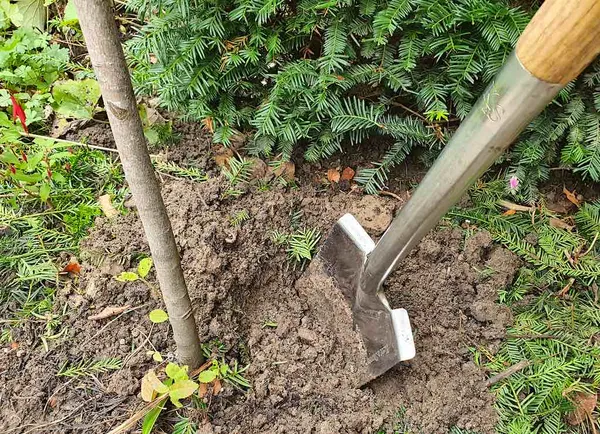
In winter, many plants are dormant. Now is the time to move (transplant) most deciduous trees, shrubs, and plants without much trouble. Dig up as large a root ball as possible and make sure the soil is similar at the new location (assuming the plant was growing well at its old spot). If you’re moving the plant specifically to improve its conditions, take the time first to improve the soil and conditions at the new location. For large shrubs and older trees, it’s advisable to trim the roots all around during the growing season, so they’re easier to move and cause fewer problems.
Pruning
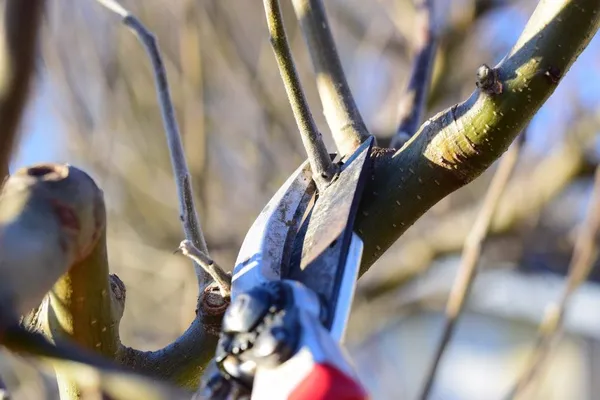
Since most deciduous trees, shrubs, and plants are dormant in the winter, it’s also a good time to prune. We call this winter pruning. Opinions on winter pruning are divided: Pruning now has not only advantages (plants are dormant, and the desired shape is clearly visible without foliage), but also some disadvantages (risk of rapid regrowth and potentially slower healing of cuts that are too large). However, there is often not enough time to prune in the summer, or it can be difficult to work when the tree or shrub is fully leafed out. We therefore (also) prune deciduous trees and shrubs in the winter and accept that rapid regrowth or water sprouts may occur.
Prune the apple and pear trees, prune the wisteria, and prune the grapevines.
At the end of winter, you can safely prune ornamental grasses down to just above the ground. A good time to do this is in February, just before the new shoots begin to emerge. You should also prune panicle hydrangeas at the end of winter.
Do not prune ABC trees in the winter or spring. These include maple (Acer), birch (Betula), and hornbeam (Carpinus). There is a high risk of significant sap flow during those seasons. Prune these trees when they are fully leafed out. This also applies to pruning stone fruits (Prunus: cherry, plum, apricot, peach, and almond) and walnut (Juglans). This will also help prevent diseases and infections.
It’s also best not to prune evergreen trees and shrubs in the winter. Wait until spring to avoid any frost damage. Less hardy plants (such as Mediterranean herbs like lavender and rosemary) should also be pruned in the spring, after the last real frost.
Cuttings
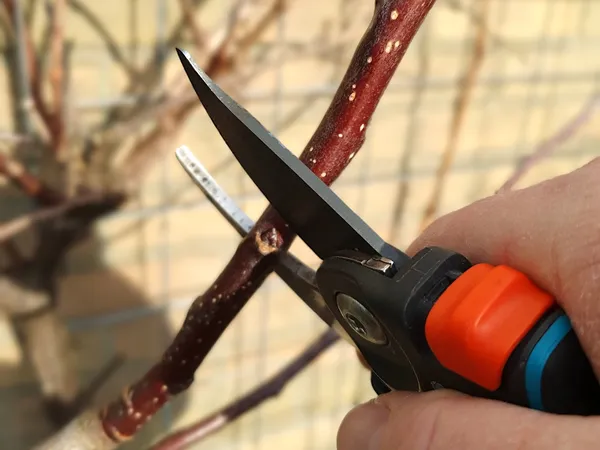
Winter is the perfect time to take woody cuttings, also known as winter cuttings. Many woody plants and shrubs can be propagated by cuttings in the winter. To do this, cut a straight branch about 15–20 cm long and place it in a pot filled with rooting medium (light potting soil or even sandy soil), or simply plant it directly into the garden soil. Water it once, and then all you really have to do is wait. Winter cuttings root much more slowly than softwood cuttings and semi-hardwood cuttings (summer cuttings), but the success rate is much higher. This is because the risk of drying out is very low, and the growth rate is still slow. In case of prolonged drought, it’s best to water the cuttings a little.
Taking winter cuttings is very easy—especially with these plants, which are very easy to propagate in the winter.
Tidying Up
Don’t tidy up your garden too much in the winter! Many animals and insects have found shelter in your garden or are finding food there. Anything that can be used as a shelter or food source, we’d definitely just leave it be until spring! We do, however, always clean out the shed and our garden tool storage area in the winter.
Landscape Design and New Plans
One of the things we love most about winter is getting lost in garden books, garden magazines, garden blogs, and so on—all for inspiration for new garden plans. We then work out these plans in detail on paper (or on the computer, of course). Not a single year has gone by without us coming up with a new plan for a flower bed, patio, plant combination, or even the entire front or back yard!
Be sure to check out our Garden Design series: Garden Design – Start by Making a List of All Your Garden Wishes and Part 2: Garden Design – Shapes, Paths, and Sightlines.

Maintenance of Garden Tools
Most people don’t maintain their garden tools—or any garden machinery or equipment they may have—very well. That’s a shame, because it naturally shortens their lifespan. Have you treated yourself to some nice, high-quality tools? Then be sure to take good care of them. Always clean your garden tools immediately after use, and give them a thorough cleaning at least once a year. Winter is also a good time to lubricate and/or sharpen tools such as pruning shears and hedge trimmers.
Just enjoy yourself
You might have thought you’d be able to relax a bit in the garden this winter, but as you can see above, there’s really plenty to do! Of course, even in winter, it’s important to take a moment to reflect on what you’ve already accomplished and simply enjoy your garden! Even in winter, there’s still so much to enjoy in the garden: for example, beautifully blooming and fragrant winter-flowering plants, stately evergreens and topiary, brightly colored trunks and branches, or uniquely shaped trees and shrubs!
Be sure to check out our favorite plants for a beautiful winter garden.