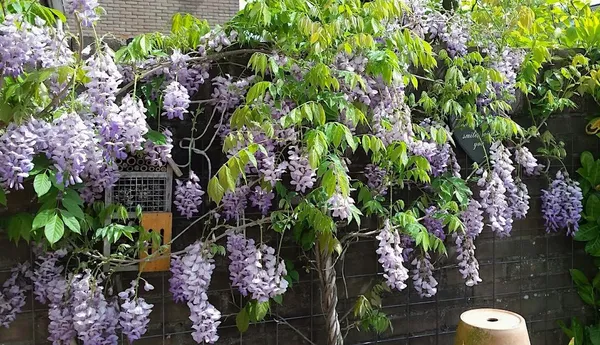
Why isn't my wisteria blooming?
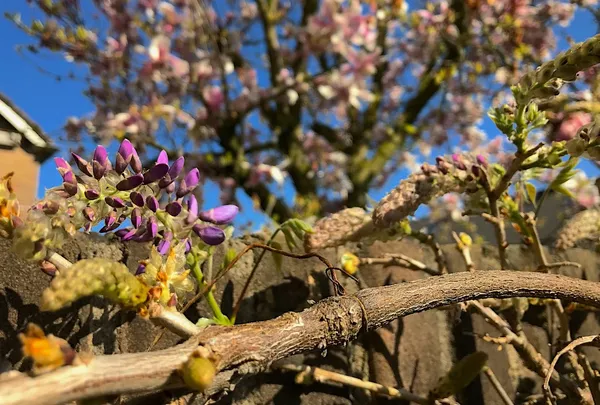
Wisteria is a beautiful climbing plant with impressive blooms.
Depending on the species, it blooms with long, hanging clusters of (purple)blue, white, or pink flowers, which also have a wonderful fragrance.
Wisteria is one of the most beautiful climbing plants and is therefore very popular. However, many people have trouble getting the plant to bloom. There can be several reasons for this.
Why isn't the wisteria blooming?
Choose the Right Type of Wisteria
The two best-known species are Wisteria sinensis (Chinese wisteria) and Wisteria floribunda (Japanese wisteria).
The Chinese wisteria is the first to bloom, usually starting in (mid-)April. It begins to bloom before the plant has any leaves. The Japanese wisteria does not begin to bloom until later, starting in late April or May. The leaves appear either before or at the same time as the flowers.
See all the differences between Wisteria sinensis and Wisteria floribunda
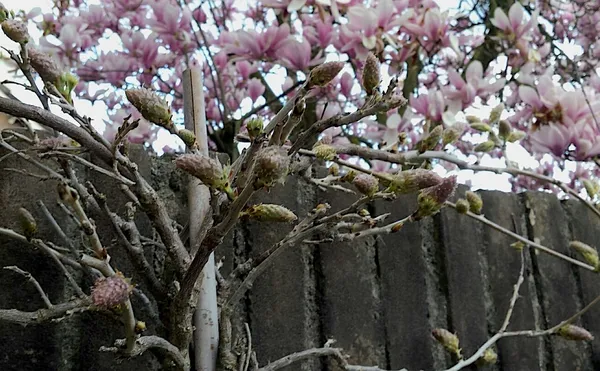
Age of the Wisteria
Wisteria sinensis can begin blooming as early as 3 years after planting. One of the best and easiest varieties to grow is the ‘Prolific’ cultivar.
Wisteria floribunda takes a very long time to bloom. It can take as long as 7 to 10 years!
Grafted or seed-grown plant
A wisteria grown from seed can take a very long time to start blooming. For this reason, grafted plants are increasingly common on the market. A grafted wisteria often blooms years earlier than one grown from seed. So this is definitely something to keep in mind when making a purchase.
Location
Wisteria thrives in a sunny, warm spot. Partial shade is also acceptable. A south- or west-facing wall is ideal.
A spot in (deep) shade can result in little or even no flowering.
Incorrect pruning
The wisteria blooms on old wood. It is therefore important to prune it correctly to avoid cutting off shoots that would otherwise have bloomed.
Prune wisteria twice a year.
See also: How to Prune Wisteria