
Which Viburnum is evergreen?
Viburnum (known as “snowball” in Dutch) is a genus comprising many different plants. They are hardy plants with beautiful and distinctive blooms. Many species produce striking berries. Some Viburnums are fragrant; there are winter-flowering and summer-flowering varieties; the shape and structure of the leaves also differ, and the height varies greatly by species.
Many viburnums are deciduous. However, a number of viburnum species are evergreen.
This is exactly the kind of gardening question we get asked a lot:
Is Viburnum evergreen? If so, which ones?
The Evergreen Snowball Bush: Viburnum tinus
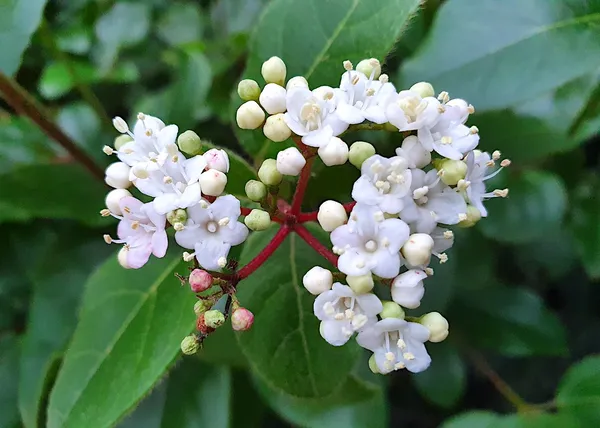
One of our favorite evergreen plants is the laurel snowball or evergreen snowball. Viburnum tinus has beautiful, sturdy, glossy dark green foliage and blooms for a very long time: sometimes as early as September through March or April. Viburnum tinus blooms profusely with small white or pinkish-white flowers that emerge from pink, brown, or dark red buds. The flowers have a wonderful fragrance. After flowering, dark blue to black-blue berries form.
Although this plant is actually native to the Mediterranean, Viburnum tinus now thrives in our climate as well. It’s a fairly fast-growing plant and eventually reaches a height of about 2–3 meters. You could also train it into a small evergreen tree. It also makes a very attractive hedge plant.
There are many different cultivars available. These differ, for example, in hardiness, height, but especially in flower color and bud color. Examples include Viburnum tinus ‘Eve Price,’ ‘Gwenllian,’ ‘Lisarose,’ ‘Spirit,’ ‘Pink Prelude,’ ‘Lucidum,’ ‘Campactum,’ ‘Grandiflorum,’ ‘Purpureum,’ and ‘Variegatum.’
Evergreen Viburnum davidii
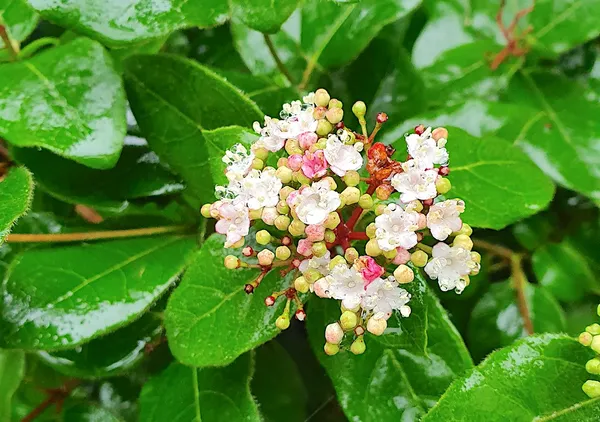
This evergreen snowball shrub grows fairly low and has a densely branched habit. The leaves are firm, veined, dark green, and elongated. In June, Viburnum davidii blooms with small white umbels. After flowering, it produces striking metallic-blue berries (provided there is a male plant nearby). It naturally grows in a rounded shape and usually does not grow much taller than 100–120 cm.
Evergreen Viburnum rhytidophyllum
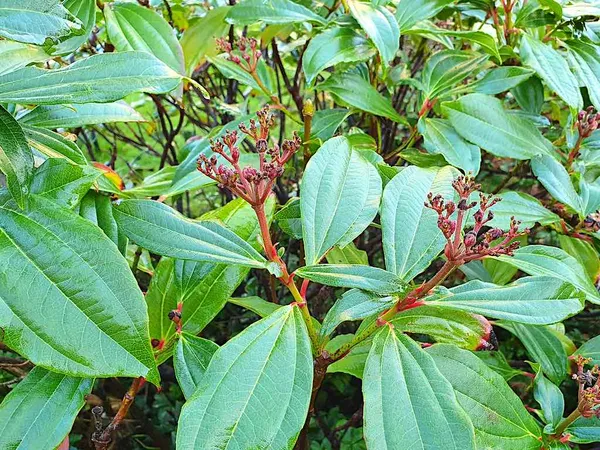
Although Viburnum rhytidophyllum is evergreen, this species is less suitable for small gardens. It grows fairly quickly and can reach a height of about 4–6 meters. This evergreen viburnum blooms around May–June, producing creamy-white umbels. Bright red berries appear after flowering and slowly turn black. The oval, deeply wrinkled leaves are felt-like on the underside and may release fine hairs that can irritate the eyes and respiratory tract.
Viburnum burkwoodii
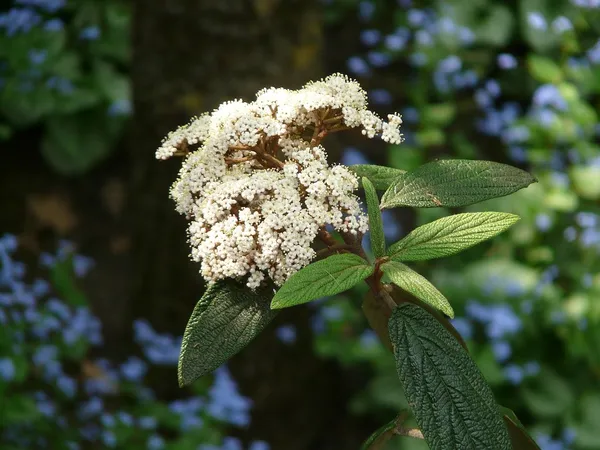
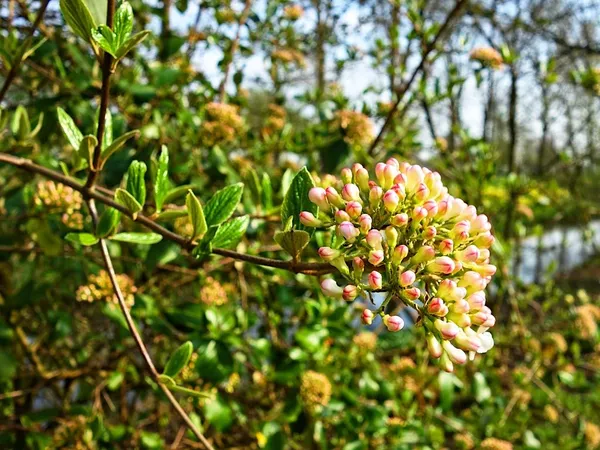
Burkwoodii is a (semi-)evergreen snowball bush with white-pink flowers in round clusters that emerge from pink flower buds. It blooms in April–May, and the flowers have a strong but pleasant fragrance. After flowering, elongated berries form that turn red at first and later black. The small leaves are egg-shaped and change color slightly throughout the year. In the spring, the foliage is bronze-colored; in the summer, it is dark green; and in the fall, it may turn orange. Viburnum burkwoodii is semi-evergreen. This means that leaf loss may occur during severe frosts. In recent years, however, the leaves have remained on the plant quite well. This snowball bush grows to a height of about 2–3 meters. Viburnum burkwoodii ‘Anne Russell’, ‘Mohawk’, ‘Chenault’, and ‘Conoy’ are well-known cultivars.
Even more evergreen Viburnum species
Although less well-known, there are certainly more Viburnum species and cultivars that retain their leaves. Unfortunately, not all species are equally suitable for a small garden, as they can sometimes grow quite wide and tall. Less well-known species include:
- Viburnum ‘Pragense’
- Viburnum utile
- Viburnum henryi
- Viburnum rhytidophylloides