
Which plants are suitable for a narrow hedge?
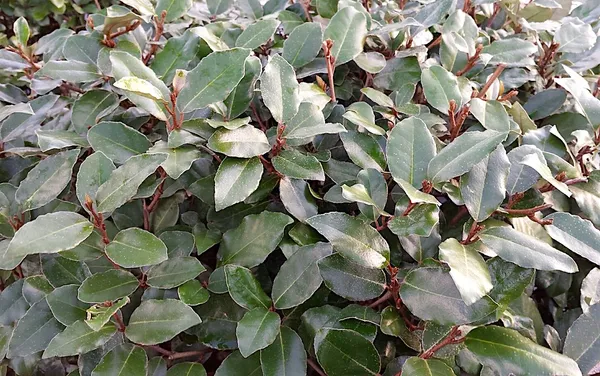
Do you have limited space in your garden but would still like a green boundary? We understand that all too well. A natural, green boundary is very valuable and provides shelter and food for countless animals, insects, and birds. Still, people often worry that a hedge will grow too big or too wide.
Even on a rooftop terrace or balcony, there’s usually very little space. Fortunately, there are definitely narrow hedge plants available!
There are several evergreen plants that are suitable for a narrow hedge. Some of these hedge plants can be used to create a taller hedge, while others make it easy to create a beautiful low hedge. These are our favorite hedge plants if you have limited space.
Evergreen hedge plants for a narrow hedge
A narrow hedge of yew
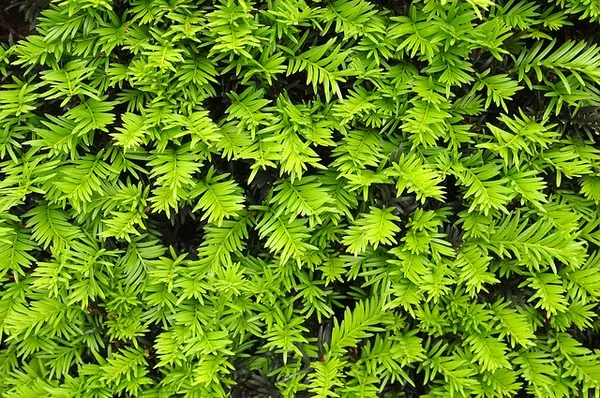
The ultimate hedge plant when you’re short on space. Yew (known in Dutch as “Taxushaag” or “venijnboom”) can be pruned into a very neat, narrow shape and easily maintained that way. It’s also an easy hedge plant. Even if you prune it back too far, the yew will simply sprout new growth from the bare wood or the trunk—unlike most other conifers. Yew has a beautiful dark green color and provides good privacy. Young shoots are light green. It’s also ideal for topiary or rounding off the corners of a hedge.
Narrow hedge: Portuguese laurel (Prunus lusitanica)
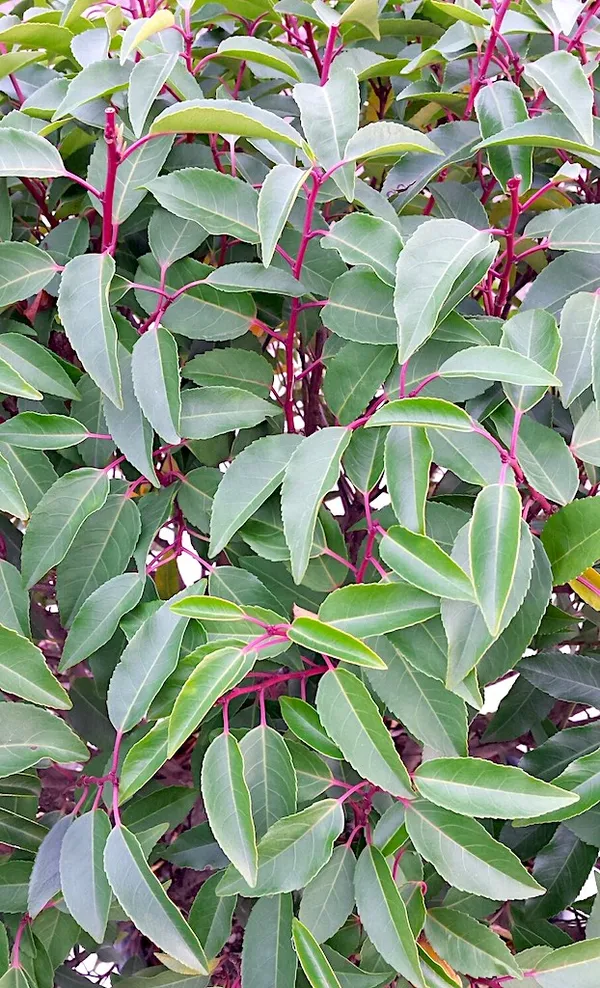
Portuguese laurel (Prunus lusitanica) is a popular choice for a fairly narrow hedge. The young shoots are reddish, and the dark green, oval- to pointed-shaped leaves of this hedge plant are attractive. Portuguese laurel naturally grows in a somewhat conical shape, making it ideal for a narrow hedge. The leaves of Prunus lusitanica ‘Angustifolia’ are even more pointed and are the most commonly chosen variety for a Portuguese laurel hedge. With minimal pruning, it will produce white flowers.
Narrow hedge: Cherry laurel
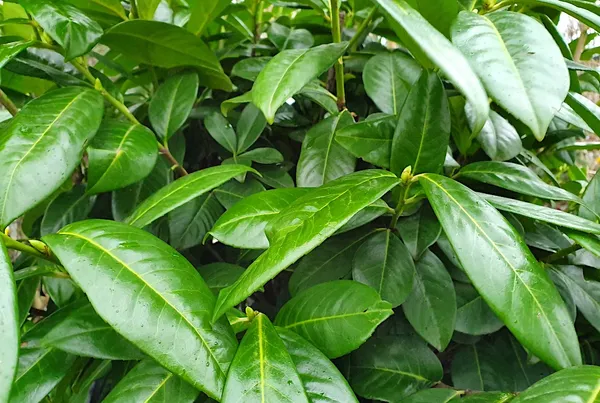
Cherry laurel is probably not the first species that comes to mind for a narrow hedge. Most people are familiar with cherry laurel as a broad hedge with large leaves (which is also beautiful, by the way), but there are several Bay laurel varieties suitable for a narrow hedge. The best-known variety is Prunus laurocerasus ‘Caucasica’. This cultivar has dark green, oval to pointed leaves, which are much narrower than those of, for example, the well-known ‘Rotundifolia’ or ‘Novita’. Its growth habit is much more compact and upright. By pruning it several times a year, you can create a beautiful narrow hedge. Another cultivar suitable for a narrow hedge (and very similar to this one) is Prunus laurocerasus ‘Elly’. This one has slightly brighter green, glossy leaves and can also be easily kept small or narrow.
Privet as a narrow hedge
Unfortunately, privet is often underappreciated these days. This is mainly because young plants or newly planted ones often lose their leaves in the winter. Still, it’s a wonderful hedge plant. Privet forms a beautiful, dense, and full hedge that’s very easy to maintain. Animals, insects, and birds love it, especially when the hedge blooms and later produces berries. The scent of the flowers is delightful and can be smelled from a great distance. Privet is very easy to keep narrow and is naturally quite slender. The hedges only become wider as they mature, but this isn’t necessary. You can also opt for a single row to keep the hedge even narrower. Ligustrum ovalifolium is most commonly planted for hedges, but Ligustrum vulgare is also very beautiful, with narrower leaves and lovely blossoms.
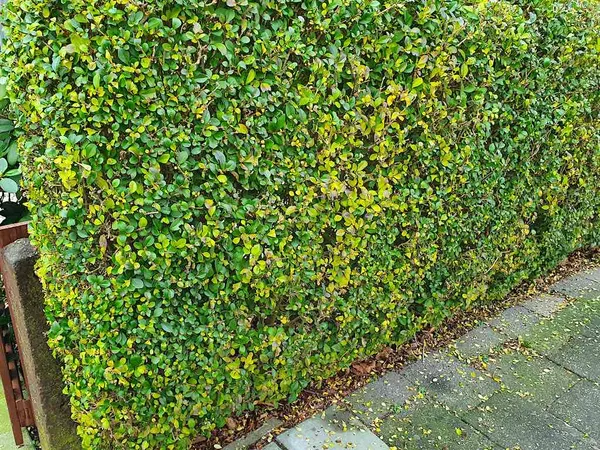
Narrow hedge of olive willow
Olive willow (Elaeagnus ebbingei) is also being planted more and more often. This beautiful hedge plant with gray-green foliage is very hardy. You’ll have few problems with olive willow even on a balcony or rooftop terrace. Although olive willow naturally tends to grow somewhat wider, this hedge plant is easy to keep narrow through pruning. They also look beautiful trained on a trellis or metal frame. Unlike many other plants, they quickly form a nice, dense canopy. Depending on how often they’re pruned, they may bloom and subsequently produce berries. However, this is rarely seen, as they’re usually pruned before they have a chance to flower.
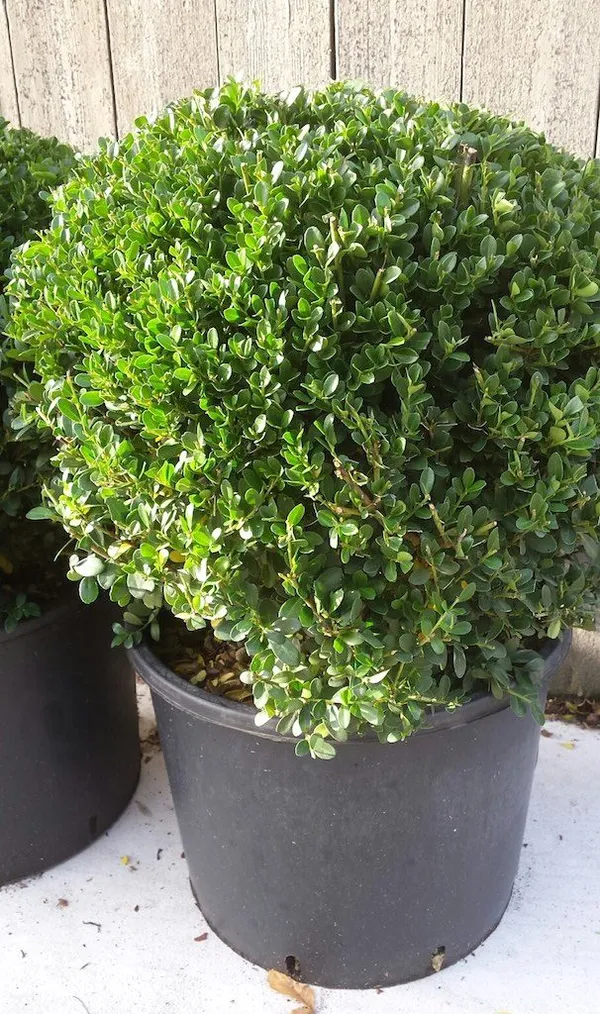
Japanese holly (Ilex crenata)
Ilex crenata is now widely planted as Boxwood substitute. From this, it’s also clear that it’s a good hedge plant for low and narrow hedges. Chinese or Japanese holly grows somewhat slower than boxwood, but is very similar in foliage and shape. Ilex crenata ‘Dark Green’ is the most commonly planted variety and is a slightly darker green than boxwood.
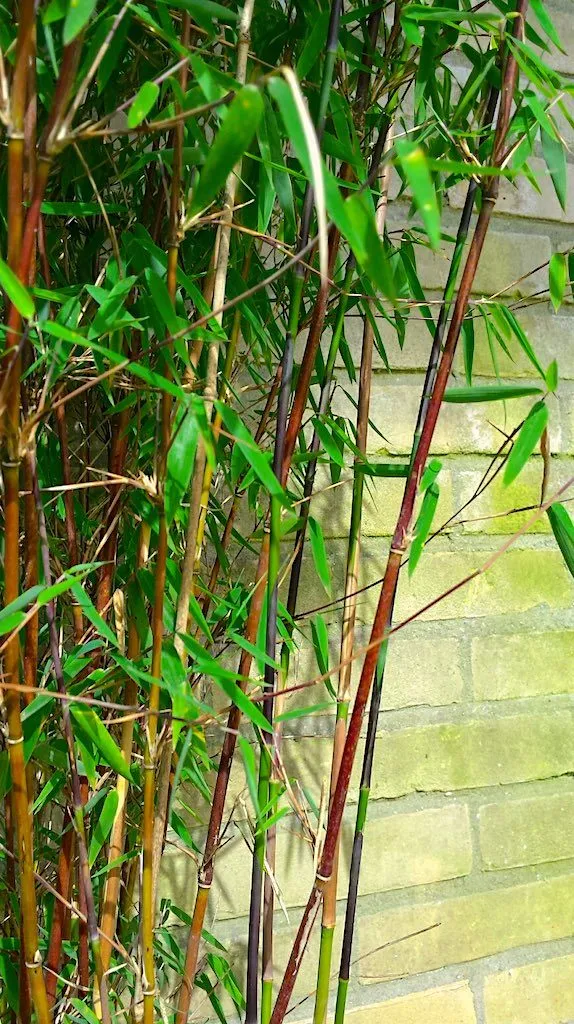
Narrow hedge of non-invasive bamboo (Fargesia)
It is also possible to create a narrow hedge using bamboo. Although this is also possible with fast-spreading varieties (such as Phyllostachys), we would not recommend it. Instead, use Non-invasive bamboo: Fargesia. These varieties form a clump and will not produce runners that pop up elsewhere in the garden. Keep in mind, however, that even clump-forming bamboo can grow or spread quickly, but always around the existing clump.
Fargesia is often planted as an evergreen hedge on rooftop terraces and balconies, as well as in pots and planters. Keep in mind, however, that the bamboo dries out more quickly during the growing season, so it will require a little extra care and attention then. Some Fargesia varieties bend over significantly or grow quite wide. Choose upright and slender bamboo species.
A narrow hedge of climbing plants
Would you like an even narrower hedge, or do you have even less space than you thought? Then consider a narrow hedge of climbing plants. For example, on a ready-made trellis with ivy (Hedera), Clematis armandii, or Tuscan jasmine.