
Which pears are self-pollinating?
Would you like to have a pear tree in your garden, too?
But what if you only have room for one tree or sapling?
Then choose a self-pollinating pear!
In order to bear fruit, most pear trees need another pear tree.
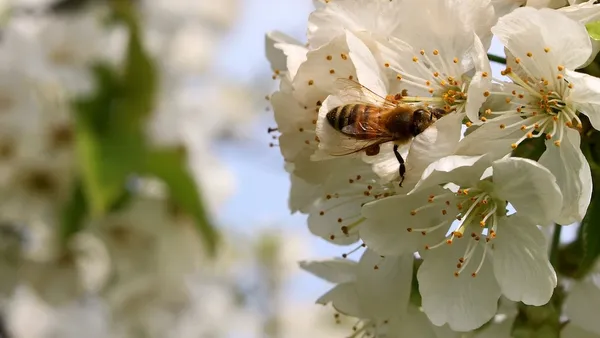
This must be a different variety, with the same flowering period. The bees will then ensure that the pears pollinate each other. This is called cross-pollination.
Although cross-pollination is necessary for most pear varieties, there are also self-pollinating pear trees (also known as self-fertile). These do not need a second pear tree to produce pears.
Self-pollinating pear trees are ideal for a small garden.
Since you don't need a second tree, you save a lot of space. That's handy if your yard isn't very big.
Which pears are self-pollinating?
In the list below, you'll find self-pollinating pear trees (Pyrus communis), including an indication of whether they are table pears or cooking pears.
- Conference (desert pear)
- Gieser Wildeman (stewing pear)
- Clay Pear (stewing pear)
- Saint Remy (stewing pear)
- Williams (table pear)
- Winter Reed Pear (stewing pear)
- Sweet Brederode (stewing pear)
Higher yield?
Although self-pollinating varieties do not need another tree, the yield is often higher or of better quality if a second pear tree is within reach.
It doesn't have to be a large tree, by the way; it can also be a low-stem tree, a columnar tree, or an ornamental pear tree (with blossoms). The only requirement is that they bloom at the same time.
Check out these self-pollinating fruit trees as well:
Self-Pollinating Apple Varieties
Self-Pollinating Cherry Varieties
Self-Pollinating Plum Varieties