
Which Nepeta stays low? (Compact catnip varieties)
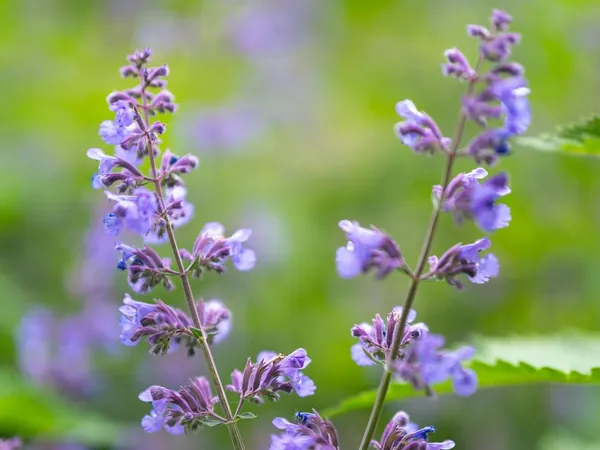
Nepeta, better known as catnip, is a popular perennial in many gardens. The plant has a long blooming season, attracts bees and butterflies, and is also hardy and low-maintenance. As a result, it is often used in borders, natural plantings, and low-maintenance gardens. However, there is one important consideration: not every Nepeta variety remains low-growing or compact.
Different Types of Catnip
Within the genus Nepeta, Nepeta racemosa and Nepeta faassenii are the most commonly used in gardens. These two species form the basis of most garden varieties of catnip.
Nepeta racemosa generally remains shorter and more compact, making it suitable for the front of a border or for smaller gardens. Nepeta faassenii usually grows somewhat more vigorously and loosely, although the final height can vary greatly depending on the cultivar.
Because of this natural variation, it’s important to carefully consider the growth habit of a specific species or cultivar. Some catnip species remain low-growing and form clumps, making them ideal as compact border plants, while others take up more space and are better suited to larger, more open plantings.
The Best Compact and Low-Growing Nepeta Varieties
Nepeta racemosa ‘Snowflake’
Nepeta racemosa ‘Snowflake’ is a compact, white-flowering Nepeta that grows to about 20–30 cm tall. The plant has a low, clump-forming habit, so it retains its neat shape. The white flowers create a calm and fresh effect in the border and pair well with virtually all other colors.
Nepeta racemosa ‘Superba’
Nepeta racemosa ‘Superba’ is a classic and reliable cultivar that grows to about 25–35 cm tall. This plant forms a full, compact clump and blooms profusely with blue-purple flowers. Thanks to its vigorous growth, this variety retains its shape well, especially when pruned back after flowering.
Nepeta faassenii ‘Kit Cat’
Nepeta faassenii ‘Kit Cat’ is one of the most compact Nepeta varieties available. Reaching a height of about 25–30 cm, this plant stays very low. It forms a dense, gray-green clump with bright blue flowers and is ideal for small borders, edging, and pots.
Nepeta faassenii ‘Purrsian Blue’
Nepeta faassenii ‘Purrsian Blue’ grows slightly taller, usually 30–40 cm, but remains compact enough for most gardens. This cultivar is known for its long blooming season and good reblooming after pruning. The foliage is slightly greener. Its growth habit is somewhat looser than that of ‘Kit Cat,’ but it remains easy to manage in the border.
Nepeta ‘Junior Walker’
Nepeta ‘Junior Walker’ is a compact variety within the Walker group. This plant remains noticeably smaller than ‘Walker’s Low’ and has a neater, more upright growth habit, reaching a height of about 30–40 cm. Its intense blue-purple flowers make it ideal for borders where you want the look of the Walker series, but in a more compact size.
Is Nepeta ‘Walker’s Low’ really low-growing?
The name Nepeta ‘Walker’s Low’ suggests a low, compact plant, but that’s not actually the case. This Nepeta often reaches a height of 60–80 cm and also spreads considerably. As a result, it is particularly well-suited for medium to large borders, where it has the space to grow freely and naturally.
The name itself does not refer to the plant’s height, but to a garden in England where this variety originated. “Walker’s Low” is therefore a place name, which makes the impression that it is a low-growing plant somewhat misleading.
As a result, in smaller gardens or more tightly planted areas, it can quickly become too large and too dominant.
Here's how to keep Nepeta compact
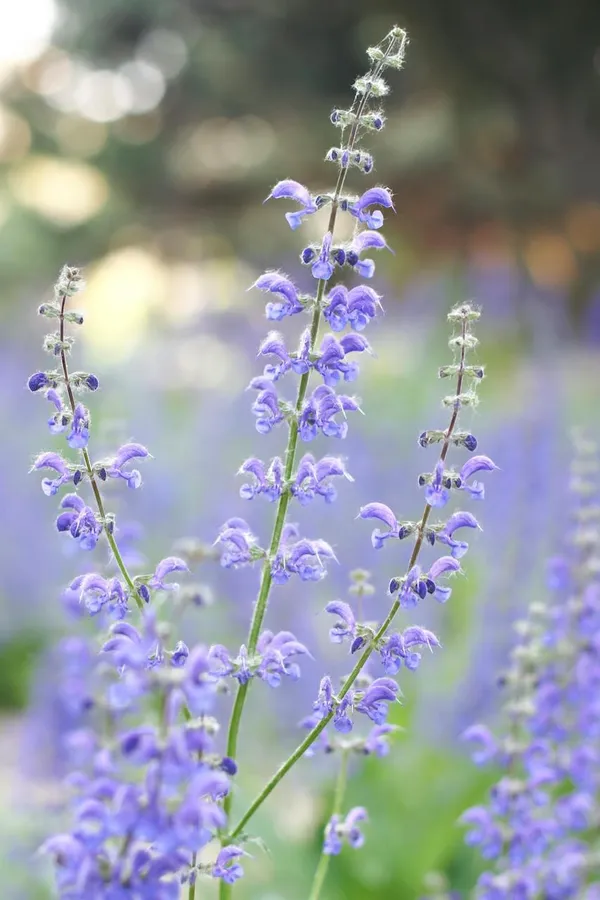
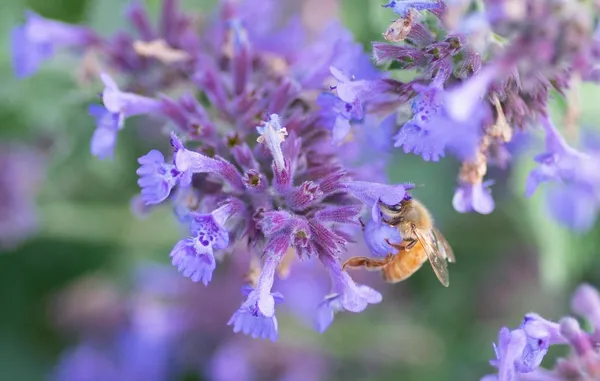
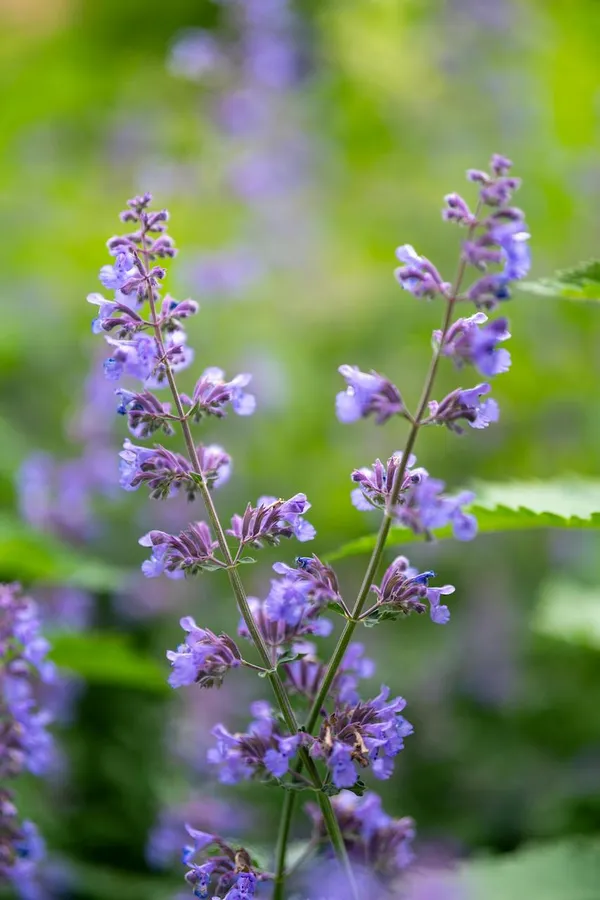
Even compact Nepeta varieties can become somewhat leggy after flowering. By pruning the plant back significantly after the first bloom—about halfway down—it stays more compact and often produces a second bloom. This helps the plant maintain a neat shape and extends its ornamental value in the garden. You can also use this pruning method on taller varieties to keep them slightly more compact.
Which Nepeta is best suited for your garden?
The best Nepeta for your garden depends on the available space and the desired effect. For a small garden, a narrow border, or the front of a planting bed, low-growing Nepeta varieties such as ‘Kit Cat,’ ‘Snowflake,’ and ‘Superba’ are particularly well-suited.
It is important to carefully consider both the species and the cultivar. Nepeta racemosa, in particular, tends to remain more compact on average than Nepeta faassenii, while some well-known cultivars, such as “Walker’s Low,” grow much larger than their name suggests.