
Which hostas aren't affected by snails?
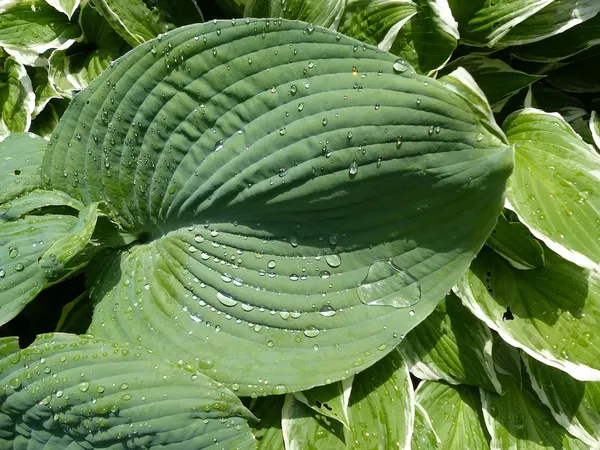
Hostas (plantain lilies) are beautiful foliage plants that pair well with many other plants and garden styles.
Still, many gardening enthusiasts are hesitant to plant them in their own gardens. Hostas are, of course, known to be susceptible to snails.
Sometimes it seems like snails are only interested in your hostas! Especially when your plants are still young.
Which hostas are resistant to snails?
Although virtually all Hosta varieties are susceptible to snails, there are also some Hostas that are eaten significantly less by snails. “Resistant” is therefore not the correct term. “Less susceptible,” or at least “less likely to be damaged,” better describes these varieties.
Hostas with thicker, stiffer leaves are particularly less susceptible to snails. Many blue hostas have these characteristic thick, stiff leaves. Hostas that grow more upright or take on a vase-like shape also seem to be more resistant to snails for longer.
Hosta varieties that are resistant to snails:
- Hosta Abiqua
- Beach Boy
- Big Daddy
- Blue Angel
- Blue Arrow
- Blue Cadet
- Blue Diamond
- Blue Mouse Ears
- Hosta Bullet Proof
- Camelot
- Catherine
- Devon Blue
- El Niño
- First Frost
- Forbidden Fruit
- Halcyon
- June
- Justine
- Krossa Regal
- Patriot
- Party Popper
- Sieboldiana
- Sum and Substance
- Titanium
- Hosta 'Touch of Class'
* Unfortunately, we have not tested many of these varieties ourselves, as we only have a limited number of hostas in our garden. This list of varieties is therefore largely based on the experiences of specialized growers.
How do you prevent snails from damaging your hostas?
Healthy plants are much less susceptible to snails and other pests. So it’s important to place your plants in a suitable location. For most heart-leaves, this means a spot in partial shade or full shade, with slightly moist, nutrient-rich soil.
Young plants are usually popular with snails, too. That’s why they could use some extra protection. For example, place them in a spot that’s harder for snails to reach, or try to keep snails away by placing sharp gravel around the plant, wrapping copper tape around the pot, or regularly spraying the plants with garlic extract.