
Which Fruit Tree for a Small Garden?
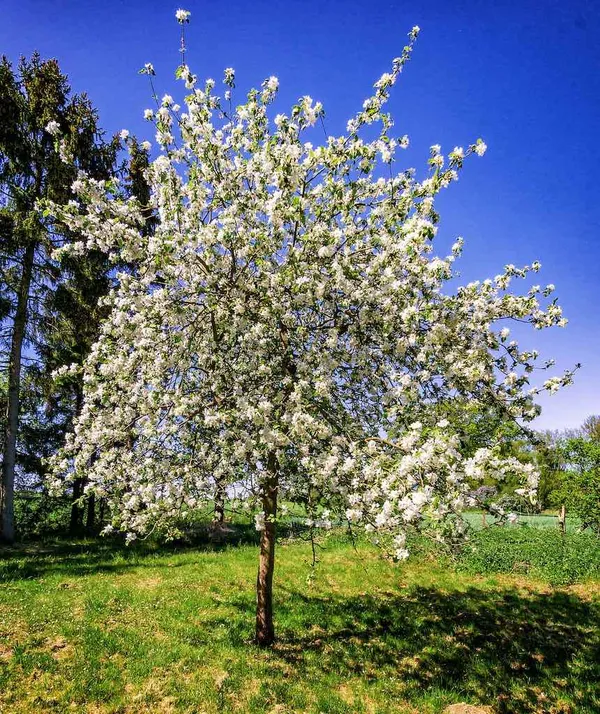
A garden isn't really complete without a tree. A tree adds height to your garden, provides visual interest throughout the seasons, offers shelter for birds and other animals, and provides cooling shade in the summer…
In a small garden, there's limited space for a tree. So which tree should you choose?
A fruit tree is ideal for a small garden: Not only can you enjoy fruit from your own garden in the fall, but in the spring there’s also beautiful blossoms! It’s no surprise that a few real fruit trees are also featured in our article on our favorites flowering trees! Some fruit trees also have beautiful fall colors or unique leaf shapes.
Can you grow a fruit tree in a small garden? Which types of fruit trees are suitable?
Fruit Trees They are beautiful trees. Older specimens have gnarled trunks and attractive shapes. We usually think of standard trees when we think of fruit trees. However, a standard fruit tree isn’t suitable for a small garden. Standard fruit trees grow too tall, and their crowns become too wide. They also don’t start branching out until they’re about 200 cm tall, which means you’ll need a ladder to pick the fruit.
In addition to the well-known standard-sized fruit trees, there are also other tree forms that are suitable: half-standard and low-standard fruit trees, and even dwarf and columnar fruit trees.
Low-stem fruit tree
A low-stem fruit tree (sometimes called a shrub-type tree) is ideal for small gardens. Low-stem fruit trees begin to branch out at a height of about 40–60 cm. They are grafted onto a weak rootstock, which keeps them small. Typically, a low-stem tree does not grow taller than 2–2.5 meters. Most varieties are also suitable for growing in a pot or container. A low-stem tree does have a normal growth habit, so you can still expect a good yield.
Mini fruit tree, Patio fruit tree, or Columnar fruit tree
Even smaller than low-stem trees are the so-called mini fruit trees, dwarf fruit trees, or columnar fruit trees. Not only do they branch out from very low down, but they also remain very narrow. They’re ideal if you have very limited space, or for growing in a pot or planter. Columnar fruit trees are also sometimes called “Ballerina” fruit trees. However, the yield from such a mini fruit tree or columnar fruit tree is lower.
Half-standard fruit tree
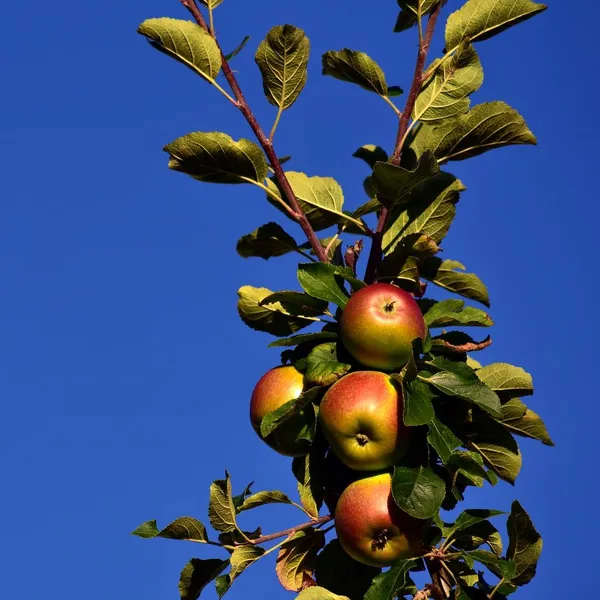
If you have a little more space, you can also opt for a half-standard fruit tree. Half-standard fruit trees do grow larger. A half-standard tree begins to branch out at about 100–120 cm and reaches a total height of 2.5–3.5 meters. Choosing the right weak rootstock makes all the difference here. With proper pruning, even a half-standard tree can be kept to a manageable size and height. Half-standard fruit trees are ideal if you have the space and want a high yield. If you’d like a half-standard fruit tree in a pot, you’ll need a fairly large pot or container.
Espalier fruit (espalier shape and espalier tree)
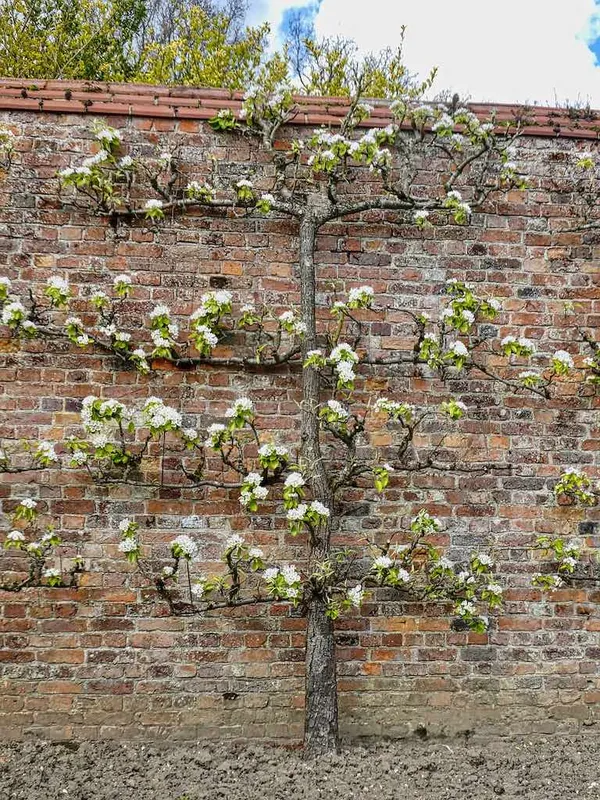
Another way to plant a fruit tree in a small garden is to use an espalier fruit tree. Espalier fruit trees are trees that are trained to grow on a trellis. The branches grow horizontally or at an upward angle (palmette or fan shape), and the tree spreads very little. This results in a very narrow fruit tree, but one with maximum yield, because all the branches, buds, and fruits receive plenty of light. Espalier fruit trees are available as low espaliers (branching just above the ground or from a low stem), as well as half-standard and standard varieties. You can also create an espalier shape yourself, for example, using a frame made of bamboo poles, a trellis, or metal tension wires. However, it will take a few years to achieve a beautiful espalier shape.
A espalier fruit tree is also a wonderful way to create more privacy and less visibility into the garden to ensure. An added benefit is that (almost all) fruit trees are deciduous and therefore do not block light from entering the house in the winter.
Potted fruit trees
The best fruit trees for growing in pots are low-stem fruit trees, dwarf or mini fruit trees, and columnar fruit trees. Duo fruit trees (two varieties on one tree) and family fruit trees also work well in pots. Keep in mind that fruit in a jar They do require more care, however. They dry out more quickly and need to be watered more often. Still, it’s perfectly possible to grow smaller fruit trees in pots and containers.
Which fruit trees are suitable for a small garden? (And which ones aren't?)
Apples, pears, cherries, plums…
Although most fruit trees Although they are also available as low-stem or half-stem varieties, some species are more suitable than others.
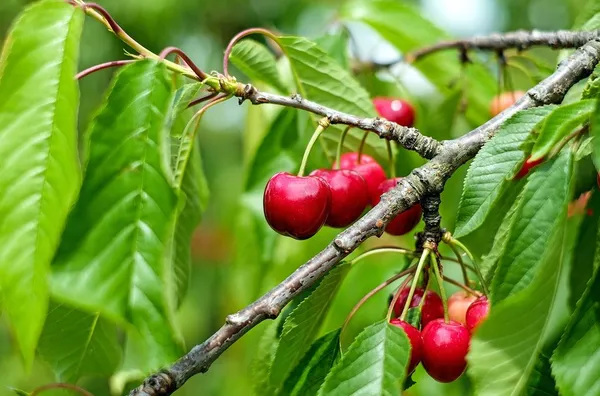
Cherry trees, for example, are fast-growing—even on a weak rootstock. As a result, they quickly become too large for your garden. If you still want a cherry tree, it’s best to choose a true dwarf variety. Nut trees also tend to grow tall and large quickly.
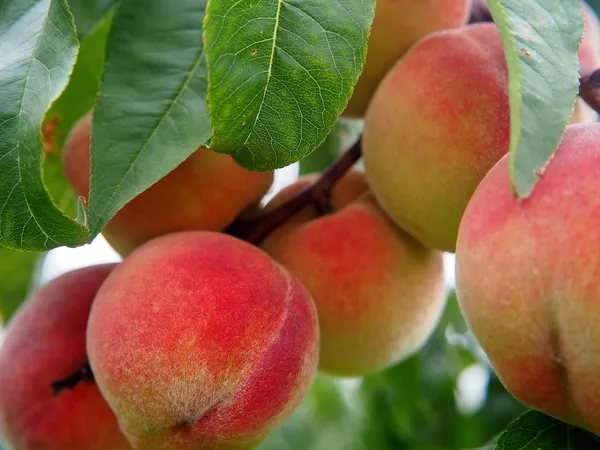
Apricots, peaches, and nectarines are susceptible to frost damage to their early blossoms. Choose a peach resistant to leaf curl disease to prevent many problems.
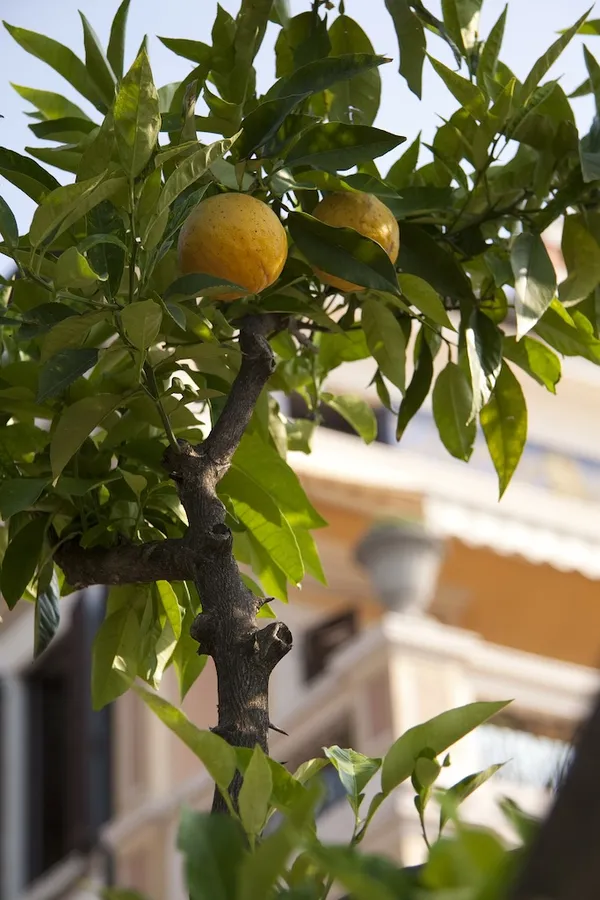
Citrus fruits taste and smell wonderful and add a lot of visual appeal to your garden (especially in a large terracotta pot). However, they are not hardy at all and must be brought indoors well before the first frost. You just have to have enough space for that…
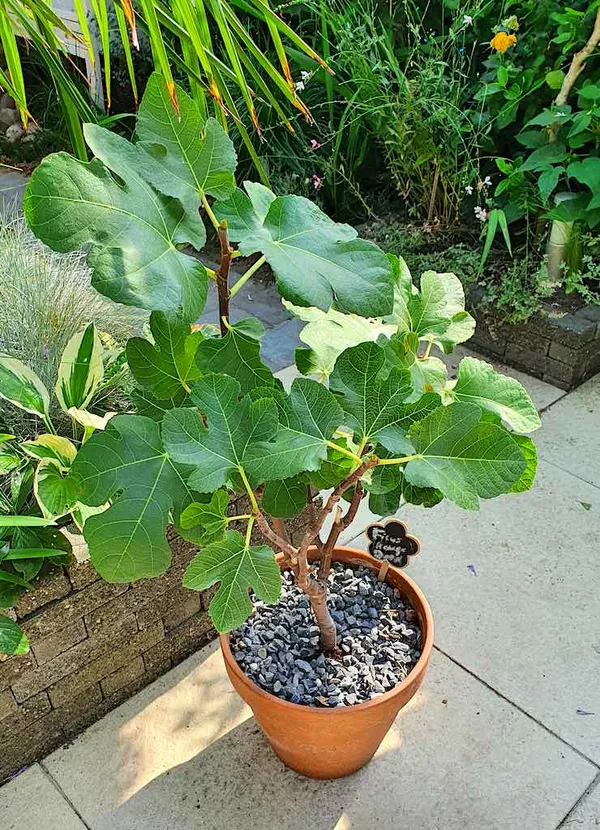
Even within a single species, there can be significant differences. Unfortunately, many fig varieties do not ripen in our climate. But there are also Fig varieties that do bear fruit in the Netherlands. Especially if you provide them with a sheltered, warm, and sunny spot in well-drained soil. You can even harvest Brown Turkey figs several times a year!
Choose a self-pollinating fruit tree
Since there usually isn't room in a small garden for a second tree to ensure proper cross-pollination (same species, different variety), it's best to choose a self-pollinating fruit tree.
Within each species, there are varieties that are self-pollinating.
For example, Malus domestica varieties such as Benoni, Ecolette, and Jonagold for apples. For pears, these include Pyrus communis varieties such as Conference, Gieser Wildeman, and Williams. For cherries, these include Prunus avium Lapins, Sunburst, and Van. Self-pollinating plums include, for example, Prunus domestica Victoria, Mirabelle de Nancy, and Opal.
View all:
- Self-pollinating apple varieties
- Self-pollinating pear varieties
- Self-pollinating cherries
- Self-pollinating plum varieties
Apple Tree in a Small Garden
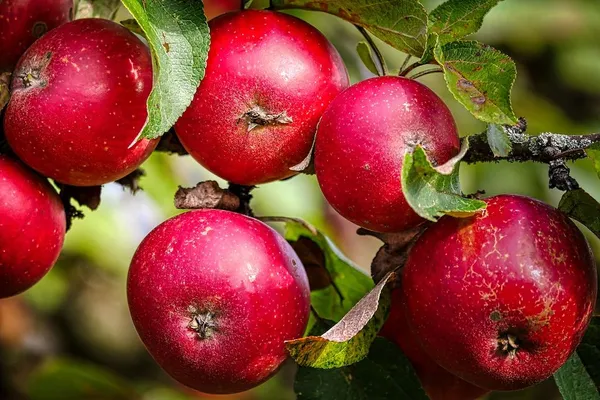
Most apple varieties (Malus domestica) can be grown in a small garden, provided you choose a half-standard tree—or, better yet, a low-stem tree. Consider whether you want an apple to eat straight from the tree or one that will keep longer. Or would you prefer a cooking apple for baking or processing? It’s important to choose a self-pollinating apple variety so you won’t need a second tree. A low-stem apple—or better yet, a dwarf, mini, or columnar variety—is the best choice for growing in a pot.
Apple Tree for a Small Garden
- Benoni (low-stem, half-stem)
- Ecolette (low-stem, half-stem)
- Goldcats (columnar, moderately self-pollinating)
- Gold Sensation (columnar)
- Greencats (columnar, moderately self-pollinating)
- Green Sensation (columnar)
- Groninger Kroon (low-stem)
- Jonagold (low-stem, half-stem)
- Maypole (column shape)
- McIntosh (column-shaped)
- Mini Cox
- Redcats (columnar, moderately self-pollinating)
- Red Leaf (columnar)
- Red Sensation (columnar)
Pear Tree in a Small Garden
Most pear varieties (Pyrus communis) can be grown in a small garden, provided you plant a half-standard tree—or, better yet, a dwarf tree. Decide whether you want a dessert pear or would prefer a cooking pear. It’s important to choose a self-pollinating pear variety so you don’t need a second tree. A low-stem pear—or better yet, a dwarf, mini, or columnar pear—is the best choice for growing in a pot.
Pear Tree for a Small Garden
- Condo (column-shaped)
- Conference (low-stem, half-stem)
- Gieser Wildeman (low-stem, half-stem)
- Helenchen (columnar form, not self-pollinating)
- Clay Pear (low-stem)
- Little Queen (columnar, not self-pollinating)
- Louisa (dwarf)
- Saint Remy (low-stem)
- Williams (low-stem, half-stem)
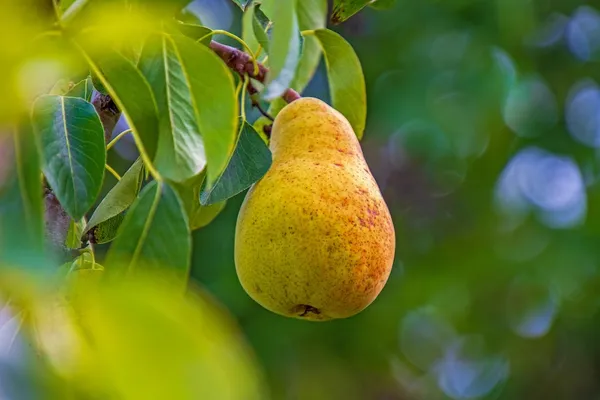
Cherry Tree in a Small Garden
Cherry trees (Prunus avium and Prunus cerasus) quickly grow too large for a small garden. We recommend choosing only a low-stem variety with an (extra) weak rootstock, or a dwarf or mini cherry tree. Make sure to select a self-pollinating cherry variety so you won’t need a second tree. Special patio varieties have now been developed from a number of well-known cultivars. These should remain small. A dwarf cherry, mini-cherry, or columnar variety is the best choice for a pot.
Cherry Tree for a Small Garden
- Hedelfinger Patio (dwarf)
- Kordia Mini (dwarf)
- Lapins (dwarf)
- Morello Mini (dwarf)
- Newstar (low-stem)
- Regina Mini (dwarf)
- Sunburst (low-stem)
- Sylvia (column shape)
- From (low-stem)
Plum Tree in a Small Garden
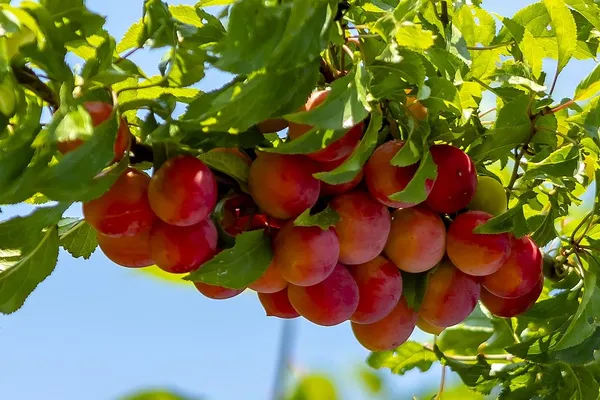
Many plum trees (Prunus domestica) are suitable for smaller gardens. They often don’t grow very tall or wide. Still, the best choice is a low-stem plum tree or a dwarf variety. Think about which color plum you prefer: a yellow plum or a blue plum? It’s important to choose a self-pollinating plum variety so you won’t need a second tree. A low-stem plum—or better yet, a dwarf or mini plum—is the best choice for growing in a pot.
Plum Tree for a Small Garden
- Czar Mini (dwarf)
- Mirabelle Mini (dwarf)
- Opal (low-stem or half-stem)
- Opal Mini (dwarf)
- Victoria (low-stem or half-stem)
- Victoria Mini (dwarf)
Less Commonly Planted Fruit Trees
When we think of fruit trees, we usually think of apples and pears. Cherries and plums are also commonly planted. But there are many more kinds of fruit trees. Below are a few types of fruit trees that are planted less often. In our opinion, however, that’s a shame!
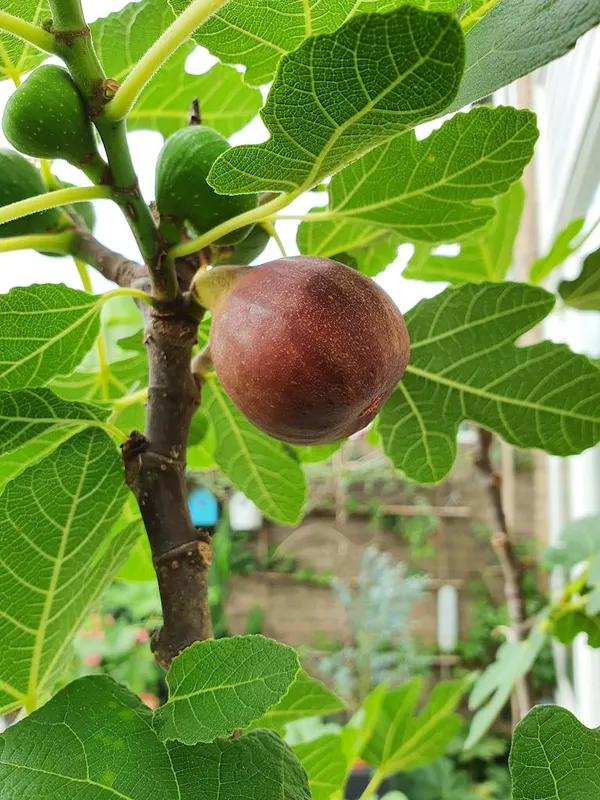
Fig Tree in a Small Garden (Ficus carica)
A fig tree is highly recommended for a sunny and somewhat sheltered garden. Its beautiful trunk, which turns a lighter shade of gray as the tree ages, its gorgeous, large, hand-shaped leaves, and the growth of its fruit all add great ornamental value. We also think its bright yellow fall color is well worth it.
If you choose the right variety and ensure well-drained soil and a sunny spot—preferably next to a warm wall—you’ll be able to truly enjoy delicious figs! A fig tree is also well-suited for growing in a pot or planter.
View the Fig varieties suitable for our climate
Quince in a Small Garden (Cydonia oblonga)
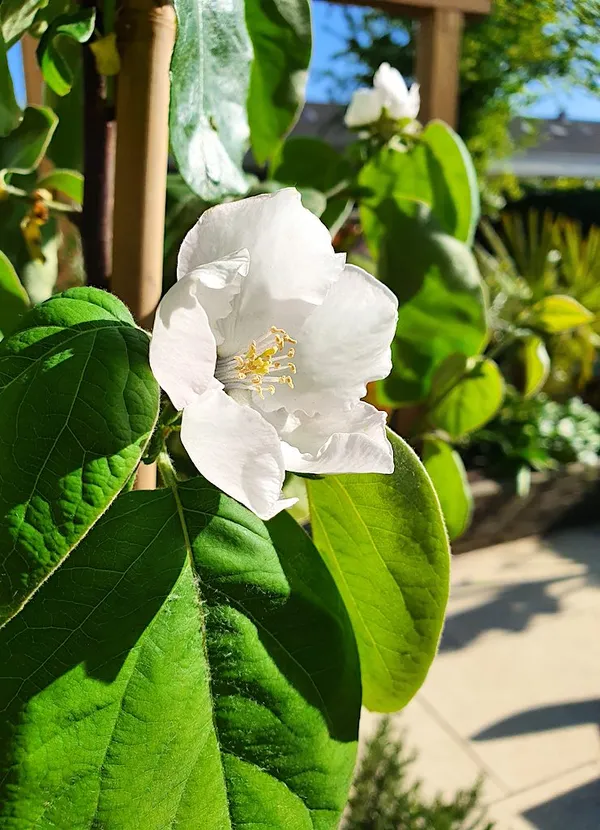
Quince trees have somehow fallen out of fashion. While they used to be planted regularly, you rarely see them in our gardens these days. It’s a shame, because they’re beautiful fruit trees that don’t grow very large. The blossoms are strikingly large and graceful, and the development of the fruit is a joy to watch. In the fall, the leaves turn a striking yellow (contrasting with the often-red stems). The bright yellow fruits can’t be eaten right away, but they’re perfect for cooking. They also have a wonderful aroma.
Recommended quince varieties for small gardens include: Cydonia oblonga Leskovacka, Leskovacz, Portugal, and Vranja.
Other fruit trees that are planted (too) infrequently
- Persimmon (Diospyros kaki)
- Dogwoods (Cornus mas and Cornus kousa)
- Medlar (Mespilus germanica)
- Nashi pear (Pyrus pyrifolia)
- Paw Paw (Asimina triloba)
Tips for Planting and Caring for Fruit Trees
- Potted fruit trees can be planted year-round (except when there is a frost). Fruit trees grown from seed are planted between November and March. The ideal time for planting is in the fall.
- Keep the area around the base of the tree clear during the first few years. Fruit trees are sensitive to competition around their base.
- Prune away any fruit that forms during the first year after planting. This will allow the tree to devote all its energy to establishing its root system and sprouting properly.
- Choose good structural branches (based on which wind direction) and use them to form the framework of the fruit tree.
- How to Prune an Apple Tree (View the previous article via the link)
- Pruning in the winter promotes rapid new growth. Pruning in the summer, on the other hand, limits growth.