
Which evergreen climbing plants are suitable for shade?
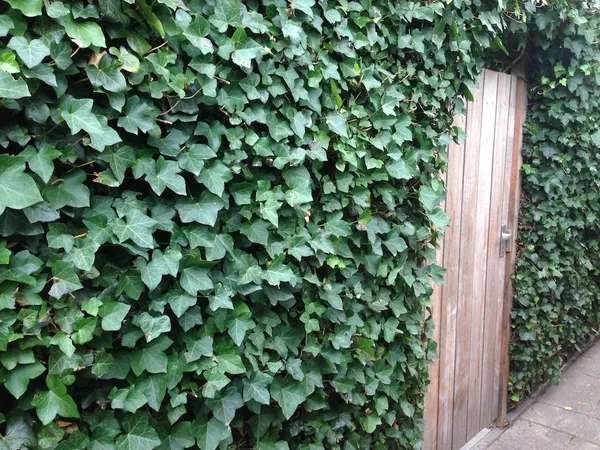
One of the most frequently asked questions we see about climbing plants is which ones are suitable for shade AND which ones are evergreen. Both, in other words! This very specific requirement narrows down the list of climbing plants quite a bit, but there are certainly a few options. Below, we’ll take a closer look at these various evergreen climbing plants for shade:
Ivy (Hedera)
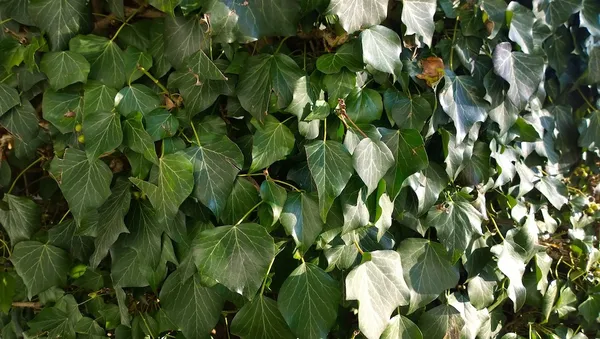
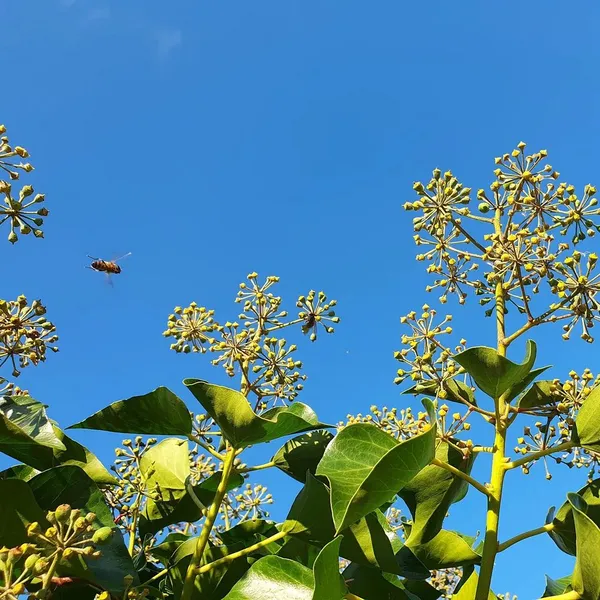
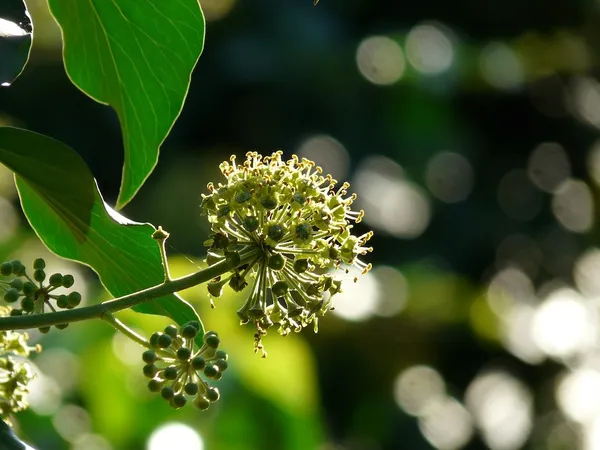
The best-known climbing plant for shade is ivy. This evergreen climber can thrive in the sun, shade, or partial shade. It’s a very easy-to-grow vine and a fast grower. Of course, this also means that ivy needs to be pruned regularly to keep it under control. Ivy also tends to send runners along the ground, allowing it to spread throughout your flower bed. Still, few climbing plants create such a beautifully dense screen as ivy. Its blooms are also valuable: In the fall, the flowers attract many bees, and the berries are eagerly eaten by birds once they’ve been hit by frost several times.
There are several types of ivy. The native species is Hedera helix (small-leaved ivy). However, Hedera hibernica (large-leaved or Irish ivy) is gaining popularity and is being used more and more often. For example, it’s also used in ready-made ivy hedges (often called “Woerner”). Variegated ivy varieties often grow slightly slower. Examples include Hedera helix ‘Goldheart’ and ‘Goldchild,’ but Hedera colchica also has variegated leaves.
Do you find ivy a bit boring for your garden fence, for example? Then consider combining ivy with flowering climbing plants, such as clematis, honeysuckle, or climbing roses, or opt for a plant with beautiful foliage color, such as wild grapevine. These climbing plants are deciduous, but they pair beautifully with the evergreen ivy.
Evergreen clematis (Clematis armandii)
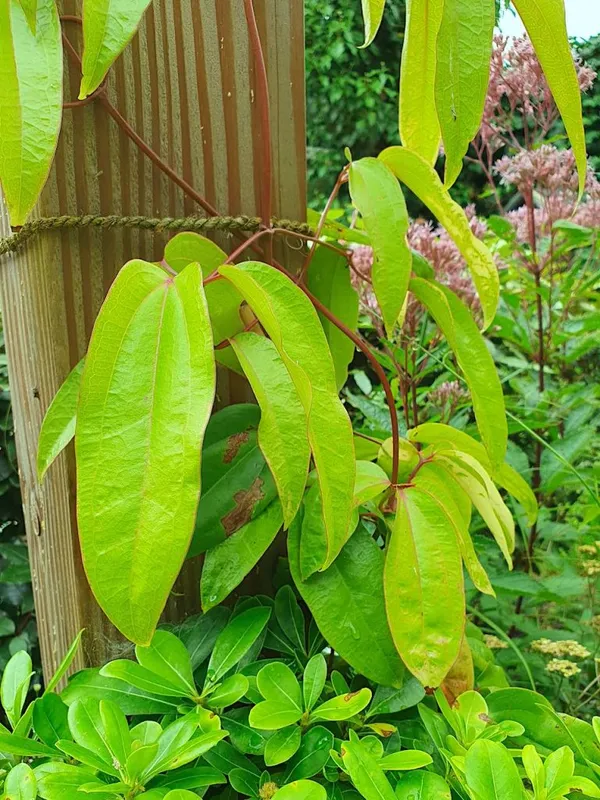
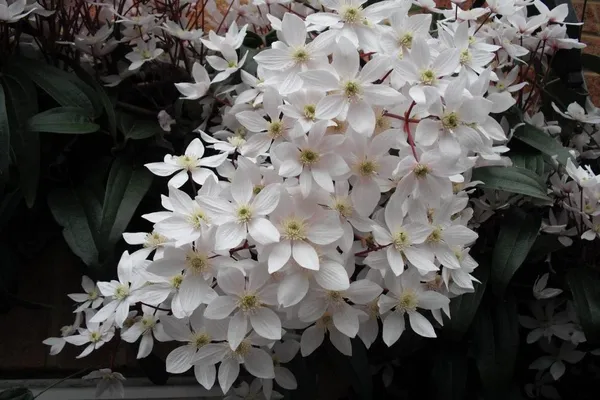
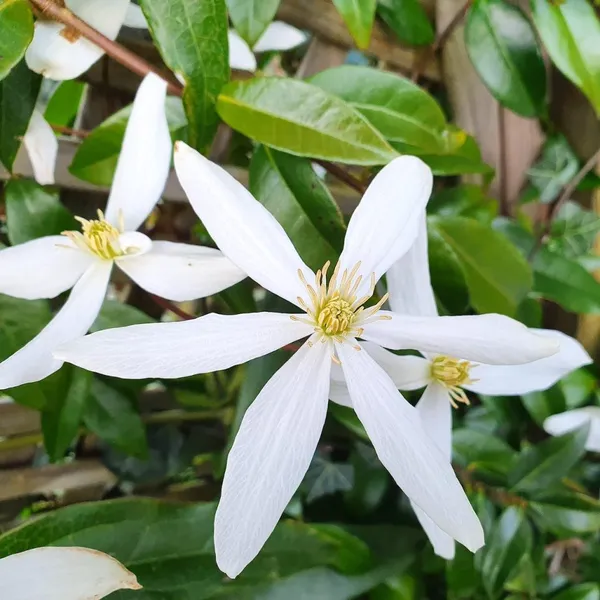
Another evergreen climbing plant for shade is Clematis armandii. Clematis armandii is a beautiful clematis that stays green even in winter. However, it does require a somewhat sheltered location and well-drained soil. In early spring, Clematis armandii blooms with large, star-shaped white flowers that also have a lovely fragrance. In the shade, however, flowering may be less abundant. The foliage of Clematis armandii is elongated and glossy dark green in color.
There are several Clematis armandii cultivars, including Clematis armandii ‘Snowdrift’ (large white flowers) and ‘Apple Blossom’ (white-pink flowers).
Evergreen honeysuckle (Lonicera henryi)
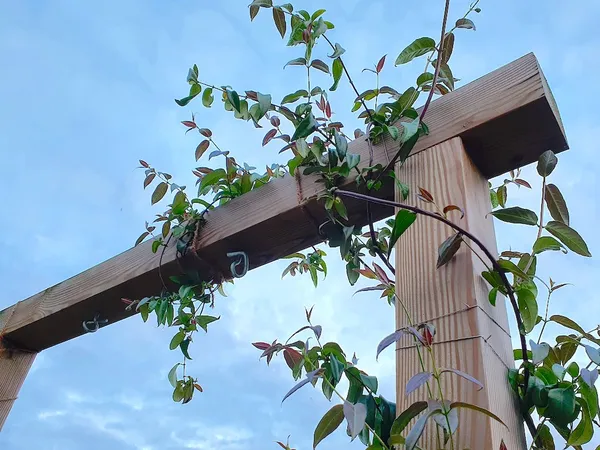
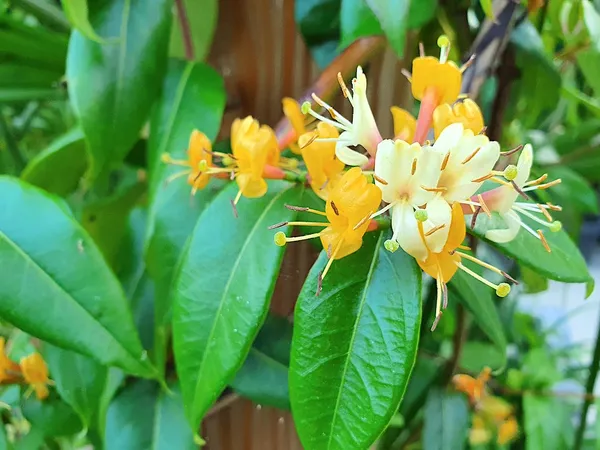
There is also an evergreen honeysuckle: Lonicera henryi. This evergreen clematis has somewhat narrower and smaller leaves and blooms in the spring with small yellow-pink flowers. After flowering, it produces blue berries. Lonicera henryi also prefers a somewhat sheltered location and well-drained soil.
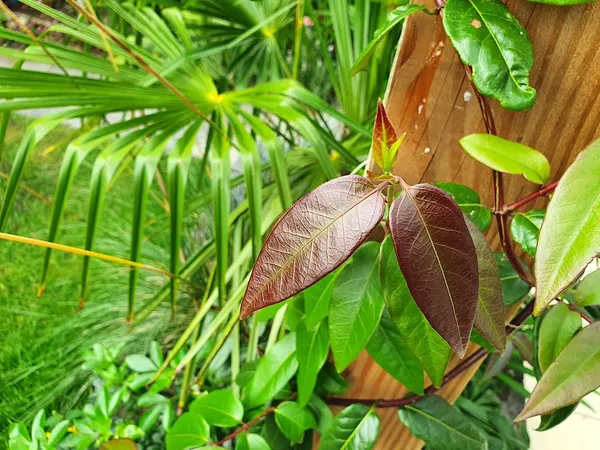
Lonicera henryi ‘Copper Beauty’ has leaves that turn bronze and yellow-white flowers. Unlike deciduous honeysuckle varieties, its flowers are not fragrant.
Star jasmine or Tuscan jasmine (Trachelospermum)
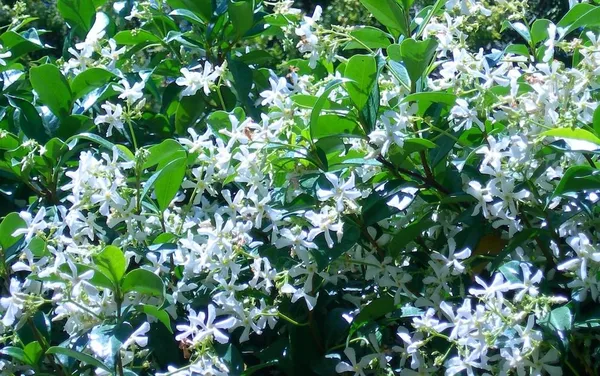
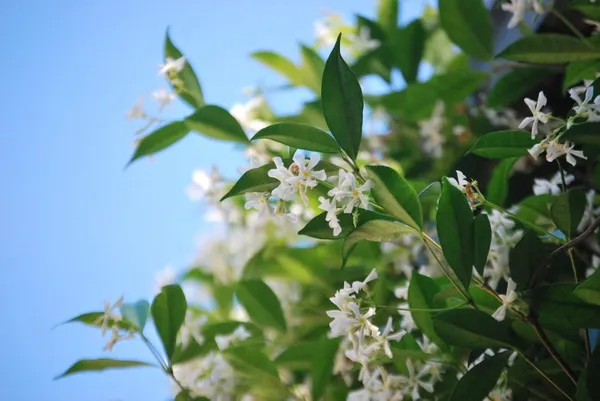
In addition to the evergreen climbing plants for shade mentioned above, you might also consider star jasmine. Star jasmine, or Tuscan jasmine (Trachelospermum jasminoides), is a very beautiful evergreen climbing plant. However, this climber prefers more sun, especially to bloom. If you’re not interested in the flowers but rather in the evergreen foliage, then star jasmine could be a good choice, provided you give it a sheltered spot and well-draining soil. If you’re lucky, you might still get to enjoy its beautiful (small) star-shaped flowers from time to time—they have a wonderful fragrance.
In addition to the well-known white star jasmine (Trachelospermum jasminoides), there are also yellow star jasmine and pink star jasmine. These are cultivars of Trachelospermum asiaticum. Unlike the well-known Tuscan jasmine, these varieties are prone to root rot, and their fragrance is slightly less intense.
Firethorn (Pyracantha)
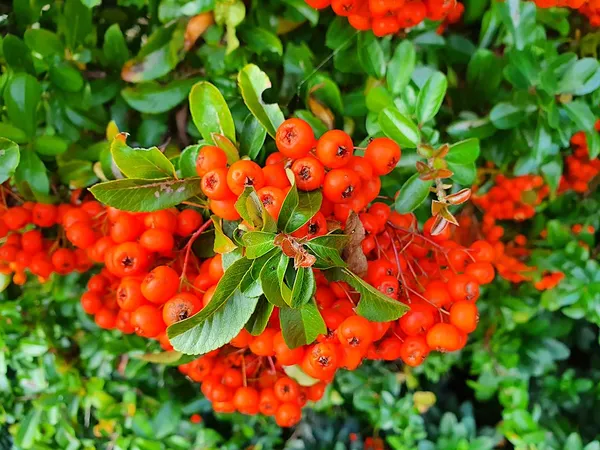
Firethorn isn’t actually a true climbing plant, but rather an espalier plant. Still, firethorn is very well suited for growing against a wall or fence. It is a beautiful, densely branched shrub with small leaves and an attractive evergreen appearance. In the spring, the plant is covered with white flowers, and in the fall, it produces its characteristic orange, red, or yellow berries, depending on the cultivar chosen. The only downside to firethorn is pruning: always wear gloves to prevent minor cuts!
More evergreen espalier trees for shade
In addition to firethorn, there are other evergreen espalier trees and plants that are suitable for shady locations:
- American holly (Ilex aquifolium ‘J.C. van Tol’)
- Beech (Fagus sylvatica; deciduous rather than evergreen)
- Photinia (Photinia fraseri)
- Cardinal's Hat (Euonymus japonicus)
- Cherry Laurel (Prunus laurocerasus ‘Caucasica’)
- Portuguese laurel (Prunus lusitanica)
- Yew (Taxus baccata)