
Which climbing plants are suitable for a narrow hedge?
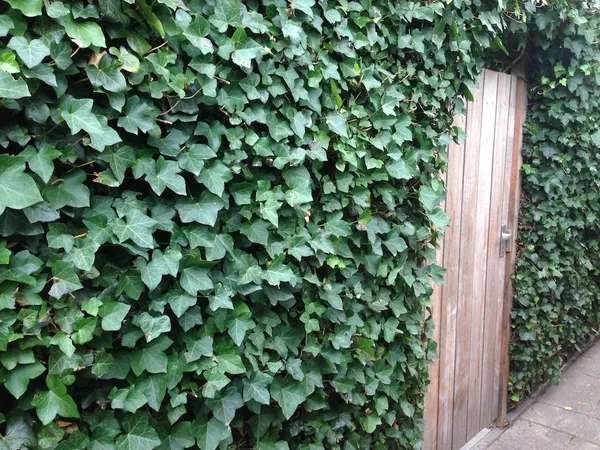
Do you only have a narrow strip of plants or a border between your yard and your neighbor's?
But do you still want a dense hedge (quickly)?
Plant a hedge of climbing plants!
These days, you see ready-made hedges everywhere, used as property boundaries—made of ivy or firethorn, for example. They’re ideal for quick results and immediate privacy. However, they can be quite pricey, especially if you need a few more meters. That’s why it’s also a great idea to create your own hedge using climbing plants.
A hedge of evergreen climbing plants It takes up very little space, and with the right variety, it becomes beautifully full.
For almost all climbing plants, you’ll need a sturdy trellis, wire mesh fence, or steel wires for the plants to grow up against. It’s also a good idea to plant them a little closer together than you normally would. After all, you want to form a dense hedge quickly.
Which climbing plants are suitable for a narrow but dense hedge?
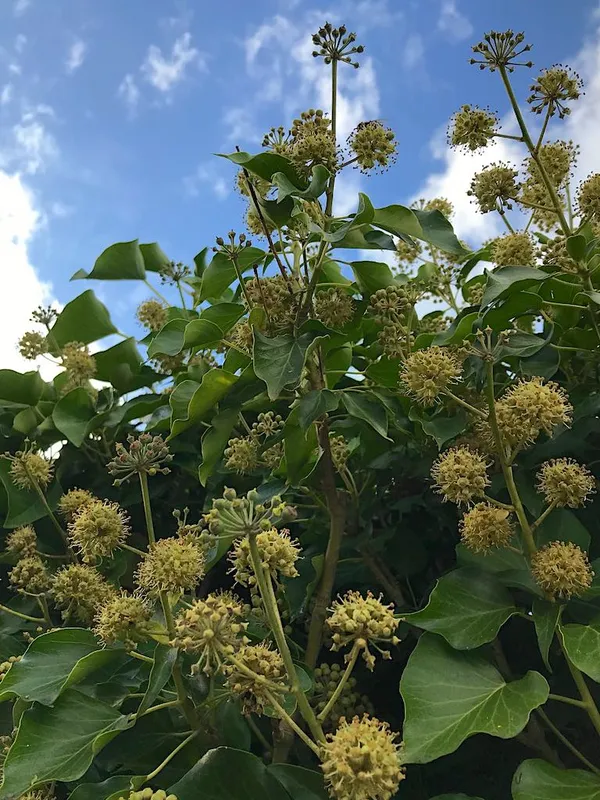
Ivy (Hedera)
The most popular choice for a dense hedge is ivy. It’s also a good option if you don’t want to spend too much, since you can buy fairly young plants. Even then, you’ll still have a beautiful hedge within 1–2 years. Not only does ivy grow very quickly (once it’s established), but it also thrives in most locations. So it works well in full sun or deep shade.
The downside of ivy is… that it grows so fast!
In other words, you'll need to prune it regularly! Also, keep a close eye on the shoots just above and just below the ground to prevent them from spreading to places where you'd rather not have Hedera.
The most commonly used species are Hedera helix and Hedera hibernica. Although you can also choose attractive cultivars with beautiful leaf colors, they often grow much more slowly.
Here's a great tip: combine Hedera with other (flowering) climbing plants, such as Clematis. That way, you'll have a beautiful, full, and dense hedge, but you'll still have flowers in your garden.
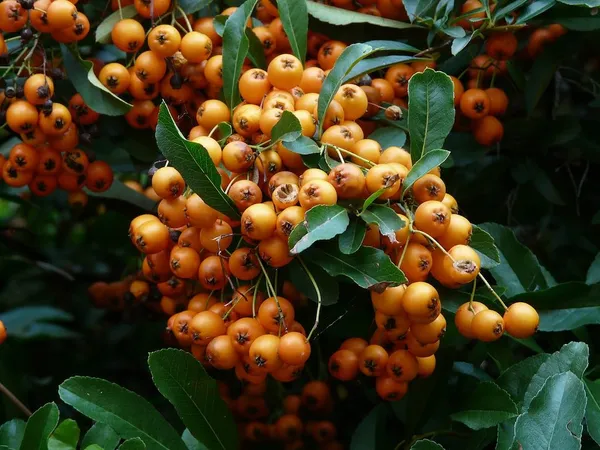
Firethorn (Pyracantha)
You can create a beautiful, dense hedge with firethorn. This plant doesn’t need a trellis, but some support can help it in the first few years. Over time, a beautiful, full hedge will develop that is still narrow—or can be easily kept narrow. Be sure to wear gloves while pruning, or you’ll quickly end up covered in scratches.
Firethorn is an easy-to-grow plant that thrives in many different locations (including shade). It doesn't grow very quickly.
You can enjoy firethorn throughout the year, because its beautiful white blossoms are followed in the fall by many striking red, orange, or yellow berries. Birds love them!
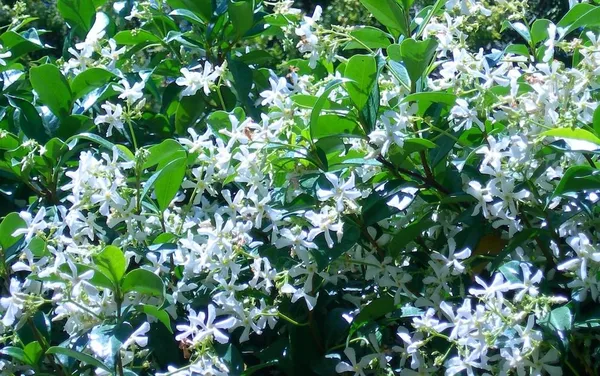
Tuscan jasmine or star jasmine (Trachelospermum jasminoides)
Tuscan jasmine is a very beautiful climbing plant that has become incredibly popular in recent years. Not only does this jasmine produce countless tiny star-shaped flowers, but the white blooms also smell absolutely wonderful! Once established, star jasmine can grow quite quickly, but it takes a little longer to form a dense hedge. Pruning isn’t necessary until the plant is more mature. By the way, when you prune it (or if you bruise the leaves), a white, sticky sap is released.
Although Tuscan jasmine is increasingly being used as a narrow hedge plant, this isn't a good idea everywhere. Tuscan jasmine is not fully hardy.
In open areas, Tuscan jasmine is much less resistant to frost. If there’s a week of severe frost, you’ll see that the Star jasmine develops brown leaves. Usually, the plants will sprout again (if there's still some green left), but it takes quite a while (sometimes years) before a nice, dense hedge forms again.
A sheltered spot is best for this hedge. For example, you could add a reed mat to the wire mesh fence, or you might prefer to choose a spot next to a (south-facing) wall.
Tuscan jasmine can tolerate drought fairly well, but only once it has become established. That, too, is something many enthusiastic gardeners sometimes forget.
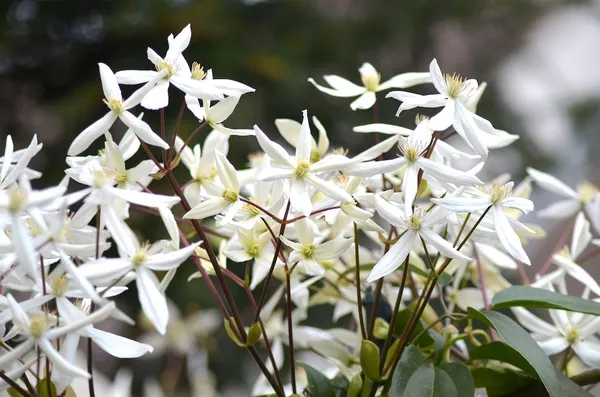
Evergreen clematis (Clematis armandii)
Clematis armandii is another beautiful climbing plant that is often used in narrow hedges. Its large, graceful leaves can form a lovely hedge, and as a bonus, it produces beautiful white flowers. This climbing plant often produces long runners. However, it takes several years for the hedge to become nice and full and dense.
For Clematis armandii (and cultivars such as Apple Blossom and Snowdrift), the same applies as for Tuscan jasmine: an unprotected location is not ideal. A week or more of hard frost is guaranteed to cause plant loss.
Passionflower (Passiflora caerulea)
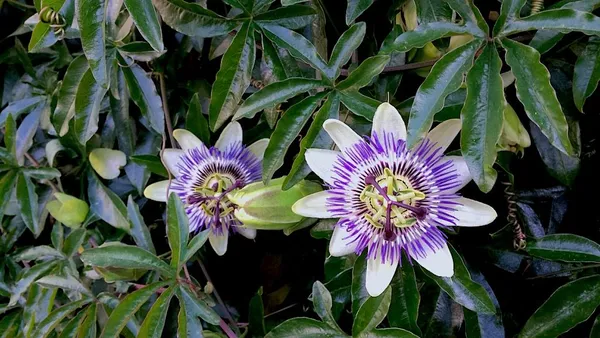
Passiflora is a plant with graceful, palmate leaves and exotic-looking flowers. It sometimes produces bright orange fruits. It really is a beautiful and unique climbing plant.
Passiflora is also being used more and more often as an evergreen climbing plant for narrow hedges. Perhaps this is because winters seem to be getting milder in recent years. Still, you have to be very careful, because the Most Passiflora species are not very hardy. It doesn't even have to be very cold for parts of the plant to die off. As a climbing plant, Passiflora caerulea can easily survive most winters, but because large parts of the above-ground growth die back—or, in severe winters, the plant may even disappear entirely above ground—it is not the best choice for a narrow hedge.
However, as soon as spring begins, the plants’ vigorous growth means that the chain-link fence will be quite overgrown again by this summer.
Would you like to create a narrow hedge using climbing plants? 5 Tips
- Then choose the right type and Take the location into account in your yard. No one wants to see their beautiful hedge turn into a wall of brown, dead leaves—or end up with nothing but bare stems.
- Make sure you have a sturdy structure for the climbing plants to grow on. Consider a trellis, a rack, a wire mesh fence, or steel wires. Place sturdy posts every few meters to anchor the entire structure.
- Plant the climbing plants closer together than you normally would. Depending on the species and size you buy, aim for about 3–5 plants per meter. This way, you’ll have a dense hedge sooner, with Less visibility and more privacy in your own yard.
- Keep in mind that planting them closer together does require more maintenance. The plants will need water more frequently and, over time, will also need fertilizer sooner. This is even more true in the case of a narrow strip of plants or narrow flower bed.
- Young climbing plants are often very delicate. Plant them carefully and take good care of them. It may take a while for the plants to take root. It may help to choose slightly larger plants. These are already a bit less delicate.