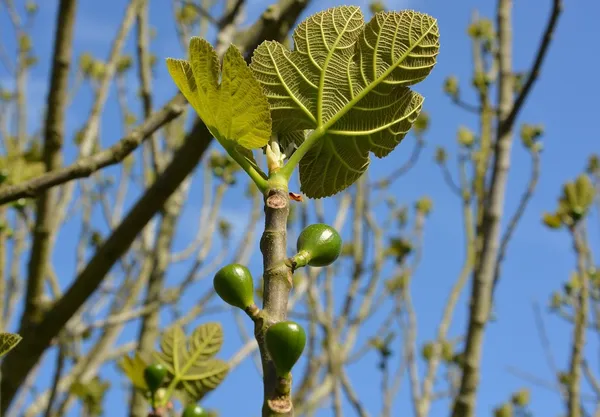
When should you prune a fig tree? And how?
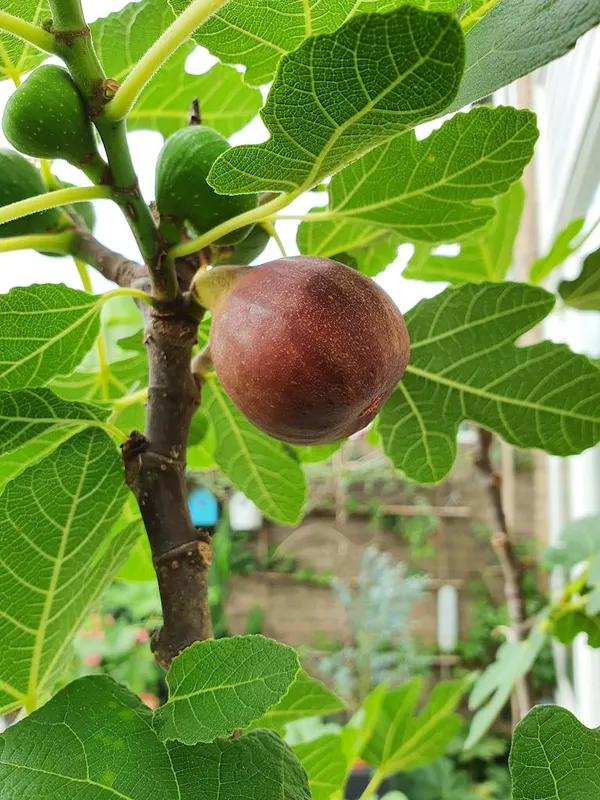
A fig tree is a beautiful plant for a sunny garden. Its lovely, large, uniquely shaped leaves, its light-gray trunk and older branches, and, of course, its delicious figs make this one of our favorite plants in our garden.
A fig tree can be grown as a shrub, a small or large tree, or as an espalier. It is important to provide a sunny, warm, and sheltered location, as well as well-drained soil. A fig tree grows fairly quickly, especially when planted in the ground. However, fig trees respond well to pruning.
Not all fig varieties are very hardy, or produce ripe fruit during our summers. Check out our List of fig varieties that produce ripe figs in our country.
When should you prune a fig tree?
The best time to prune a fig tree is when it is dormant (and the leaves have fallen). You can prune the fig tree during the winter months, from November or December through February.
If you want to remove a branch during the growing season, that’s no problem either. However, it’s best not to prune a fig tree in the spring. Fig trees can bleed heavily at that time, making it harder for the pruning wound to heal.
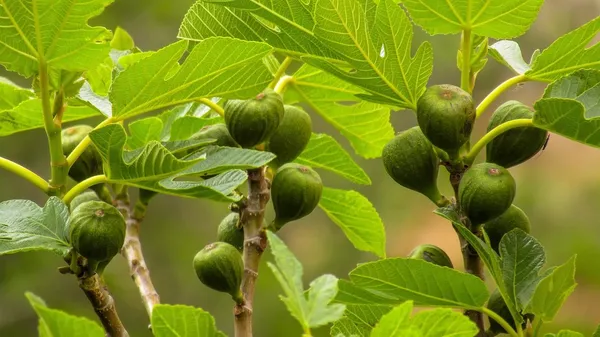
How do you prune a fig tree?
Figs can be grown as freestanding shrubs or small trees, or trained against a warm wall (or fence). Figs are planted both for their ornamental value and for their fruit.
When pruning fig trees, they often release a white sap. This can cause skin irritation. You may want to wear gloves.
When pruning a fig tree, remove crossing branches and any diseased or dead wood. Create a nice, open canopy so that the fruit on all branches receives enough light and warmth and can ripen properly. Prune away any intermediate branches that grow very close to other branches. Also prune away any inward-growing branches. This will help you achieve a nice crown (or espalier shape). It’s also best to prune off any new shoots growing from the root or just above the ground.
With older trees, you’ll often see branches growing from the trunk that cross each other or get in the way. In that case, prune away the branches that aren’t growing straight up or outward.
A fig tree trained on a trellis
A fig tree trained on a trellis is ideal for maximizing yield, even in a very small or narrow space. A south- or southwest-facing wall is preferred, so that as much heat as possible is transferred to the figs to help them ripen.
If you’ve planted your fig tree as an espalier, try to create a nice spreading or fan-shaped form. This ensures that all the branches get enough light and benefit fully from the warmth of the wall behind them. This will certainly boost the yield. Even with a fig tree trained as an espalier, any intermediate branches that are too close to the main branches should be pruned away. New shoots and branches that grow outside the espalier shape or grow forward are also removed. This way, you can grow a beautiful fig tree even in a very small or narrow spot in the garden and still enjoy plenty of figs!
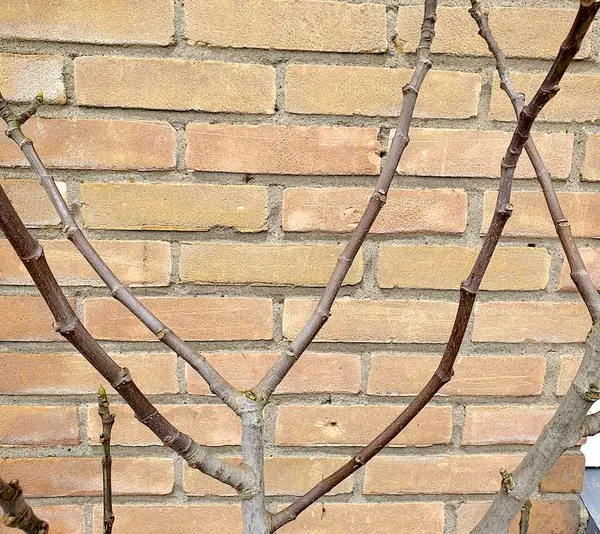
A fig tree trained as an espalier produces many figs in a small space. Increasing the distance between the branches can boost the yield.
Is it easy to propagate figs from cuttings?
Pruned branches are perfect for preparing winter shelters. Cut them into cuttings about 20 cm long and let them take root at their own pace. This process doesn't happen very quickly with figs, by the way, and not all cuttings will take root successfully. Still, this way we have new fig plants to give away every year.
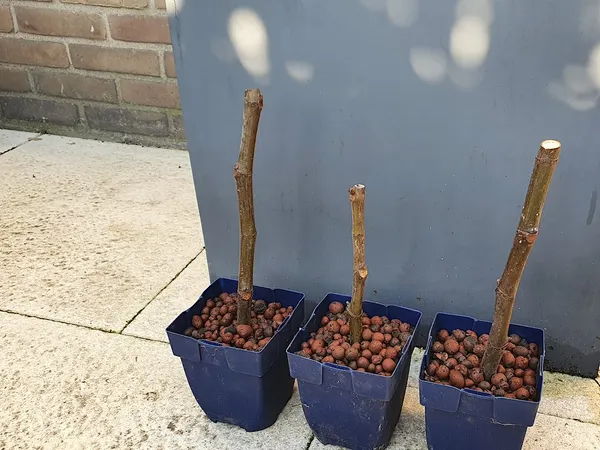
Propagating figs from cuttings is really easy!
Should you prune unripe figs in the fall?
After the first (or sometimes second) harvest, new figs often grow again around fall. Because temperatures drop and there is less sunlight, these figs often won’t ripen. In that case, it’s best to prune them off so that energy isn’t wasted unnecessarily. This way, all the energy goes into the last bit of growth this year and into next year’s growth and fruit. If you do leave these figs on the tree, they will rot and fall off on their own over the winter. Animals and birds will certainly appreciate them. See also our Garden Questions blog: Do figs still ripen in October or November?
Please note: You should leave the very small figs on the plant, as these are next year's fruit. They will remain on the plant all winter and start growing again in the spring.