
When should you prune a climbing rose? And how do you prune climbing roses?
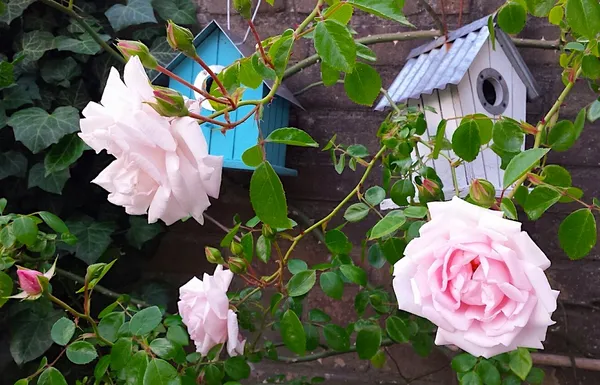
Climbing roses are roses that are trained to grow along a wall or fence, for example. Strictly speaking, they are not true climbing plants, because they depend on being trained. In the past, climbing roses were therefore often called espalier roses.
Pruning climbing roses is different from pruning shrub roses.
Not all climbing roses are pruned the same way.
In English, the difference becomes clear by categorizing climbing roses into “climbing roses” and “rambling roses.” Climbing roses have sturdier shoots and produce longer or repeat blooms. Rambler roses grow vigorously and quickly, with weaker shoots, and bloom only once (though spectacularly!) for a short period.
When should you prune a climbing rose? And how do you prune climbing roses?
In this article, we explain how to prune a climbing rose, when it's best to do so, and why pruning is necessary.
Are you still looking for a nice climbing rose with a long blooming season and a wonderful fragrance? Then be sure to check out our own The Search for the Best Climbing Rose.
Why do you prune a climbing rose?
Climbing roses encourage the growth of new, strong shoots and prevent a lot of tangled, weak growth with few blooms.
When should you prune climbing roses?
Prune climbing roses when they are dormant. The best time to prune a climbing rose is from December through March.
You can also prune in the fall. This prevents the rose from being buffeted by the wind when the weather turns worse. The downside is that you often end up cutting off the last blooms or newly formed rose hips.
Unlike other climbing roses, you should prune a rambler rose immediately after it blooms.
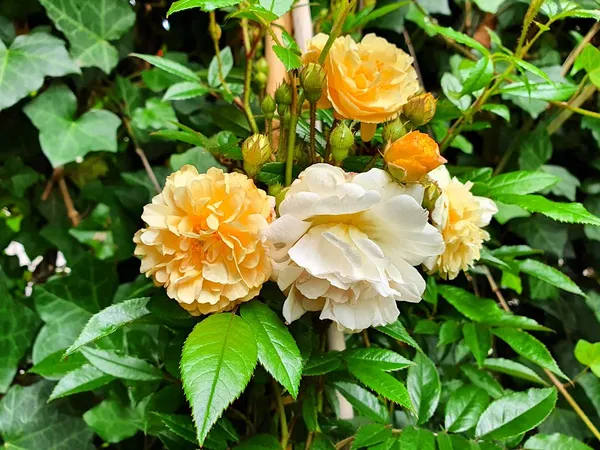
How do you prune a climbing rose?
You can prune rambler roses back severely every year. They will quickly sprout new growth and bloom beautifully again next summer.
With climbing roses, you really only prune the side shoots and keep the trellis framework intact. Remove any new shoots that grow between the rungs of your trellis so that there is enough space between the layers for the rose to grow properly and bloom profusely. If a branch extends beyond your trellis, wall, or fence, or becomes too long, prune it back as well.
Prune all shoots back to about 3–4 buds (about 15 cm) from the main branch (also known as the scaffold branch). Prune just above an outward-facing bud. This will also determine the direction of growth for the new shoot. Avoid inward-facing growth.
Also prune away thin twigs, dead ends, and any wild shoots (shoots that grow from below the grafting point) completely.
If one of the main branches at the base is producing fewer or almost no side shoots and is becoming very woody, it’s time to prune it and rejuvenate the rose bush. Prune the main branch all the way back to just above the ground. Use a sturdy pruning shears or pruning saw for this. Then select a new shoot growing from the ground to eventually replace it.
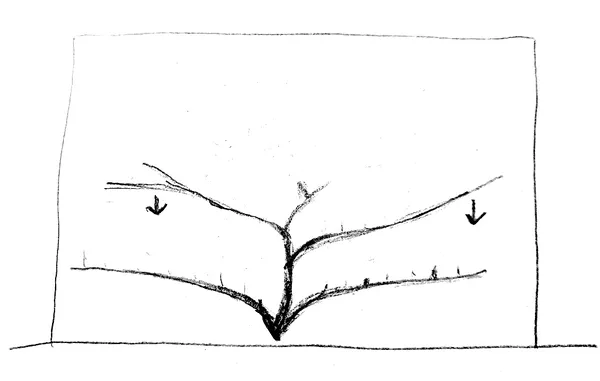
A freshly pruned climbing rose should look something like this. Prune it back to about 10–15 cm from the main branches.
Training a Young Climbing Rose
To train a young rose along a wall or fence, a climbing rose needs a sturdy support structure. You can use bamboo poles, a trellis, a lattice, or a fence, or you can stretch metal wires.
To create a beautiful framework, bend a side shoot as horizontally as possible (but carefully) every 20–40 cm. Do this on both sides of the rose. This will then become one of the main branches or framework branches of your climbing rose. To do this, select attractive and sturdy shoots, just below the horizontal branch you want to fill in. The more horizontal the main branch, the more (upright) side shoots will form. It is precisely these upright (side) shoots that bear the flowers.
Don't forget to tie up new shoots so they continue to grow in the desired direction and shape.
As the climbing rose grows older, you can keep adding new layers, so that eventually the entire wall will be covered by the rose.
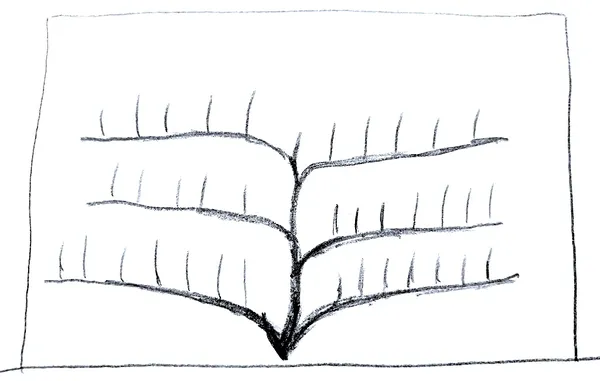
Try to make the main branch as horizontal as possible each time.
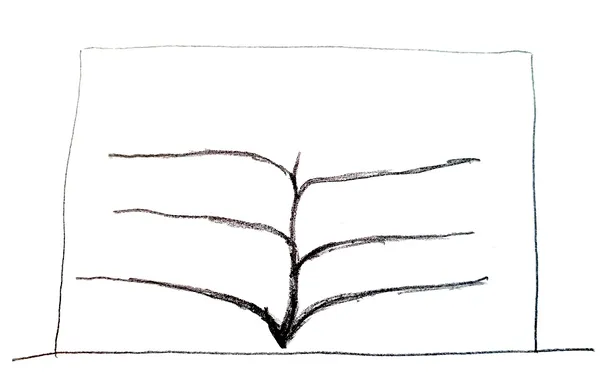
The ideal shape of a mature climbing rose.
Before we forget:
Pruning Roses Of course, you do that with gloves on!
You won't be the first person to cut yourself because you wanted to quickly prune the rose bush in between other tasks…