
When and how can you divide and transplant Sedum?
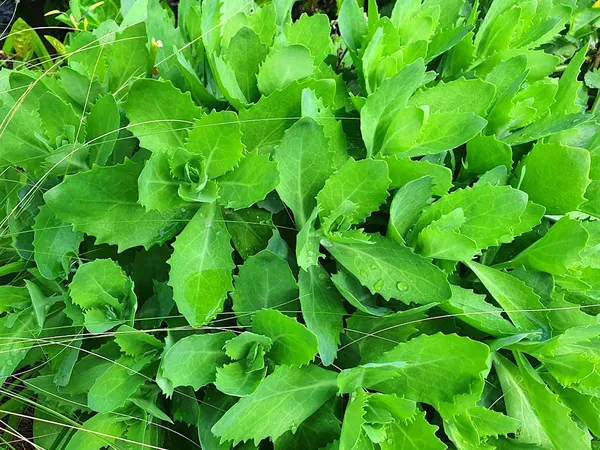
Sedum is a very easy-to-grow (and beautiful) plant for a sunny garden.
You'll often have sturdy plants within just two years. And you don't really have to do anything at all!
Snails stay away from them; they can withstand drought quite well, and most Sedum species are not prone to disease.
You can enjoy Sedum for a very long time—from the moment the first rosettes appear in early spring, through the development of the foliage, to the formation of the sometimes enormous, spherical plants. The small flower buds that form afterward could easily be mistaken for the actual bloom. Once the buds open, the true color of the variety becomes visible. After the long flowering period, you can continue to enjoy its beautiful winter silhouette until the following spring.
Sedum usually grows fairly quickly and can therefore become quite large perennials. In a small border, you sometimes have very little space left for other plants.
Has your sedum gotten really big, too? Then it's time to divide (split) your sedum!
How soon can you divide sedum?
If your Sedum has taken root well in your garden and gets enough sun, it will soon show vigorous growth. To keep Sedum under control and suitable for smaller borders, it’s a good idea to divide the plant every 2–3 years. That’s no problem at all, of course, because it gives you free new plants for your garden—or nice ones to give away.
When can you divide and transplant Sedum?
The best time to divide Sedum is in early spring. When the new growth points or rosettes become visible and temperatures start to rise a bit, it's a good time to divide your Sedum.
Although you can also divide the plant later in the spring or even in the fall, this is less than ideal. By then, the plant has already grown quite large, making it much harder to divide the plants properly. And in the fall, it’s a shame to miss the blooms, of course!
What's the best way to divide Sedum?
Dig the sedum out of your border, or remove it from the pot, and place the root ball on a flat, sturdy surface. Depending on the size of the plant or clump, decide whether you want to divide it into one or more plants.
Use a sharp spade to cut the root ball and divide it. A serrated (bread) knife also works well, or you can simply tear smaller clumps apart.
It's best to remove the central part of the plant. Over time, many perennials tend to become increasingly leggy in the center.
Replant some of the sedum back where you took it from, and find new spots for the divided sedum plants.
After planting, water thoroughly once (yes, even with Sedum). If you don't have a suitable spot in your garden right away, you can also pot the Sedum.