
What kinds of fruit can be grown in a pot or planter?
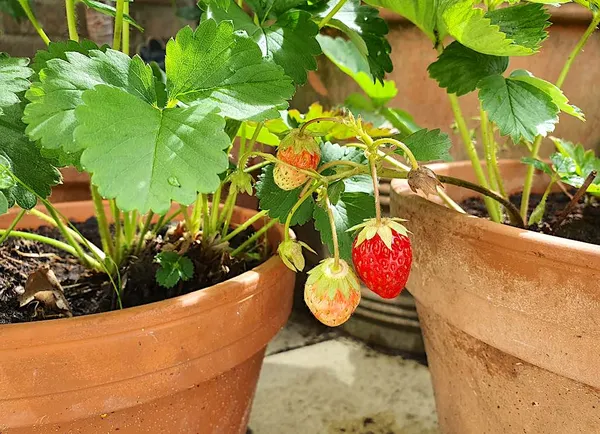
Fruit from your own garden is truly a real treat!
But maybe you don't have any space for that at all? Or maybe you only have a patio, balcony, or rooftop terrace?
Fortunately, many fruits also grow well in pots. Small fruits and mini or patio fruit trees are particularly well-suited for this.
So growing fruit on a patio, balcony, or rooftop terrace is no problem at all!
Many low-stem fruit trees can also be grown in a pot, but you'll need a fairly large pot or planter.
Fruit plants in pots usually require a little extra care. The plants dry out more quickly, and their nutrients are depleted sooner. It is therefore essential to water them generously and fertilize them in a timely manner. It’s also best to choose a pot or container that isn’t too small. The larger the pot, the easier it will be to care for the plant.
Growing fruit in pots and containers has another advantage: you aren’t limited by your soil type. If you do have a garden but, for example, heavy clay soil, you can still create the necessary conditions in a pot. That way, you can still grow delicious (but acid-loving) blueberries! You can also move the plants on days that are too hot or, conversely, very cold.
Berries in a pot
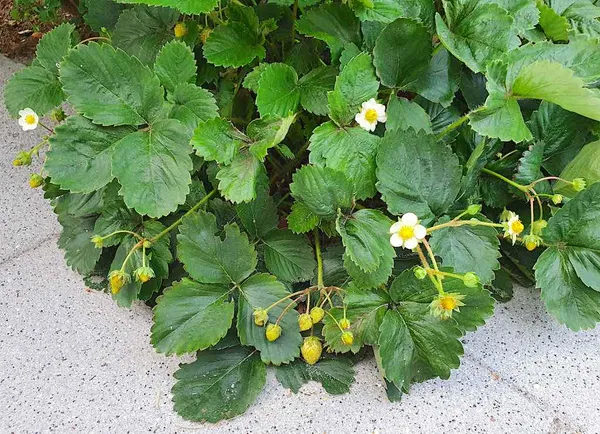
Strawberries (Fragaria)
Who hasn’t had a pot of strawberries in their garden? A strawberry from your own garden is often so much tastier than one from the supermarket. Strawberries are relatively easy to grow. If you’re really aiming for maximum and continuous yields, though, it gets a bit more difficult. Fortunately, there are also good everbearing varieties available (e.g., Favori, Furore, Ostara).
Blueberries and bilberries (Vaccinium)
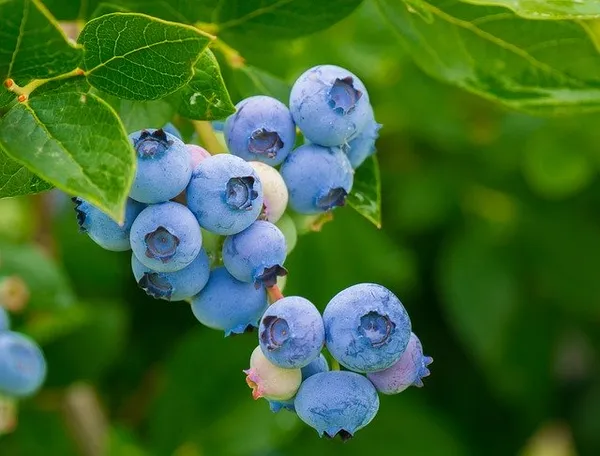
Blueberries are becoming more and more popular. They’re very healthy and also just really tasty. There are many different varieties. In Dutch, the blueberry (Vaccinium corymbosum) is sometimes called a “bosbes,” but that’s actually incorrect. The “bosbes” is a different species: Vaccinium myrtillus.
Blueberries are suitable for planting in the shade. They also need very acidic soil for good growth and yield. Even watering them with (hard) tap water can be detrimental. Because some varieties can grow very large and tall, it’s wise to keep this in mind when selecting the variety you want. Blueberries are self-pollinating. However, planting a second variety can increase the yield.
In addition to their fruit, many varieties also display beautiful fall colors. We have the North Country and Pink Lemonade varieties ourselves.
Blackberries (Rubus fruticosus)
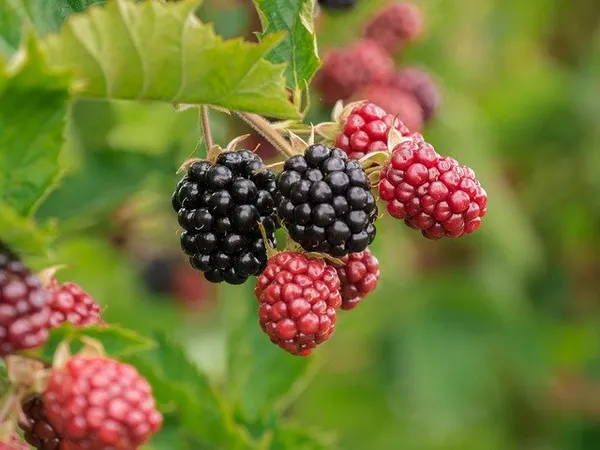
Blackberries are very easy plants to grow. You’ll have a good harvest in no time. The challenge often lies in finding a variety that stays smaller, since they can grow (and spread) enormously. The relatively new variety “Reuben” is said to be very well-suited for growing in a pot. The “Thornless Evergreen” is also a slower-growing variety and may be a better choice.
Most blackberries have thorns. There are also Thornless blackberries available. These include, for example, the Chester Thornless, Thornless Evergreen, Triple Crown, and Black Satin.
Blackberries need support. They won't develop sturdy, upright stems on their own.
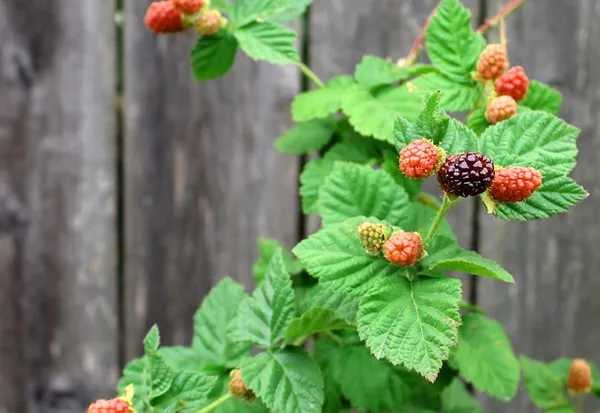
Blackberry Varieties (including Tayberry)
There are also many hybrids available between blackberries and raspberries: black-raspberries. Well-known varieties include Tayberry, Loganberry, and Boisonberry. Less well-known varieties include Youngberry, Sunberry, and Be careful with these varieties when grown in pots, as they often grow quite vigorously.
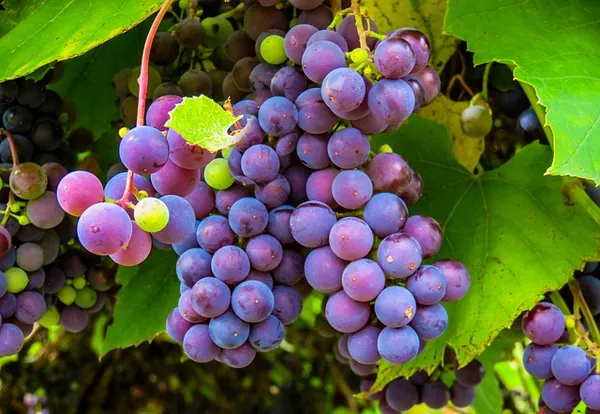
Grapes (Vitis vinifera)
White grapes, blue grapes, red grapes… There are an incredible number of grape varieties. When choosing the variety you want, consider its potential for vigorous growth, as well as its suitability for our climate, resistance to common diseases, good yield, and, of course, flavor. There are now plenty of seedless varieties available as well. There are both white seedless grapes, if red and blue seedless grapes.
Grapes need a large pot and good drainage. Their growth will also need to be trained, and suitable support must be available for the vine. For a good yield, both winter pruning and summer pruning of grapevines required.
Raspberries (Rubus idaeus)
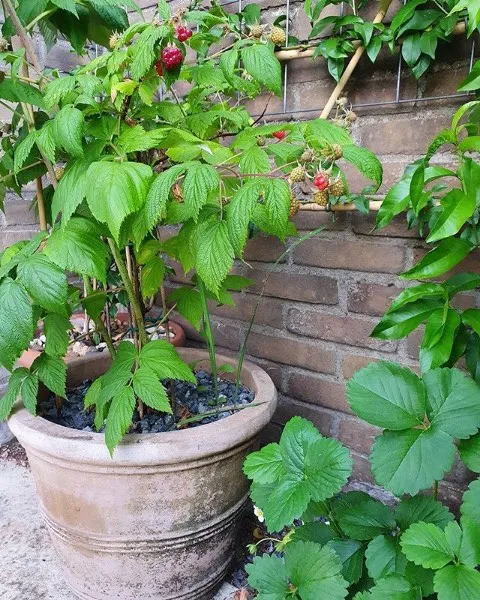
Raspberries are delicious when picked fresh from the plant and are a great way to treat yourself after a bit of work in the garden. There are many varieties available, and even different colors (including black and yellow, in addition to red).
Raspberries prefer a fairly sunny spot. There are two types: summer raspberries and fall raspberries. In addition to the obvious difference in when they ripen, there’s also a major difference in how they’re pruned. Summer raspberries grow on old wood (last year’s growth). Fall raspberries, on the other hand, grow on new wood and can therefore be pruned all the way back to the ground after harvest. This makes them ideal for beginners who want to grow raspberries in their own garden.
Many raspberry varieties are also vigorous growers. So keep this in mind when selecting a variety. Less vigorous growers are better suited for growing in pots. There are also a few everbearing varieties available, which are ideal for pots. We have the Polka variety in a pot ourselves.
Blue Honeysuckle (Lonicera caerulea)
The (blue) honeyberry looks a bit like a blueberry, but you can harvest it earlier—as early as mid-May. Its flavor is also somewhat similar to that of a blueberry or bilberry. However, it’s important to select the right varieties, because not all cultivars are equally flavorful. Most varieties don’t grow too large, making them well-suited for growing in a pot.
Honeyberries thrive in a sunny spot. Once the berries have changed color, it’s best to let them hang on the plant for a while longer (about a week), which will greatly improve their flavor. For a good harvest, you’ll need several plants to ensure pollination. Good varieties include Jugana and Velikan.
Japanese wineberry (Rubus phoenicolasius)
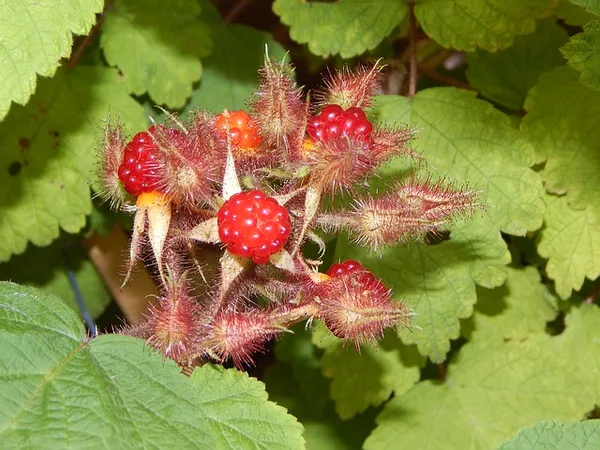
The Japanese wineberry is a plant that bears fruit and ripens well even in the shade. This shrub looks somewhat like a blackberry. You do need to be careful when picking the fruit, though, because the plant is covered with small thorns all around the berries. The berries have a fresh, sweet flavor. Many people describe them as tasty little candies.
When planted in the ground, these shrubs can grow quite large and, just like blackberries and—to a lesser extent—raspberries, spread underground via runners. Fortunately, this isn’t a problem when grown in pots, and the shrub remains much more compact. The harvest, however, will be somewhat smaller.
Jostaberries (Ribes x nidigrolaria)
The jostaberry is a hybrid of a gooseberry and a black currant. Its flavor is closer to that of a black currant than to that of a gooseberry. Unlike gooseberries, it has no thorns.
This berry bush can also grow quite large when planted in the ground, but it stays much smaller when grown in a pot. Even then, the yield is usually still sufficient.
Kiwibes (Actinidia arguta)
Growing kiwis in our country is certainly not easy. They also take up a lot of space. But the kiwi’s little brother, the kiwi berry, is much more suitable. The kiwi berry requires less space, and the fruit ripens more easily. The plant looks quite a bit like a real kiwi (Actinidia deliciosa), but produces smaller fruits and has a smooth (edible) skin. The fruits are more about the size of a large grape.
With proper care and timely watering and fertilization, this climbing plant can also be grown in a (larger) pot.
Kiwi berries do need a climbing support, such as a pergola. It’s best to face it south so the fruit can ripen faster. Although kiwi berries grow more slowly than kiwis, regular pruning is still necessary to prevent them from getting too big.
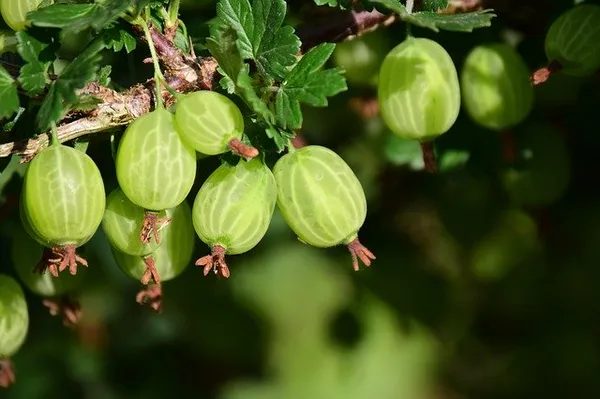
Gooseberries (Ribes uva-crispa)
Gooseberries also grow well in (partial) shade. However, they do not like to be planted in overly wet soil. Although gooseberries are not (any longer) very popular in the Netherlands, they are, for example, popular in England and Germany. As a result, there are many cultivars available. Gooseberries also come in a variety of colors.
Many varieties can grow quite large and are vigorous growers. Keep this in mind when purchasing. Some varieties that remain smaller include Hinnonmaki Gold (yellow), Josselyn (red), Remarka (red), Rokula (red), and Rochus (green).
One drawback of gooseberries is that they have a lot of thorns (or spines). There are also varieties with few thorns: Captivator and Tatjana.
Red and white currants (Ribes rubrum)
Red (and white) currants are relatively easy to grow. They produce a bountiful harvest quickly, which you can enjoy throughout the summer. However, it’s best to cover them with netting, because birds love the red berries. Apparently, the white berries are less popular with birds.
We used to eat buckets full of red berries every summer. The entire harvest came from just one bush in my parents’ garden. As kids, we always ate the berries with sugar, because they are a bit (slightly) tart. The white berries are often even a little tart.
Red currants prefer a sunny location in well-drained soil (they don’t like to stand in water). Choose a variety that isn’t very susceptible to disease and doesn’t grow too large or become overly vigorous. Well-known varieties include Jonkheer van Tets, Rovada, Red Lake, Albatros (white), Witte Parel, and Gloire de Sabons (pink).
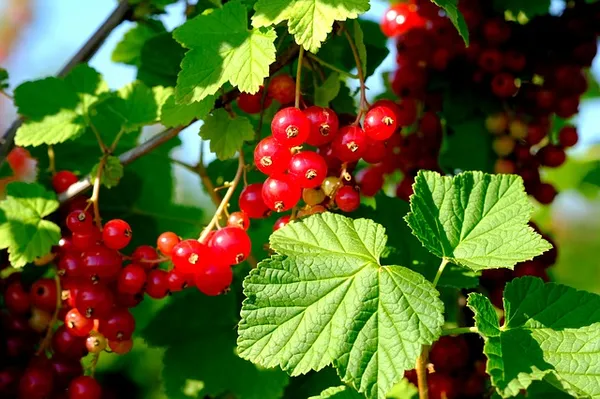
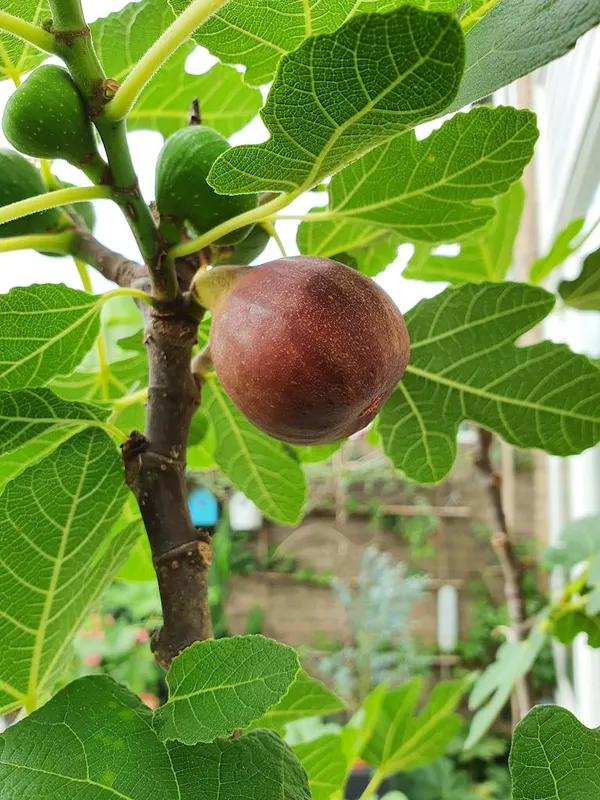
Fig (Ficus carica)
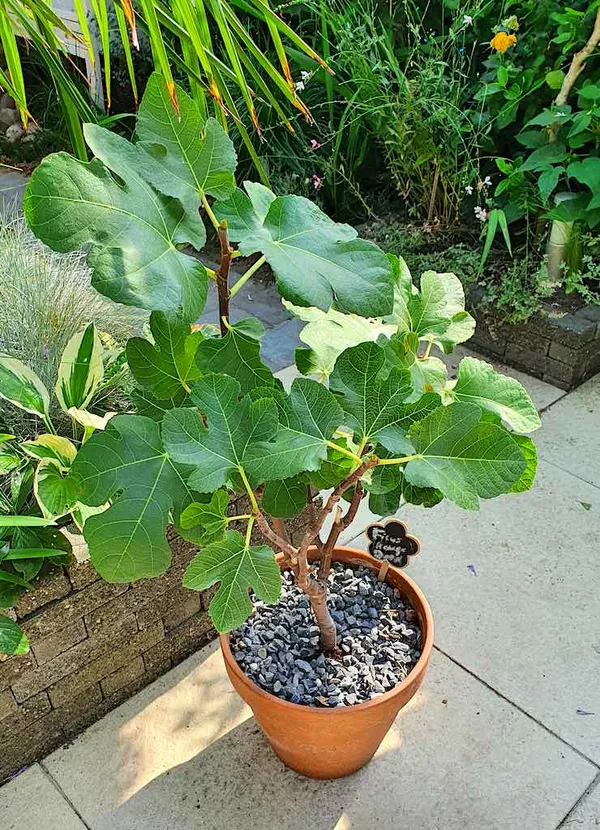
A fig tree isn’t classified as a small fruit tree, but it can be kept compact with regular pruning. In a large pot or planter, you can of course let it grow beautifully as the centerpiece of your garden! They’re lovely little trees to look at. As the trunk ages, it will develop a beautiful gray patina. The large leaves are a delight to behold, and it’s also fascinating to watch the figs ripen.
If you want to plant a fig tree in your garden, it’s important to choose the right variety. Not all figs are sufficiently hardy, and certainly not all figs ripen well in our summers. The best-known variety that thrives in our country is Ficus carica Brown Turkey.
Check out our list of suitable fig trees that ripen even in our climate.
Fig trees prefer a sunny, sheltered spot. A spot against a south-facing wall is ideal. Although fig trees planted in the ground generally require little to no extra water, those grown in pots should be watered fairly regularly. Since a fig tree can grow quite large, a spacious pot is recommended.
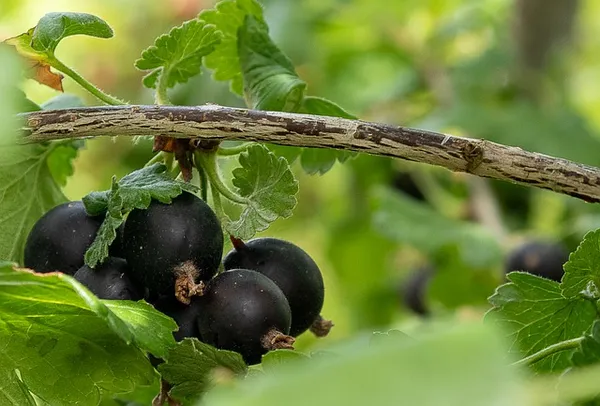
Black currants (Ribes nigrum)
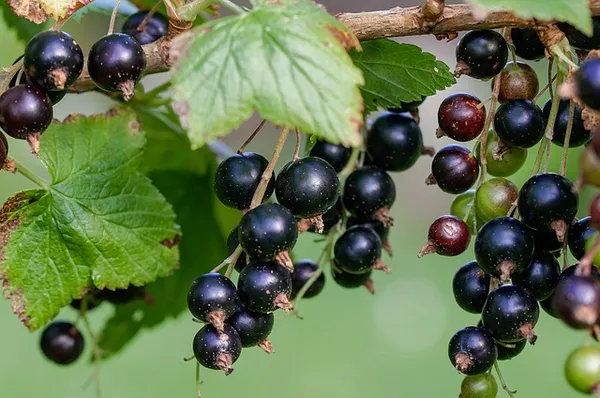
Black currants resemble red and white currants, but they are actually quite different. The taste, in particular, is completely different. It is reminiscent of cassis, but the berries do have a tart flavor. This plant is also characterized by the distinctive scent of its leaves and branches.
Many varieties can grow quite large. For a black currant in a pot, it’s best to choose a variety that’s a little less vigorous. For example, Ben Sarek. Other well-known varieties include Triton, Titiana, Ben Nevis, and Wellington.
Potted fruit trees
Many fruit trees can also be grown in pots. For example, low-stem varieties (often labeled as “shrubs” in many stores). In that case, you’ll quickly need a fairly large pot. A better choice would be the so-called mini fruit trees, patio fruit trees, or columnar fruit trees. In most cases, these are also self-pollinating varieties, so you won’t need a second plant.
There are now many varieties of mini fruit trees available.
For example, apples, pears, cherries, plums, peaches, nectarines, and apricots.
In addition to patio fruits, exotic plants can also be interesting. Of course, most varieties do require a bit more care, especially in the winter. There’s a wide variety to choose from. Just think of all the different types of citrus: lemon, lime, mandarin, orange, kumquat, grapefruit, calamondin…