
What is your favorite hydrangea?
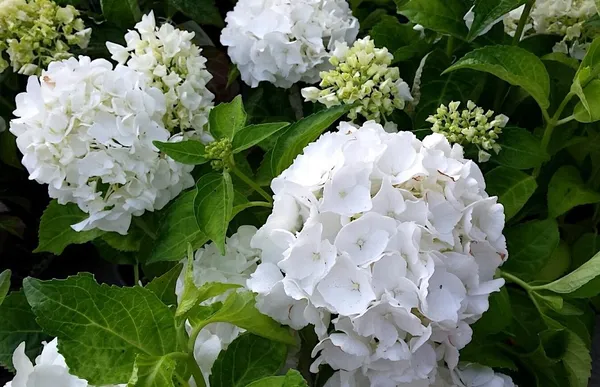
Hydrangeas are (thankfully) back in style!
For years, they were seen as old-fashioned and maybe even a little boring…
Those days are truly over! In recent years, hydrangeas have made a major comeback. You see them everywhere now, and there are an incredible number of (new) cultivars available.
Plant some hydrangeas in your garden, too, and enjoy their large flowers, long blooming season, and plenty of color!
What types of hydrangeas are there?
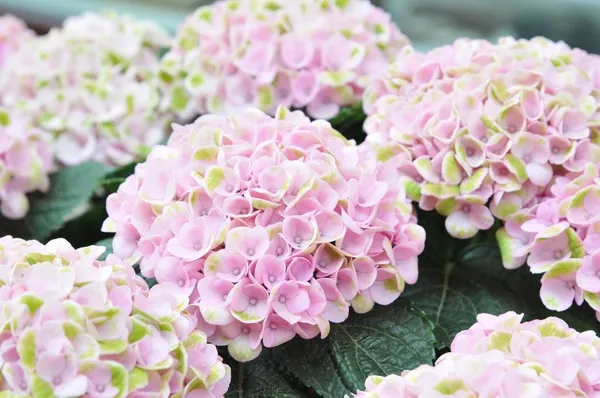
Hydrangea macrophylla (garden hydrangea)
The best-known hydrangea is the common hydrangea, or ball hydrangea, also known as Hydrangea macrophylla. There are two well-known subspecies. When people think of macrophylla, they usually think of the familiar large, spherical flowers. However, the umbrella-shaped flower heads are also becoming increasingly popular.
The farmer's hydrangea comes in pink, white, purple, and blue varieties. The flower heads do not droop because the plant develops sturdy branches. However, you need to be careful when pruning, because if you cut back too much, you’ll miss out on next year’s blooms. These hydrangeas bloom on last year’s growth.
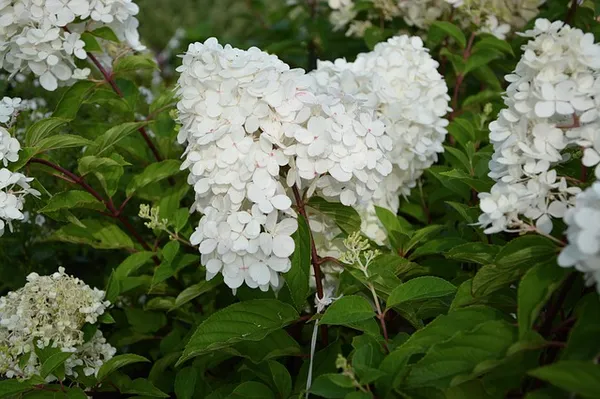
Hydrangea paniculata (panicle hydrangea)
The panicle hydrangea (Hydrangea paniculata) is also very commonly planted. This variety is also known as the sheep’s head hydrangea. Panicle hydrangeas are characterized by their large, almost triangular, panicle-shaped flower heads on sturdy, upright branches. There are various color varieties, but they all originate from white. The flowers often change color as the blooming period continues. Prune panicle hydrangeas back to about 30 cm above the ground every year. This keeps them relatively small without affecting their flowering. Panicle hydrangeas bloom on new growth.
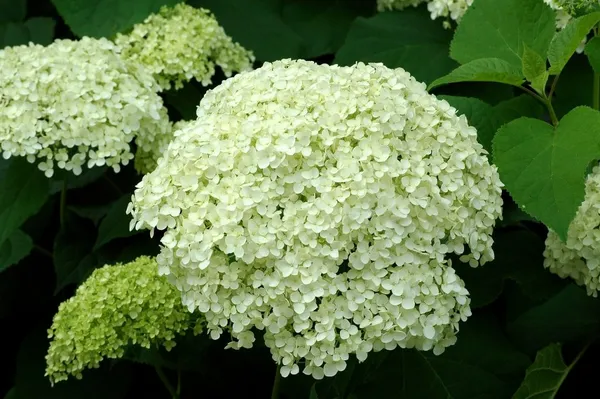
Hydrangea arborescens (including Annabelle)
Furthermore, Hydrangea arborescens is extremely popular. The Dutch name for this plant is “tree hydrangea,” but it isn’t used very often. This includes, among others, the Annabelle hydrangea. The arborescens is characterized by large flower heads, usually white. Other color varieties are now available, and several cultivars have been introduced to the market that are extra sturdy, making the large flower heads less likely to droop. The tree hydrangea can also be pruned back each year to about 30 cm above the ground.
Less Well-Known Hydrangea Varieties
Although many other species are less well known, there are many more that are truly worth checking out:
- Hydrangea aspera (velvet hydrangea)
- Hydrangea ayescha (lilac hydrangea)
- Hydrangea quercifolia (oak-leaved hydrangea)
- Hydrangea serrata (umbel hydrangea)
- Hydrangea petiolaris (climbing hydrangea)
Unique Cultivars
- Varieties with an extra-long blooming period, such as the "Forever and Ever" series.
- Flower heads that change color, such as the Magical series.
- Two-colored cultivars, such as Peppermint and Harlequin.
- Extra-rich colors, for which special “collections” have been developed.
- Low-growing varieties such as Pia, Tovelit, and Hornli.
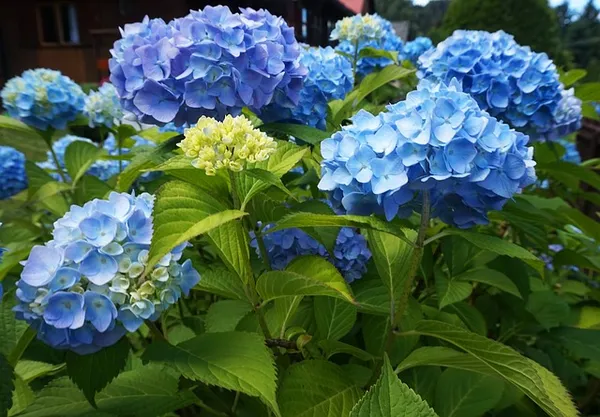
Blue? Or maybe pink?
Hydrangeas are usually pink in color. But there are also quite a few blue hydrangeas on the market—ranging from light blue to purple and even dark blue! But be careful, because these are actually pink hydrangeas. They turn blue only if the soil is acidic enough. There’s also a substance called alum that produces a true blue color. However, once its effect wears off, or if the soil is no longer acidic enough, your hydrangeas will turn back to pink.
White isn't always white
Perhaps even more popular than pink is the white hydrangea. A white hydrangea instantly adds a classic touch to your flower beds and looks stunning next to stately homes. White also fits perfectly with the trend of recent years of designing gardens primarily in shades of white (and gray).
But you also have to be careful with white hydrangeas. Many hydrangeas aren’t pure white, or don’t remain that way throughout the entire blooming period. They often change color, developing a creamy, pink, or green tint. That’s beautiful too, of course, but not necessarily white. This is especially true for panicle hydrangeas.
Ball Hydrangea vs. Panicle Hydrangea
What exactly is the difference between a farmer's hydrangea (or ball hydrangea) and a panicle hydrangea?
| Farm Hydrangea (macrophylla) | Panicle hydrangea (paniculata) |
| Spherical flower heads | Feather-shaped flower heads |
| Blooms on old wood | Blooms on new wood |
| Flowers arranged in a beautifully balanced pattern | Flowers, especially on top |
| Pink, white, purple, blue | White, cream, white-pink |
| Only in shade or partial shade | Can also be placed in a sunnier spot |
Can a hydrangea be grown in a pot or planter?
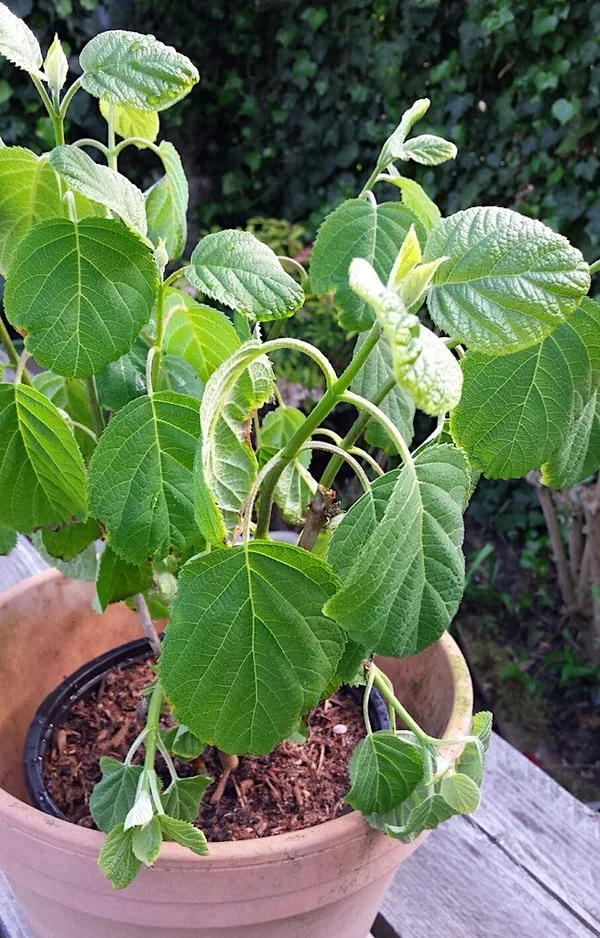
Hydrangea is wilting
You sometimes see it in home decor magazines or gardening magazines…
A beautiful, profusely blooming hydrangea in a flower pot. Of course, this is possible, but you have to keep in mind that hydrangeas, in particular, are very sensitive to a lack of water. In a pot, they’ll become dehydrated much more quickly than when planted in the ground.
If you want to grow a hydrangea in a pot, water it every day!
During a drought, you should even water several times a day!
By the way, you can quickly tell if your hydrangea isn’t getting enough water, because the plant will immediately start to wilt. If this goes on for too long, your plant will definitely suffer damage. Usually, the plant will drop its leaves during a drought, but flowering can also be significantly shortened as a result.