
Trees up to 3 meters tall for a small garden
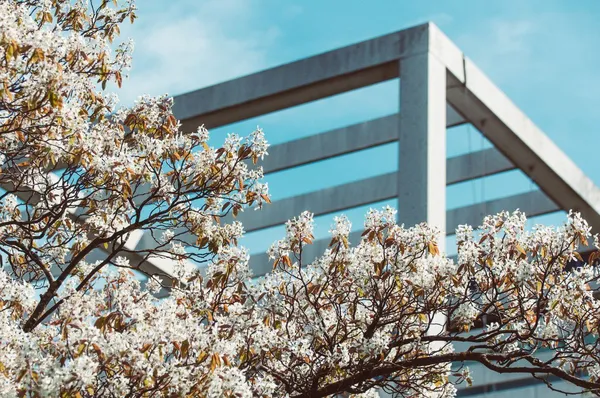
Do you think your yard is too small for a tree? It doesn't have to be that way at all. Even in a small backyard, a narrow flower bed, or on a compact patio, a tree can add a surprising amount of character. It brings height to the garden, provides greenery above eye level, and can offer something special throughout the seasons with its blooms, fall colors, or beautiful branches.
As far as we're concerned, every garden should have a tree—even a small one. And it's definitely possible.
But which tree is the right choice? A tree no taller than three meters might seem like the most logical choice, but looking only at height isn’t enough. For example, a slender four-meter-tall tree might be a better fit than a 2.5-meter-tall tree that grows much wider. The tree’s growth habit, growth rate, and how it responds to pruning also play an important role.
Are you unsure if you have enough space?
Don’t just look at the space you have on the ground. A tree also grows upward, so it can actually make a big impact in a small garden without taking up much space. A slender tree along a fence, a small multi-trunked tree in a flower bed, or a fruit tree next to the patio: there are more possibilities than you might think.
But when is a tree really suitable for a small garden? It's not just the final height that matters. The width, growth habit, growth rate, and the way a tree responds to pruning also make a difference.
When is a tree suitable for a small garden?
So a good small garden tree doesn't necessarily have to be a true dwarf. What's more important is that the tree's proportions are suited to the available space.
The growth habit is just as important as the height. For example, a narrow tree that is four meters tall may fit much better than a wide tree that is 2.5 meters tall.
The growth rate can play a role. Some trees eventually grow larger, but they grow so slowly that they remain modest in appearance for years. This is the case, for example, with Magnolia stellata Interesting.
And then, of course, there's pruning. Some trees can be pruned regularly to keep them around three meters tall. Other trees can be pruned, but it doesn't make them look any better. With still other species, pruning is hardly necessary because they naturally remain small.
Don't just look at the height
A three-meter-tall tree does not automatically require three meters of space. See also:
- the final width of the crown
- the space above the terrace
- the distance to a fence or wall
- views from home
- the available root space
That’s why, especially in a small garden, a slender tree may be a better choice than a short, wide tree.
Tree or multi-stemmed tree?
The shape in which you let a tree grow also makes a difference. In a small garden, a multi-trunked tree can appear more airy than a tree with a single thick trunk and a dense canopy. The view of the garden remains visible between the trunks and branches, making the tree seem less massive.
For some species, this multi-stemmed form is therefore an added benefit. For others, it’s mainly a matter of personal taste. You can read more about this in our article featuring the most beautiful multi-stemmed trees, in which we explain in more detail how a multi-stemmed tree differs from a shrub and a single-stemmed tree.
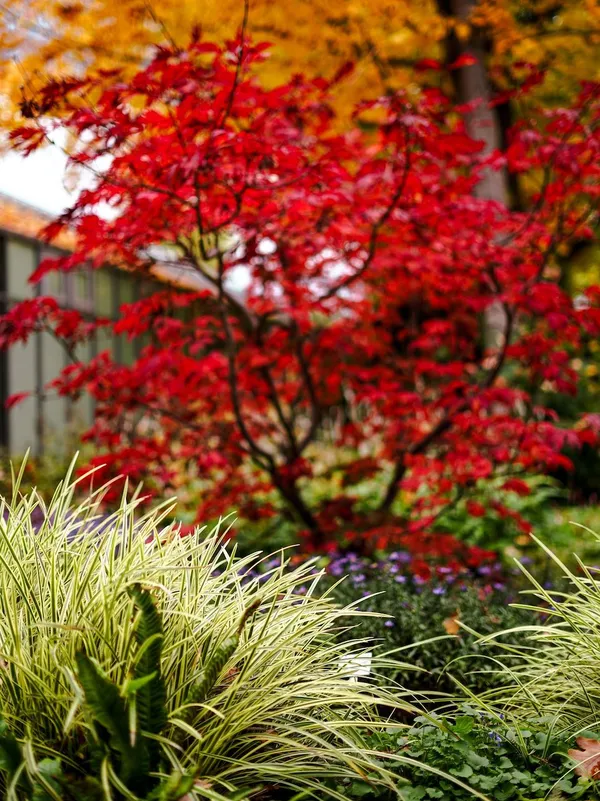
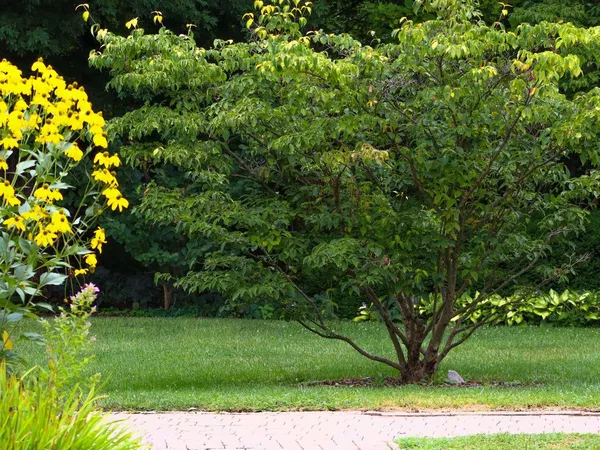
Need more space after all?
Could the tree in your yard use a little more room to grow? If so, there are plenty more options. In our article The perfect tree for a small garden Here you'll find our favorite trees, which grow to about 5 to 6 meters tall but, thanks to their growth habit, still fit well in a small garden.
9 trees up to 3 meters
Below are ten trees that are well-suited for a small garden. Some remain small by nature, while others eventually grow larger but can be kept to around three meters.
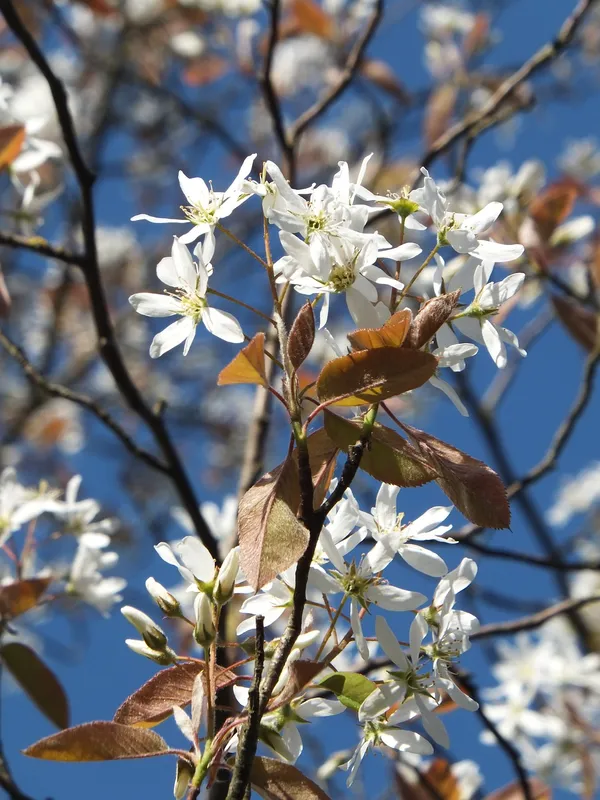
1. Currant Tree – Amelanchier “Obelisk”
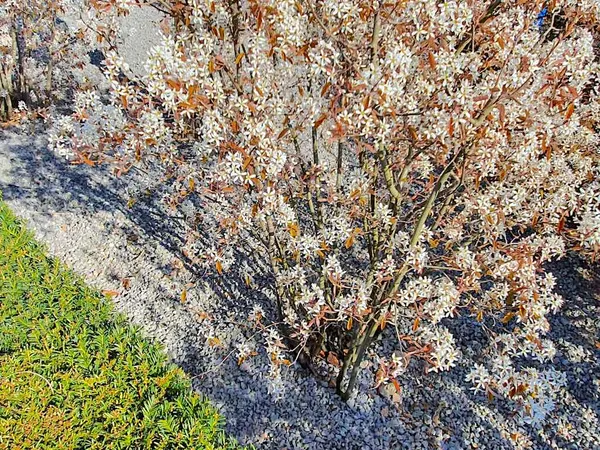
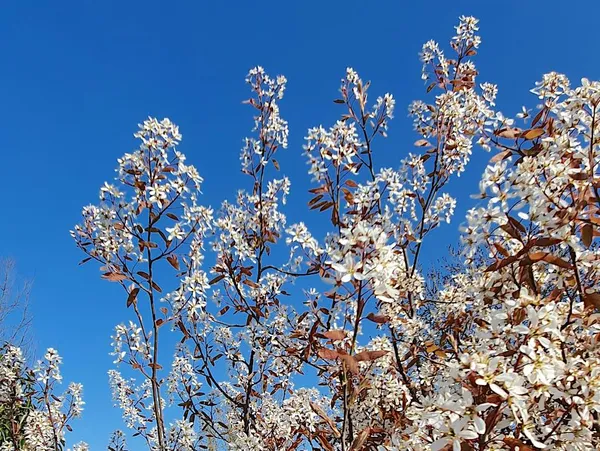
If we had to pick one tree that combines many of the qualities you look for in a small garden, it would be the currant tree. “Obelisk” It is particularly interesting because it grows much narrower than the broad, shrub-like currant trees that you also come across.
The young leaves start out bronze-colored and later turn green. In the spring, white flowers appear, followed by dark-colored berries. In the fall, the leaves turn yellow, orange, and red. Even in the winter, the delicate branching remains attractive.
“Obelisk” grows strikingly narrow and upright. The cultivar eventually reaches a height of more than three meters, but remains relatively narrow. This makes it particularly suitable for a small garden where space is limited.
If you really want to keep it around three meters tall, pruning is necessary. That’s different from whether the tree normally needs pruning: for natural growth, you can mostly let it grow on its own, but to keep it strictly at a maximum height of three meters, you’ll need to prune it regularly.
That makes “Obelisk” a great choice for a small garden after all. You get a tree that naturally has a good balance between height and width, without having to constantly prune back a wide crown.
Why is it suitable for a small garden?
Mainly because of its narrow, upright growth habit and its exceptional ornamental value throughout the year.
Features
- narrow and ascending
- blooms, berries, and fall colors
- suitable as a multi-trunk tree
Other Interesting Cultivars
“Ballerina” – upright and profusely flowering, but wider than ‘Obelisk’.
“Robin Hill” – pink flower buds and white flowers.
A. lamarckii – the well-known currant tree, which has great ornamental value but is noticeably wider and bushier.
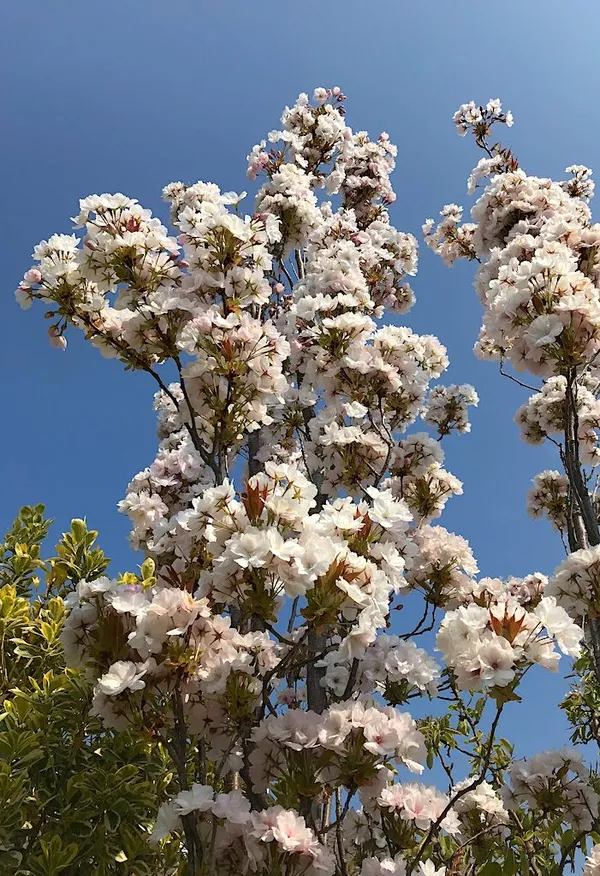
2. Ornamental cherries – Prunus incisa “Kojo-no-mai”
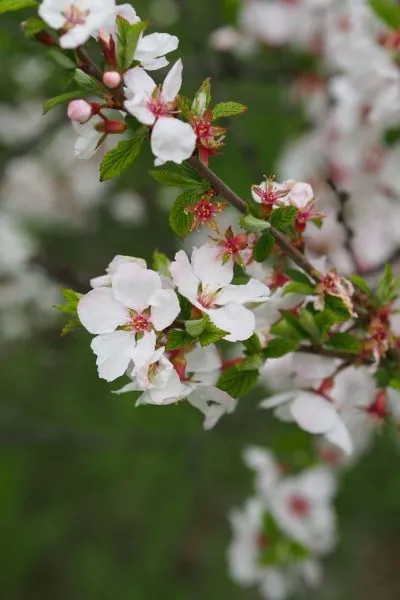
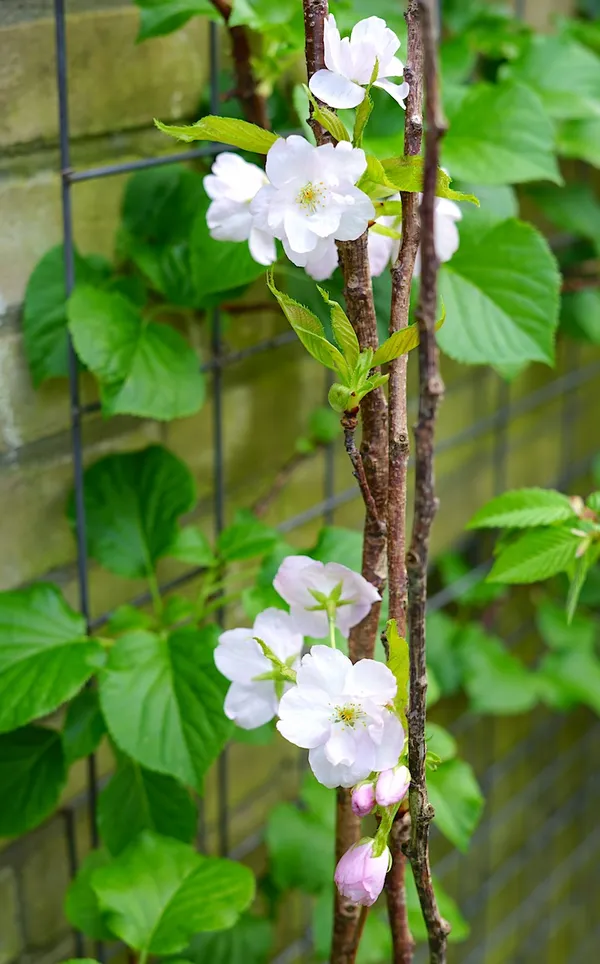
Prunus incisa is one of the most interesting ornamental cherry trees for a small garden. Within this species, there are several cultivars available with very different growth habits. This allows you to choose either a compact tree that naturally remains small or a narrow, upright variety if you have limited space in width.
“Kojo-no-mai”
If you're looking for a small tree that still has character in the winter, then “Kojo-no-mai” one of the best choices.
The branches form striking zigzag patterns, making the tree an interesting sight even when it has no leaves. In early spring, white to light pink flowers appear, often before the leaves emerge. Later, fresh green leaves develop, which may change color in the fall.
"Kojo-no-mai" naturally remains relatively small and grows in a compact form. So you don't need to prune it constantly to keep it within the available space.
That is precisely what makes this ornamental cherry tree ideal for even the smallest gardens. The tree takes up very little space, yet its irregular branching and early bloom give it plenty of character.
Why is it suitable for a small garden?
Because it naturally stays small yet is still a real eye-catcher.
Features
- naturally small
- prominent branching
- early spring bloom
Other Interesting Cultivars
“Mikinori” – compact growth and abundant blooms; an interesting alternative to “Kojo-no-mai.”
“Umineko” – upright growth and white flowers.
Prunus serrulata ‘Amanogawa’ – none P. incisa, but it is an interesting ornamental cherry for a small garden. This cultivar grows very narrow and columnar and is therefore particularly suitable when space is limited in width. It eventually grows well over three meters tall, but takes up relatively little space in width.
3. Japanese maple – Acer palmatum “Orange Dream”
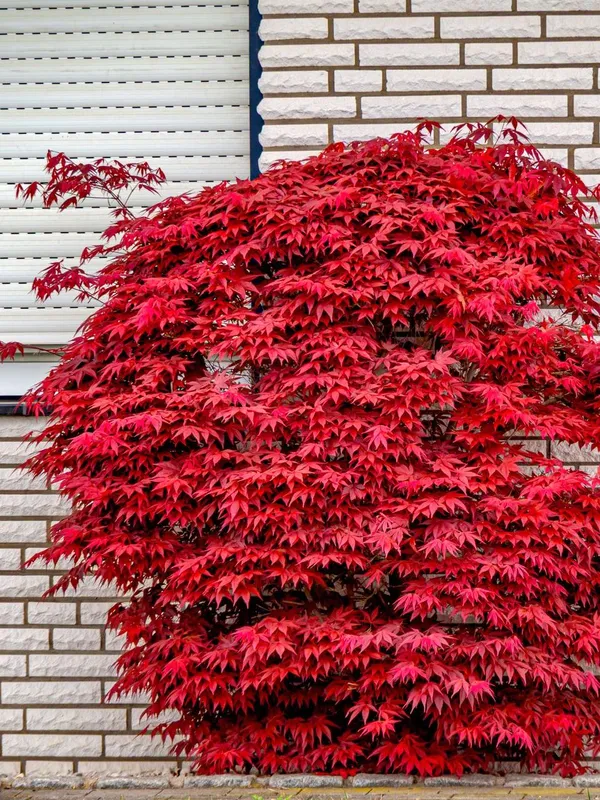
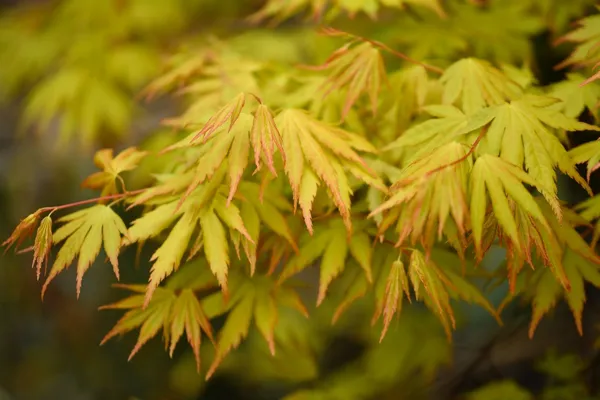
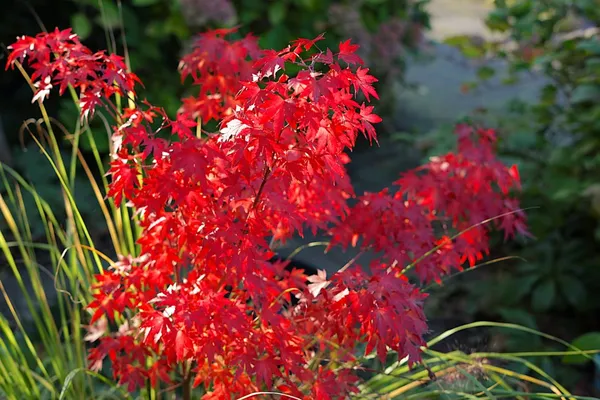
A Japanese maple practically belongs on any list of trees for small gardens. Inside Acer palmatum There is also a vast selection of growth habits, leaf colors, and leaf shapes.
For this list, “Orange Dream’ An interesting choice. The young leaves emerge in striking shades of yellow to orange. In the summer, they turn greener, and in the fall, warm shades of yellow and orange may reappear.
This cultivar has a compact growth habit and remains relatively small. Its natural form is key: a Japanese maple is beautiful precisely because of its delicate branching and airy crown.
Pruning is therefore usually hardly necessary. Cutting the tree back drastically to keep it exactly at three meters can actually compromise its natural shape.
A sheltered spot is important. The delicate foliage does not tolerate strong winds or extreme drought well. A spot with morning sun or light partial shade can therefore be ideal.
Why is it suitable for a small garden?
Because even a relatively small tree can provide plenty of color, texture, and an airy canopy.
Features
- striking leaf color
- compact growth habit
- requires little pruning
Other Interesting Cultivars
“Inaba-shidare” – red foliage and an elegant, trailing form; especially appealing if you have space in width.
“Skeeter’s Broom” – narrow and upright; a good choice for a small or narrow garden.
“Garnet” – red foliage and a low, spreading growth habit.
“Koto Hime” – very compact and with fine leaves.
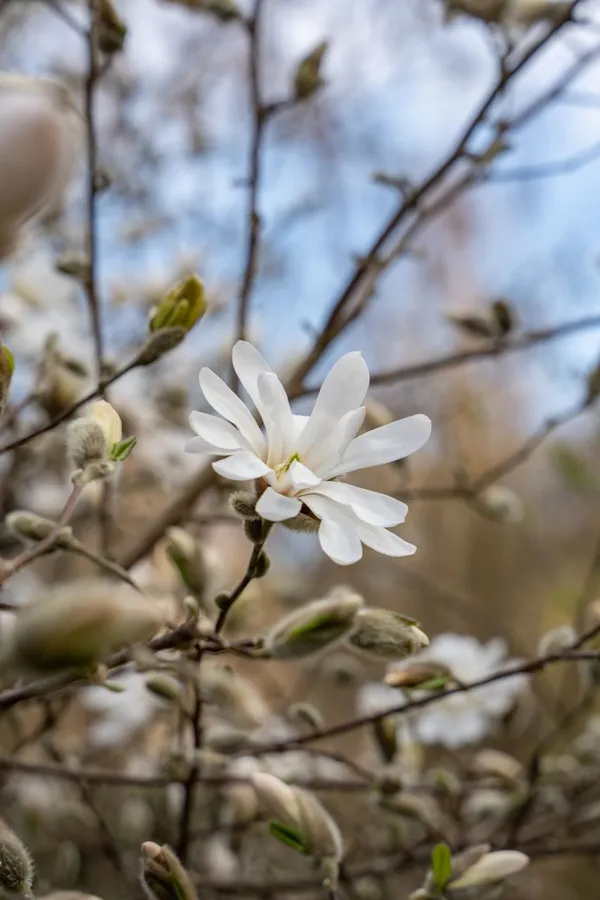
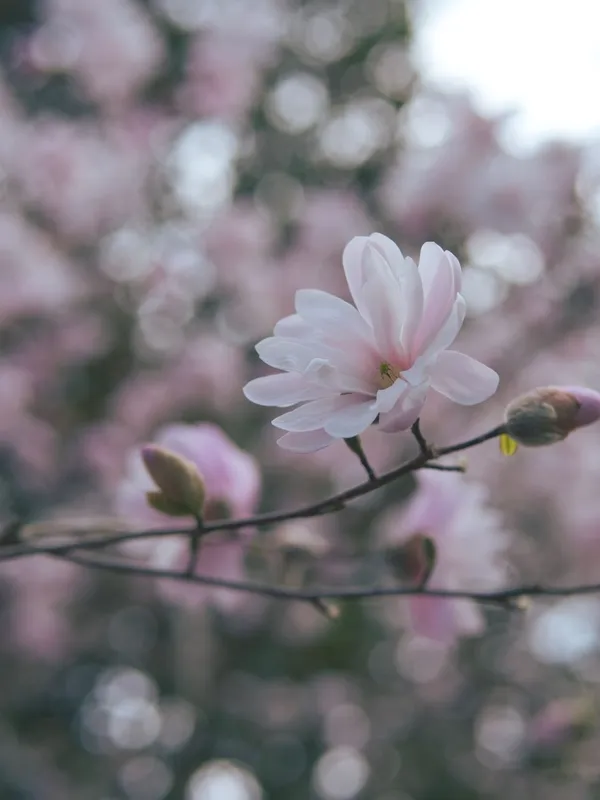
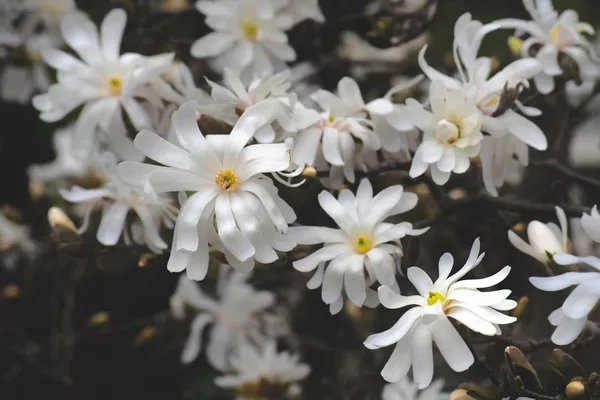
4. Star Magnolia – Magnolia stellata “Rosea”
For those looking primarily for a tree with spectacular spring blooms, the star magnolia is a wonderful choice.
Magnolia stellata ‘Rosea’ is a relatively small tree or large shrub. The pink flower buds open in early spring to reveal nearly white, star-shaped flowers. The bloom can be exceptionally abundant.
“Rosea” remains relatively compact, but can eventually develop a broad crown. The species also grows very slowly. As a result, it takes a long time for the tree to reach its full size, making it a better choice for a small garden than its maximum dimensions might suggest at first glance.
This is definitely not a tree you should choose with the idea that you’ll keep it strictly under three meters through pruning. Magnolias don’t always respond well to heavy pruning, and their natural, often multi-stemmed form is actually a key part of their charm.
Why is it suitable for a small garden?
Because this relatively slow-growing, modest tree makes for a stunning spring focal point.
Features
- very abundant early flowering
- growing very slowly
- beautiful multi-trunked form
Other Interesting Cultivars
“Royal Star” – white, profusely blooming flowers.
“Waterlily” – large white flowers with many petals.
“Centennial” – blooms profusely and is also a good choice for a smaller garden.
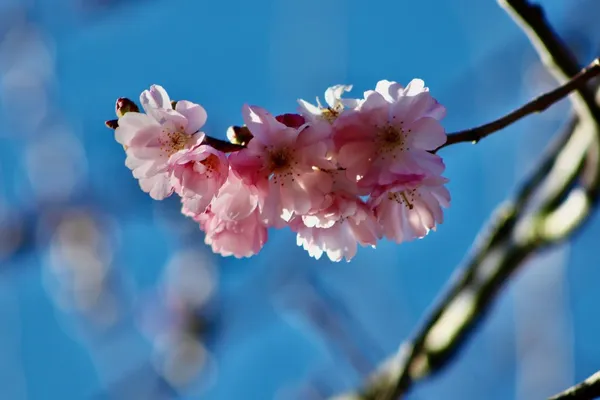
5. Winter-flowering ornamental cherry – Prunus × subhirtella “Autumnalis Rosea”
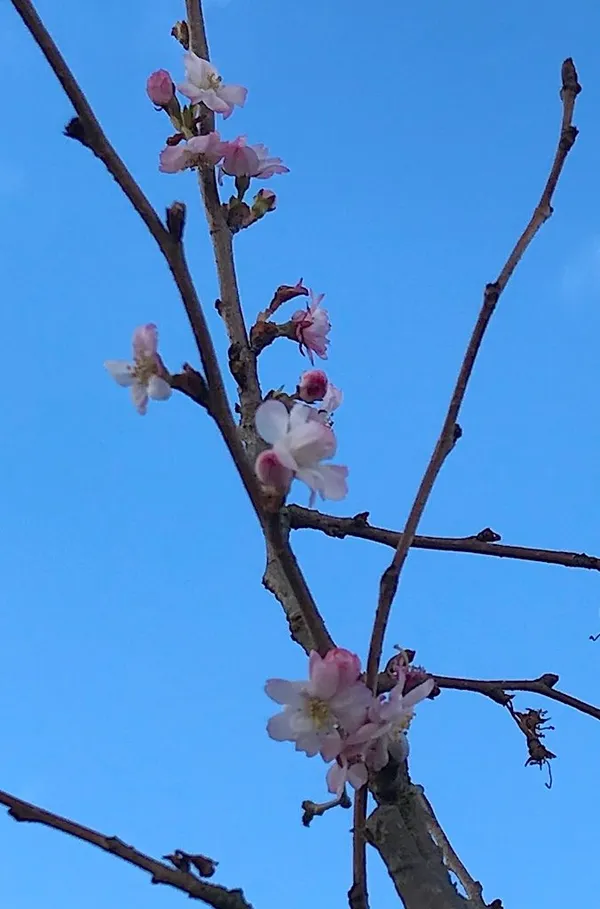
A tree that can start blooming as early as fall adds something special to a small garden.
Prunus × subhirtella ‘Autumnalis Rosea’ produces light pink flowers starting in the fall and during mild spells in winter and early spring. As a result, it blooms just when many other trees are completely bare.
The tree will eventually grow to well over three meters tall. However, its relatively slow growth and airy crown make it more suitable for a small garden than its eventual height might suggest. So you don’t choose it because it will remain a true three-meter tree, but because of its growth habit and unique flowering period.
Pruning too heavily is not recommended. Instead, give it enough space to develop its natural, airy shape.
Why is it suitable for a small garden?
Mainly because of its exceptionally long blooming period. As a result, a single tree provides great ornamental value even outside of spring.
Features
- blooms from fall through spring
- airy crown
- special winter value
Other Interesting Cultivars
“Autumnalis” – similar, with white flowers.
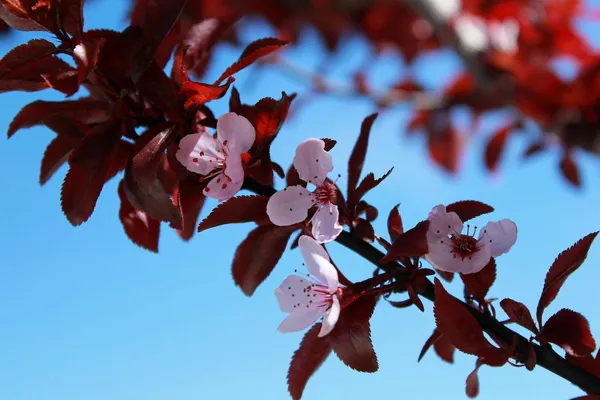
Prunus cerasifera ‘Nigra’ – a red-leaved tree that grows larger if left unpruned.
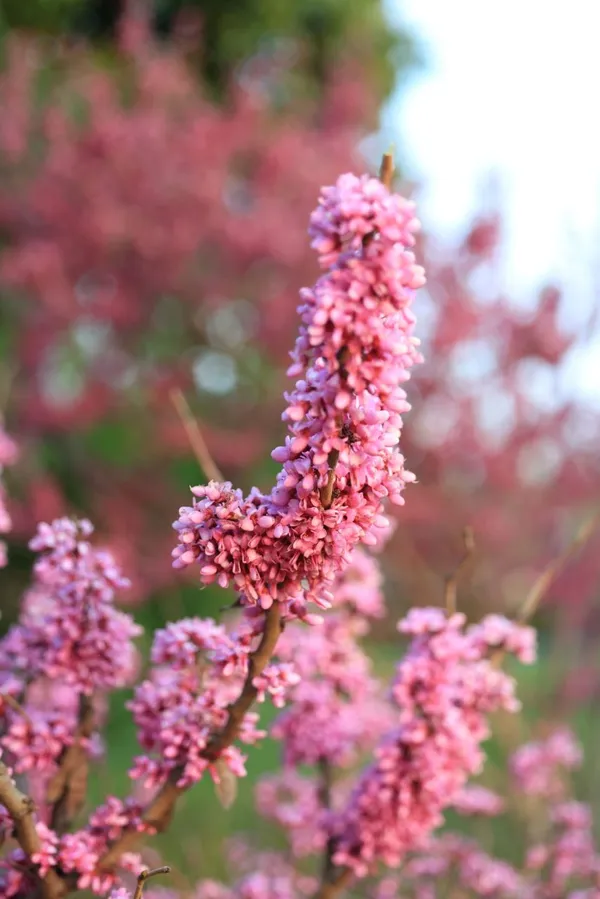
6. Judas tree – Cercis chinensis “Avondale”
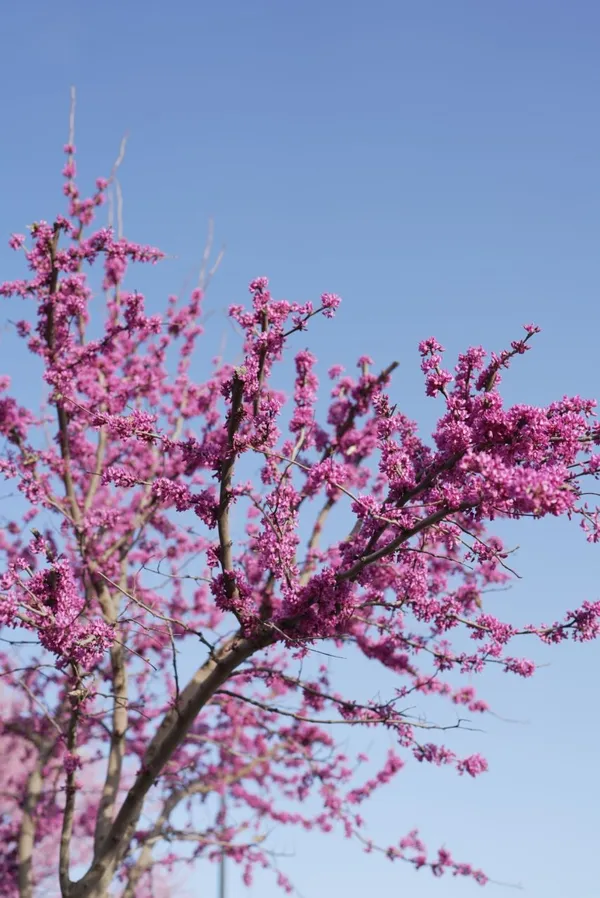
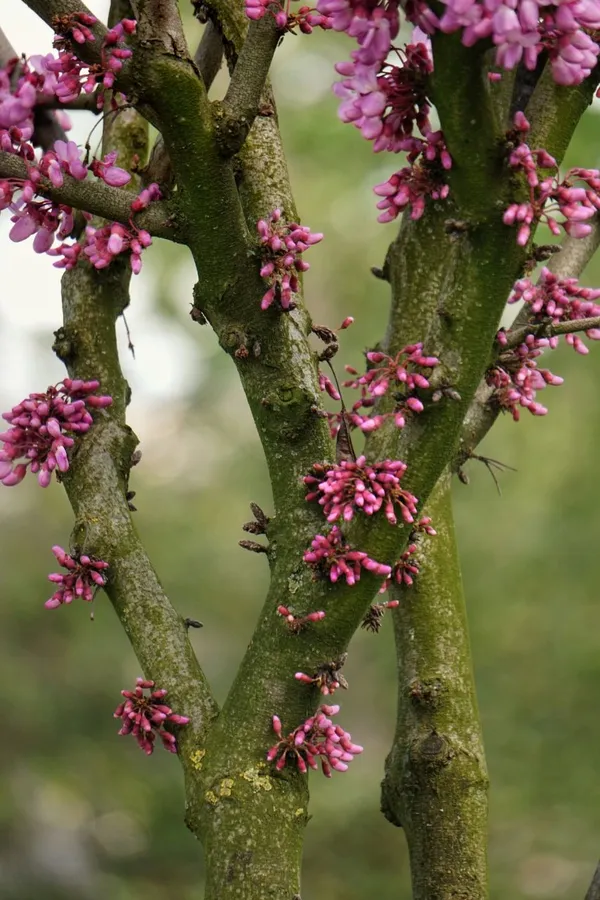
A Judas tree has a unique way of blooming: the flowers appear directly on the bare wood.
At Cercis chinensis In the spring, ‘Avondale’ produces large clusters of dark purple-pink flowers before the new foliage has fully developed. This is followed by heart-shaped leaves, which may be reddish-purple when they first emerge. The leaves change color in the fall.
"Avondale" remains relatively compact and is beautiful when trained as a multi-trunk tree. The different trunks and the open crown create a natural and airy appearance.
For a small garden, it is best planted as a multi-trunk tree. This allows you to take advantage of the species’ characteristic growth pattern without the tree looking heavy or bulky.
Why is it suitable for a small garden?
Because of its relatively compact shape, distinctive blooms, and highly ornamental foliage.
Features
- flowers on the bare wood
- Good as a multi-trunk tree
- striking leaf color
Other Interesting Cultivars
“Ruby Falls” – compact weeping form with dark foliage; especially appealing if you're specifically looking for a weeping tree.
“Forest Pansy” – dark foliage and pink blooms, but much sturdier.
“Hearts of Gold” – striking golden-yellow young leaves.
7. Japanese dogwood – Cornus kousa “Snowbird”
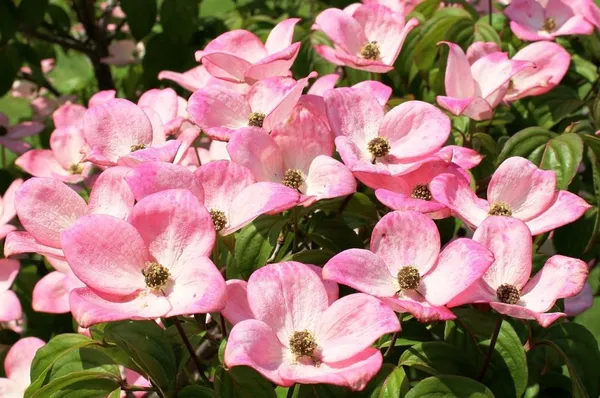
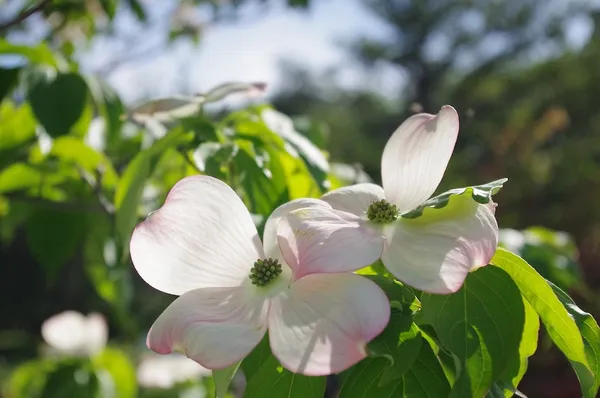
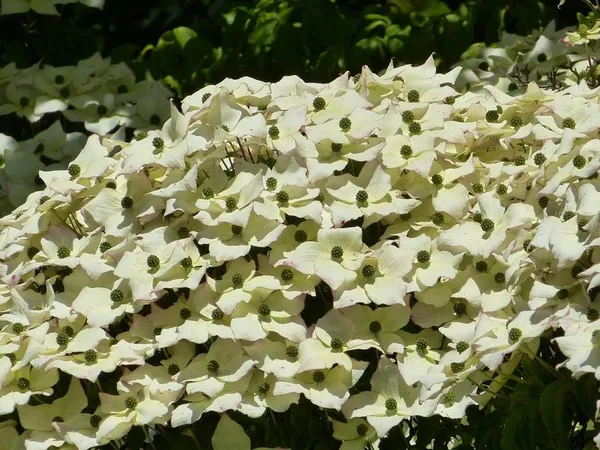
A Japanese dogwood is interesting because it isn't just beautiful when it's in bloom. Its fruits and fall colors also add to its ornamental value.
For a small garden, “Snowbird” An interesting cultivar. It grows relatively slowly and remains more compact than many others Cornus kousa-cultivars. The white bracts appear in the summer, followed by red fruits. In the fall, the leaves may take on beautiful colors.
The natural shape is quite wide and layered. That is why, in this case as well, the available width is more important than just the final height.
Why is it suitable for a small garden?
Because even with a relatively compact cultivar, you still get the characteristic blooms, fruit, and fall color of a Japanese dogwood.
Features
- growing relatively slowly
- white bracts and red fruits
- autumn color
Other Interesting Cultivars
“China Girl” – blooms profusely, but eventually grows larger.
“Miss Satomi” – pink bracts; beautiful but also more robust.
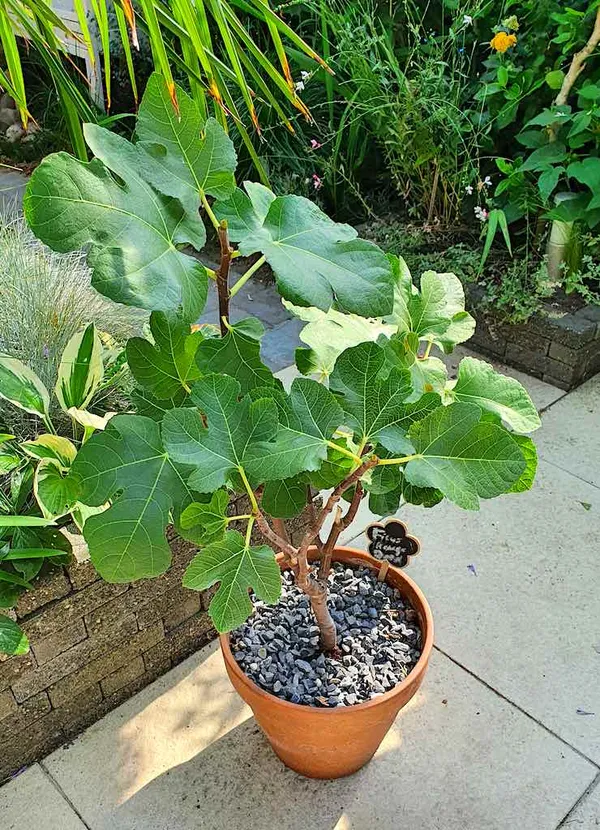
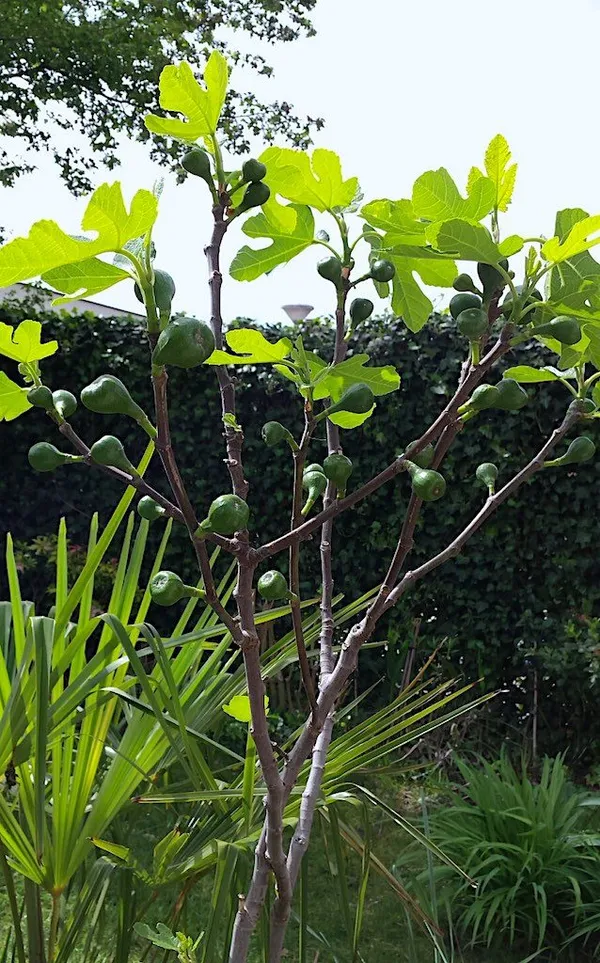
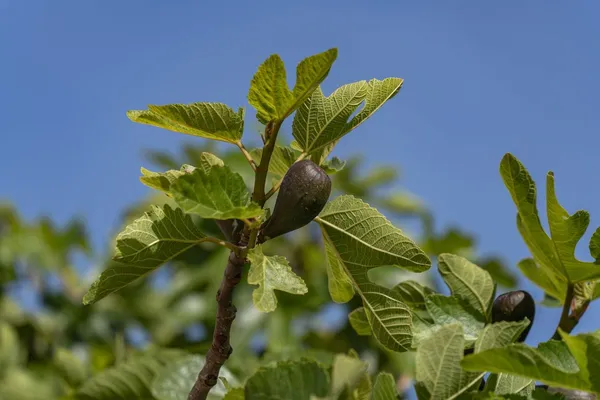
8. Fig – Ficus carica “Rouge de Bordeaux”
A small garden doesn't have to be limited to just beautiful flowers and foliage. A fig tree can be both an attractive tree and a fruit tree.
Ficus carica “Rouge de Bordeaux” is an interesting choice for this. The tree remains relatively compact, especially if you train it to grow as a small tree, and the fruit ripens well in a warm summer.
The large, hand-shaped leaf gives the fig a unique appearance. The figs appear in the summer and late summer, turning dark purple when ripe.
A fig tree thrives in a warm, sunny spot. A sheltered location—for example, next to a sunny wall—not only helps the plant grow but also aids in the ripening of the fruit.
Fig trees tolerate pruning well. This makes it relatively easy to keep the crown within the available space. That sets this tree apart from, say, a magnolia: in that case, pruning can actually be a practical way to keep the tree around three meters tall.
Why is it suitable for a small garden?
Because it combines an elegant tree with edible fruit.
Features
- edible dark purple figs
- large, decorative leaf
- easy to prune
Other Interesting Figs
“Brown Turkey” – A well-known and reliable fig tree, but it’s a vigorous grower and therefore requires a lot of pruning.
“Ice Crystal” – notable for its deeply lobed, decorative leaves.
“Little Miss Figgy” – a compact cultivar for those with very limited space.
9. Portuguese bay leaf – Prunus lusitanica “Angustifolia”
The last tree on this list clearly shows that you don't have to limit yourself to trees. A shrub or hedge plant can also make an excellent small tree.
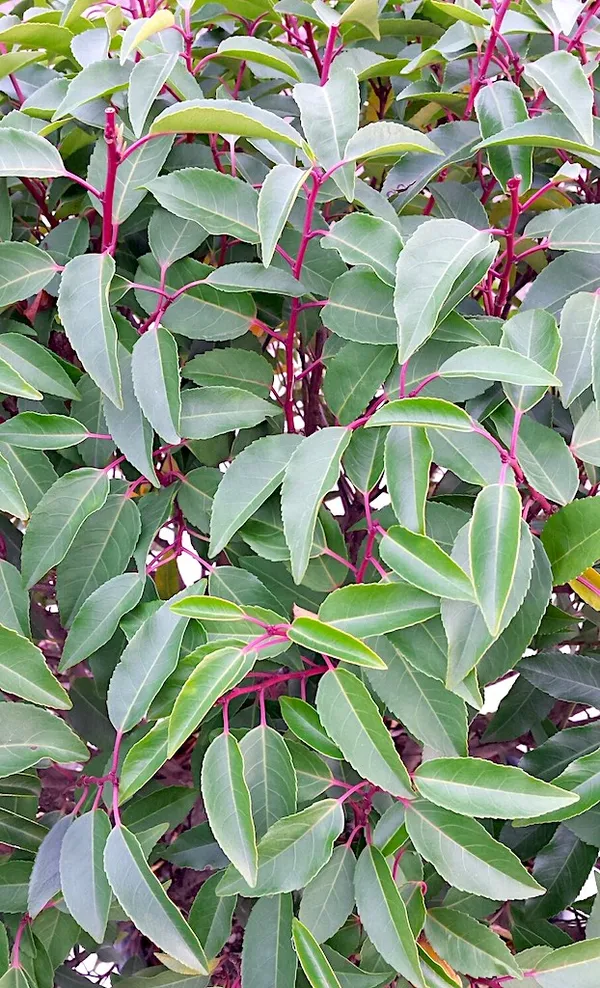
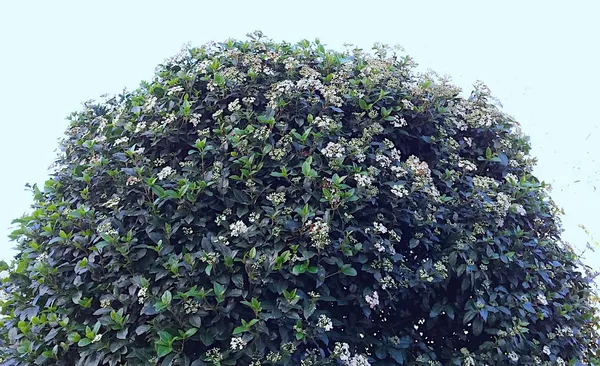
The Portuguese laurel is naturally a large evergreen shrub or small tree. It has dark green, glossy leaves, striking dark red young twigs, and white, fragrant clusters of flowers in the spring and early summer. Dark fruits then appear.
This species can eventually grow much taller than three meters. Nevertheless, it’s a good choice for a small garden because it tolerates pruning very well. You can train it as a tree from a young age and then keep the crown at the desired size.
This is precisely why pruning isn't a stopgap measure, but rather part of how you use the plant.
A multi-trunked variety can also look much airier than a single-trunked tree. For a small garden, a multi-trunked Portuguese laurel is therefore definitely worth considering.
Why is it suitable for a small garden?
Because you'll get a strong, evergreen tree that adapts well to the available space.
Features
- evergreen
- easy to prune
- Suitable as both a single-trunk tree and a multi-trunk form
Other hedge plants can also be used as trees
Portuguese laurel isn't the only hedge plant that can be used this way.
Osmanthus delavayi – slow-growing, with delicate foliage and fragrant white flowers.
Privet (Privet) – strong, easy to shape, and suitable for a delicate crown.
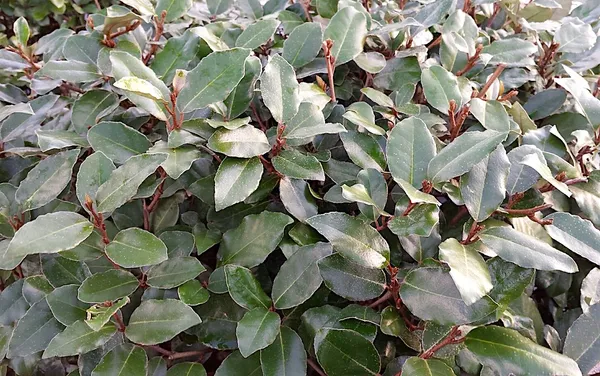
Olive willow (Elaeagnus × ebbingei) – gray-green leaves and sturdy, but a vigorous grower.
Viburnum tinus – Evergreen, compact, and interesting because it blooms in winter.
These plants are particularly interesting if you want to grow a small evergreen tree and are willing to guide its growth through pruning.
Which tree is right for your small garden?
Which tree is best for you depends mainly on what’s important to you. Are you looking for a slender tree? Do you want it to have lots of flowers, striking foliage, or would you prefer an evergreen tree? These choices can help you decide.
Do you have limited width?
Prunus serrulata ‘Amanogawa’ and Amelanchier ‘Obelisk’ are interesting because of their relatively narrow growth habit.
Do you want a tree that stays small naturally?
Prunus incisa ‘Kojo-no-mai’ is one of the most logical choices. It remains relatively small and requires little pruning.
Are you looking for eye-catching foliage above all else?
Acer palmatum ‘Orange Dream’ has striking orange-yellow young leaves. For red foliage, you might want to consider ‘Inaba-shidare’ or ‘Garnet,’ for example.
Do you want spectacular blooms?
Magnolia stellata ‘Rosea’, Prunus incisa ‘Kojo-no-mai’ and Cercis chinensis ‘Avondale’ Each has its own unique blooming period and appearance.
Do you want flowers in the winter, too?
Then Prunus × subhirtella ‘Autumnalis Rosea’ Particularly interesting. This ornamental cherry can bloom as early as fall and during mild winter periods.
Are you looking for a tree that’s beautiful year-round?
Amelanchier ‘Obelisk’ is a true all-rounder, offering blooms, berries, and fall colors. Also Cornus kousa ‘Snowbird’ offers several moments of aesthetic appeal.
Do you want to grow fruit in your small garden?
With Ficus carica ‘Rouge de Bordeaux’ You can combine a decorative tree with edible fruit. But also the fruit of Cornus kousa ‘Snowbird’ and Amelanchier ‘Obelisk’ are edible.
Would you like an evergreen tree?
Prunus lusitanica is a strong, highly moldable option. Also Osmanthus, privet, olive willow and Viburnum tinus can be trained into a tree shape.
10 trees at a glance
| Tree | Height without pruning* | Width without pruning* | Growth habit | Prune to about 3 m | Highest ornamental value |
|---|---|---|---|---|---|
| Amelanchier ‘Obelisk’ | ± 4 m | 1–1.5 m | narrow, ascending | yes | Four Seasons |
| Prunus incisa ‘Kojo-no-mai’ | ± 1.5–2.5 m | ± 1.5–2.5 m | compact, upright | barely | flowers + branches |
| Prunus serrulata ‘Amanogawa’ | ± 4–8 m | ± 2.5–4 m | very narrow, column-shaped | limited | flowering + growth habit |
| Acer palmatum ‘Orange Dream’ | ± 2.5–4 m | ± 2.5–4 m | compact, bushy | a little | leaf color |
| Magnolia stellata ‘Rosea’ | ± 2.5–4 m | ± 2.5–4 m | broad, often with multiple trunks | I'd rather not | spring bloom |
| Prunus × subhirtella ‘Autumnalis Rosea’ | ± 4–8 m | ± 3–4 m | airy, wide | limited | fall/winter blooming |
| Cercis chinensis ‘Avondale’ | ± 2.5–4 m | ± 1.5–2.5 m | compact, multi-stemmed | limited | flowering on bare wood |
| Cornus kousa ‘Snowbird’ | ± 3 m | ± 2.5–4 m | compact, wide | barely | flowering + fruiting |
| Ficus carica ‘Rouge de Bordeaux’ | ± 2–4 m | variable | ascending | good | fruits + leaves |
| Prunus lusitanica ‘Angustifolia’ | much larger | much larger | shrub/tree | good | evergreen |
*Approximate measurements for plants that are allowed to grow freely. The final size may vary depending on the cultivar, location, and growing conditions.
Prune to about 3 m indicates how much pruning is needed if you want to keep the tree around three meters tall. This is therefore different from the amount of pruning required to maintain the tree’s natural shape. A tree may naturally require little pruning, but it may still need to be pruned regularly to keep it at a maximum height of three meters.
Up to 3 meters: a guideline
A small garden doesn't necessarily call for a tree that literally grows to a maximum height of three meters. Sometimes a tree that naturally remains small is the best choice. Other times, a slender tree that grows to four meters is much more suitable than a broad tree that grows to 2.5 meters.
Therefore, when choosing a plant, don't just look at the height listed on the plant label, but focus especially on its eventual width, growth habit, growth rate, and tolerance to pruning.
This way, you can avoid having to constantly prune a tree after a few years—and you’ll end up with a tree that remains natural and beautiful even in a small garden.
Want to learn more about trees for a small garden? Check out our article “All About Trees”