
Tips and Plants for a Narrow Border Up to 30 cm Deep
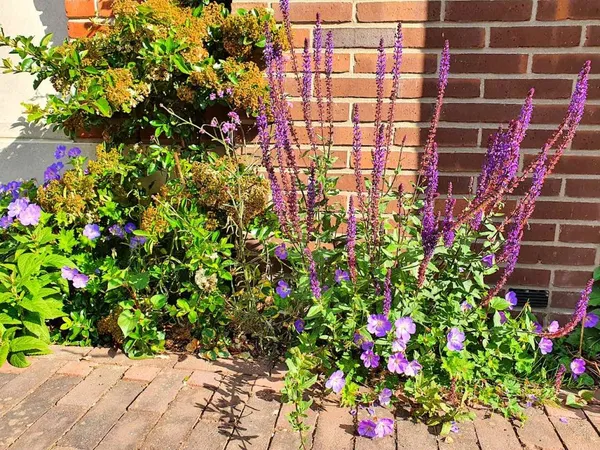
In small gardens and urban gardens, people often opt for narrow planting strips along a fence, wall, shed, or patio. Such a narrow border, no more than 30 cm deep, may seem simple, but in practice it is actually one of the most challenging borders to plant effectively.
The limited space causes plants to dry out more quickly, hang over paths, or crowd each other out. Still, with the right choices, you can create a surprising amount of ambiance and greenery.
With clever combinations of compact perennials, ornamental grasses, and climbing plants, you can turn even a narrow border into a real eye-catcher. In this article, we share practical tips, suitable plants, and beautiful combinations for narrow borders up to 30 cm deep.
What is the minimum depth a flower bed should be?
A very narrow border can be surprisingly beautiful, but there is a clear lower limit. In practice, borders less than 25 to 30 cm deep are difficult to plant.
In very narrow planting strips, problems such as the following quickly arise:
- not enough space for the roots to grow
- rapid drying of the soil
- plants that hang over paths or terraces (this doesn't necessarily have to be a bad thing)
- long-term food shortage
Still, a narrow border certainly doesn’t have to be a bare strip along a fence or wall. With compact perennials, groundcovers, dwarf ornamental grasses, and climbing plants, you can create a lot of ambiance in a small space.
Smart Design Tips for a Border Up to 30 cm Deep
With a border that’s only 30 cm deep, you won’t be able to plant multiple rows. To create a sense of depth, vary the heights of the plants; try staggering them slightly relative to one another; and consider using the wall or fence to support a climbing plant.
- Use no more than 3–5 plant species
- Repetitive Work for Relaxation
- Choose airy plants instead of dense clumps
- Make the most of the height of your plant bed
- For example, use climbing plants
- Or alternate between low and tall perennials
- Leave enough space around walkways
- Choose varieties that require little to no support
- Combine leaf textures to create more contrast and a sense of depth
- It's better to use groups of plants rather than individual plants
For extremely narrow borders, the following work particularly well: compact perennials, groundcovers, small ornamental grasses, or just climbing plants against a wall or fence.
See more tips for a narrow flower bed
Best Plants for a Narrow Border in the Sun
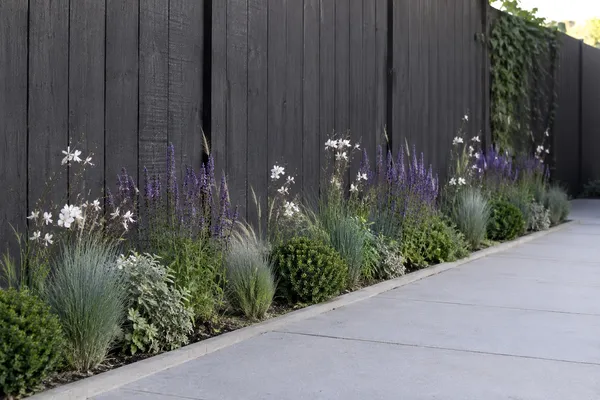
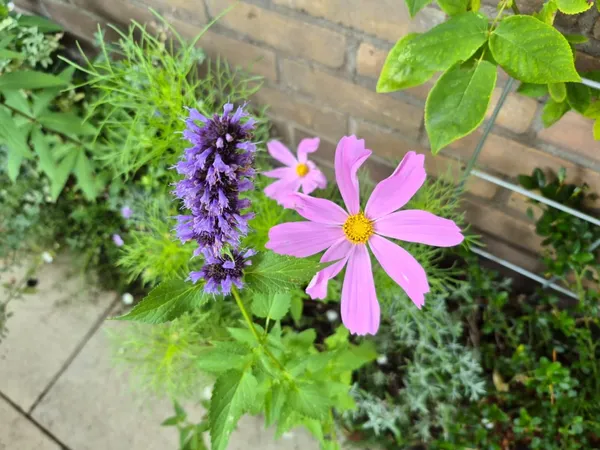
In a sunny flower bed, it's all about hardy, heat-tolerant plants that can withstand drought and stay beautiful for a long time.
Compact Perennials
- Carnation (Dianthus)
- Blood-red cranesbill (Geranium sanguineum)
- Wood Sage (Salvia nemorosa)
- Lavender (Lavandula angustifolia)
- Carpathian Bellflower (Campanula carpatica)
- Catnip (Nepeta)
- Bellflower (Campanula lactiflora ‘Prichard’s Variety’) – other varieties are too wide
- Girl's Eyes (Coreopsis verticillata)
- Wall Daisies (Erigeron karvinskianus)
- Beauty Candle (Gaura lindheimeri ‘Short form’) – other varieties are too wide
- Purple Bellflower (Heuchera)
- Perennial Pinks (Iberis sempervirens)
- Stonecrop (Sedum spurium)
Narrow ornamental grasses
- Bluegrass (Sesleria autumnalis)
- Blue fescue (Festuca glauca)
- Japanese sedge (Carex)
- Lamp Cleaner Grass (Pennisetum ‘Little Bunny’) – standard variety is too wide
- Feathergrass (Calamagrostis acutiflora ‘Karl Foerster’)
- Feather grass (Stipa tenuissima)
Compact shrubs
- Nandina (Nandina domestica) – choose a compact variety
- Japanese holly (Ilex crenata)
- Shrub Veronica (Hebe)
- Winter heather (Erica)
- Column Shapes
Best Plants for a Narrow, Shaded Border
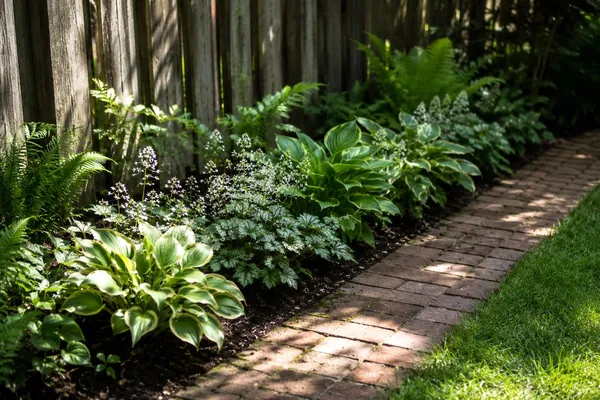
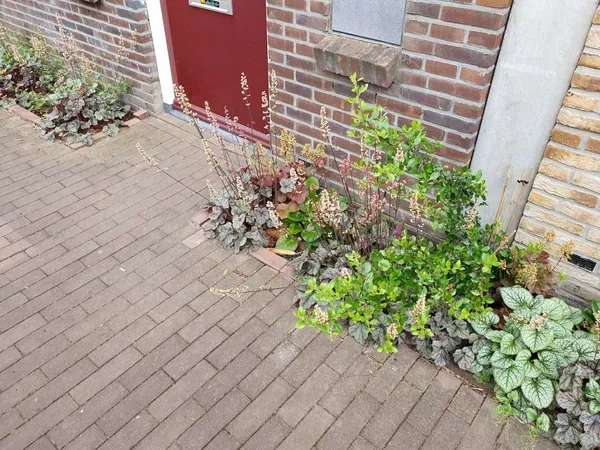
In a shady flower bed, the focus is mainly on foliage texture, different shades of green, and plants that grow well even with less light.
Perennials
- Dwarf Plantain Lily (mini Hosta) – standard variety, too wide
- Horned Lily (Epimedium)
- Caucasian forget-me-not (Brunnera)
- Lesser Periwinkle (Vinca minor)
- Creeping bugle (Ajuga reptans)
- Lilyturf (Liriope muscari)
- Lungwort (Pulmonaria)
- Purple Bellflower (Heuchera)
- Red Wood Fern (Dryopteris erythrosora)
- Bergenia
- Foamflower (Tiarella)
- Rock Fern (Asplenium trichomanes)
- Marsh Fern (Asplenium scolopendrium)
Ornamental Grasses
- Variegated sedge (Carex)
- Japanese sedge (Carex)
- Japanese mountain grass (Hakonechloa) – can eventually spread out
- Woodrush (Luzula sylvatica)
Compact or upright shrubs
- Japanese spindle tree (Euonymus fortunei) – choose the upright variety
- Skimmia
- Meatberry (Sarcococca)
- Firethorn (Pyracantha) – do not plant near walkways because of its thorns
- Column Shapes
Climbing Plants: The Perfect Solution for Narrow Borders
Is your flower bed next to a wall, fence, or shed? If so, vertical planting is often the smartest solution. Climbing plants take up very little space on the ground but add plenty of greenery and height. Combine a beautiful climbing plant with a small shrub or ground-covering perennial in front of it, and you’ve already created something lovely!
Climbing Plants for Sunny Spots
- Clematis
- Honeysuckle (Lonicera periclymenum)
- Climbing Roses (Rosa) – Choose a Thornless Climbing Rose for a Walkway
- Passionflower (Passiflora)
- Tuscan jasmine (Trachelospermum jasminoides)
Climbing Plants for Shade
- Mountain Clematis (Clematis montana) – can grow quite large
- Evergreen honeysuckle (Lonicera henryi)
- Climbing hydrangea (Hydrangea petiolaris)
- Ivy (Hedera)
- Firethorn (Pyracantha)
- Wild grapevine (Parthenocissus) – can grow quite large
Beautiful plant combinations for a border up to 30 cm deep
A narrow border looks its best when you use well-defined combinations rather than individual plants. Repetition, contrast in foliage, and a limited color palette create a sense of calm and a full, lush appearance, even in a small space.
Sun-Protection Combinations
In a sunny flower bed, you can play with contrast and dynamism: airy plants next to sturdy structures, and long-blooming varieties interspersed throughout. The key is to create combinations that make the most of warmth and light without disrupting the flower bed’s sense of calm.
AI visualization
Airy, long-blooming: natural and bee-friendly
- Salvia nemorosa ‘Caradonna’ – sleek, dark flower stalks with a graphic effect
- Salvia nemorosa ‘Ostfriesland’ – extremely reliable and profusely flowering
- Nepeta faassenii ‘Walker’s Low’ – a broad, soft clump with a long flowering season and repeat blooms
- Festuca glauca ‘Elijah Blue’ – a compact, blue-gray accent that brings a sense of calm
- Gaura lindheimeri ‘Whirling Butterflies’ – light, dancing blooms well into late summer
- Optional: Echinacea purpurea ‘Magnus’ – a bold splash of color and ecological value
👉 Result: a vibrant border that never feels “crowded,” but is constantly in motion
Mediterranean charm: warm, wonderfully fragrant, and lush
- Lavandula angustifolia ‘Hidcote’ – compact, deep purple, and very reliable staple
- Lavandula angustifolia ‘Munstead’ – blooms slightly earlier and with lighter flowers, for variety in the flowering schedule
- Stipa tenuissima – airy movement and gentle transitions between textures
- Trachelospermum jasminoides – an evergreen climber with a fragrant scent and a vertical growth habit
- Optional: Santolina chamaecyparissus ‘Nana’ – silvery-gray, compact form that adds a sleek accent
👉 Result: a warm, dry Mediterranean atmosphere with a strong sense of structure
Modern narrow border: sleek, graphic, and evergreen
- Heuchera ‘Obsidian’ – dark, almost black foliage as a graphic focal point
- Sesleria caerulea – compact clumps that add texture and rhythm
- Ilex crenata ‘Dark Green’ – a closely clipped form as an alternative to boxwood
- Euonymus fortunei ‘Emerald Gaiety’ – a low, evergreen, spreading shrub with a light-colored edge
- Liriope muscari ‘Moneymaker’ – neat flower spikes and a tidy edge
👉 Result: a modern, low-maintenance flower bed with clean lines and year-round texture
Shade Combinations
In the shade, the focus is less on color and more on combinations of foliage and texture. By combining different leaf shapes, shades of green, and varying heights, you can create a calm yet layered border right there.
AI visualization
A Serene Green Border: Tranquility, Repetition, and Soft Leaf Textures
- Hosta ‘Halcyon’ / ‘Blue Mouse Ears’ (low to medium foliage mass)
- Carex morrowii ‘Ice Dance’ (narrow, delicate linear structure)
- Polystichum setiferum ‘Herrenhausen’ (soft, refined, slightly woody)
- Pachysandra terminalis (neat groundcover; keeps the base looking neat)
- Optional for walls or fences: climbing hydrangea (Hydrangea petiolaris)
👉 Result: a calm, almost Japanese atmosphere without being boring
Playful leaf contrast: contrast in both color and leaf shape
- Heuchera ‘Palace Purple’ / ‘Caramel’ (color accent in the foreground)
- Hakonechloa macra ‘Aureola’ (trailing ornamental grass)
- Brunnera macrophylla ‘Jack Frost’ (light-colored foliage + spring bloom)
- Athyrium niponicum ‘Pictum’ (silver/purple fern for texture)
- Tiarella cordifolia (fills in bare spots, blooms in spring)
👉 Result: vibrant, yet still controlled and stylish
Evergreen narrow border: a modern shaded area, green all year round
- Skimmia japonica ‘Rubella’ (compact growth habit + winter buds)
- Carex oshimensis ‘Evergold’ (with a faint streak of color throughout)
- Bergenia cordifolia ‘Winter Glow’ (glossy leaves, winter color)
- Euonymus fortunei ‘Emerald Gaiety’ (low-growing, compact, evergreen)
- Liriope muscari (slender flower spikes + groundcover)
👉 Result: an architectural, low-maintenance shade border
Practical Tips for Very Narrow Flower Beds
Creating and maintaining a very narrow border or planting strip can be quite a challenge. Here are a few final tips to help you create a beautiful border with healthy plants:
- Water more frequently during dry spells
- Keep in mind that rainwater often doesn't reach the area along walls and fences as well
- A raised edge around the flower bed helps keep the water in the bed
- Apply organic fertilizer in the spring
- Use a layer of compost as mulch over the flower bed to prevent the soil from drying out
- It's better to choose a few hardy varieties than many different plants
- Limit yourself to a maximum of 4–6 varieties per meter (repetition is more important than variety)
- For example, consider 1 dominant structural plant + 2 companion plants + 1 groundcover
- Even though the strip is narrow, try to space the plants out slightly
- Make the most of the height of your planting bed and vary the heights of the plants
- Plant a slightly taller groundcover next to a climbing plant
- Use evergreen plants to add texture in the winter as well