Time to look back (and look ahead)
For us, September and October are the months when we take stock.
We enjoy looking back on the gardening year (so far) and are already looking forward to next year.
Now that many plants have already passed their peak, but the fall-blooming plants and ornamental grasses are still at their most beautiful, it’s a good time to look back and make plans.
This month, you can still see the leaves, the spent stems, or the seed heads. You can also clearly see how tall the plant has actually grown in your garden. This may differ from what the label led you to believe…
Since it wasn’t long ago that everything was in full bloom (or perhaps is still in bloom), you can easily gauge how the plants grow throughout the year and what effect any changes might have. You can also find photos of the plants you’ve grown fairly quickly.
For us gardening enthusiasts, a garden is never finished.
There's always something that could be improved or done differently…
It therefore makes sense to think about what you didn't like as much about your garden this year.
Take notes of things that stand out (or disappoint) throughout the year. A sort of mini garden journal, in other words. Take (overview) photos that clearly show how a particular border fared or how certain plants grew. Walk through your garden regularly and think about what you’d like to see done differently.
What went wrong in the garden?
What are you less satisfied with?
Which plants didn't take root, and why? Were there any plants that wouldn't grow, or that withered away completely? Did any plants bloom differently than expected (for example, in the wrong color), did they not bloom at all, or did fruit trees and fruit shrubs fail to bear fruit?
Do you miss blooms or color during a certain time of year?
And which plant combinations were disappointing or turned out not to work at all in practice?
This is your chance to make your garden (even) better next year!
Learn from this year and make adjustments where necessary
Transplant perennials and deciduous shrubs Or decide in advance where you’ll plant your ornamental grasses, less hardy plants and shrubs, or evergreen shrubs and trees. It’s best to wait until spring to move these plants.
What's going well in your garden?
What, exactly, are you really happy with?
Are there any plants that survived the winter well without protection, even though they actually less hardy ? Were you able to harvest a lot of your fruits and vegetables from pots and containers? Did certain plants thrive in less-than-ideal conditions, or were there any (spontaneous) plant combinations that surprised you?
Don't forget to take a moment to reflect on the things that did go well.
All too often, we forget to enjoy ourselves because there’s always room for improvement. What a shame, of course!
What went wrong in our own little garden?
As I write this blog post, there’s a notebook on the garden table in which we’ve jotted down a few notes (from time to time) throughout the year. Still, September is the time for us to really get down to business.
Damage Caused by Snails
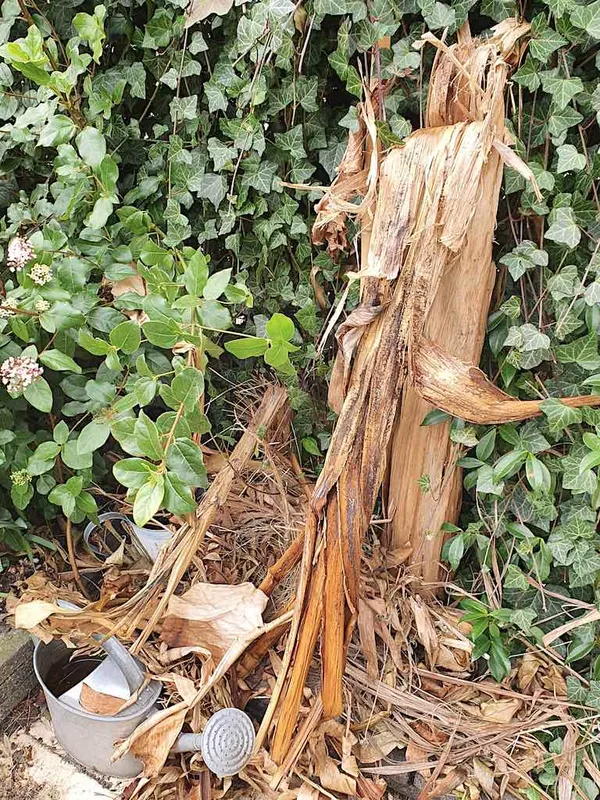
The banana is completely dead
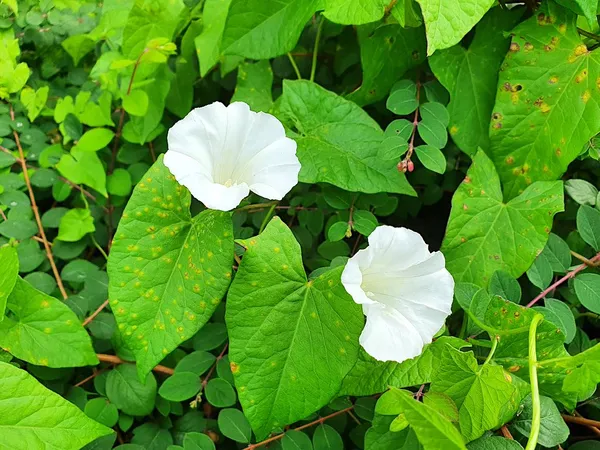
Hedge Bindweed
- For example, in this year’s gardening journal, we note that the banana plants unexpectedly sprouted again (though not until late May), while this year, for the first time, the Banana trees do not require winter protection had received. This was actually quite nerve-wracking, because just last winter the temperature dropped to -12°C several times and even hit -16°C for a whole week! The banana trees had completely died back above ground and remained much smaller (less than 170 cm tall), but they did survive.
- Our favorite climbing rose, New Dawn It bloomed beautifully this year. However, there was virtually no secondary flowering (in most years, this species blooms profusely again later). The rose has also become almost bare and leafless (due to starry dew), which means the less attractive wall behind it is much more visible than in other years.
- Not a single dahlia has come back up. We had, of course, expected this from the dahlias we’d set aside in a (spacious) pot in a sheltered spot as a test, but unfortunately, we’ve also lost the dahlias we left in the ground (in a raised border with a thick layer of mulch).
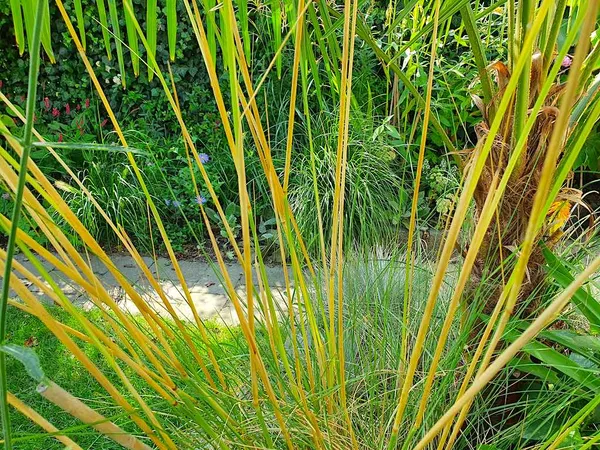
- We also note that the Calamagrostis Karl Foerster has not yet bloomed. They were fairly young ornamental grasses when they were planted, but we suspect that the location for these upright ornamental grasses is still in too much shade, causing the stems to remain limp and preventing the flowers from developing properly.
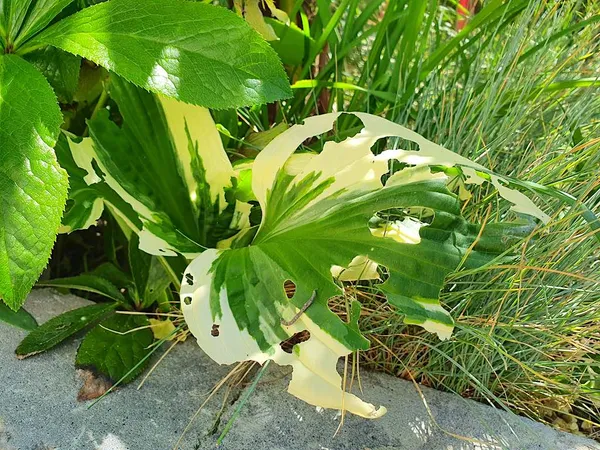
- We'd also like to reiterate a point we've mentioned many times before: Never before have there been so many snail infestations and damage caused by snails! And this even though we certainly aren't animal-friendly garden have… All animals are welcome here (though snails are a bit less so)!
What went well in our own little garden?
We also note the good things. Usually at the end (and often very few of them, because we tend to have a fairly critical eye)…
For example, we're very happy with our new Butterflies and Bees border. This border, which measures about 3 by 1 meter, consists entirely of Good butterfly plants and ideal plants for bees, interspersed with a few ornamental grasses.
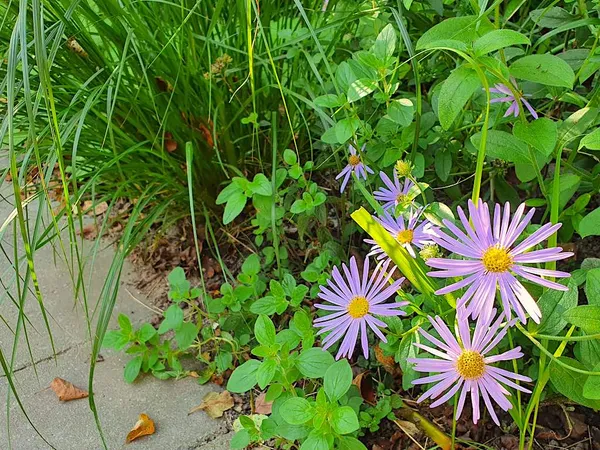
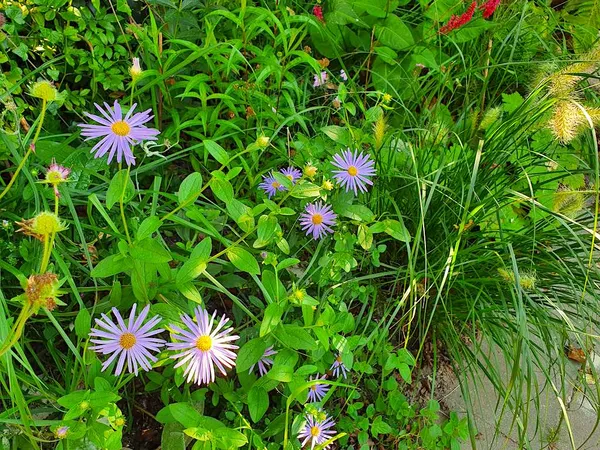
Although we lost some of the new plantings to the many snails (Achillea, Monarda, Aster), we’re happy with the plants that did sprout and are growing well. For example, we’re raving about the Lythrum; the Persicaria is growing perfectly in the shade under the tree; and we’re pleasantly surprised by the remaining Asters, which are blooming beautifully!