
It's time to prune trees, shrubs, and plants in your small garden for the winter
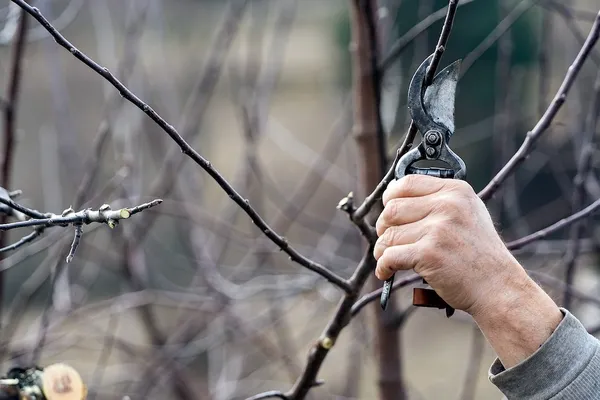
In a small garden, every square meter counts. A tree that grows too tall, a shrub that spreads too wide, or a climbing plant that takes over everything directly affects light, views, and the use of space. That’s exactly why winter pruning is so important in a small garden. With targeted pruning, you can keep your plants in balance without making the garden feel crowded or cluttered.
Winter is the ideal time for this. Plants are dormant, their shape is clearly visible, and you can prune them without making the garden look “bare” right away. In this article, you’ll learn how to approach winter pruning wisely in a small garden, which plants to prune and when, and what to pay extra attention to when space is limited.
What is winter pruning, and why is it important?
Winter pruning is the pruning of trees, shrubs, and climbing plants during their dormant period, usually between November and February. During this phase, growth has ceased and most plants have no leaves, making the branch structure clearly visible.
The purpose of winter pruning is to improve health, shape, and future growth potential. By pruning away dead, damaged, or crossing branches, you encourage healthy new growth in the spring, improve air circulation and light penetration, and reduce the risk of disease. For fruit trees, winter pruning contributes to better fruit quality and higher yields.
In a small garden, winter pruning is especially valuable because space is limited. By pruning early, you can clearly see where branches cross each other, where they block sunlight, or where they’re growing too close to paths, patios, or other plants. This helps you maintain a clear view, light, and structure in the garden, while allowing the plant to grow naturally and healthily in the spring.
What should you keep in mind when pruning in a small garden during the winter?
Pruning in a small garden requires precision. Every branch you prune is visible and affects the light and space. Key points to consider are:
- Timing: Never prune during a severe frost or when the wood is frozen, because branches can break and wounds will heal poorly.
- Tools: Always use sharp, clean pruning shears to prevent ragged cuts and infection.
- Targeted pruning: Prune with a specific goal in mind, such as allowing more light to reach the ground, creating more space around paths, or improving the view from patios.
- Get to know the plant: Some species bleed easily in the spring, while others recover slowly. Know which plants to prune early and which ones are best left alone.
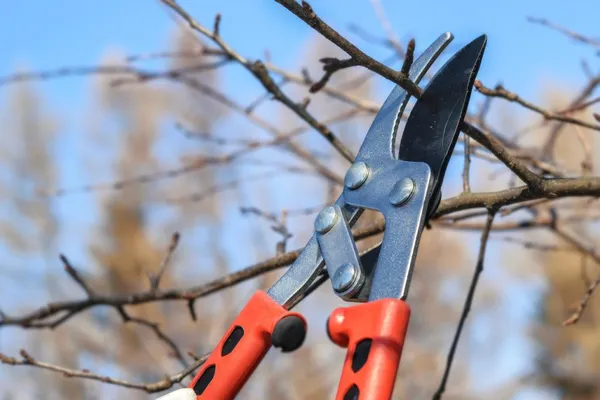
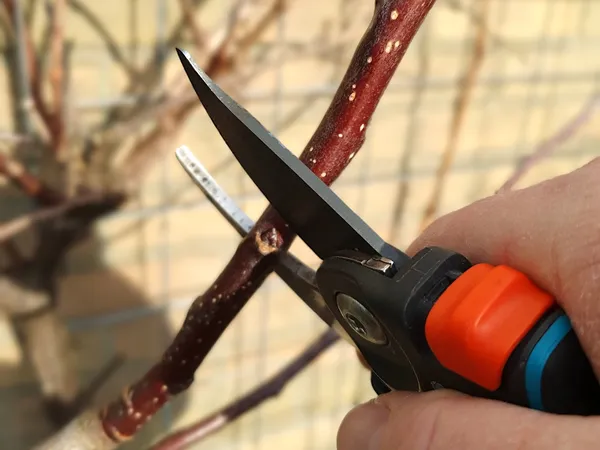
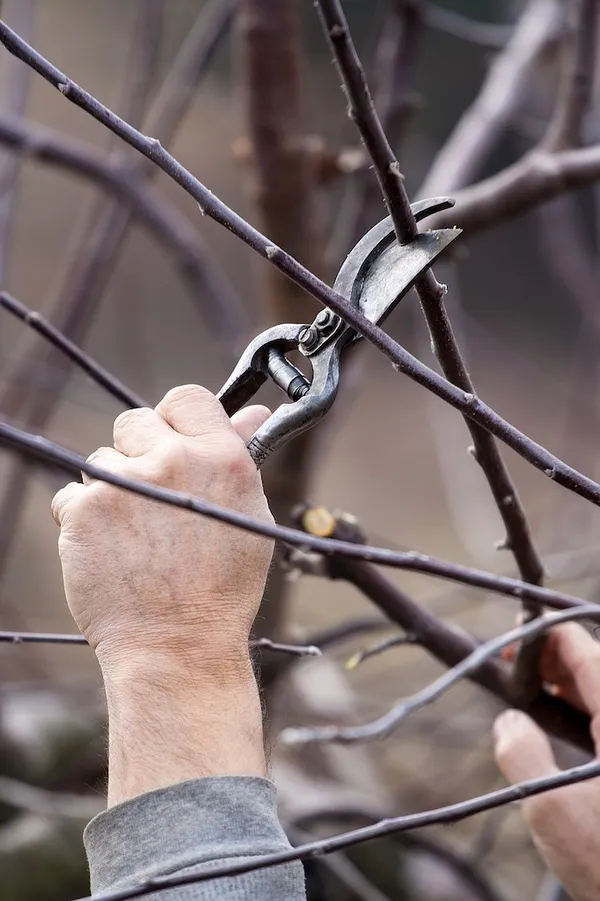
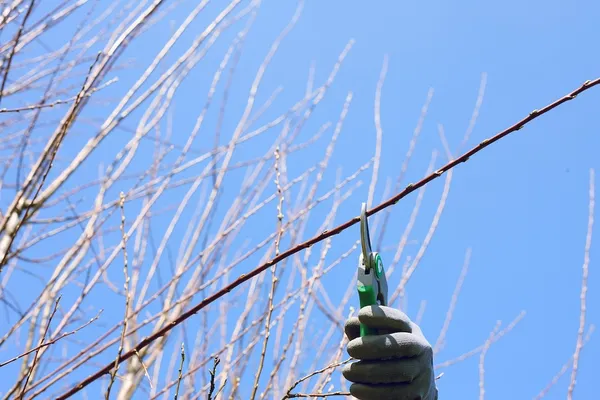
Early Winter Pruning
Early winter—usually November and December—is the time to inspect plants and address minor problems. This is especially true for trees and fruit-bearing plants, which can easily bleed or weaken in the spring.
Typical examples include the ABC trees: birch, maple, and hornbeam, as well as walnut, grapevine, and fig. These should be pruned early to prevent sap loss and weakening. Pruning focuses on removing dead, damaged, or crossing branches and improving the overall structure.
Light maintenance pruning of trees, hedges—such as beech, hornbeam, and privet—and climbing plants—such as ivy and wild grapevine—should also be done during this period. The goal is to maintain a clear view and a healthy structure.
Pruning in Early Winter
Trees:
- Birch (Betula)
- Maple (Acer)
- Walnut (Juglans)
- Hazel (Corylus)
- Chestnut (Castanea)
Shrubs and hedges:
- Beech (Fagus sylvatica)
- European hornbeam (Carpinus betulus)
- Privet (Ligustrum)
Fruit:
- Grape (Vitis)
- Fig (Ficus carica)
Climbing Plants:
- Ivy (Hedera)
- Climbing Rose (Rosa)
- Wild grapevine (Parthenocissus)
Late-winter pruning
In late winter—usually January and February—plants are completely dormant. Pruning during this time encourages healthy new growth and determines where the plant will grow in the spring.
Fruit Trees Apple and pear trees, for example, benefit from late winter pruning because an open, airy canopy improves their health and enhances fruit quality. Espalier trees can also be pruned in a targeted manner.
Many shrubs that bloom on one-year-old wood, such as butterfly bush, panicle hydrangea, tree hydrangea, and roses, respond well to pruning during this period. Pruning encourages new shoots and more abundant blooms without restricting the plant’s natural growth in the summer.
Perennials Plants such as coneflower, sage, sedum, and catnip can be pruned starting in February. This also applies to many ornamental grasses, such as lamp-polisher grass, Chinese reed, and pampas grass. You can cut back the dead above-ground parts of the plants just above the ground. The plants will then sprout again from the root ball.
Pruning in late winter (or early spring)
Trees:
- Pruning Apple Trees (Malus domestica)
- Pruning Pear Trees (Pyrus communis)
- Quince (Cydonia oblonga)
- Training Methods for Fruit Trees
Shrubs:
- Pruning Annabelle Hydrangeas (Hydrangea arborescens)
- Pruning Hibiscus (Hibiscus syriacus)
- Pruning Panicle Hydrangeas (Hydrangea paniculata)
- Spirea, summer-flowering (Spiraea japonica)
- Pruning Shrub Roses (Rosa)
- Pruning the Butterfly Bush (Buddleja)
Fruit:
- Raspberry (Rubus idaeus)
- Kiwi (Actinidia)
- Gooseberry (Ribes uva-crispa)
- Red and white currants (Ribes)
Climbing Plants:
- Pruning Wisteria
- Clematis, Group 3 (Clematis)
- Kiwi (Actinidia)
Perennials and ornamental grasses
- Pruning Deciduous/Non-Evergreen Perennials
- Pruning Non-Evergreen Ornamental Grasses
We've previously written a comprehensive guide to plants to prune in February
Which plants should you definitely not prune in the winter?
Not every plant is suitable for pruning in the winter. Spring-blooming shrubs, in particular, form their flower buds the previous year. If you prune them in the winter, you’ll remove the buds and the plant won’t bloom.
In addition, some plants are sensitive to frost or have difficulty recovering from winter pruning. In those cases, it’s better to wait and do nothing for a while.
Plants you should avoid pruning in the winter:
- Forsythia
- Lilac
- Magnolia
- Rhododendron
- Farm Hydrangea
- Conifers
- Cherry
- Bay Leaf
- Lavender
- Plum
- Ornamental cherries
- Witch Hazel
- Winter Dogwood
Winter Pruning in a Small Garden: Overview and Conclusions
Winter pruning helps keep your small garden healthy and well-organized. The goal is to improve structure, health, and light exposure, not to slow growth (for that, you’d use summer pruning). By knowing when and how to prune each type of plant, you can prevent them from crowding each other out and keep your garden spacious and inviting.
Use this article and overview as a starting point, and learn more about the proper pruning method for each plant. We regularly add specific pruning instructions for individual plants or groups of plants. Of course, we’ll link to them right here. That way, you can prune with ease even in the winter.