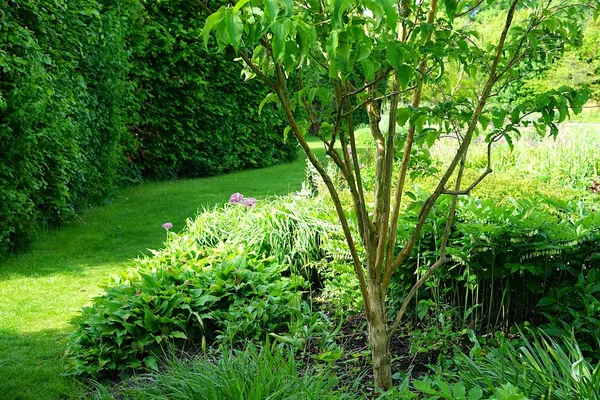
The Most Beautiful Multi-Trunk Trees
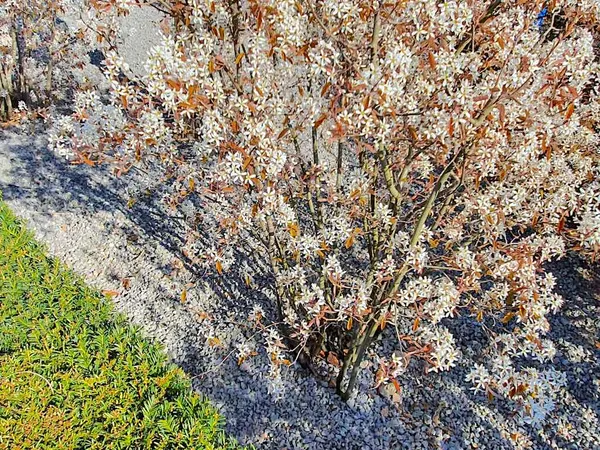
Multi-trunk trees are still very popular. They add character to your garden and have a natural look. A multi-trunk tree often has a somewhat more open appearance—ideal for small gardens. Trees and shrubs in this form also remain smaller than other specimens of the same species.
Although, in theory, you can turn many trees or large shrubs into multi-trunk trees, this technique is often applied to specific species.
Here is our list of popular, well-known, and lesser-known multi-trunked trees for small gardens. These are all trees and shrubs that remain small, grow more narrowly or primarily upward, or grow very slowly. Or species that can easily be kept small with the right pruning.
What exactly is a multi-stemmed tree?
Multi-stemmed tree: definition
Characteristics of multi-stemmed trees
A multi-stemmed tree is specially pruned from a young age to form multiple stems or main branches directly at or near the ground. It has at least 2 stems, but more commonly 3 to as many as 5 stems or upright main branches.
Multi-trunked trees often grow more slowly and/or remain somewhat smaller than other trees of the same species. Many species grow in a vase shape. The trunks are often bare, resulting in an open and airy growth habit.
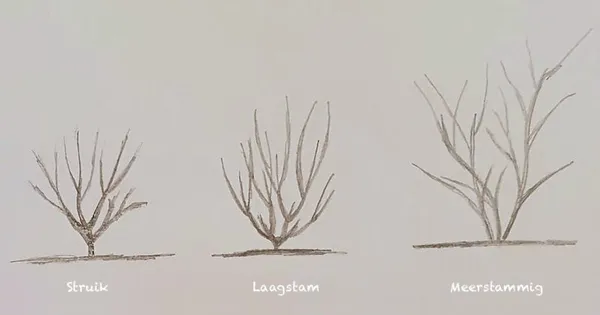
What is the difference between a multi-stemmed tree and a shrub?
Shrubs usually branch out from a main branch. Often, the branches start a little higher up, especially if the plant has never been pruned back. Multi-stemmed trees branch out from the ground or just above the ground. However, shrubs can also branch out from low down. In that case, the difference quickly becomes less clear.
However, another difference lies in the thickness of the lower branches. With shrubs, the branches are often still thin or young twigs. With a multi-stemmed tree, you can expect a bit more volume. At least 2 or 3 main branches, scaffold branches, or small trunks should already be thicker and sturdier.
However, there are also varieties sold as multi-trunk trees that do not branch near the ground but rather from a low trunk. This is something to keep in mind when purchasing. So think carefully about what you’d like in this regard. You often see this type of low branching in white birches, Japanese maples, and magnolias.
Will you choose deciduous or evergreen?
Although an evergreen multi-trunked tree is a beautiful sight in your garden, it is actually the deciduous varieties that are most valuable for a small garden. With these varieties, you’ll enjoy the seasons more fully and benefit from specific ornamental features each season—such as blossoms in the spring, fruit in the summer, beautiful fall colors in the fall, and the lovely, whimsical shapes or colorful trunks in the winter.
Perfect for small gardens
Multi-trunk trees are very well-suited for small gardens. They often remain smaller than the species itself and have an open, airy appearance. Many deciduous species are beautiful throughout the year. This makes them ideal trees for small gardens!
7 Popular Multi-Trunk Trees
- Amelanchier lamarckii (sour cherry tree)
- Magnolia (false tulip tree)
- Cornus kousa (large-flowered dogwood)
- Acer palmatum (Japanese maple)
- Rhus typhina (sumac)
- Malus (ornamental apple)
- Betula utilis (white birch, Himalayan birch)
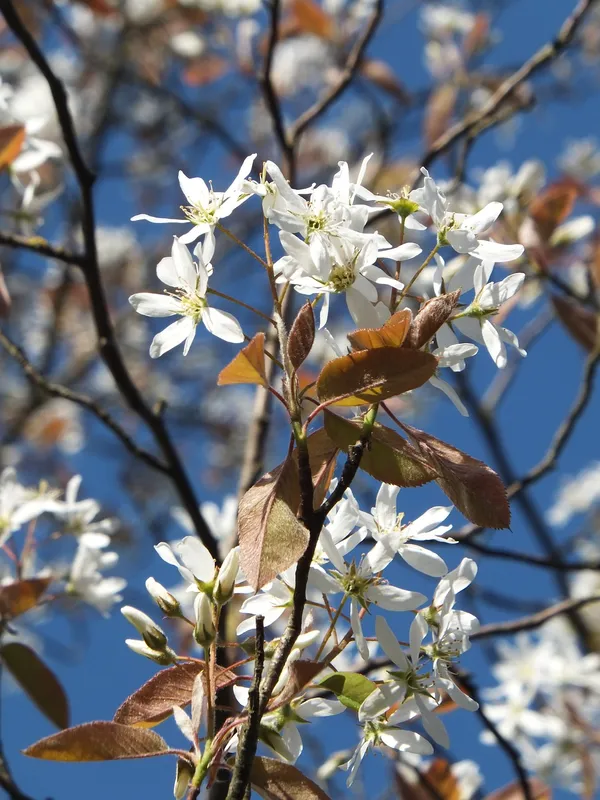
1. Multi-stemmed serviceberry (Amelanchier lamarckii)
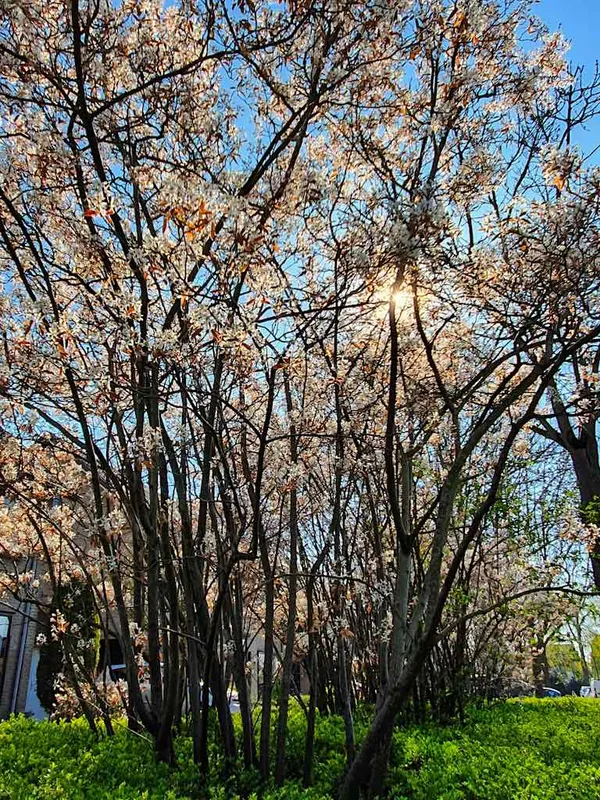
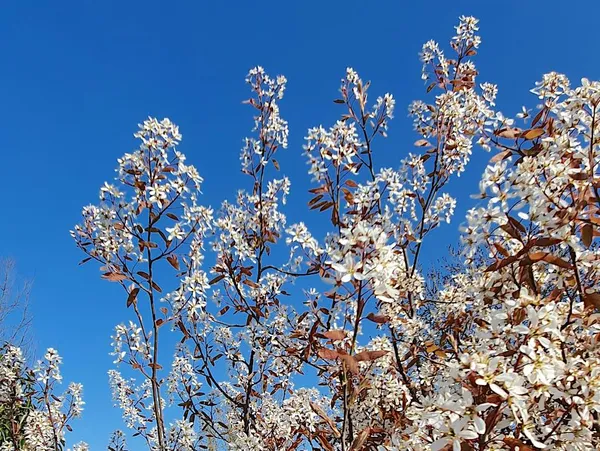
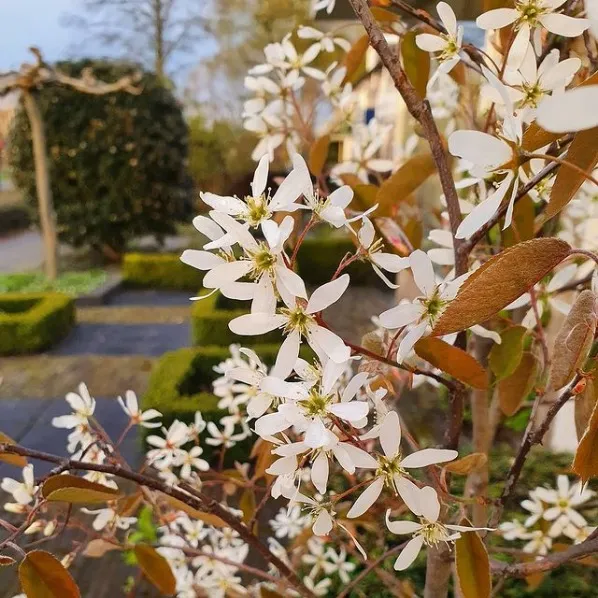
Perhaps the best-known tree for small gardens: the Amelanchier. It also looks very nice as a multi-trunked tree in a small garden.
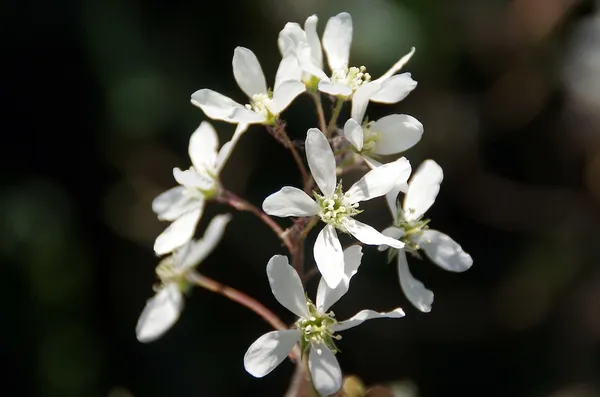
In the spring, the beautiful, pure-white blossoms adorn your garden, complementing the bronze-colored foliage that’s just beginning to sprout. After flowering, berries form in the summer that birds love. Our little trees are emptied in just a few days!
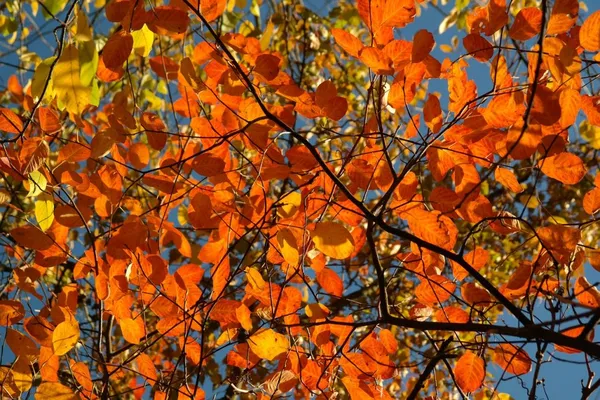
After summer, you can still enjoy the yellow, orange, and sometimes red hues of fall. In winter, you can already see the flower buds for spring on the gray-colored branches.
- Height: 3–5 m.
- Ornamental value: All seasons (blooms, berries, and fall color)
- Location: Sun, partial shade, shade; undemanding
2. Magnolia as a multi-trunked tree
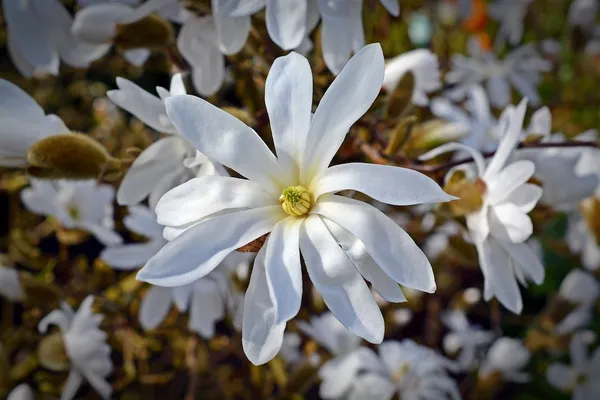
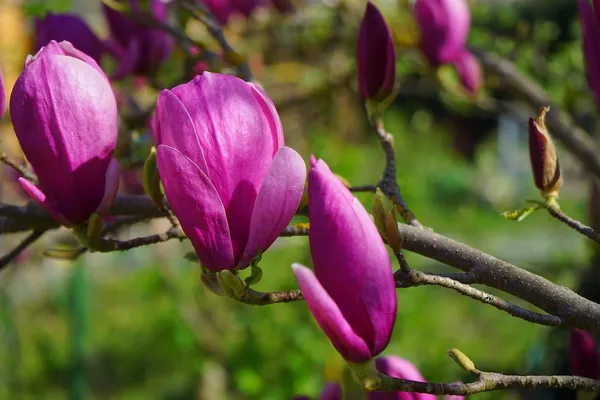
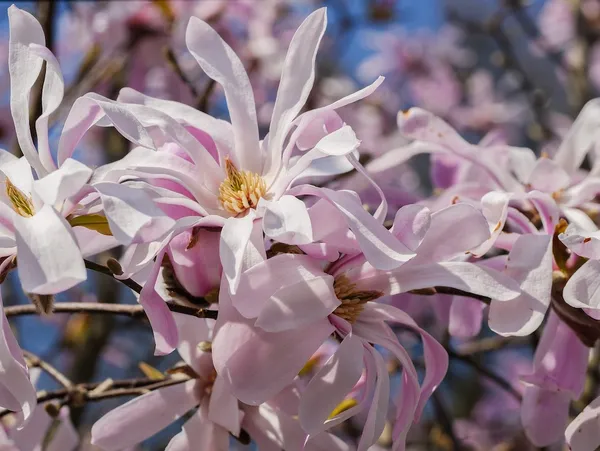
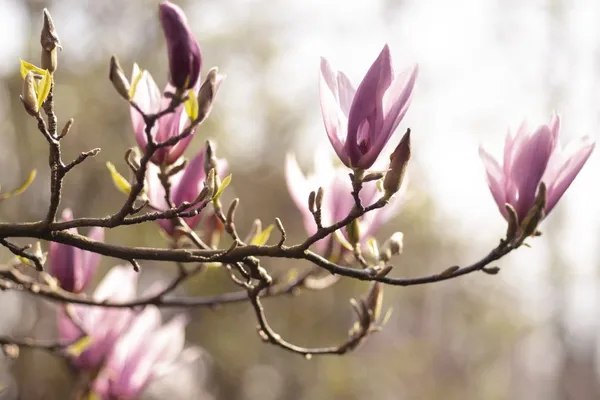
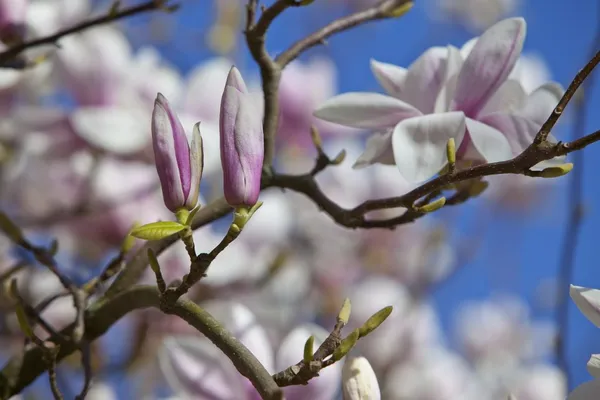
Magnolias (false tulip trees) are among the most beautiful and unique trees we know. Almost everyone recognizes their large pink and white-pink tulip-shaped flowers in early spring. The large flowers stand out even more because magnolias bloom before their leaves emerge and because few other plants are in bloom during that time.
Unfortunately, you can only enjoy the exuberant bloom for a relatively short time. That’s why magnolias are sometimes called boring, but nothing could be further from the truth! Many varieties develop beautiful, large, and sometimes almost exotic foliage. Some magnolias bloom a second time around summer, and their graceful, hairy buds become visible on the plant as early as fall. In warm summers, there’s a chance that exotic-looking fruits will form.
But perhaps the most beautiful thing about a magnolia (aside from its blooms, of course) is the way it grows. Magnolias have a beautiful and very natural growth habit. It’s no coincidence that people are often advised not to prune a magnolia. It is precisely this growth habit that makes magnolias very well-suited to being grown as multi-trunk trees. An added benefit is that they also grow more slowly as a result, because, after all, not all Magnolias Stay Small.
Suitable varieties: Magnolia stellata, Magnolia ‘Susan’, Magnolia liliiflora, Magnolia ‘Genie’, Magnolia ‘Heaven Scent’, Magnolia loebneri ‘Merril’.
- Height: 2–4 m.
- Main ornamental feature: Blossoms in early spring
- Location: Sunny, well-drained (slightly acidic) soil, preferably somewhat sheltered from cold winds
3. Multi-stemmed Japanese dogwood (Cornus kousa)
Cornus kousa is a beautifully shaped, profusely flowering shrub that is also well-suited as a multi-trunked tree in a smaller garden.
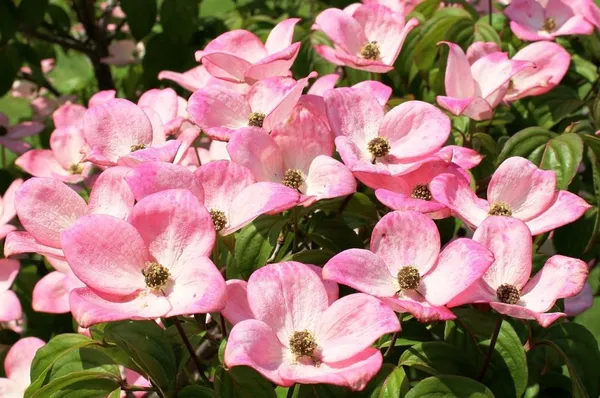
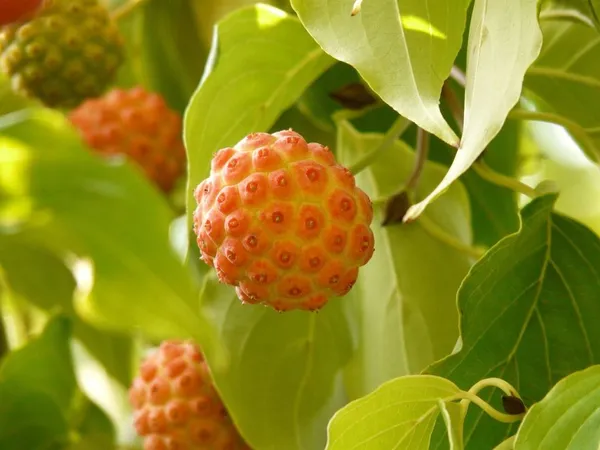
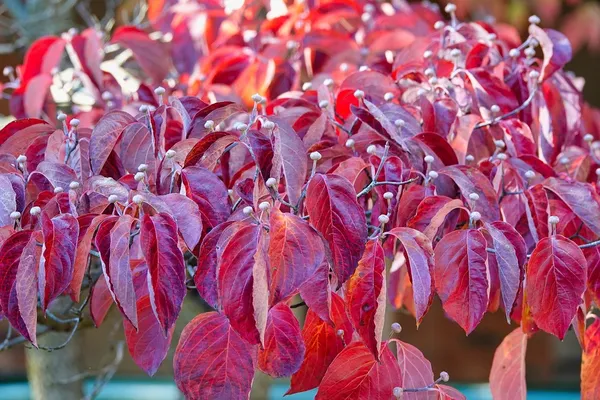
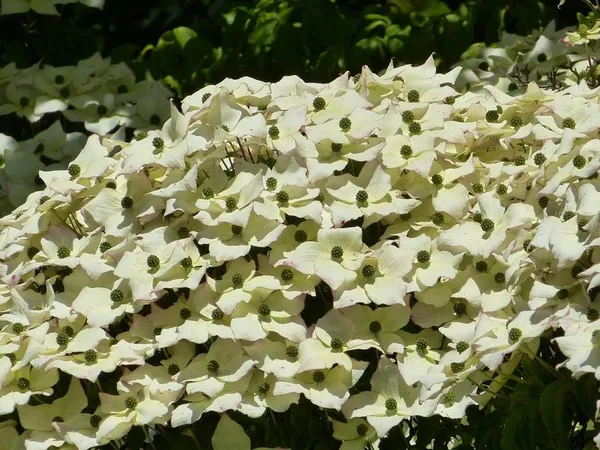
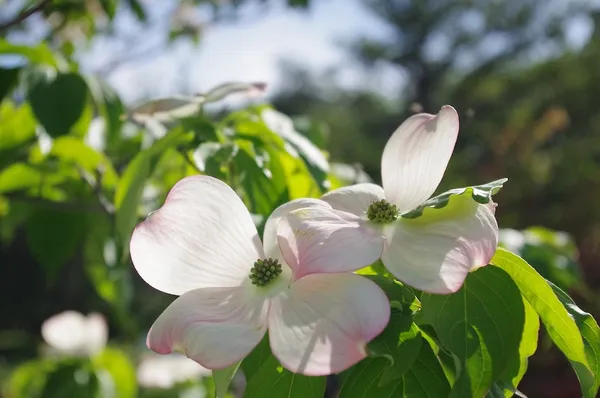
Around May and June, the striking star-shaped white flowers appear (though these are actually bracts; the actual flowers are less noticeable). After flowering, unique fruits resembling raspberries or strawberries develop. In the fall, the graceful, slightly wavy foliage takes on a beautiful yellow and orange-red to wine-red fall color.
Cornus kousa initially grows fairly upright and often doesn’t spread out until later. It is a shrub that grows more slowly as it ages. Cornus kousa naturally grows in layers, creating a distinctive tree shape.
Beautiful varieties: Cornus kousa 'China Girl' (cream-white to creamy white), Cornus kousa 'Miky Way' (pure white), Cornus kousa 'Satomi' (soft pink), and Cornus kousa 'Schmetterling' (stays smaller).
- Height: 3–6 m.
- Ornamental value: All year round (attractive foliage, striking blooms, fruit, and fall color)
- Location: Sun or partial shade, in well-drained soil, preferably slightly acidic, and ideally somewhat sheltered from frost and cold.
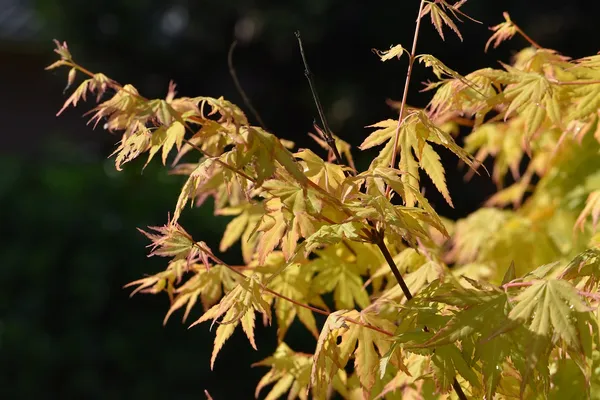
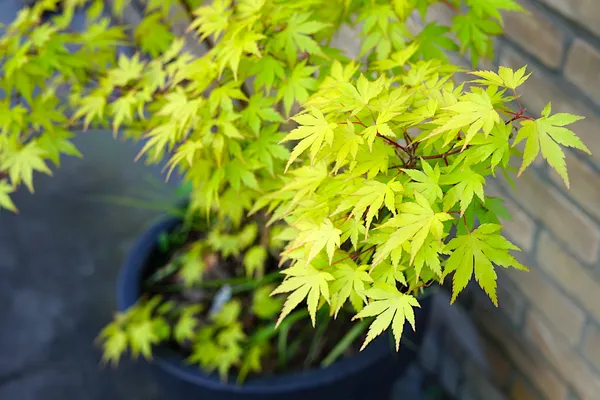
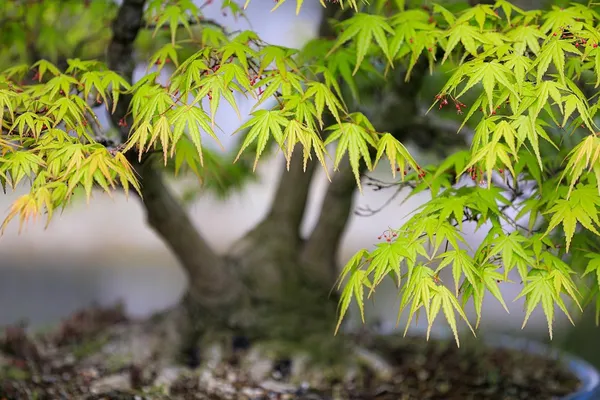
4. Multi-trunk Japanese maple (Acer palmatum)
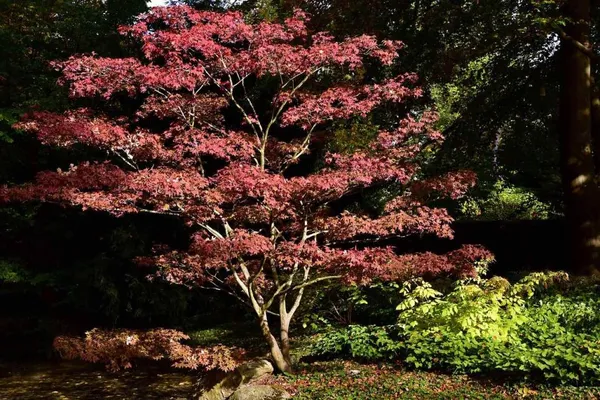
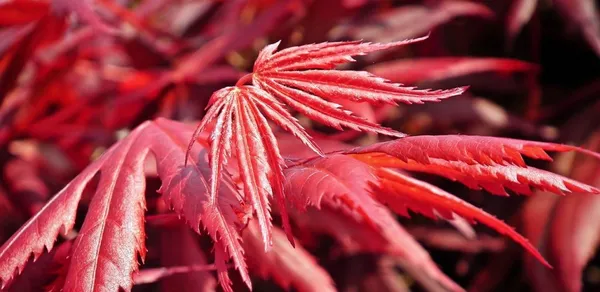
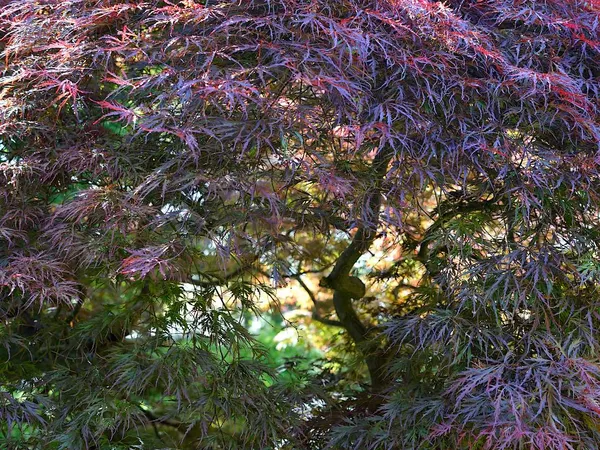
Are you looking for a multi-trunked tree with spectacular fall colors? Then nothing beats a Japanese maple! Depending on the cultivar, the palm-shaped leaves turn yellow, orange, purple, or red in the fall. Red Japanese maples are also always very popular. These are varieties that red leaves throughout the growing season have. In the fall, they often change color to a different shade of red. There are also varieties with deeply lobed leaves (Dissectum).
Acer palmatum is best known for its striking and beautiful fall foliage. But a Japanese maple is anything but boring the rest of the year, either! They often display multiple leaf colors throughout the year. For example, the ‘Orange Dream’ variety sprouts yellow-orange leaves in the spring, and the foliage turns light green in the summer. The fall color then shifts to orange-red. There are also varieties that produce samaras in the summer (winged nuts, often red in color). There are even Japanese maples that adorn the winter garden with a beautifully colored trunk, such as Bi-Hoo and Sangokaku.
Beautiful varieties:
- Acer Atropurpureum (dark red, turns deep red)
- Acer Dissectum (striking light green foliage, especially in spring; deeply lobed, turning bright orange to light red in fall)
- Acer Garnet (upright growth; deeply lobed wine-red leaves turn bright red in the fall)
- Acer Orange Dream (leaves emerge as a soft orange and turn orange-red in the fall), Shirasawanum Aureum (yellow leaves, turning orange-red)
- Acer Osakazuki (hand-shaped green leaves that turn a beautiful shade of red)
- Acer Sangokaku (yellow autumn color, coral-red branches), Bloodgood (grows more compact, dark red to black-red foliage, turns deep red)
- Height: 2–4 m.
- Ornamental value: Foliage color
- Location: Partial shade or shade, sheltered from cold east winds Prevent brown leaf edges. Slightly acidic to acidic soil
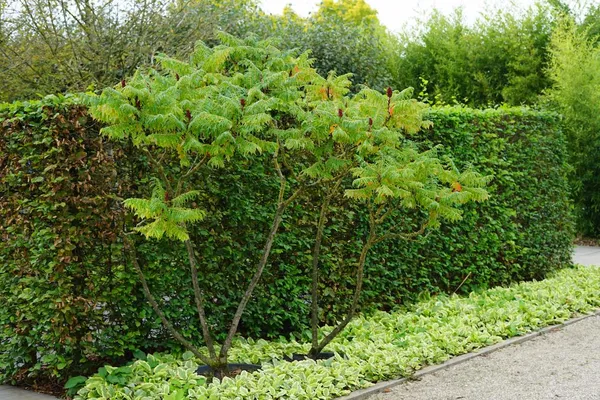
5. Multi-stemmed sumac (Rhus typhina)
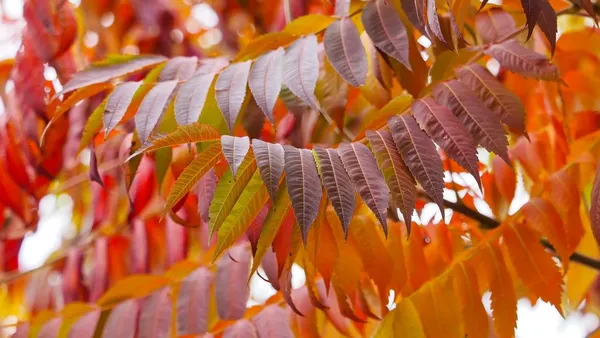
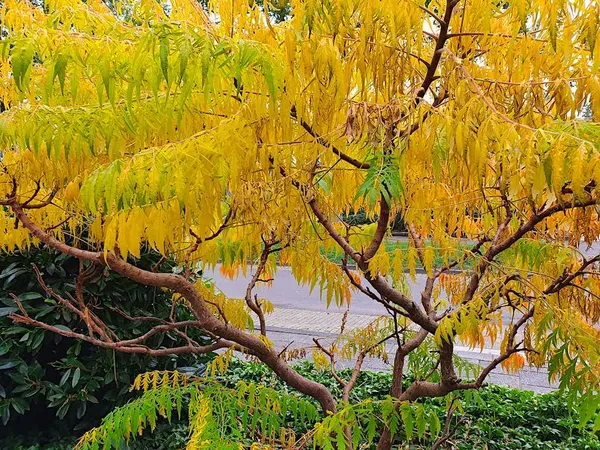
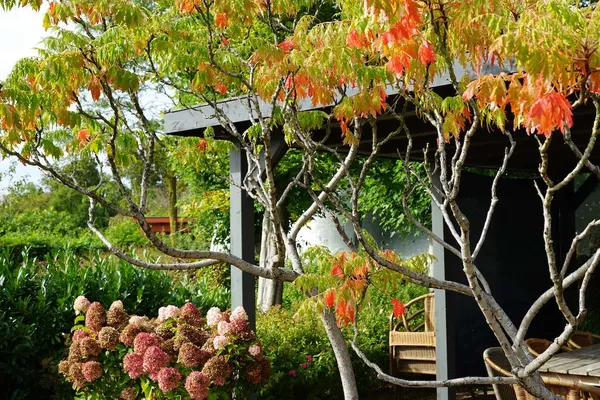
A truly beautiful and almost fairy-tale-like tree, with a lovely, naturally open growth habit, striking blooms, and spectacular fall color! We love the velvet tree. It’s a fairly fast grower, but once it has reached a certain height and width, its growth slows down a bit.
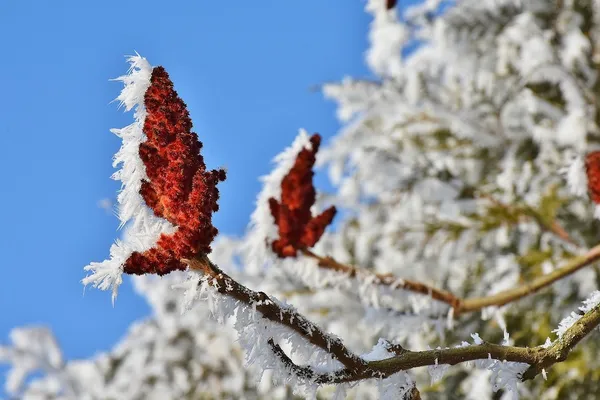
The graceful, pinnate foliage is also worth noting. In the fall, the leaves turn yellow to bright orange and orange-red to purplish-red. Around June, striking burgundy-red, hairy flower panicles appear, which remain visible well into winter, long after the leaves have fallen. The young branches are reddish-brown and velvety-hairy.
This tree is undemanding and will take root easily in many places. According to some people, it’s TOO easy. Over time, the tree will develop long rhizomes and sprout elsewhere in the flower bed or garden. If this is not what you want, remove the new shoots promptly and transplant them, discard them, or give them away.
Attractive varieties: Rhus typhina ‘Dissecta’ (with deeply lobed leaves), Tiger Eyes (also with deeply lobed leaves, more orange in color, and remains smaller)
- Height: 3–5 m.
- Ornamental value: Feathery foliage, long-lasting flower plumes, and striking fall colors
- Location: Full sun, partial shade; not demanding, but prefers not to be too exposed to the wind
6. Ornamental apple as a multi-stemmed tree (Malus)
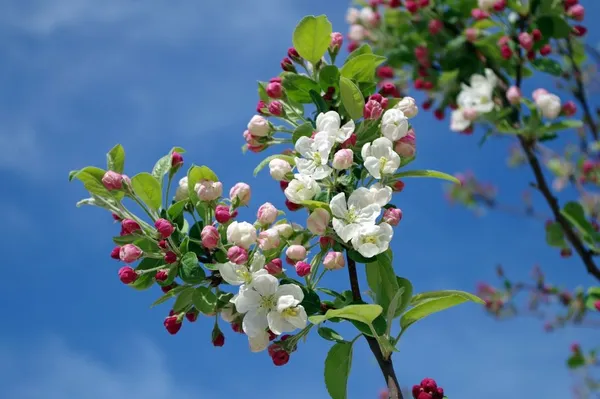
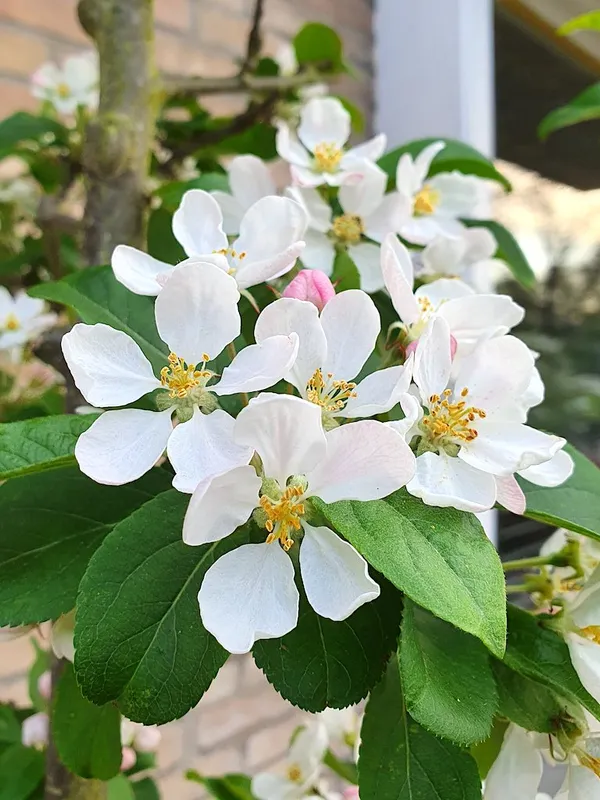
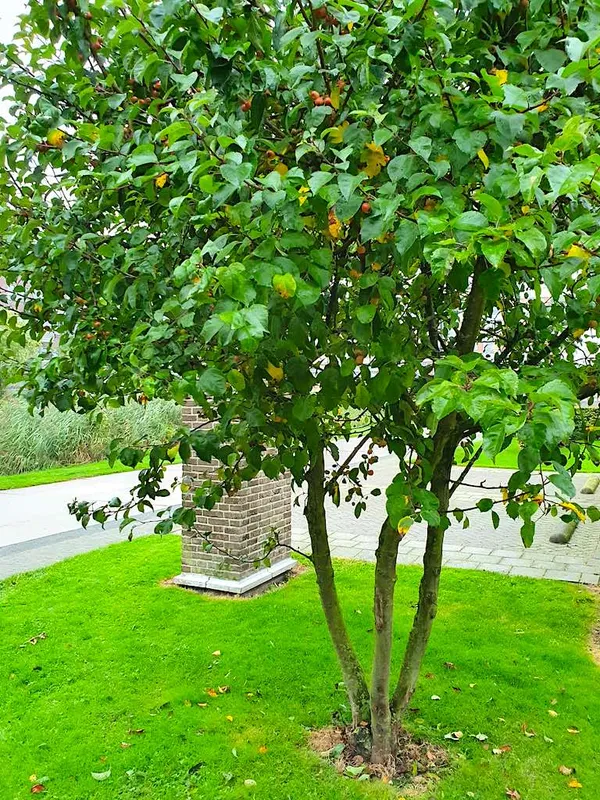
Another fantastic multi-trunk tree is the ornamental apple tree. Yet it is rarely used in this way. An ornamental apple tree, in particular, is a joy to enjoy all year round. Its growth habit and appearance are also very well suited to a multi-trunk tree.
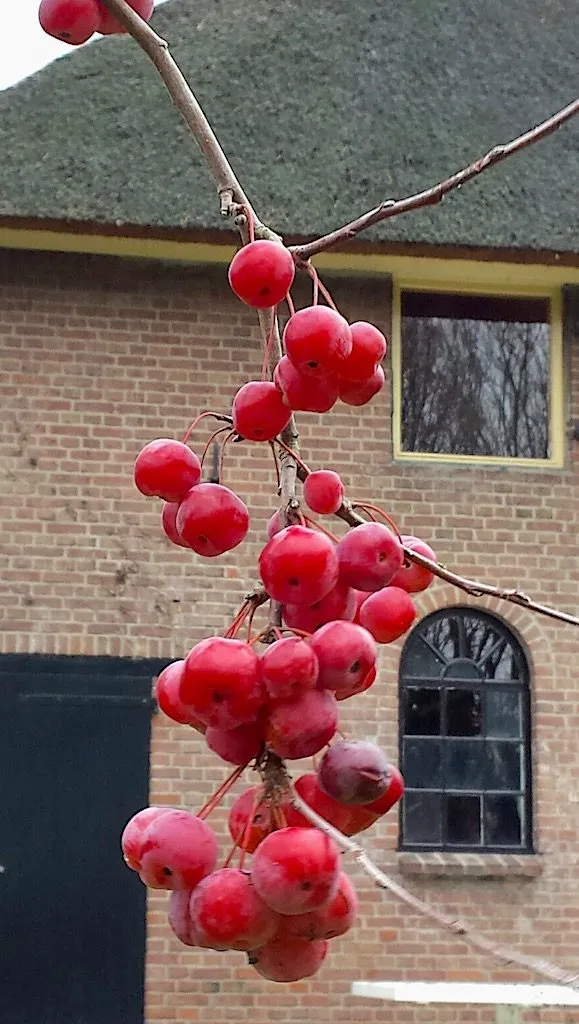
In the spring, you can enjoy the abundant white to white-pink blossoms. Then, the young leaves emerge in a fresh green color. After flowering, the small apples begin to form. As summer progresses, the apples take on more shape and color. In the fall, the leaves turn yellow-orange or yellow-brown, and the ornamental apples have reached their final color. The more leaves that fall, the more the ornamental apples stand out against the blue autumn sky. In many varieties, the apples remain on the tree for a long time: often, frost is needed to harden the apples so the birds can’t eat them.
Beautiful varieties:
Malus ‘Red Sentinel’ (bright red ornamental apples, white-pink blossoms), ‘Evereste’ (orange-red ornamental apples, white blossoms), ‘Golden Hornet’ (yellow ornamental apples and white-pink blossoms), ‘Rudolph’ (leaves emerge brown-red, purple blossoms, and orange-yellow ornamental apples).
- Height: 3.5–4.5 m.
- Ornamental value: Blooms in the spring and ornamental apples in the fall/winter
- Location: Full sun, nutrient-rich and well-drained soil
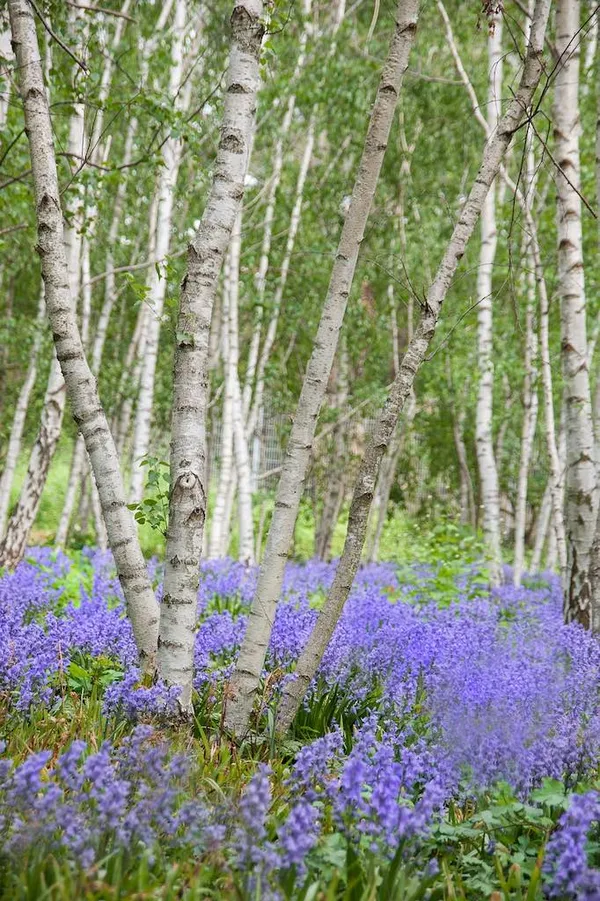
7. Multi-stemmed white birch (Betula utilis)
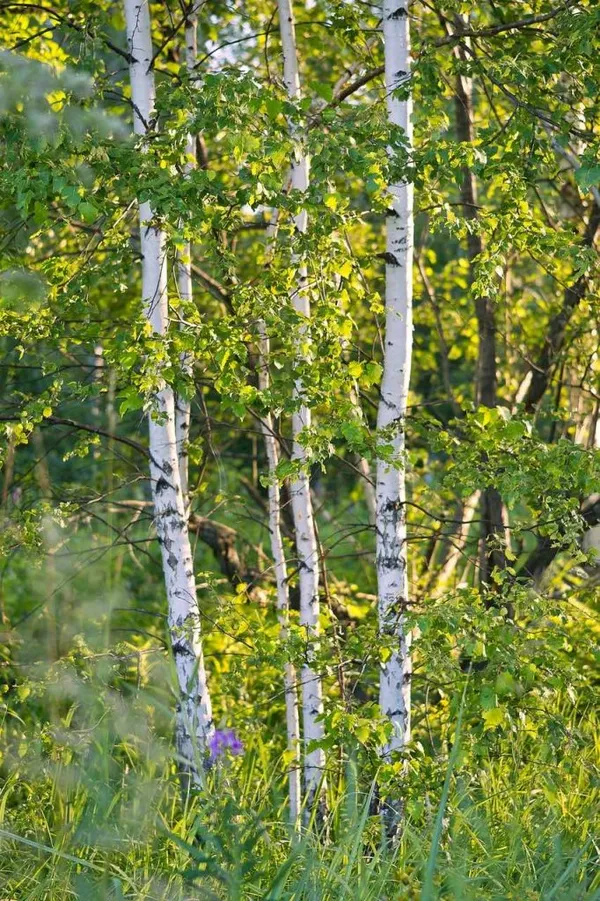
Actually, a birch tree grows much too large for a small garden. But as a multi-stemmed tree, the white birch or Himalayan birch is much less vigorous. This is because multiple trees or cuttings are often planted together in a single pot, which creates fierce competition. As a result, a white birch can still be grown in a small garden! However, regular pruning is recommended.
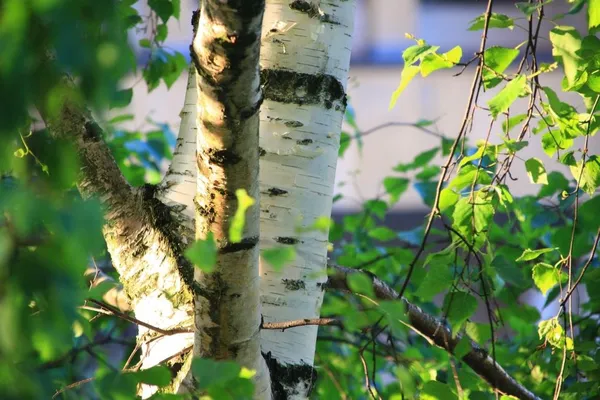
Betula utilis has a somewhat open growth habit, allowing light to filter through the foliage even as the tree matures. Its most distinctive feature, of course, is its strikingly white trunks. In young trees, the bark may still be slightly light brown. As the tree ages, the trunk becomes increasingly white. In the fall, the leaves change color from dark green to golden yellow, which looks very beautiful against the white, sometimes peeling bark.
Varieties: Betula utilis ‘Doorenbos’ / ‘Doornbos’ (Dutch selection of jacquemontii, based on the whitest trunk)
- Height: 8–10 m.
- Ornamental value: White trunk in winter, golden-yellow fall foliage
- Location: A spacious spot, not demanding
7 more beautiful multi-trunk trees
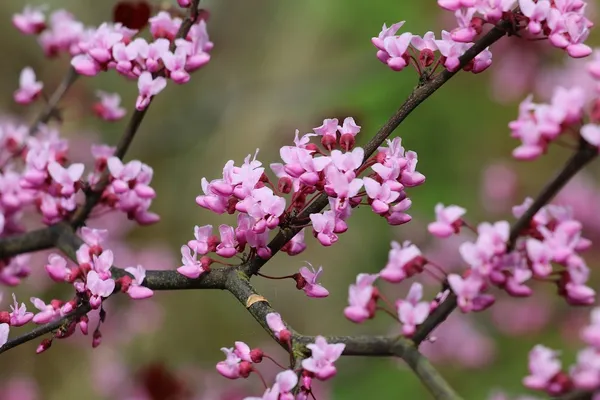
8. Cercis canadensis (American Judas tree)
The blooms are particularly striking because Cercis blooms on bare wood. Around April–May, the pink to purplish-pink flowers appear in dense clusters on the bare branches. Only then does the tree begin to grow leaves. Depending on the variety, these leaves are large, oval, heart-shaped, or kidney-shaped.
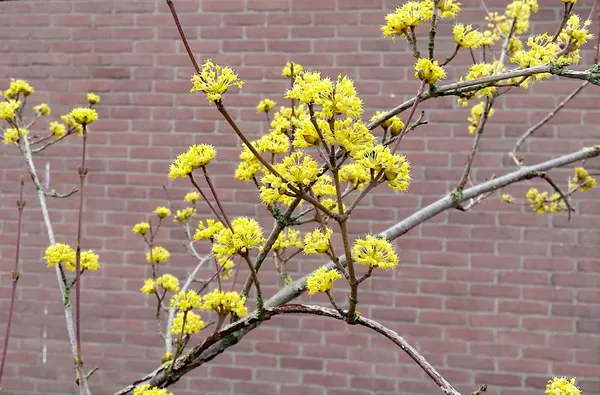
9. Cornus mas (yellow dogwood)
In February, the entire tree is transformed into a sea of tiny yellow flowers. Ideal for early-season bees. After flowering, red fruits appear in the summer. In the fall, the leaves turn a yellow-orange to orange-red color.
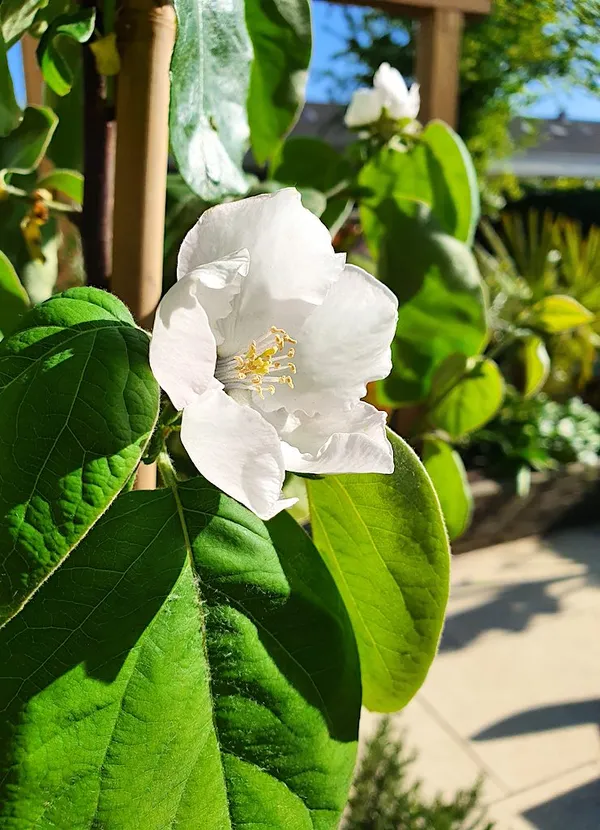
10. Cydonia oblonga (quince)
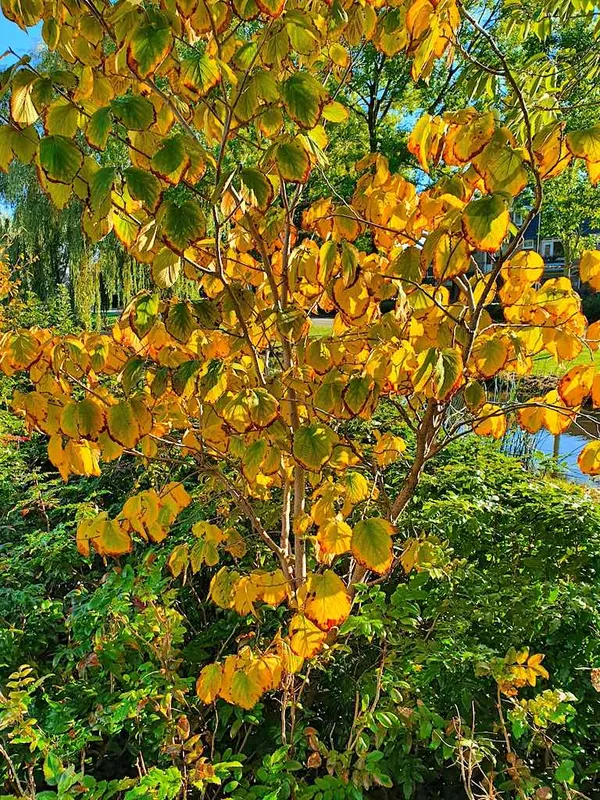
A very pretty little fruit tree with large pink-and-white blossoms and yellow pear- or apple-shaped fruits in the fall. Graceful foliage with beautiful yellow fall color and red veins.
11. Hamamelis intermedia (witch hazel)
Not only does it have beautiful winter blooms with distinctive spider-like (fragrant) flowers, but it also has an attractive growth habit and yellow-to-orange fall color.
12. Koelreutia paniculata (yellow soapberry, bubble tree)
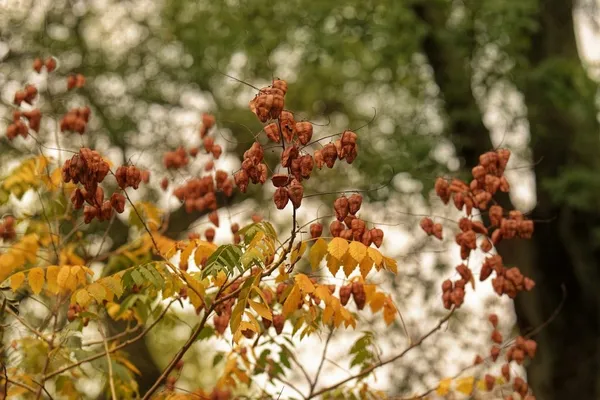
Distinctive yellow flower spikes in the summer; the leaves start out bronze-colored in the spring, then turn green, and turn yellow-orange in the fall.
13. Prunus serrulata (ornamental cherry)
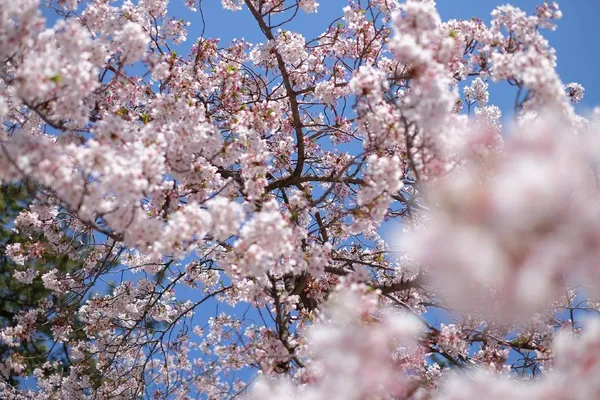
Not only is an ornamental apple tree ideal, but an ornamental cherry tree is also very well-suited as a multi-trunk tree. It usually does not bear fruit, but it does produce abundant blossoms and striking fall colors.
14. Sorbus aucuparia (rowan)
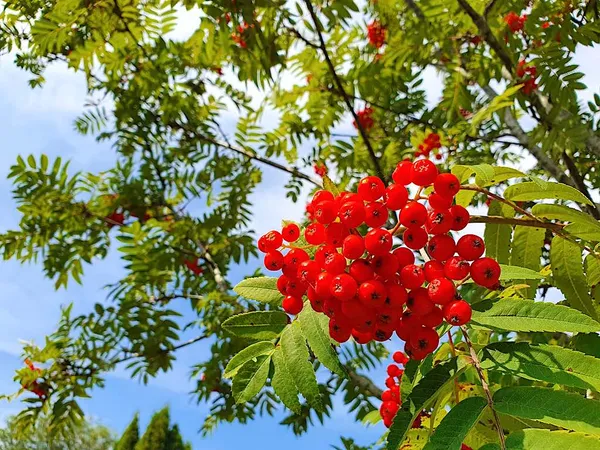
Rowan is usually grown as a standard tree, but it also makes a wonderful addition to the garden as a multi-stemmed tree. Its white blossoms adorn the spring garden, and its orange or red berries are eagerly devoured by birds in late summer. Moreover, the pinnate leaves are a delight to the eye.
Less Well-Known Varieties for a Multi-Trunk Tree
Below are some more varieties that look especially beautiful as multi-trunk trees. Many of these varieties do grow somewhat larger, but can be kept smaller with more frequent pruning.
- Albizia jullibrissin (Persian silk tree) – Foliage and exotic blooms
- Corylus avallana (hazel) – Yellow catkins in February and hazelnuts in the fall
- Elaeagnus umbellata (autumn olive) – Silver-colored leaves and red berries
- Gleditsia triacanthos ‘Sunburst’ (honey locust) – Yellow to bright yellow pinnate leaves
- Heptacodium miconoides (seven-sons tree) – White flowers and peeling bark
- Lagerstroemia indica (Indian lilac) – Striking flowers and peeling bark
- Parottia persica (Persian ironwood) – Spectacular fall color and red blooms