
The Best Flower Bulbs for Bees
Early in the spring, bumblebees and honeybees become active again. Because very few plants are in bloom during this time, there is little nectar and pollen available. That’s exactly why it’s important to plant early-blooming flower bulbs (in the fall). This way, you’ll ensure there’s plenty of food for bees and bumblebees in the spring. We’d love to tell you which flower bulbs are best for bees and how to plant them in your garden.
When do bees become active?
In early spring, starting around February, the first bumblebees become active again. Some wild bees are active starting in February, while others become active around March. Honeybees also become active starting in March.
What are the best flower bulbs for bees?
The best flower bulbs for bees are early-blooming varieties that produce plenty of nectar and pollen. Flower bulbs that bloom later in the spring or in the summer are also attractive to bees, but around that time, the supply of nectar and pollen is much greater because so many other plants are in bloom. That’s why you can make the biggest difference with early spring-blooming flower bulbs.
Choose organic flower bulbs
We always recommend choosing organic flower bulbs. This is especially important for bees, because it ensures that they won’t be exposed to harmful substances. No chemical pesticides or synthetic fertilizers are used in the cultivation of organic flower bulbs.
Winter aconite (Eranthis)
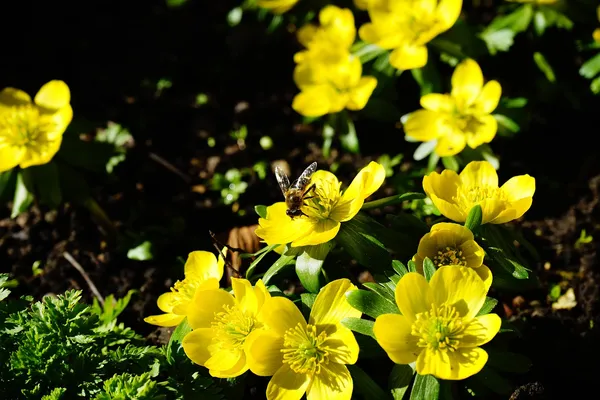
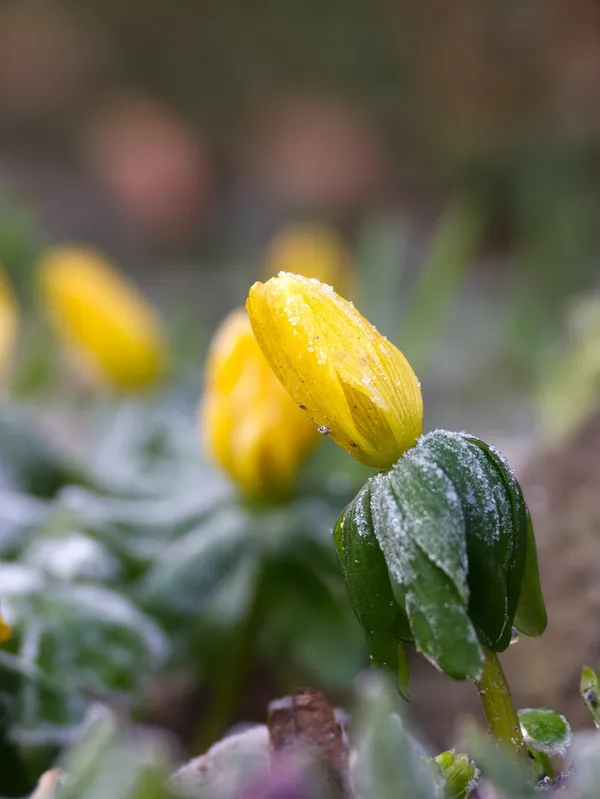
Eranthis hyemalis is one of the first plants to bloom each year. The blooming season begins around February. Winter aconite features bright yellow, cup-shaped flowers set against dark green bracts and grows to a height of no more than about 10 cm. At lower temperatures, the flower remains closed. It pairs beautifully with crocuses or snowdrops, for example.
Snowdrops (Galanthus)
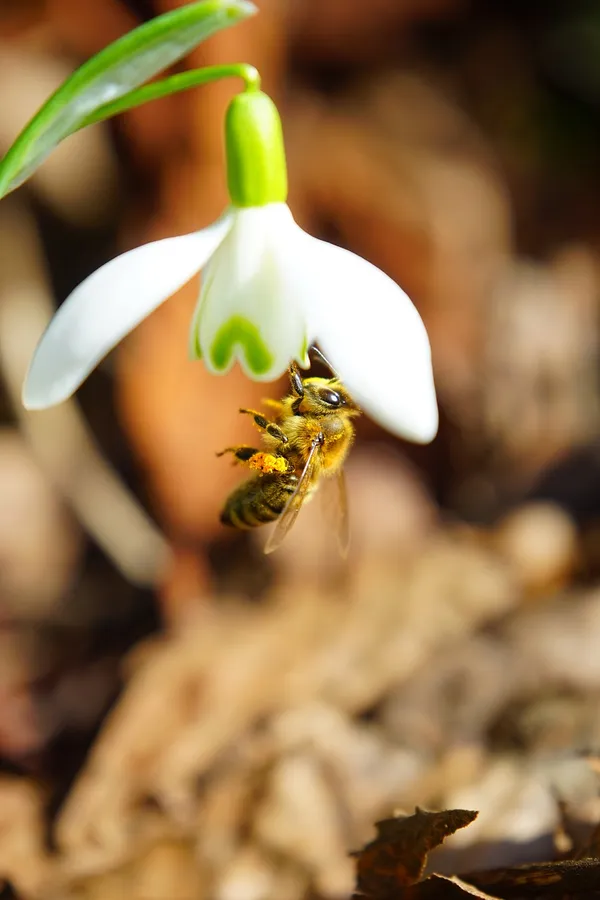
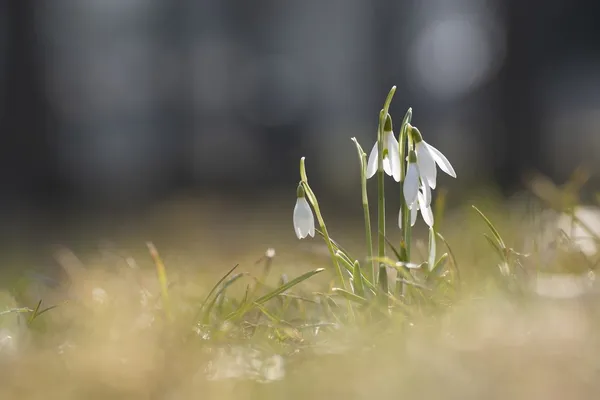
Galanthus nivalis, also known as the snowdrop, blooms early, producing small, white, drooping flowers. Snowdrops are often considered one of, if not the first, flowering bulbs to bloom, starting in February. Snowdrops are especially beautiful when planted in large groups and naturalize well. In addition to the common snowdrop (Galanthus nivalis), the large snowdrop (Galanthus elwesii) is also commonly seen in gardens.
Crocus (Crocus)
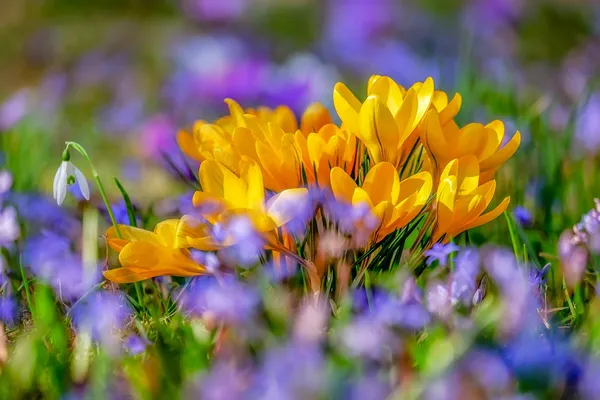
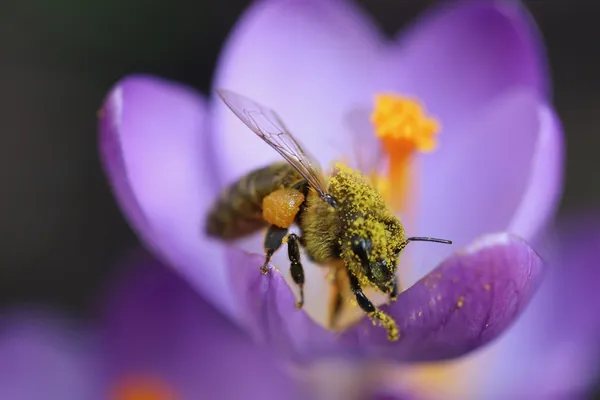
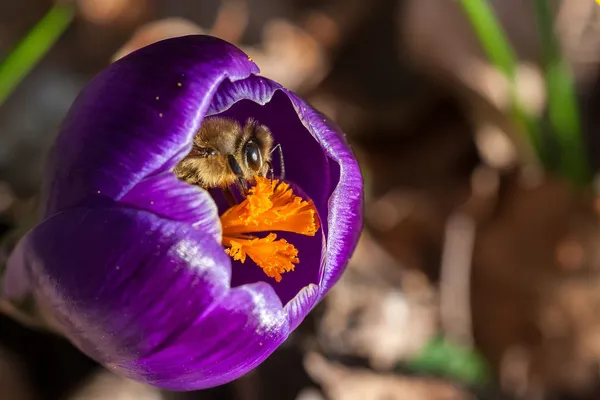
Another one of the first flowers to bloom is the crocus. For example, choose field crocus (Crocus tommasinianus) or variegated crocus (Crocus vernus). As early as February or March, crocuses bloom with purple, white, or yellow flowers. They’re ideal for naturalizing, for example in the lawn. Crocuses also look their best when planted in large groups. Crocus requires a sunny location and well-drained soil.
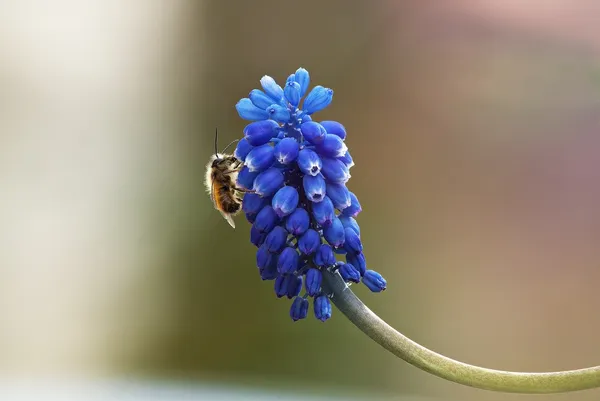
Grape hyacinths (Muscari)
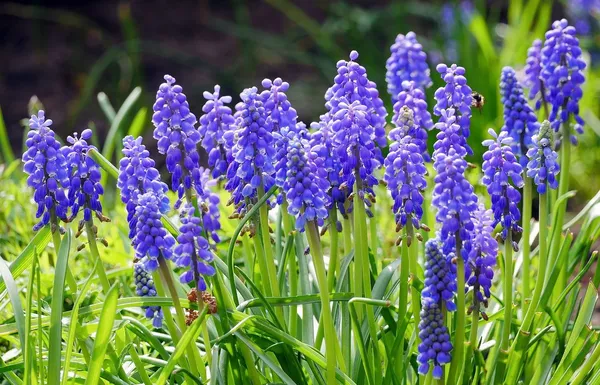
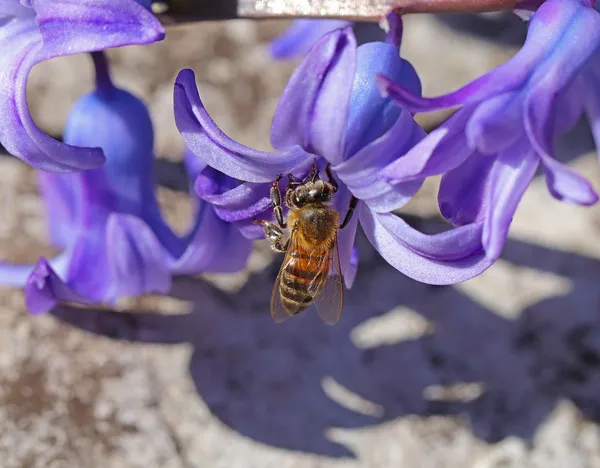
Muscari armeniacum (grape hyacinth) is, of course, well known to everyone and a very easy-to-grow flower bulb. Muscari blooms with small but striking blue flowers in upright clusters. There are now also white and bicolored grape hyacinths. Blue grape hyacinths look lovely at the front of a border, along a path, or in a pot. They naturalize very easily and quickly. They make a beautiful combination with daffodils, wood anemones, or tulips.
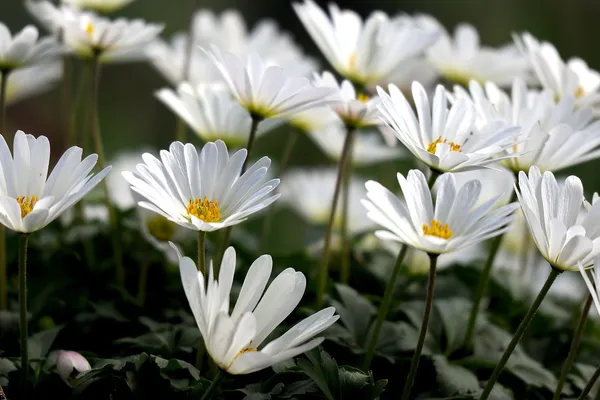
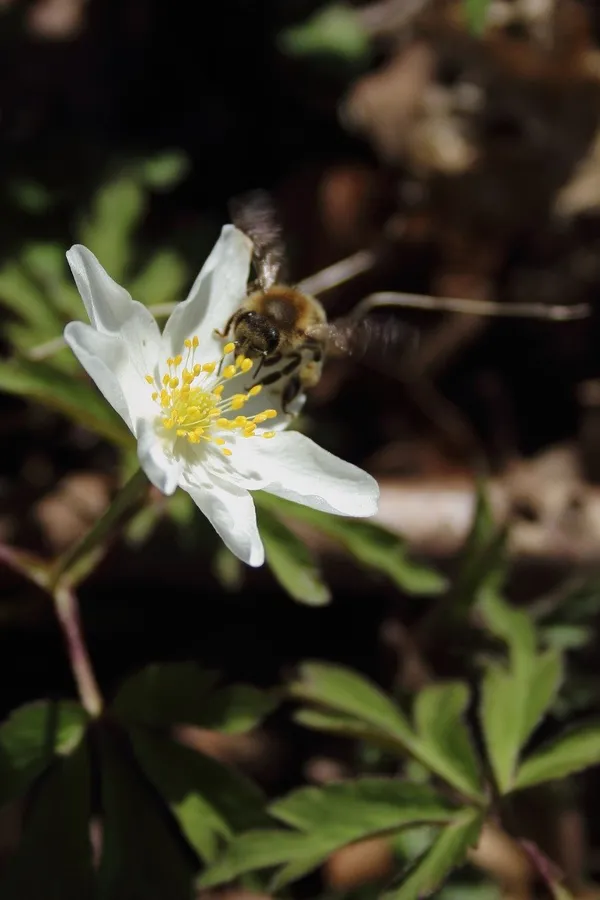
Wood Anemone (Anemone)
Anemone nemorosa (wood anemone or wild anemone) blooms with white, star-shaped flowers. The wood anemone begins to bloom around March and eventually forms a beautiful carpet of white flowers. It grows to no more than about 20 cm and is also suitable for slightly moister soil. The wood anemone pairs beautifully with, for example, grape hyacinths.
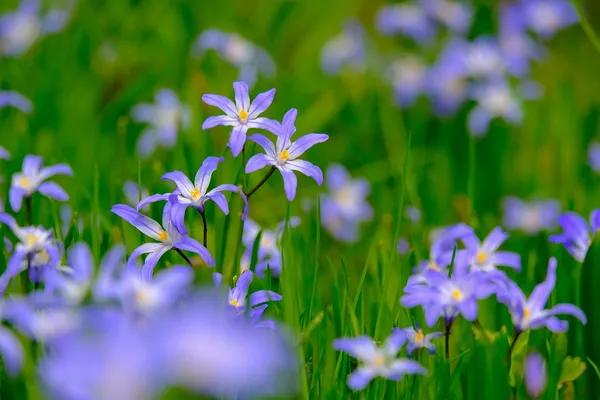
Star Hyacinth (Scilla)
Scilla (star hyacinth) produces star-shaped flowers around March or April. Star hyacinth stands out for its blue flowers, but it also comes in purple, white, and pink. Scilla looks beautiful when planted (or, more accurately, potted) in large numbers. It always attracts plenty of bees and bumblebees. It pairs beautifully with daffodils or anemones.
Ornamental Onion (Allium)
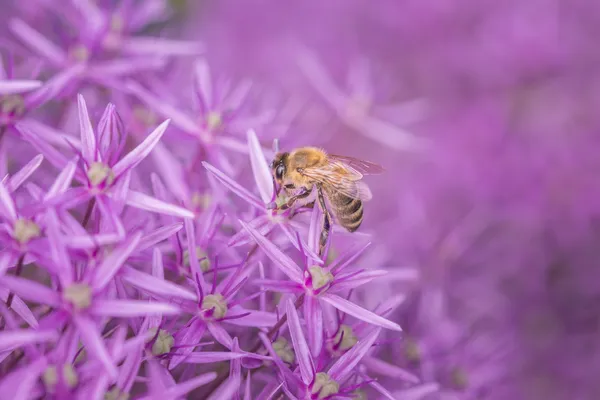
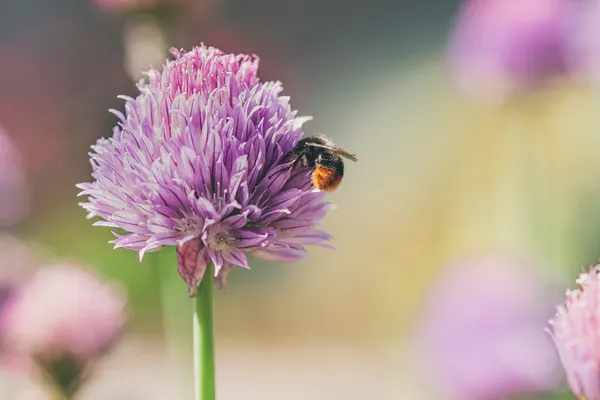
Allium, also known as ornamental onion, has a distinctive spherical flower (which actually consists of many tiny florets) and is always popular with bees. However, Allium blooms much later than the early-blooming bulbs mentioned above, by which time many other plants are already in bloom. Still, it’s a real magnet for bees. Allium usually blooms in shades of purple, purplish-red, pinkish-purple, or white, and the flowers range from small, spherical blooms to enormous flowering clusters.
Complete Bee Buffet
Do you want to create a true buffet for bees? Then mix together a variety of high-quality flower bulbs that are good for bees, making sure they bloom in succession. This way, you can provide a good food source right from the moment the first bees and bumblebees become active. You can also use ready-made flower bulb mixes, such as the Bee Buffet: Royal Aperitif from Natural Bulbs.
Tips for a Bee-Friendly Garden
In addition to the best flower bulbs for bees, it’s of course also important that your garden is sufficiently bee-friendly. Here are our tips:
- Always choose organically grown flower bulbs: that way, you can be sure that bees won't be exposed to harmful substances.
- You may have already noticed, but we don't mention tulips or daffodils here. That's because most varieties of these flowers are less attractive to bees.
- Ensure a continuous bloom cycle so that you can provide plenty of nectar and pollen from early spring through late fall.
- Combine flower bulbs with early-blooming perennials. This will provide even more food for bees in the spring.
- Plant plenty of native or naturalized species, or species with single flowers.
- Create shelters for bees. For example, place a bee hotel in a sunny, warm, but quiet spot in your garden.