
The 7 Most Beautiful Winter-Blooming Plants
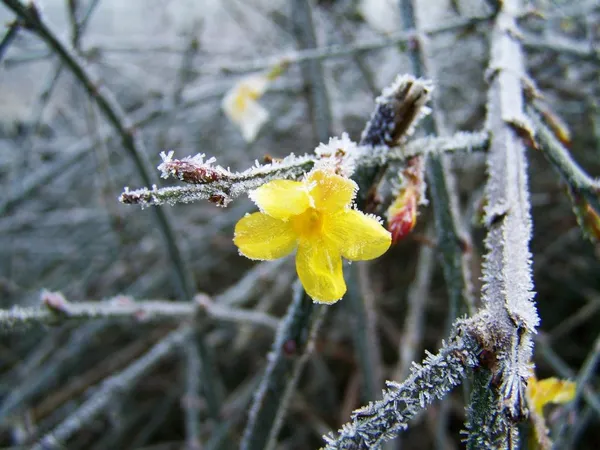
For many gardening enthusiasts, winter is their least favorite season. A common complaint (aside from the cold temperatures) is that so few plants are in bloom in the garden. Yet there are still plenty of plants that bloom profusely in winter: It’s time for winter-blooming plants!
An added bonus is that many of these winter-blooming plants also have a wonderful fragrance.
The 7 Most Beautiful Winter-Blooming Plants
Viburnum tinus (snowball bush)
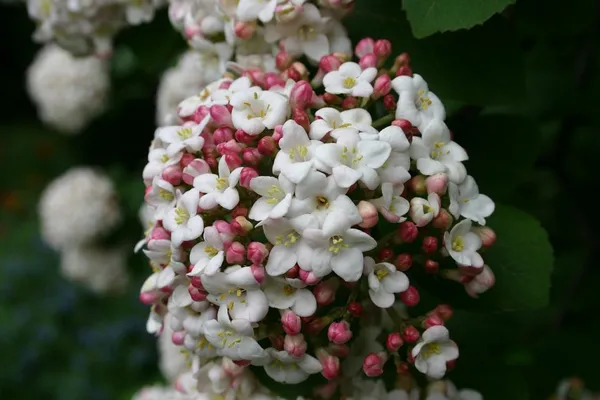
Viburnum tinus is evergreen and naturally grows as a spherical shrub. It blooms profusely and for an exceptionally long time: from November through as late as April! Beautiful little white flowers open from the countless brown-red buds. Once in full bloom, it makes a striking appearance in the garden. After flowering, black berries form. The rest of the year, the tinus provides structure thanks to its evergreen nature. Viburnum tinus can also be pruned to grow as a small tree. This snowball bush prefers a sunny location. It eventually reaches a height of about 2.5–3 meters.
There are several beautiful cultivars:
The Viburnum tinus 'Eve Price' has brownish-red flower buds and white-pink flowers. 'Gwenllian' has pink buds and white-pink flowers. 'Compactum' has pink buds and white flowers. 'Pink Prelude' has white flowers that slowly turn pink.
Viburnum bodnantense Dawn (snowball)
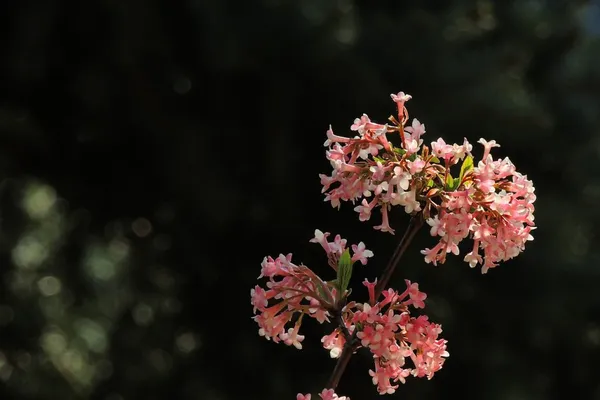
Viburnum bodnantense 'Dawn' is a deciduous shrub that blooms from January through March. The shrub grows primarily upright. The flowers consist of clusters of pink blossoms that fade to a white-pink hue. Because the Bodnantense Dawn blooms on bare branches, it stands out particularly well in the winter garden. The flowers give off a wonderfully sweet fragrance. In spring and fall, the foliage turns bronze. In summer, the foliage is dark green and slightly glossy. This snowball bush prefers a sunny location and slightly acidic soil that is not too wet. It reaches a final height of about 2–2.5 meters.
There are several beautiful cultivars:
Viburnum bodnantense 'Charles Lamont' has light pink flowers and blooms in January and February. This variety is said to be less susceptible to dieback. 'Deben' has pink buds and white flowers, but is slightly less hardy.
Mahonia (grapeberry)
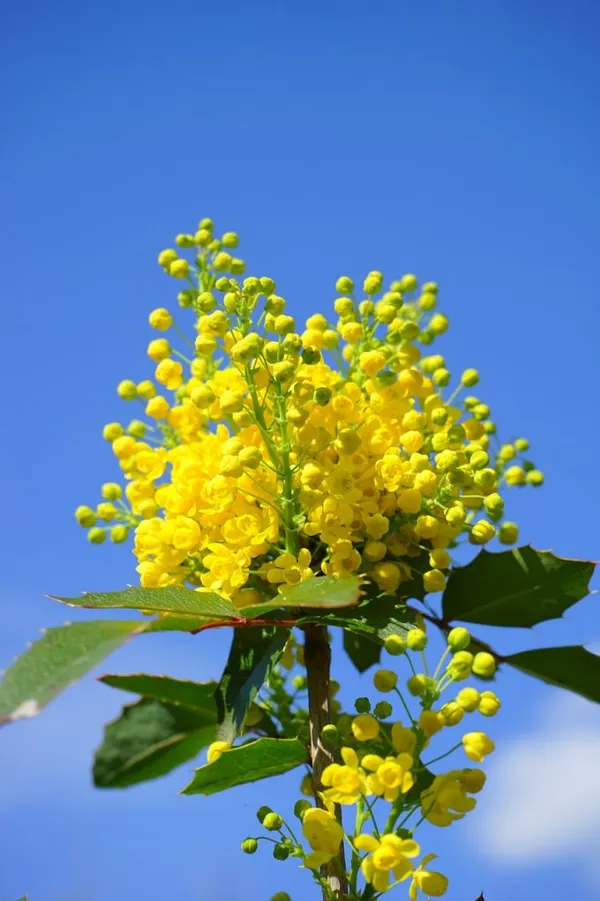
Mahonia is an evergreen shrub with feathery leaves and clusters of yellow flowers from January through April. Blue berries follow after flowering. Most varieties have prickly leaves, but there are now also cultivars that are not prickly. In addition to its evergreen nature, abundant blooms, and berries, many varieties also display beautiful dark red or purple fall foliage. Mahonia japonica remains somewhat more compact than the other species and grows to a height of about 1–1.5 meters.
Hamamelis (witch hazel)
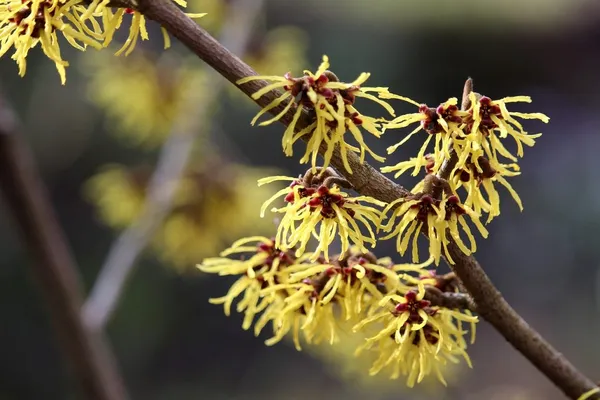
Witch hazel is a deciduous shrub with distinctive flowers on its bare branches. The flowers consist of clusters of elongated petals that curl up in rain and cold. There are several varieties. The flowers are mainly yellow, but they can also be orange or red. The flowers have a pleasant fragrance. In addition, many varieties also display beautiful fall colors.
There is Hamamelis mollis (Chinese witch hazel), Hamamelis japonica (Japanese witch hazel), and Hamamelis intermedia (a hybrid between the Chinese and Japanese varieties). Most species tend to spread quite widely, which means the witch hazel can eventually take up a fair amount of space. Still, it is a slow-growing plant. With regular pruning, the witch hazel can also be grown in small gardens. All species prefer slightly acidic soil. Their final height ranges from about 2 to 4 meters.
Jasminum nudiflorum (winter jasmine)
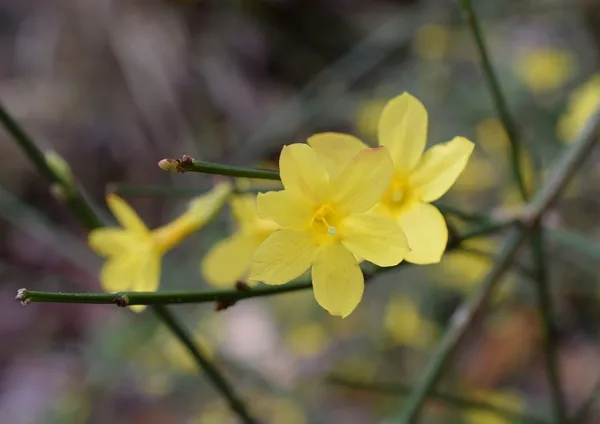
Jasminum nudiforum is a deciduous shrub that is usually grown as a climbing plant. The plant requires support, as it is neither self-clinging nor twining. Its striking blooms consist of small, yellow, star-shaped flowers that appear on the still-bare branches. It blooms from December through March. The branches are square in cross-section, with young branches green in color and older branches brown. After flowering, dark green oval leaves develop. Failure to prune and train the plant can result in somewhat untidy growth. Winter jasmine prefers a fairly sunny location and typically grows to a height of about 2–3 meters.
Chimonanthus praecox (winter sweet)
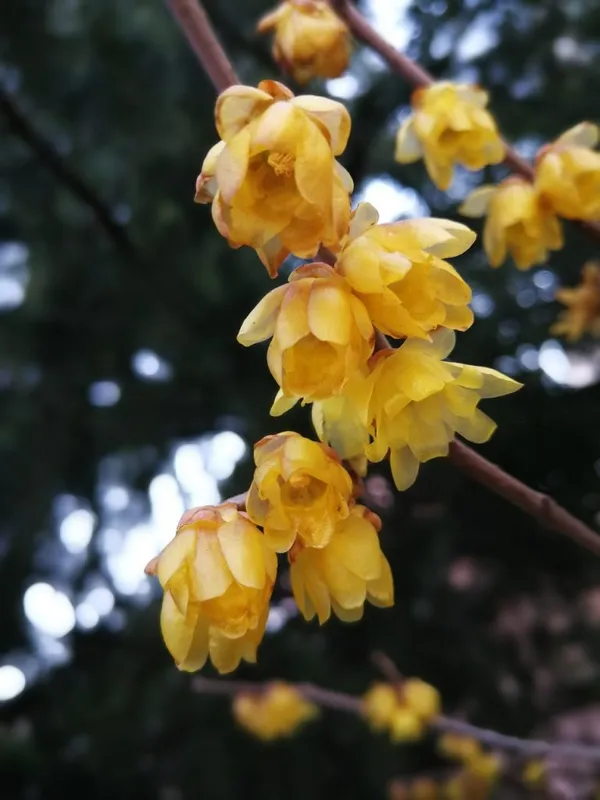
Chimonanthus praecox is a deciduous shrub that blooms with pale yellow flowers on its bare branches. The flowers have a dark red center. If you get close to this plant while it’s blooming, you’ll immediately notice its melon-like scent. That’s why this shrub is also called the melon tree. However, some people also detect a citrus note in the scent. Winter sweet can bloom from November through March. In addition to blooming in winter, its green foliage turns a bright yellow in the fall. Winter sweet prefers a sunny location and grows to a height of about 2–3 meters.
Helleborus orientalis (Eastern hellebore)
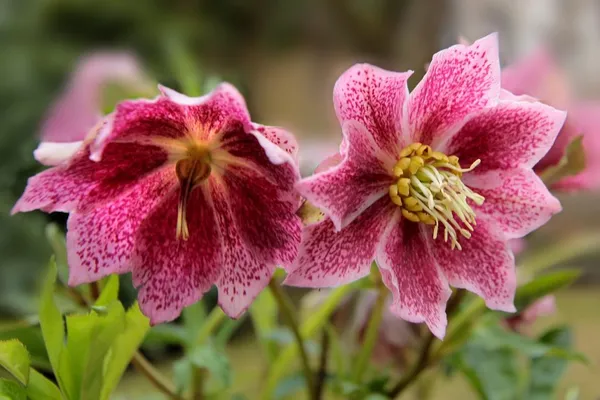
Helleborus orientalis is a plant you definitely shouldn't miss if you want winter-blooming plants in your garden.
There are many different types of Helleborus. Gardeners often know only two: Helleborus orientalis and Helleborus niger. Helleborus niger is the classic white variety, often called the Christmas rose. In the garden, this plant isn’t always easy to grow, and its color palette is limited to shades of white and green. Helleborus orientalis, on the other hand, is available in an incredibly wide range of colors and varieties (hybrids). There’s a variety to appeal to everyone.
These are perennials that bloom specifically in the winter. Hellebore blooms from December through March. Most species prefer a spot in the (partial) shade.
More Beautiful Winter-Blooming Plants
This is just our selection of winter-blooming plants. Of course, there are more true winter bloomers.
For example, Lonicera fragantissima (winter honeysuckle), Sarcococca (fleshberry), Erica carnea (winter heath), Viola (winter violets), and Galanthus nivalis (snowdrop).
For example, in our article on Which plants bloom in February? You'll find a comprehensive list of winter-blooming plants.