
The 11 Most Beautiful Berry Plants for Birds
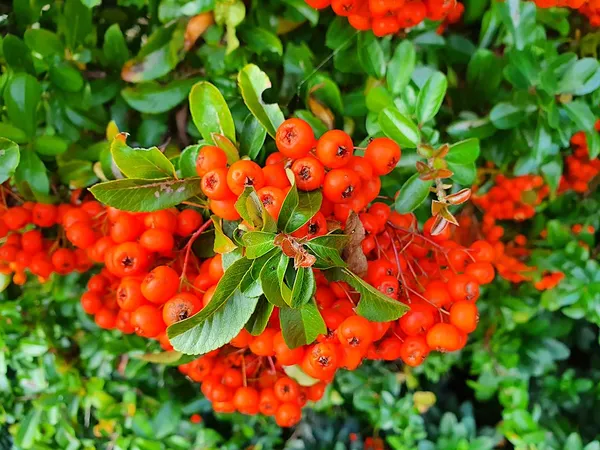
Birds love berries. Most berries appear in the fall and winter.
Berries are the perfect bird food!
And what a riot of colors: all those berries in the garden!
Some berries linger well into winter. This means they add decorative value to your garden for a long time. These include, for example, berries that are still too hard at the beginning of the season.
Berries come in all colors. Most are red or orange, but there are also yellow berries, pink berries, blue berries, black berries, and even white berries!
So it's a great way to add more color to your garden, even in winter.
We're not entirely sure if this is actually true, but it seems that many birds prefer dark and red berries over the lighter-colored or white ones… These berries stay on the plant for an extra-long time!
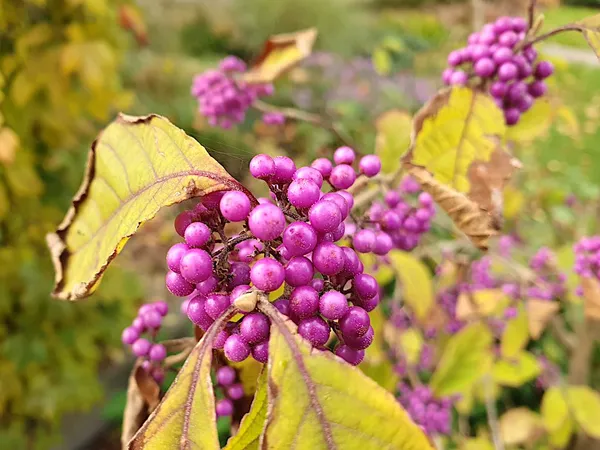
Callicarpa (or maybe not?)
In a small garden, it’s especially important that a plant isn’t just attractive to birds but also has sufficient ornamental value. Space is, of course, limited. We therefore find the well-known Callicarpa (beautiful-fruit bush), with its striking purple berries, less suitable for a small garden: aside from the berries, this shrub has little ornamental value for the garden…
Fortunately, there are many other berry plants with graceful blossoms in the spring,
uniquely shaped or evergreen foliage, AND beautiful fall color!
11 Berry Plants That Are Beautiful in Other Seasons, Too
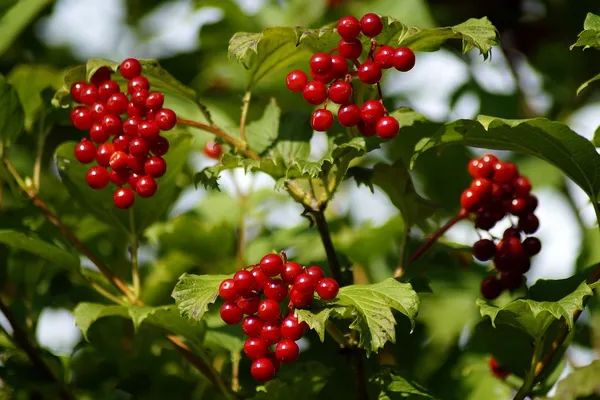
Viburnum opulus (Guelder rose)
One of the most beautiful berry-bearing shrubs is the Guelder rose. In May and June, this natural-looking shrub is covered with umbel-shaped white flowers. It does bear some resemblance to a hydrangea. In the fall and winter, it produces countless red berries, which are very popular with birds. This plant also develops a beautiful orange-red fall color. While this shrub can grow quite large, it can be kept compact.
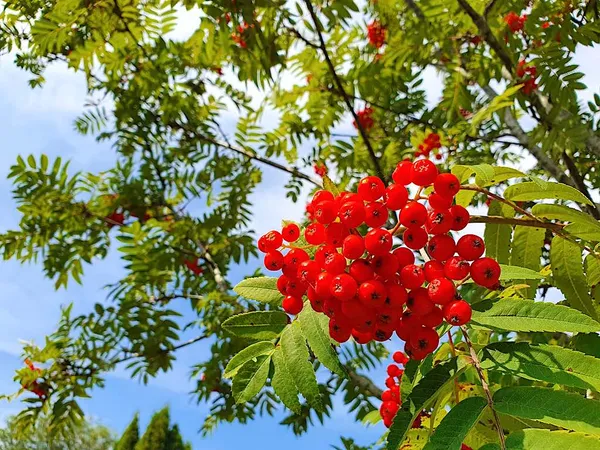
Sorbus aucuparia (rowan)
The rowan is a beautiful tree for smaller gardens. This tree grows primarily upward at first, and its crown only widens as it matures. The leaves are pinnate, and the tree has a somewhat airy appearance. In the fall, the entire tree is literally covered with berries. Birds love them and fly back and forth constantly! The fall foliage is also well worth seeing. There are many cultivars. Some trees remain slightly smaller than the species, and the berry color varies (including red, white, and pink), but it seems the “regular” orange berries are still the favorite.
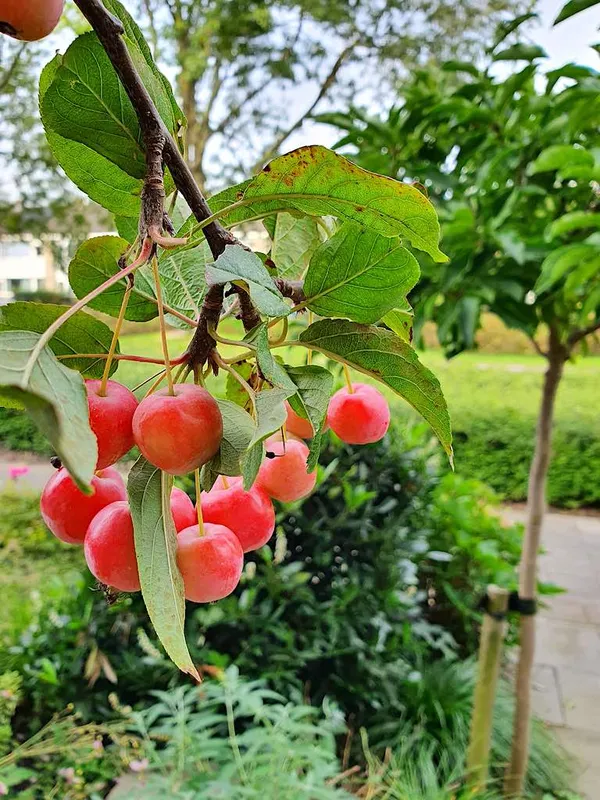
Malus (ornamental apple)
Ornamental apple trees are also very popular with birds, especially once winter is well underway. Starting in the summer, these trees are completely covered with small apples, which develop their color in the fall. The blossoms are also impressive to behold. Most varieties have beautiful white blossoms, while some are pink or dark pink. The color of the apples ranges from red to orange to yellow. Well-known and attractive varieties include Malus Red Sentinel, Evereste, Floribunda, Golden Hornet, Adirondack, Liset, John Downie, and Rudolph.
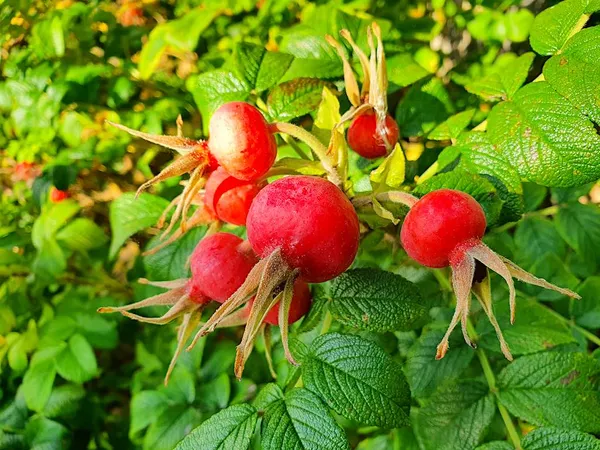
Rosa canina (dog rose) and Rosa rugosa (rugosa rose)
Of course, everyone knows the rose. But you don’t actually see the wild variety very often—at most, in older community gardens. Yet this is a shame. The dog rose is a beautiful plant with lovely (single) flowers, a pleasant fragrance, and slender red rose hips in the fall. Although birds often don’t start eating rose hips until a little later in the season, they certainly love them!
The wrinkled rose (also known as the Japanese rose hip) comes in pink, purple (pink), and white. The flowers appear somewhat wrinkled (hence the Dutch name). These roses have a distinctive, strong, yet delightful fragrance. Wrinkled roses can rebloom and produce plump orange-red rose hips. These appear in the fall and can be found on the plant alongside flowers and flower buds.
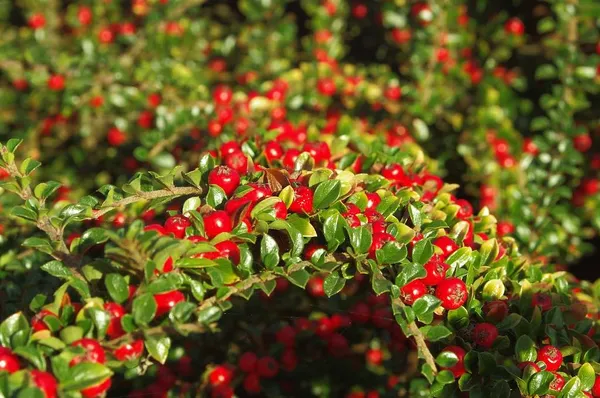
Cotoneaster (dwarf cotoneaster)
Dwarf cotoneaster may not be the most remarkable plant—or at least it doesn’t have that reputation. Still, it’s an excellent evergreen groundcover (even for difficult spots), blooms with pretty white flowers in the spring, and is completely covered with red berries in the fall. It’s like a smorgasbord for birds! It might be worth considering if you need a groundcover!
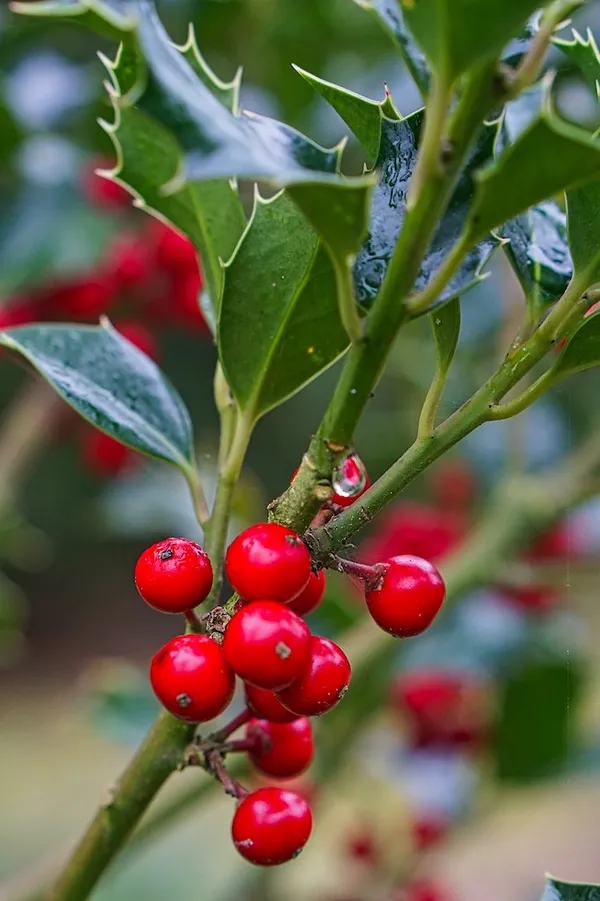
Ilex aquifolium (holly)
Holly is an evergreen plant with prickly leaves. In the fall and winter, these plants can be completely covered with small red berries, which stand out against the dark green foliage. This plant is suitable for an evergreen hedge, a mixed hedge, or as a specimen plant. There are a vast number of cultivars, most of which bear (red) berries. Varieties without prickly leaves are also available: for example, the JC van Tol.
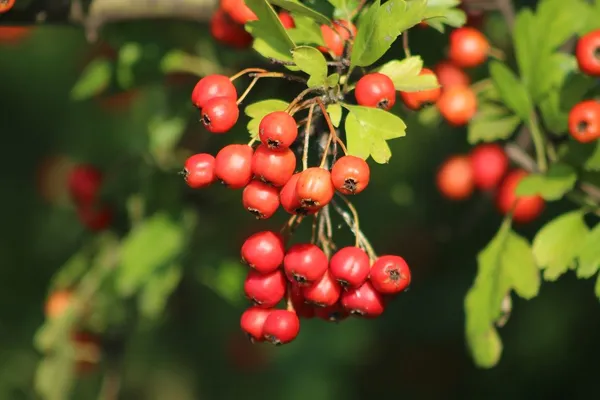
Crataegus monogyna (hawthorn)
You used to see hawthorn hedges everywhere. Unfortunately, those days are long gone. Still, the exceptionally beautiful white blossoms are truly worth seeing. Later in the season, the plant produces a profusion of red to orange berries—a real feast for small birds! Larger birds can’t get in because of the many thorny branches. For that same reason, these trees and shrubs provide excellent shelter for small birds. Not only is the hawthorn a beautiful hedge plant, but it’s also a great choice for small gardens.
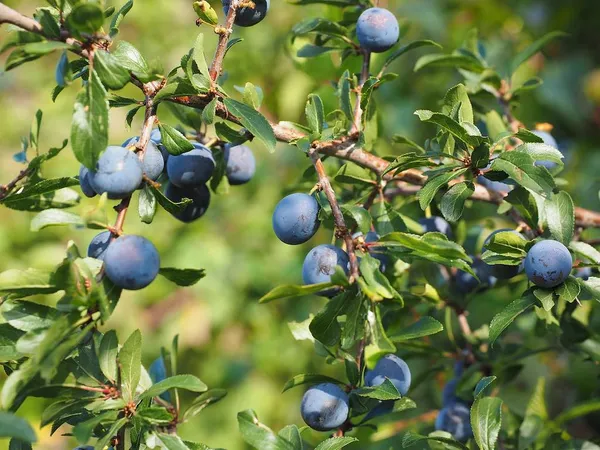
Prunus spinosa (blackthorn)
Blackthorn isn’t planted as much as it used to be either. Most likely, this is due to its numerous and large thorns. Still, the blackthorn is well worth growing. This shrub has beautiful, delicate white blossoms and striking blue berries in the fall. It is precisely because of its thorns that it is a favorite among many (small) birds.
Pyracantha (firethorn)
Firethorn is a very beautiful plant, with many white flowers in the spring and berries in the fall and winter. It is an evergreen shrub with lovely small dark green leaves. This plant also works well as a climbing plant. There are cultivars with red, orange, and yellow berries. The countless, colorful berries remain on the plant for a remarkably long time, but before winter is over, the birds always manage to find them. Actually, the plant’s only drawback is also an advantage (for the birds, that is): its many thorns.
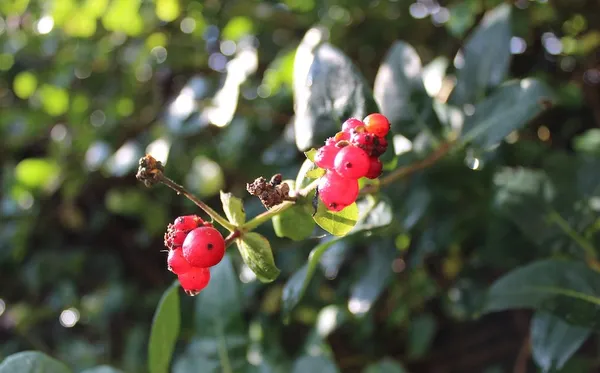
Lonicera periclymenum (wild honeysuckle)
Some climbing plants also produce berries that attract birds. Wild honeysuckle has beautiful, exotic-looking flowers, followed by bright red berries. Although these berries are poisonous, this is not a problem for many birds.
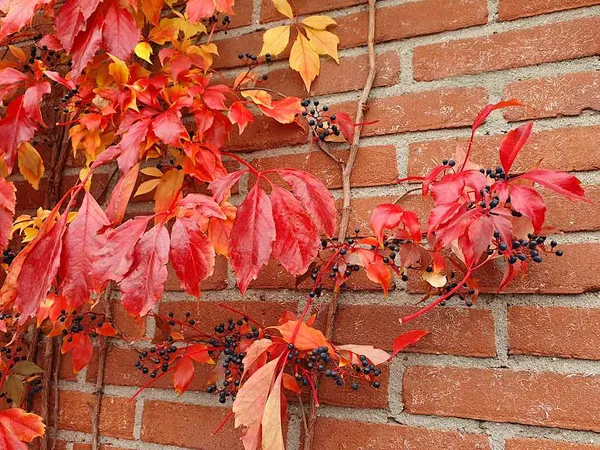
Parthenocissus (wild grapevine)
Wild grapevine is a vigorous grower and needs to be kept in check in a small garden. Still, this plant can completely transform a tall, dull wall into a fairy-tale scene. Few plants have such beautiful and intense fall colors. Wild grapevine also produces blue-black berries that magpies and thrushes, for example, love to eat.
More berry plants that birds love to eat:
Amelanchier lamarckii (sour cherry), Berberis vulgaris (barberry), Cornus sanguinea (red dogwood), Euonymus europaeus (European spindle), Hedera (ivy), Hippophae rhamnoides (sea buckthorn), Ligustrum vulgare (privet), Malus (apple), Morus alba (mulberry), Sambucus nigra (elderberry)…