
Rhododendrons: Perfect for Small Gardens, Too!
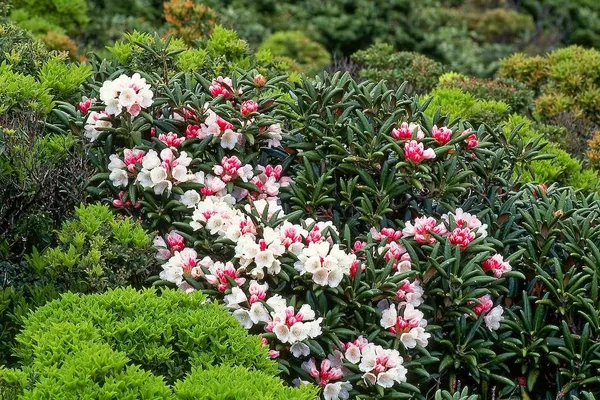
Rhododendrons are truly beautiful plants: Their rich and striking blooms in pink, purple, red, or white are a joy to behold! They are also beautifully shaped plants with glossy, sturdy, dark-green leaves. Well before a rhododendron blooms, its distinctive, large buds are already visible.
Unfortunately, many rhododendrons grow quite tall and wide. Despite their slow growth, many varieties still reach a height of about 2–3 meters and are at least as wide. You can keep a rhododendron small by pruning it in a timely manner, but this often comes at the expense of its attractive growth habit. If you don’t want a rhododendron that will eventually become too large for your garden, choose a compact rhododendron or a dwarf rhododendron.
Which rhododendrons stay small and low?
Fortunately, these days you can find more and more varieties of Buying Rhododendrons that remain fairly small. For example, the Yakushimanum hybrids are very popular. These cultivars grow to about 120 cm in height and width, but also have beautiful, large flowers (large-flowered rhododendrons).
There are also true dwarf rhododendrons. Some don't even grow taller than 30–40 cm! The flowers are smaller, though (small-flowered rhododendrons).
Many of the rhododendrons that were previously classified as azaleas also remain smaller (the genus Azalea is now also classified under Rhododendron). Incidentally, not all azaleas are evergreen.
Below is an overview of evergreen, compact Rhododendron Varieties (max. 120 cm high and wide).
Compact Rhododendrons and Dwarf Rhododendron Varieties
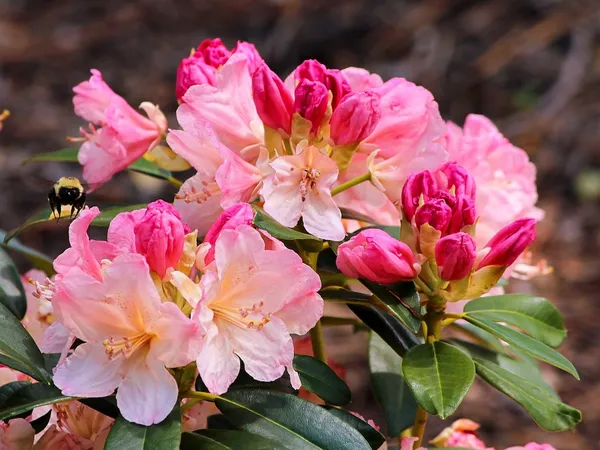
Pink Rhododendron
- Rhododendron yakushimanum ‘Anuschka’
- Rhododendron y. ‘Caroline Allbrook’
- Rhododendron y. ‘Doc’
- Rhododendron y. ‘Dreamland’
- Rhododendron y. ‘Dusty Miller’
- Rhododendron y. ‘Fantastica’
- Rhododendron y. ‘Kalinka’
- Rhododendron y. ‘Lumina’
- Rhododendron y. ‘Percy Wiseman’
- Rhododendron y. ‘Polaris’
- Rhododendron ‘Rokoko’ (Azalea)
- Rhododendron y. ‘Schneekrone’
- Rhododendron y. ‘Silberwolke’
- Rhododendron ‘Winsome’ (dwarf)
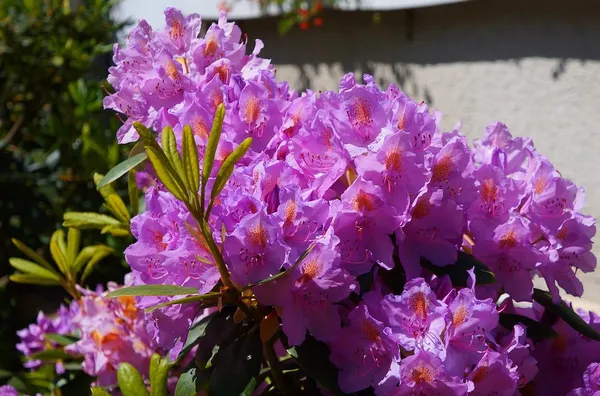
Purple Rhododendron
- Rhododendron ‘Azurika’ (dwarf)
- Rhododendron ‘Blue Tit’ (dwarf)
- Rhododendron y. ‘Bolkhens Lupinenberg’
- Rhododendron ‘Gristede’ (dwarf)
- Rhododendron ‘Konigstein’ (Azalea)
- Rhododendron ‘Moerheim’ (dwarf)
- Rhododendron ‘Ramapo’ (dwarf)
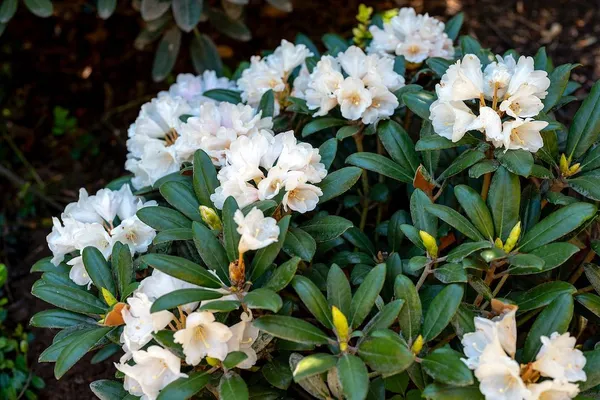
White Rhododendron
- Rhododendron ‘Artic Tern’ (dwarf)
- Rhododendron ‘Dora Amateis’ (dwarf)
- Rhododendron y. ‘Porzellan’
- Rhododendron y. ‘Schneekissen’
- Rhododendron ‘Schneeperle’ (Azalea)
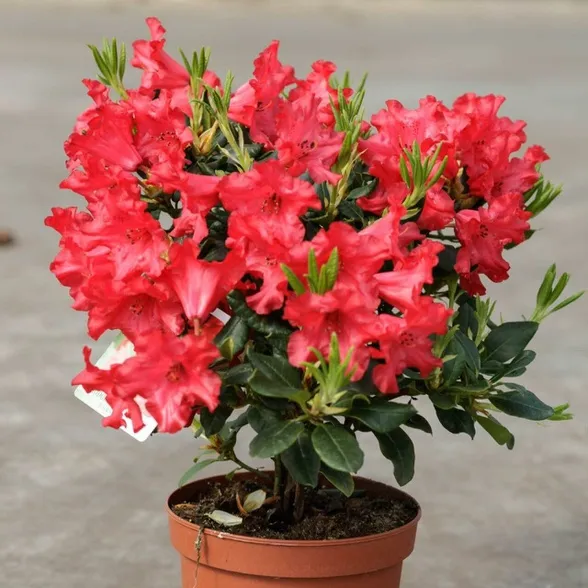
Red Rhododendron
- Rhododendron repens ‘Antje’
- Rhododendron r. ‘Baden Baden’
- Rhododendron ‘Maruschka’ (Azalea)
- Rhododendron y. ‘Morgenrot’
- Rhododendron r. ‘Scarlet Wonder’
- Rhododendron y. ‘September Red’
- Rhododendron y. ‘Sneezy’ (may grow wider)
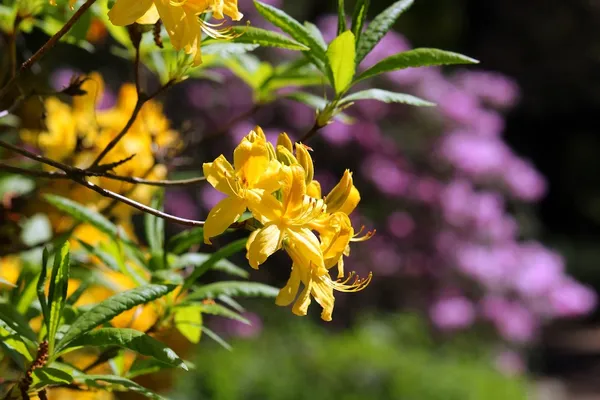
Other Dwarf Rhododendrons
- Rhododendron y. ‘Flava’ (yellow)
- Rhododendron ‘Geisha’ (Azalea, pink, red, white, or orange)
- Rhododendron ‘Kermesina’ (Azalea, pink, red, or white)
- Rhododendron y. ‘Golden Torch’ (salmon pink)
- Rhododendron y. ‘Grumpy’ (salmon pink)
- Rhododendron ‘Princess Anne’ (dwarf, yellow)
- Rhododendron ‘Wren’ (dwarf, yellow)
Caring for Rhododendrons
Planting, Location, Soil, and Care
Most (dwarf) rhododendron varieties prefer acidic soil. Keep this in mind when choosing these plants. If the soil isn’t acidic enough, amend it with special soil for acid-loving plants, garden peat, or compost made from leaf mold, pine needles, or pine bark. The soil must also be well-drained. Rhododendrons prefer not to be planted in overly wet conditions.
The best spot for a rhododendron is partial shade. Filtered light is ideal.
Deep shade, where no sunlight reaches at all, is less suitable. This can cause them to bloom less or not at all. Full sun for a large part of the day is not recommended. In a sunny spot, rhododendrons dry out quickly and drop their leaves. A thick layer of mulch around the base reduces the risk of them drying out.
Don't plant rhododendrons too deep. Their roots grow close to the surface. Don't forget to water them more often during dry spells in the summer. That's when the buds for the coming year are already forming.
Pruning and Rejuvenating Rhododendrons
Pruning is usually not necessary. It can detract from the plant’s beautiful natural shape. Of course, you can remove an unsightly branch or a part that’s in the way. If you just want to trim it a bit, or pinch back the rhododendron to keep it compact or smaller, the best time to prune is shortly after flowering. This will help you keep your evergreen shrub in good shape.
Although pruning isn’t really necessary, rhododendrons do respond well to it. If you want to rejuvenate a rhododendron or make it much smaller, you can prune it back significantly. The best time for such a major pruning is in the spring (March–April). This allows the plant to grow back full and lush more quickly. However, you’ll miss out on the blooms, since you’ll be cutting off the buds.
Frequently Asked Questions About Rhododendrons
Why isn't my rhododendron blooming?
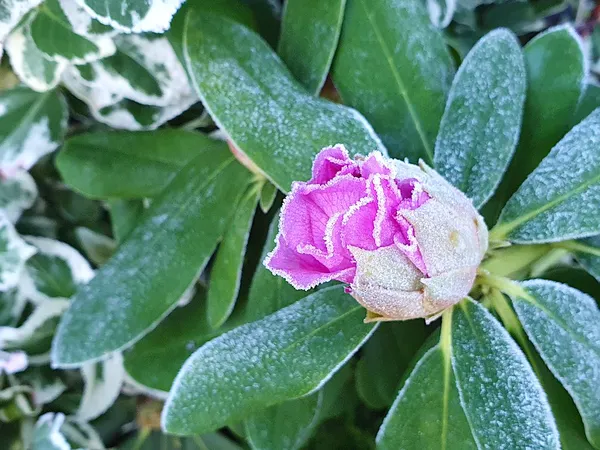
There can be several reasons why a rhododendron doesn’t bloom or has stopped blooming. Late frost can damage the flower buds. The flower buds can also fall off during or after the summer if they suffer from drought. If the rhododendron is in (deep) shade, it may produce fewer flowers or none at all. If you prune the rhododendron too early, you’ll also remove the flower buds. Therefore, wait until after flowering to prune.
How big does a dwarf rhododendron grow?
There are several varieties of compact rhododendrons. Yakishumanum hybrids grow to about 80–120 cm in height and width. Many (formerly classified as) azaleas grow to about 50–60 cm in height, and a dwarf rhododendron grows to about 30–50 cm in height and width.
Can you keep a rhododendron small or rejuvenate it?
Although many rhododendron varieties eventually grow too large for a small garden, they grow fairly slowly. By pruning the rhododendron annually, you can keep it small for a very long time. Do this after flowering. It’s best not to skip a year, because pruning too infrequently can quickly compromise the plant’s attractive shape.
If your rhododendron has grown too large, you can easily rejuvenate it. You can prune it all the way back, right to the ground. The best time to do this is in (early) spring. Healthy plants will simply sprout anew. You’ll have to wait a year for them to bloom, though, because this type of rejuvenation pruning removes all the flower buds. Alternatively, you can prune back in phases, for example by cutting back one-third of the branches completely each year. That way, you’ll still retain some of the blooms.
Can rhododendrons grow in clay soil?
Clay soil is not very suitable for rhododendrons. They require acidic, well-drained soil. If you do plant them in clay soil, it’s especially important to prepare the planting hole properly. Dig a spacious planting hole and use only garden peat or a substitute when planting. It can help to build a small mound of peat and use this as a planting bed. A raised border with acidic soil is also a solution. Over time, however, there is a chance that the soil will gradually become less acidic. It is therefore important to apply a new layer of mulch made of acidic soil or peat (or a substitute) every year.
It's also possible to plant a small rhododendron in a pot. That way, you have complete control over the soil and its acidity. This will definitely benefit its growth and flowering.
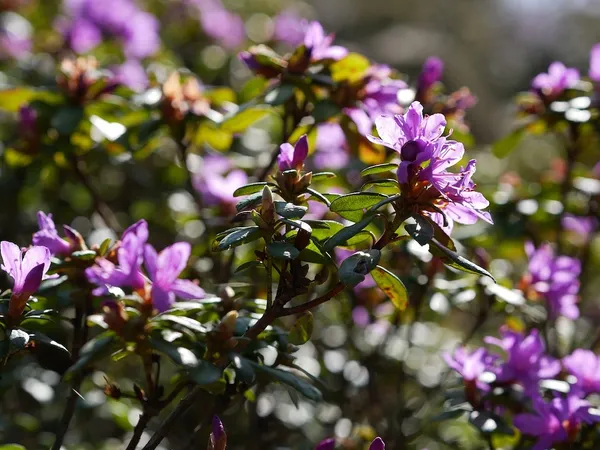
Can a rhododendron grow in full sun?
Rhododendrons are not plants for full sun. In the wild, they grow in wooded areas and along forest edges. Filtered light or “dappled shade” is ideal. If these plants are planted in (deep) shade, this often results in less flowering and less bushy plants. If planted in full sun, the risk of the plant drying out is very high. A thick layer of mulch at the base of the rhododendron can still make a difference here, as it helps retain moisture for longer. Some rhododendron varieties tolerate the sun a bit better. This applies, among others, to the Yakushimanum hybrids.