
Pruning Lavender: When and How?
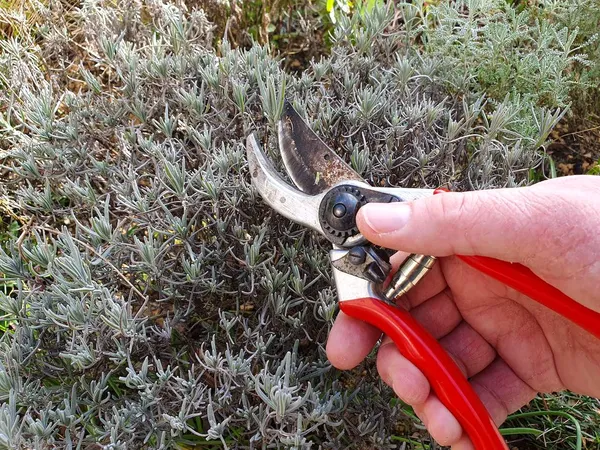
Lavender (Lavandula angustifolia) is a plant that really shouldn’t be missing from your garden… Its long blooming season, wonderful scent, and the countless insects it attracts make it a valuable addition to any garden. Lavender isn’t picky about soil. In fact, poor soil is even better! Good drainage is important, though. Lavender is easy to prune. Yet people often have doubts about this… So here’s the answer to the question: How should you prune lavender, and when should you actually prune it?
When should you prune lavender?
Lavender is best pruned twice a year. The main pruning takes place in late March or early April.
The second pruning takes place around September, when the plant has (almost) finished blooming. At that time, prune back the flower spikes and, if necessary, the tips of the lavender. This is really just shaping pruning.
Tip: If you prune your lavender in time after the first bloom, there’s a good chance it will bloom again in late summer. It’s best not to wait until the lavender has finished blooming completely; instead, simply prune off the last few flowers that haven’t yet bloomed. If you wait too long, there’s often not enough time for a second bloom.
How do you prune lavender (Lavandula angustifolia)?
Prune the lavender so that a small amount of tender new growth (the younger shoots) remains above the old (bare) wood. This will keep the lavender compact and ensure optimal flowering.
If you forget to prune in the spring, your lavender will keep growing taller. The lower part will become woody and bare. If you prune too far back (into the old wood), there’s a good chance your lavender won’t sprout again.
Tip: Take cuttings from the pruning waste. Although quite a few will fail, you’ll soon have a lot of cuttings, and some of them are sure to take root. To do this, we place several cuttings, each about 10 cm long, in pots filled with old potting soil or sand.
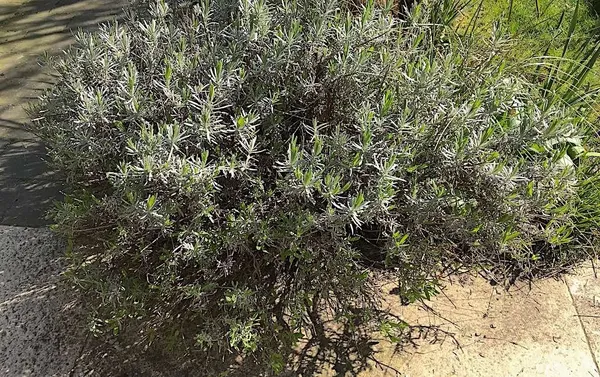
Lavender Before Pruning
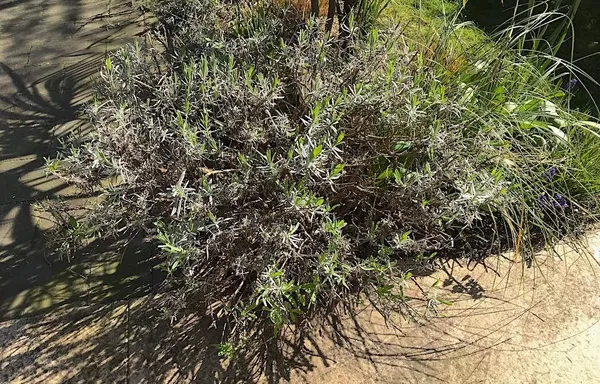
Lavender After Pruning
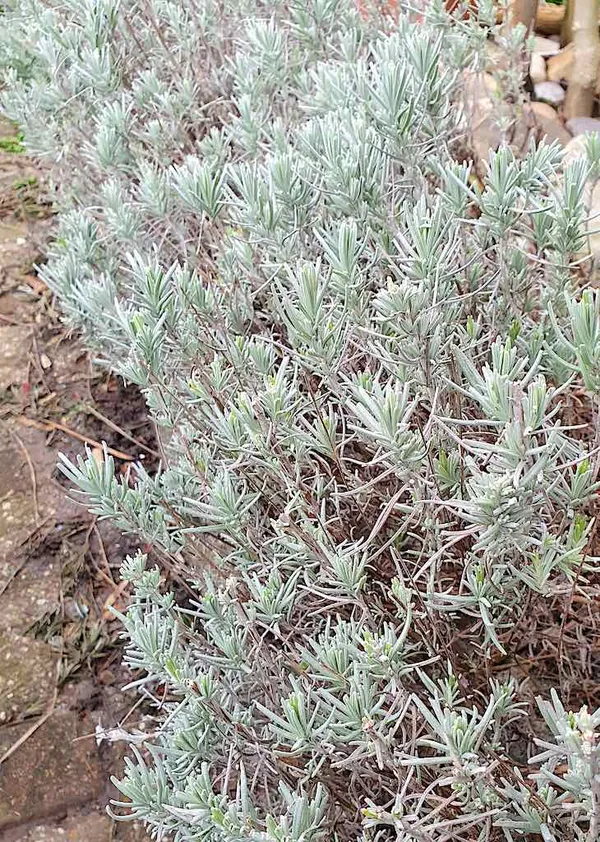
Before pruning
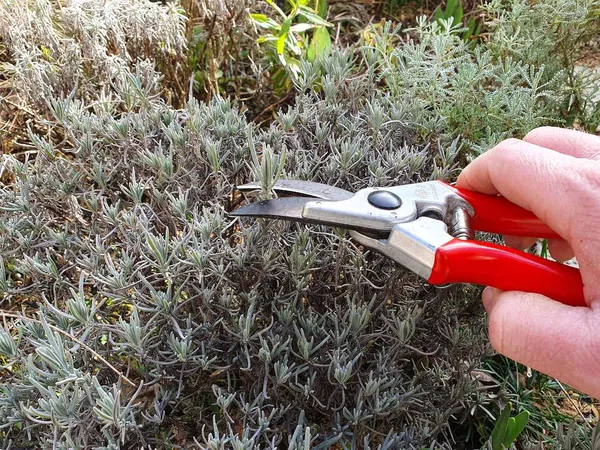
Pruning Lavender
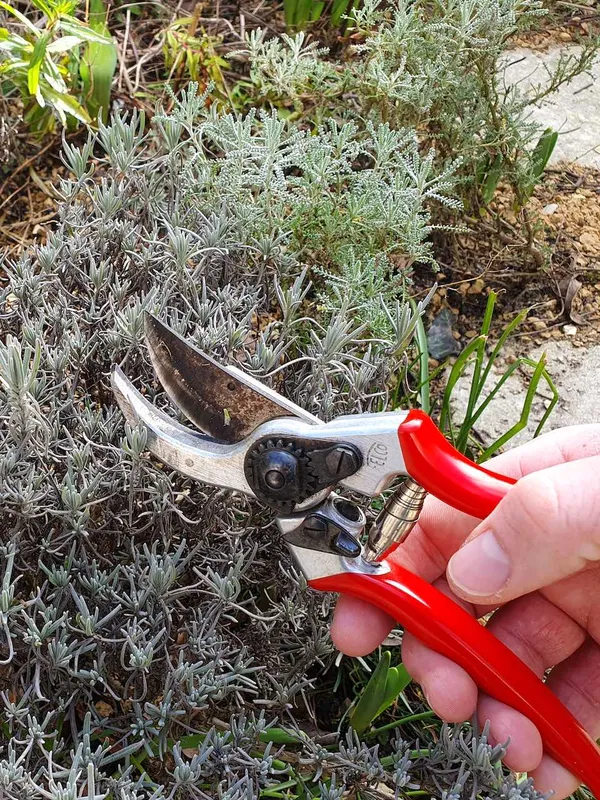
Pruning Lavender
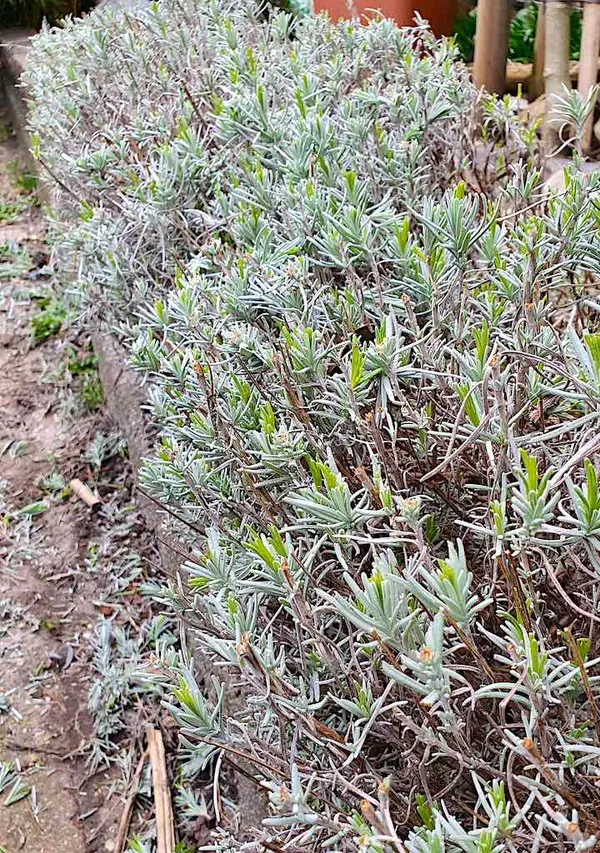
After pruning
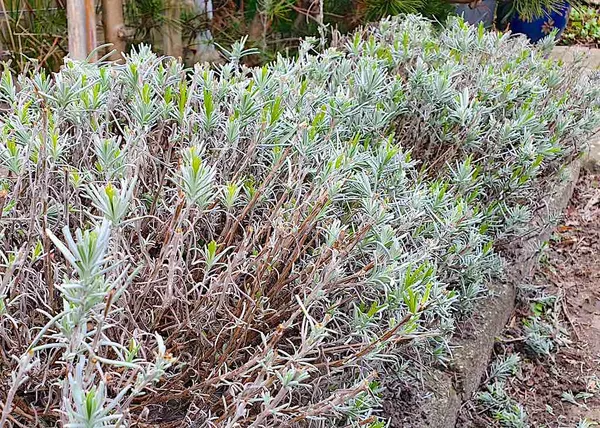
Lavender After Spring Pruning
Tested: Does lavender really not sprout again after deep pruning?
You often read this (and we mentioned it above as well): if you prune too far back (that is, down to or into the old wood), lavender often won’t sprout properly anymore. But is this really true?
Of course, we tested this for you. Since our old lavender hedge had really gotten too tall and we were in the process of redesigning this border, we intentionally pruned it back too far. The variety in question was Lavandula angustifolia ‘Hidcote’. The result was a lavender hedge that only partially recovered. The first half (which is most sheltered) eventually sprouted again. However, it took a very long time before real growth resumed. Flowering was also virtually nonexistent. Unfortunately, the second half never recovered, so we removed it.
Our conclusion: Only do this if you're willing to risk a failure.