
Preventing and Saving Long, Spindly Seedlings
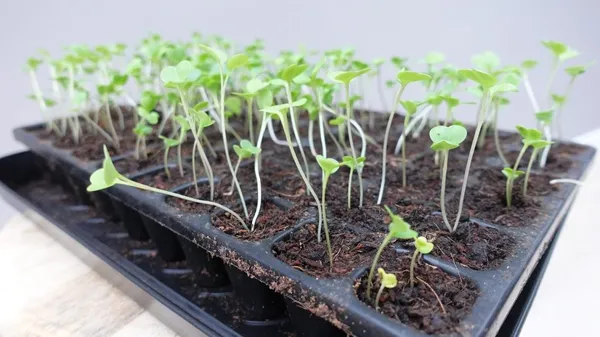
Tall, thin, spindly seedlings! It happens even to the most experienced vegetable gardeners. Healthy seedlings have short, sturdy stems. You don’t have to worry about them falling over. Tall seedlings are less sturdy and are more susceptible to wind and unwanted insects. You want to prevent that!
Causes of Spindly Seedlings
The most common cause of tall, spindly seedlings is an imbalance between light and temperature. At high temperatures, plants tend to grow quickly. At that point, the plant needs light. If there isn’t enough light, the plant will seek out more light. The plant stretches toward the light, causing it to become tall and spindly.
For most plants, the ideal germination temperature is a few degrees higher than the ideal growing temperature. Once the seeds have germinated, the seedlings can be moved to a cooler spot. This is especially true for lettuce, onions, snow peas, peas, and cabbage varieties. In addition, seedlings grown indoors are in a protected environment. They are hardly disturbed at all. Plants grown outdoors adapt to the wind, which helps them develop thicker and sturdier stems.
How can you prevent spindly seedlings?
- Make sure the seedlings aren't kept too warm. Once the seedlings have sprouted, you can move them to a cooler spot.
- Make sure there is enough light as soon as the seedlings have sprouted.
- Turn your seedlings every day once they stop growing at an angle.
- Sow the seeds in potting soil, vermiculite, or coconut coir. These media contain fewer nutrients, which slows the plant's growth. This is especially recommended if you're sowing as early as February.
- Don't start sowing too early. I only sow chili peppers, eggplants, and bell peppers in February. Wait until March for cabbage varieties and lettuce. Cabbage varieties and lettuce germinate quickly, and the days are already longer in March.
- Use a grow light. If you don't have enough light in your home but still want to start seeds indoors, you'll almost certainly need a grow light.
- Use a fan. Turn the fan on from time to time near your seedlings. This mimics the wind, which will help the plants develop stronger roots and stems.
Saving Thin Seedlings
You can still save some of the spindly seedlings. When transplanting (moving a plant to an individual pot), plant it deeper in the soil. Use a well-aerated potting mix when transplanting. Don’t pack the soil down too tightly to prevent the stem from rotting.
As soon as you notice that your seedlings are getting tall, you need to take action. The taller and thinner the seedlings are, the greater the chance that the stem will rot underground. If the seedlings have become really thin and tall, it’s better to start over and sow new seeds.
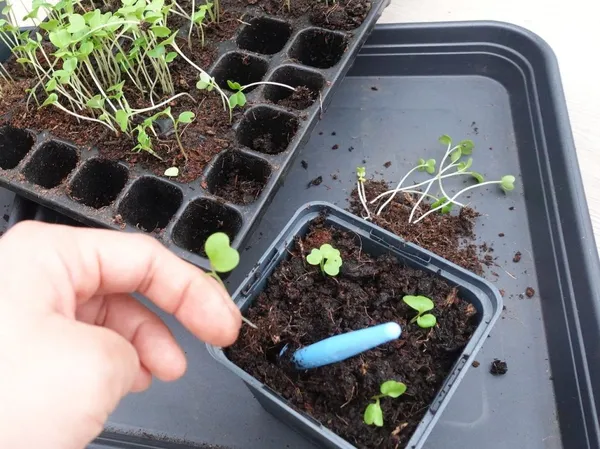
Starting in March, you can also put lettuce and cabbage varieties outside during the day. Because of the lower temperatures, they’ll grow more slowly and will start getting used to the outdoor climate. This way, you’ll get them ready to be planted outside. Don’t leave them outside for long periods right away. Instead, let the plants gradually acclimate to the outdoor climate. You can read how to do this in the article “Hardening Off Plants.”
This article was written by Estefhany Yeung of BinnenBuitenBloei.nl
On her website and through her social media accounts, she shares even more tips and inspiration for your vegetable garden, herb garden, and houseplants. You can find her on Instagram, Facebook, and YouTube under the username @BinnenBuitenBloei