
Pond Plants for a (Small) Pond
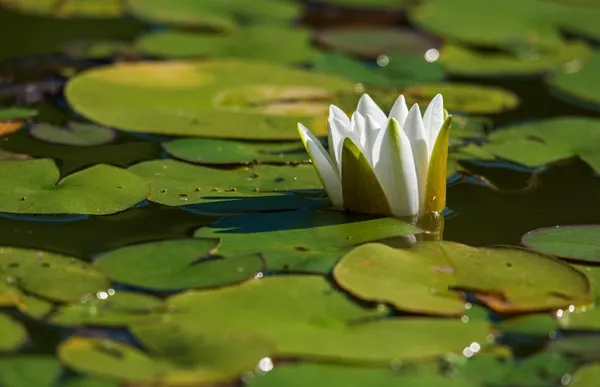
A pond offers a great opportunity to introduce a whole new group of plants to your garden: pond plants! Think of true aquatic plants, such as water lilies and yellow water lilies. Irises, cattails, and marsh marigolds are beautiful shoreline plants. For the shallow areas, plants like hollow-stemmed water-crowfoot and pikeweed are particularly attractive. Don’t forget the oxygenating plants either: they ensure good water quality and keep your pond clear.
Water also adds movement to your garden and attracts many animals and insects, such as frogs, salamanders, dragonflies, and birds. Even a small pond or mini-pond is valuable for an animal-friendly garden.
Choose the Right Pond Plants
When choosing the right plants for your pond, it’s a good idea to consider the pond’s location (how much sun it gets), the growth rate of the pond plants, the plants’ origin, and the different depth zones.
Location of the pond
Many pond plants thrive in the sun. However, too much sun can cause the water to overheat, especially in small ponds and mini-ponds. This can lead to problems such as excessive algae growth. Therefore, it’s best not to place a small pond or mini-pond in direct sunlight.
When purchasing new pond plants, always check to make sure they are suitable for your garden and your pond. Examples of shade-tolerant pond plants include water violet, sweet flag, and water mint. Yellow iris, sedge, and marsh marigold also tolerate shade well and can be used along the banks or in the marshy areas.
Growth Potential
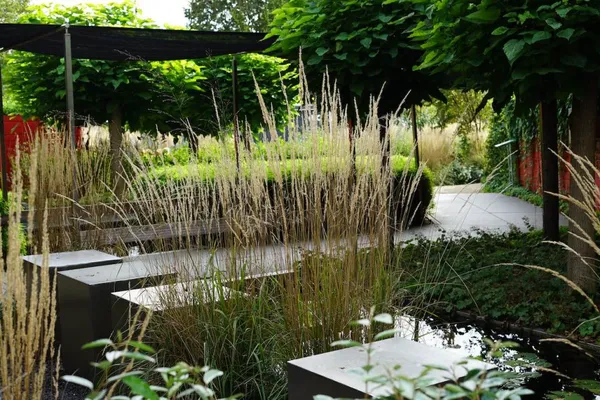
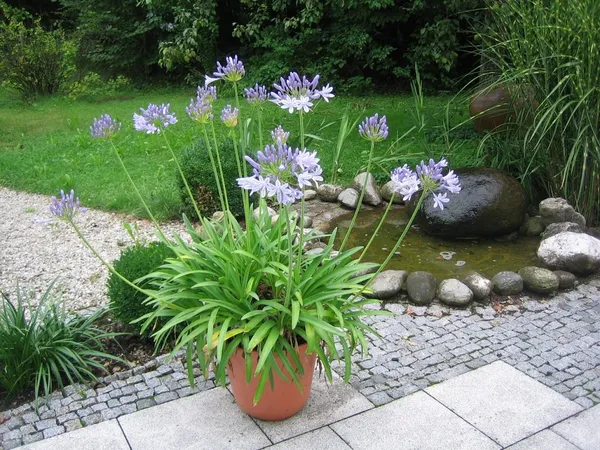
Many pond and shoreline plants can grow quite large. Just think of yellow irises, yellow water lilies, reeds, and water lilies. These plants are less suitable for in and around a pond in a small garden. If you do choose these plants, be sure to divide or remove some of them each year. It’s better to choose plants that stay smaller or don’t spread as much.
Native pond plants
Did you know that there are also a lot of native aquatic plants that are perfect for your pond? For example, you could use the native river horsetail (Equisetum fluviatile) instead of the well-known Japanese horsetail, or bistort (Persicaria bistorta) as a bank plant instead of knotweed.
Other beautiful native pond plants include arrowhead (Sagittaria sagittifolia), with its distinctive arrow-shaped leaves, and nodding sedge (Scirpus cernuus), with fine, grass-like leaves, and marsh calla (Calla palustris), with its distinctive flowers.
There are also many good native oxygenating plants that help keep your pond clear, such as shiny pondweed (Potamogeton lucens), spiked water milfoil (Myriophyllum spicatum), water buttercup (Ranunculus aquatilis), and water violet (Hottonia palustris).
There is even a native water lily: the white water lily (Nymphaea alba)!
Different zones: water depth
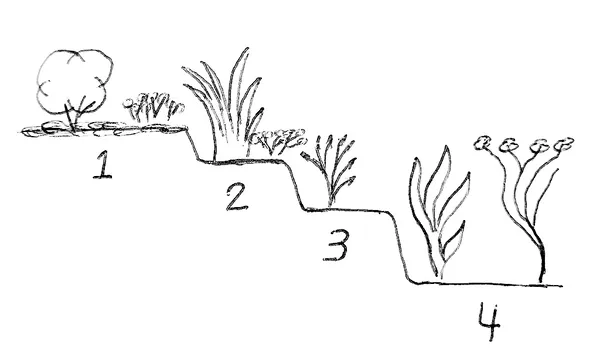
When building a pond, it is important to take the different zones into account. These zones relate to the depth of the water and determine which plants can thrive there.
If you’re building your own (linered) pond, be sure to include different zones, or choose a preformed pond with multiple depths and planting areas. Wider zones give you more space for planting. In a smaller pond, it’s best to work with 2 or at most 3 zones.
Zones in the pond
Zone 1: Around Your Pond
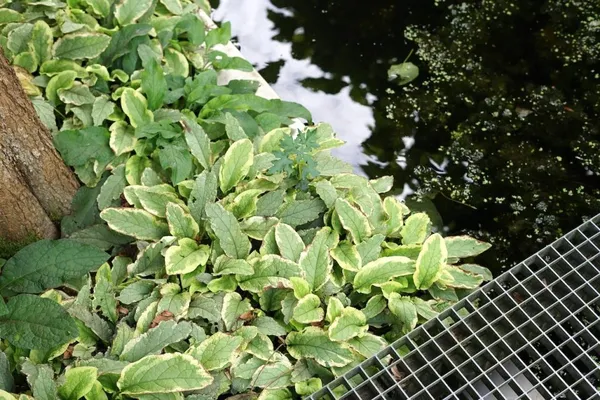
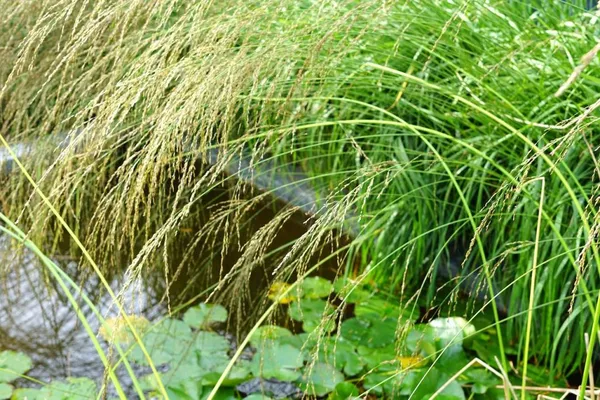
You can plant riparian and marsh plants around the pond. This creates a border around the pond. When the pond overflows, such a strip may become temporarily submerged. However, this is not a problem for riparian and marsh plants. These plants are ideal for concealing the edge of the pond. Many plants for your pond’s shore or the marsh area are also very well-suited for the shallow zone of the pond.
Zone 2: Shallow zone
Water depth up to about 15–20 cm; suitable for marsh plants and riparian plants.
The shallow zone (also known as the marsh zone or riparian zone) is often where most plants are planted. In this zone, which extends to a depth of about 20 cm, you’ll find both plants that need to be placed completely underwater and plants that prefer to have their roots in the water. Some marsh and riparian plants are very versatile and can be planted in both the shallow zone and in flower beds.
Zone 3: Aquatic Plants
Water depth: 20 cm to 40 cm; suitable for aquatic plants and oxygenating plants.
A depth of up to 40 cm is suitable for planting aquatic plants that prefer to have their roots submerged, as well as for many oxygenating plants. You can also plant dwarf water lilies in this zone.
Zone 4: Deep zone
Water depth: 40 cm to 120 cm; suitable for water lilies and deep-rooted oxygenating plants.
The deepest part of the pond is suitable for water lilies and deep-rooted oxygenating plants. These plants can grow vigorously and need some space. Water lilies prefer to grow in calm or still water.
Zone 5: Floating Plants
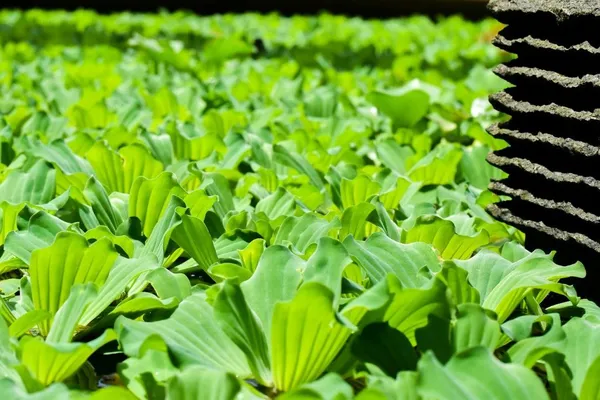
Floating plants still grow on the water’s surface. These are plants that float on the water and whose roots do not take hold. They provide shade and extract nutrients from the water, which helps keep algae in check. However, they usually grow quickly, so some must be removed regularly to prevent them from becoming too dense and covering the surface.
The Most Beautiful Pond Plants for Every Climate Zone
For each zone, we’ll let you know which plants are worth adding to your pond. That way, not only will the water itself enhance your garden, but you’ll also end up with the most beautiful pond plants in and around your pond! Just keep in mind that some of these plants can grow quickly or get quite large.
Shore plants and marsh plants around the pond
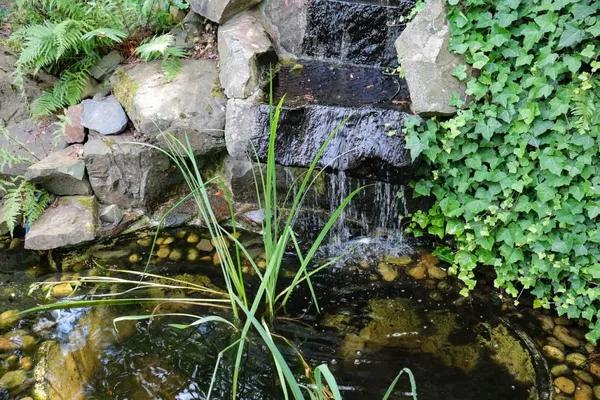
When it comes to plants for the pond’s edge, you can actually choose from the entire range of garden plants, as long as they can (temporarily) tolerate wet soil. For example, plants with large leaves or ferns. Some of these plants are even suitable for the shallow part of your pond. Some beautiful garden plants for around your pond include:
- Bistort (Persicaria bistorta) I.
- Blue sedge (Carex panicea) I.
- Marsh Marigold (Caltha palustris) I.
- Yellow iris (Iris pseudacorus) I.
- Burdock (Petasites hybridus) I.
- Plantain Lily (Hosta)
- Purple Loosestrife (Lythrum salicaria) I.
- Rodgersia
- Marsh Betony (Stachys palustris) I.
- Meadowsweet (Filipendula ulmaria) I.
- Marsh Fern (Thelypteris palustris) I.
- Avens (Geum)
- River Sedge (Carex riparia) I.
- Coinwort (Lysimachia nummularia) I.
- Cuckoo Flower (Cardamine pratensis) I.
- Feather Spirea (Astilbe)
- Darmera
- Bergenia
- Cowslip (Primula)
- Comfrey (Symphytum) I.
- Ostrich Fern (Matteucia)
- Asplenium (Asplenium)
- Narrow-leaved Cottongrass (Eriophorum angustifolium) I.
- Sedge (Carex)
- Black Cohosh (Actaea)
- Water Lily (Butomus umbellatus) I.
* All plants marked with “I.” are native.
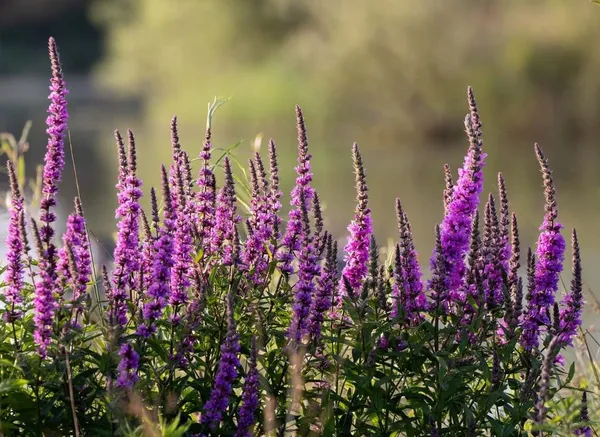
Lythrum salicaria
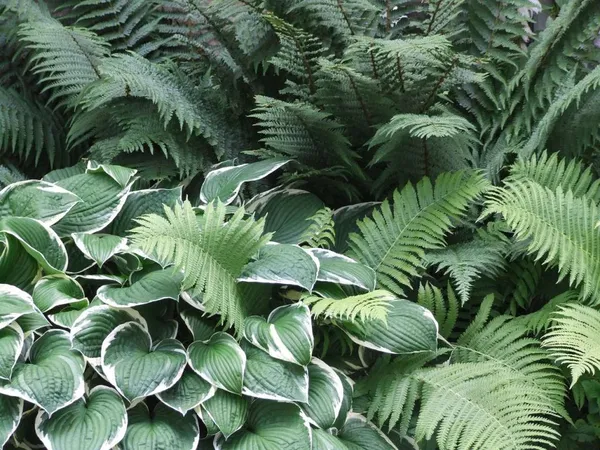
Hostas and ferns
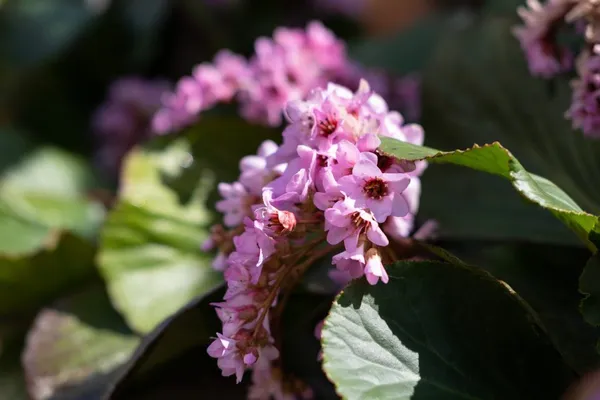
Bergenia cordifolia
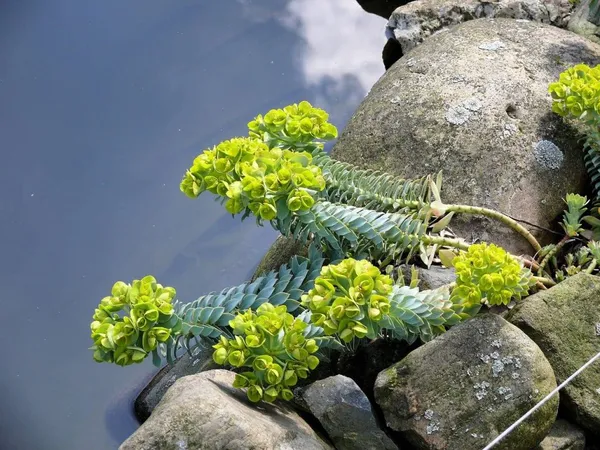
Euphorbia
Marsh Plants and Riparian Plants in the Pond
In the shallow zone, which is about 15–20 cm deep, you can really go all out: these are the plants that will make your pond beautiful! With slightly wider platforms, you’ll have extra space for your marsh plants.
- American iris (Iris versicolor)
- Beekpunge (Veronica beccabunga) I.
- Variegated Sweet Flag (Acorus calamus ‘Variegatus’)
- Marsh Marigold (Caltha palustris) I.
- Dwarf Cattail (Typha minima)
- Yellow iris (Iris pseudacorus) I.
- Great Bur-reed (Sparganium erectum) I.
- River Horsetail (Equisetum fluviatile) I.
- Japanese horsetail (Equisetum japonica)
- Japanese irises (Iris laevigata and Iris ensata)
- Sweet Flag (Acorus kalmoes) I.
- Narrow-leaved Cattail (Typha angustifolia) I.
- Marsh Betony (Stachys palustris) I.
- Marsh St. John's Wort (Hypericum elodes) I.
- Marsh Forget-Me-Not (Myosotis palustris) I.
- Coinwort (Lysimachia nummularia) I.
- Arrowhead (Sagittaria sagittifolia) I.
- Pitrus (Juncus effusus)
- Snake Root (Calla palustris) I.
- Heartleaf (Pontederia cordata) I.
- Marsh Knotweed (Persicaria amphibia) I.
- Marsh Sedge (Eleocharis palustris) I.
- Water Mint (Mentha aquatica) I.
* All plants marked with “I.” are native.
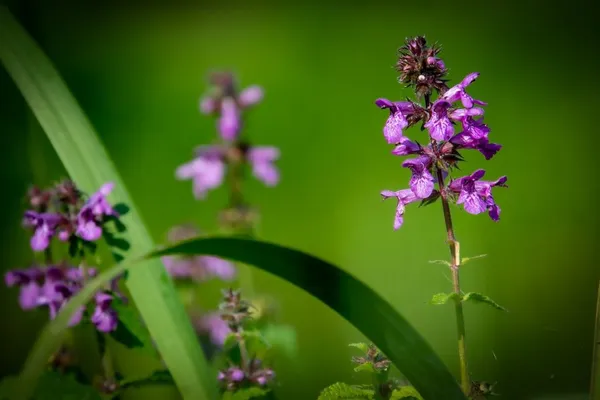
Stachys palustris
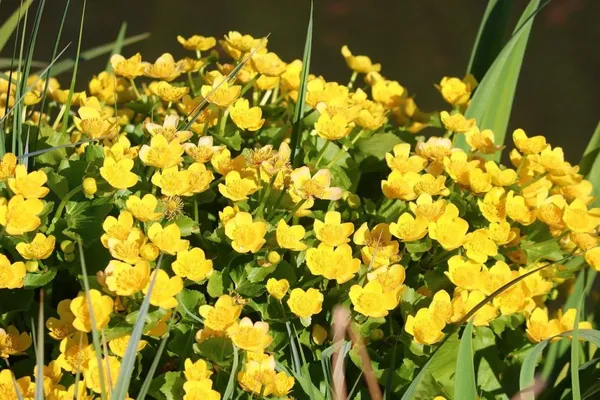
Marsh Marigold
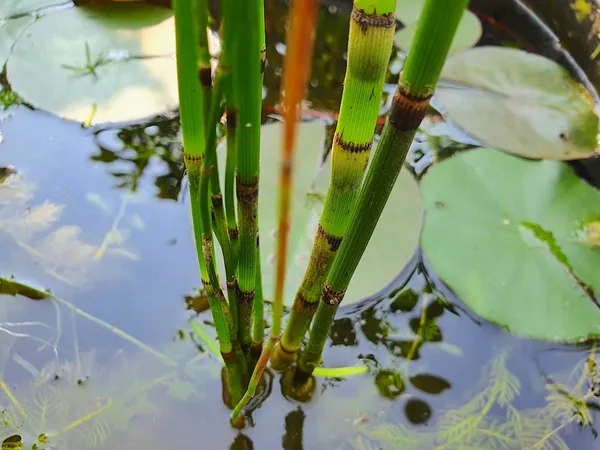
Horsetail and dwarf water lily
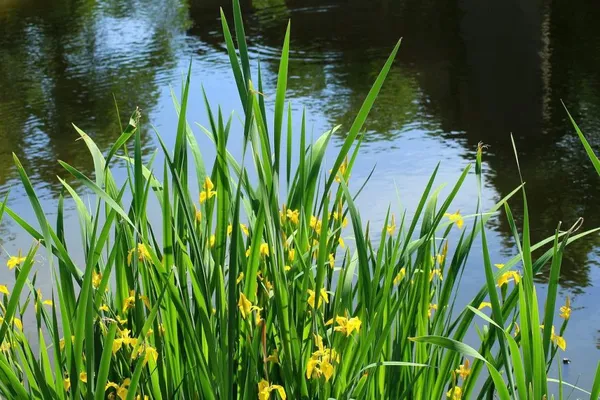
Yellow Iris
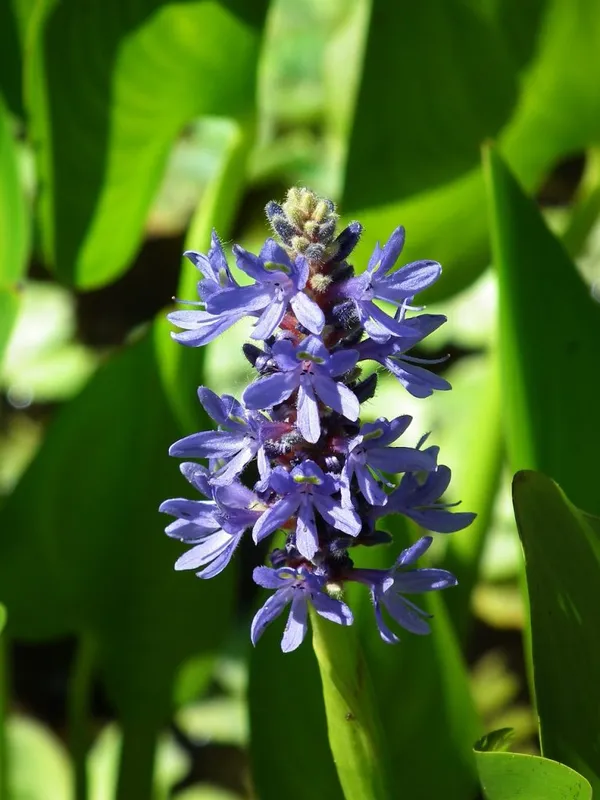
Pontederia cordata
Aquatic Plants and Oxygenating Plants
The true aquatic plants and oxygenating plants grow in the deeper part.
- Spiked Water Milfoil (Myriophyllum spicatum) I.
- Broad-leaved waterweed (Elodea canadensis)
- Common Water Pennywort (Hydrocotyle vulgaris) I.
- Shiny Pondweed (Potamogeton lucens) I.
- Common Hornwort (Cerathophyllum demersum) I.
- Horse Tail (Hippuris vulgaris) I.
- Needlegrass (Scirpus cernuus) I.
- Arrowhead (Sagittaria sagittifolia) I.
- Water Buttercup (Ranunculus aquatilis) I.
- Water Violet (Hottonia palustris) I.
* All plants marked with “I.” are native.
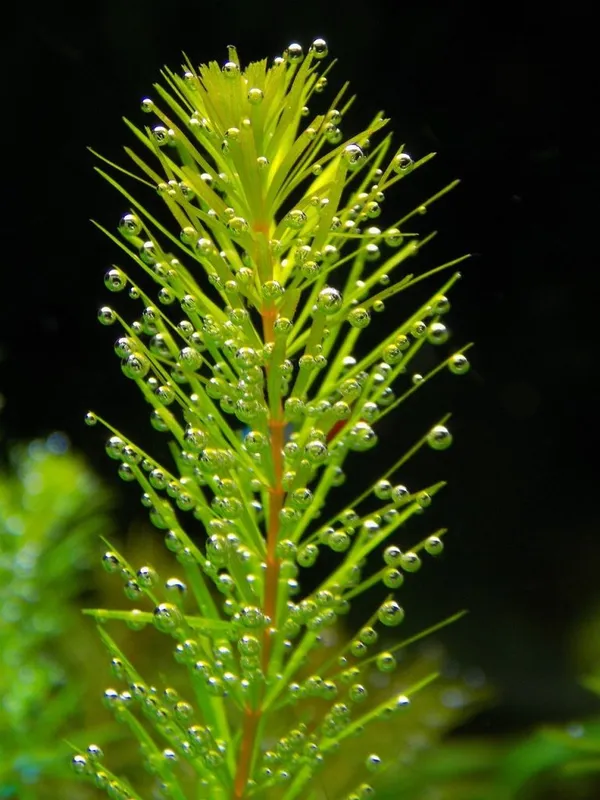
Cerathophyllum
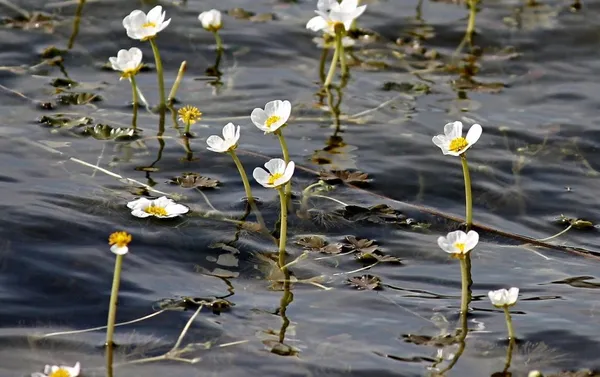
Ranunculus aquatilis
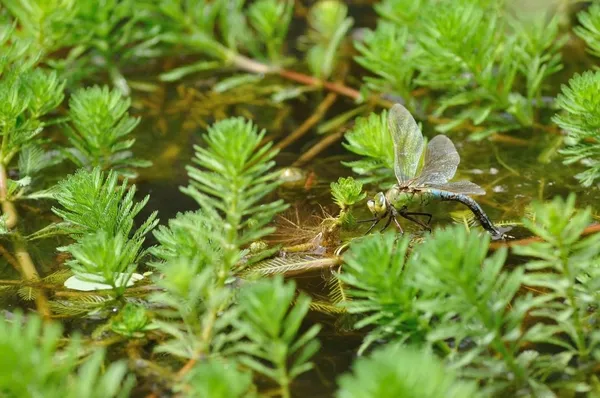
Myriophyllum
Water Lilies and Floating Plants
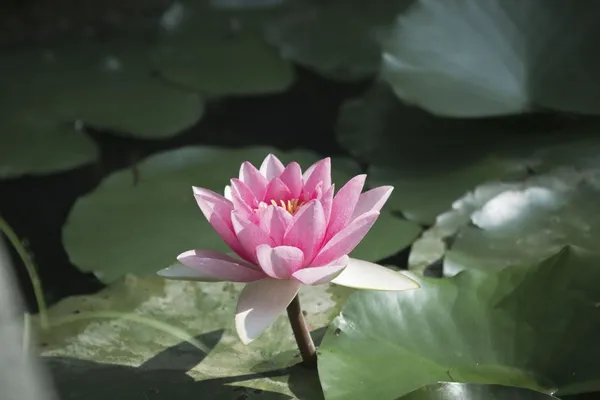
If you have room for a larger pond, then a water lily is, of course, a must! In a small pond or mini-pond, it’s better to choose a dwarf water lily or a pretty floating plant.
- Dwarf Water Lily (Nymphaea pygmea)
- Frogbit (Hydrocharis morsus-ranae) I.
- Water Soldier (Stratiotes aloides) I.
- Water Lily (Nymphaea sp.)
- White Water Lily (Nymphaea alba) I.
* All plants marked with “I.” are native.
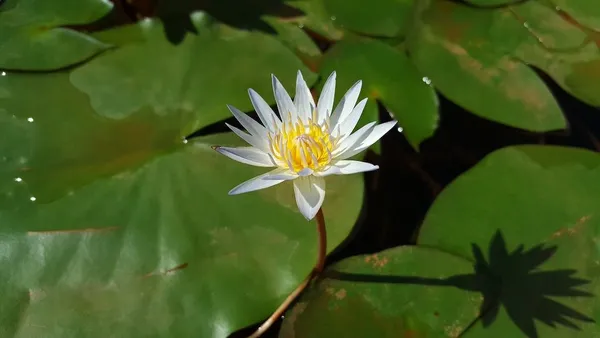
Suitable Pond Plants for a Mini Pond
Don't have room for a real pond, or can't dig one in your yard? Then consider a mini-pond. You can easily make one from an old (but watertight) zinc tub, plastic tub, or planter. You can then plant it with compact pond plants.
Examples of pond plants for a mini-pond include frogbit, needle grass, slender feathergrass, dwarf sweet flag, dwarf bulrush, and small cattail. You can even add a compact water lily, also known as a dwarf water lily.
Which pond plants will you choose for your pond?
There are so many beautiful pond plants. We haven't even come close to naming them all yet. By the way, have you noticed how many of these beautiful plants are native? Which plants will you choose for your pond or mini-pond?