Our Tips for a Sustainable Garden
These days, you can’t open a (gardening) magazine without coming across the word “sustainable.” Virtually every advertisement now includes the term “sustainable” or “sustainability.” While this isn’t necessarily a bad thing, the question remains to what extent something is actually sustainable (or made sustainably)…
What does "sustainable" really mean?
The original meaning of the word “sustainable” is “intended to last a long time.” Its meaning has since expanded to include “taking into account the environment and the finite nature of natural resources and raw materials.”
What is a sustainable garden?
In the garden, this means reusing as much as possible and creating, as it were, a closed system for the garden (circular). In a sustainable garden, everything (or at least as much as possible) stays in the garden. When gardening, you take animals and insects into account and plant plants in the ideal spot. You create a green garden that drains well and makes the most of everything nature provides. Choose organic plants—pesticides are not welcome!
Sounds like a lush garden paradise, doesn't it?
Tips for Sustainable Gardening
At least 1/2 to 2/3 green
Make sure there’s a good balance between greenery and hardscaping. In our view, a sustainable garden should consist of at least half greenery. In a truly sustainable garden, having two-thirds green space is actually highly desirable, with one-third paved. Since this can still be quite a challenge in a small garden, you can also use semi-paved surfaces. Think of gravel or crushed stone, seashells, or other materials that allow water to drain well. A lawn can also help with this.
Choose semi-paving instead of tiles
Gravel, crushed stone, shells, bark, cocoa husks… By choosing semi-paved surfaces, water stays in your garden longer and is better absorbed by the soil. It also often gives the garden a more natural look and is ideal for planting directly into!
Use what you already have
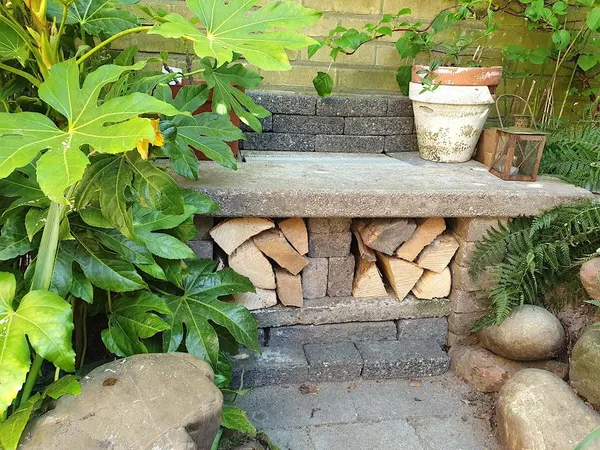
Reuse materials as much as possible and make use of what’s already in the garden. Use old tiles for a small second patio, as a foundation under a structure, or as stepping stones in a larger flower bed. Bricks and concrete blocks are ideal for edging tiles or as border borders. Leave larger shrubs and trees in your new garden, even if you didn’t choose them yourself. You won’t be able to recreate that effect anytime soon. This applies both aesthetically and for the benefit of all the wildlife in your garden. If you do decide to prune heavily, consider creating a brush pile or woodpile in a corner of your garden for animals and insects. It’s also a great way to build a real insect hotel or bee hotel!
Especially in a sustainable garden: The right plant in the right spot
Plant the right plant in the right spot! This is one of the most important principles of sustainable gardening, but it’s often forgotten or simply ignored. Before planting, be sure to research the plant’s characteristics and growing requirements so you can plant it in the right spot. If you really want to garden sustainably, avoid planting a plant that thrives in acidic soil in your garden with heavy clay soil (even if you add a bag of garden peat), and instead choose only plants that can thrive in your garden. This way, your plants will grow better and be much less susceptible to diseases and pests.
Use as much rainwater as possible
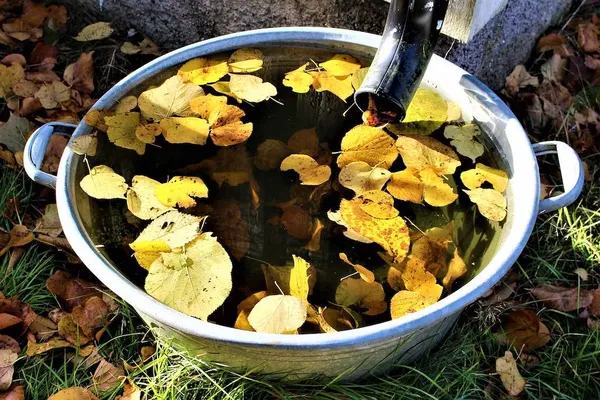
Keep rainwater in your garden for as long as possible. In most gardens, rainwater is drained directly into the sewer system via the downspout. As a result, many gardens struggle with drought in the summer, and many plants have a very hard time. Try to keep all rainwater in your garden for as long as possible so that the soil can benefit from it as much as possible. Use a rain barrel, which you can connect to the downspout with an overflow, for example. Or if you have a smaller roof surface, such as on a shed, you can connect it directly to the gutter or rain drain. The larger the rain barrel, the larger your water reserve during a drought.
To keep the water in your garden even longer, you can create a path—from high to low—from your rain barrel or downspout that the water flows through before ending up on the street and in the sewer. You can do this with a channel, a (mini) dry riverbed, or one or more shallow pools. Such a strip is also called a wadi and immediately opens up a whole new range of planting possibilities!
Don't give it too much extra water
Do you have dry soil and/or a sunny garden? If so, choose plants that (once established) require little or no extra water. Plants with gray leaves or plants with fine hairs on their leaves are good examples. Many (Mediterranean) herbs are also very well-suited for this. If you do need to water (for example, with young plants), water very sparingly. It’s best not to use a sprinkler when practicing sustainable gardening.
Read more (money-saving) tips here about watering plants
Choose sustainable and natural materials
When adding new materials to your garden, choose materials that will last a long time. That way, you won’t have to replace them soon, and you’ll only incur the cost and environmental impact once. Whenever possible, choose materials from the region or, if that’s not possible, from within the country, to minimize transportation.
When designing your garden, use natural materials as much as possible, such as (untreated) wood, boulders and stones, branches, and prunings.
Do not use pesticides in a sustainable garden
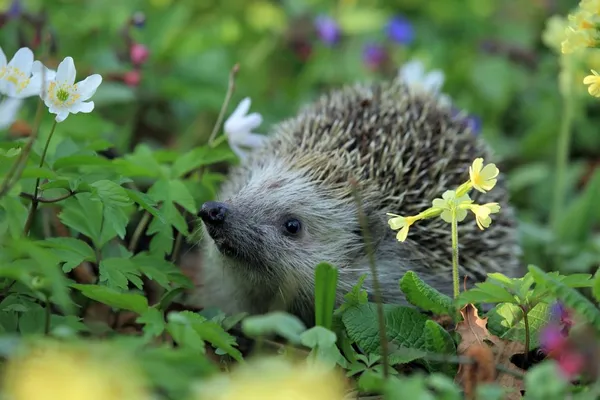
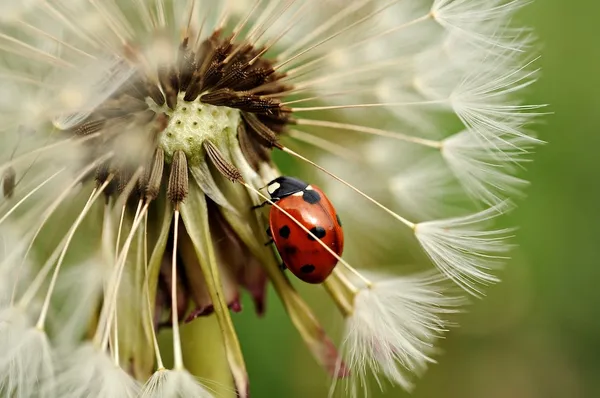
Actually, we shouldn’t even have to mention this, since it goes without saying that you don’t use pesticides when you’re gardening sustainably. Yet in practice, you see that many people still resort to pesticides when a disease or pest in the garden proves difficult to control. Keep in mind, however, that in many cases the problem will go away on its own over time, because nature (and therefore your garden as well) finds a balance. In a balanced garden, pests are eaten by other animals and birds, snails are eaten by hedgehogs and birds, and aphids are kept in check by ladybugs. As soon as you use pesticides, you disrupt this balance, and the problem is only more likely to get worse. Incidentally, this also applies in many cases to organic pesticides, because even these aren’t always environmentally friendly. Unfortunately, many plants sold at garden centers are still grown using pesticides.
Fortunately, more and more gardeners are realizing that it’s best to do without chemicals. Now it’s up to the garden centers!
Don't clean everything up
Don’t tidy up the garden too much. Let leaves, prunings, and branches lie where they are throughout the year, and create various nooks in the garden that remain undisturbed as much as possible. A small pile of branches, a stack of stones, or a pile of boulders in such a spot is ideal for a wide variety of animals and insects.
Do not cut back perennials and ornamental grasses before winter; instead, leave them as they are until spring. Once the temperature rises above 10°C in the spring (and stays there more often), you can still cut back the perennials and ornamental grasses. It’s best to leave the clippings where they are.
You should also set up a few good bee hotels or insect hotels to provide even more hiding places and spots for overwintering.
Make Your Own Compost
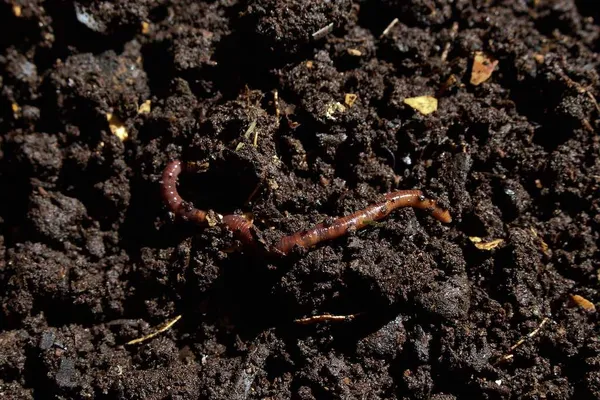
By composting all your yard and pruning waste, everything stays in your garden, and you can later mulch your flower beds and garden with a fresh layer of compost. This improves the soil structure and nourishes your garden. You can also compost a lot of organic waste. Be careful, however, with cooked or prepared food, so you don’t attract rats in the city. See also our blog post about Making Your Own Compost, for a complete list of what can and cannot go in the compost pile.
Should a sustainable garden have a lawn or not?
Although a lawn is a good way to add greenery to your garden and also helps with water drainage and retention, it requires a lot of maintenance, and there’s little that’s natural about mowing the grass short every week. The short grass is of little value to animals and plants. But simply by leaving one strip unmowed, you can greatly increase the ecological value! This way, you can enjoy a patch of grass—for yourself, for children to play on, or for pets—while many animals and insects find refuge in the tall grass. A strip of long grass in the garden also serves as an ideal corridor for animals like hedgehogs. If you’d like, you can combine the long grass with a small wildflower meadow.
Trees and plants that provide food or shelter for animals
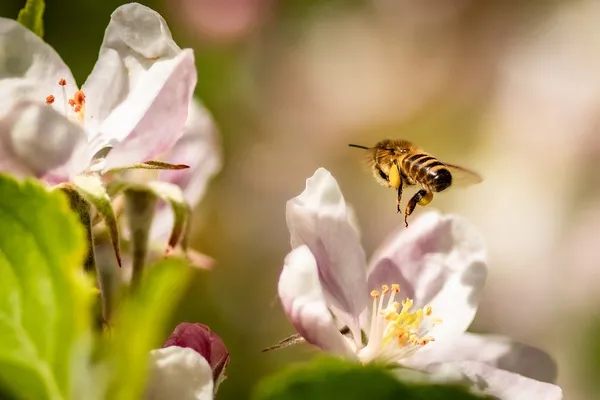
Plants that are not only ornamental but also nutritious are ideal. Consider, for example, fruit trees, berry bushes or herbs. They’re not just interesting to us, but especially to animals and insects as well. Densely branched trees or shrubs, thorny plants, or a dense hedge are also worthwhile, as they provide plenty of hiding places for birds and animals. With (organic) flower bulbs and perennials, you can ensure there’s enough nectar for bees and butterflies, from early spring through winter.
Be sure to check out our blogs featuring Tips for Bees in the Garden, plants to attract more butterflies, or tips on More birds in the garden.