
More Birds in Your Garden All Year Round: 51 Tips
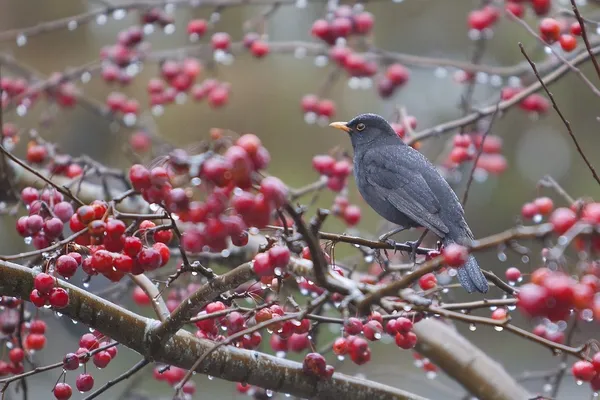
Who wouldn't want (more) birds in their garden? Once birds find their way to your garden, you'll often see all kinds of species coming and going.
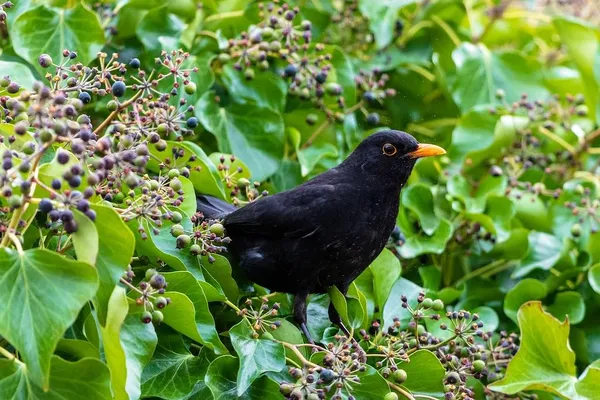
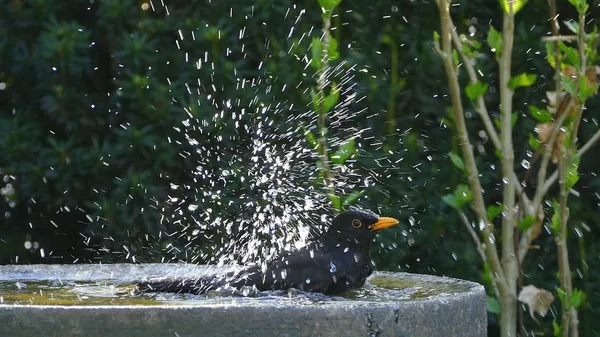
In the winter, we see lots of birds here that are drawn to the bird feeders, but also to the many berry-bearing plants we’ve planted especially for them. In the summer, the garden is a popular spot because of the birdbath, and birds always manage to find a quiet corner in the garden for a dust bath. In the fall, the birds are drawn to the many seeds. Of course, we just leave all the seed pods here. Year-round, many birds make use of the laurel hedge and hawthorn, where they can take shelter.
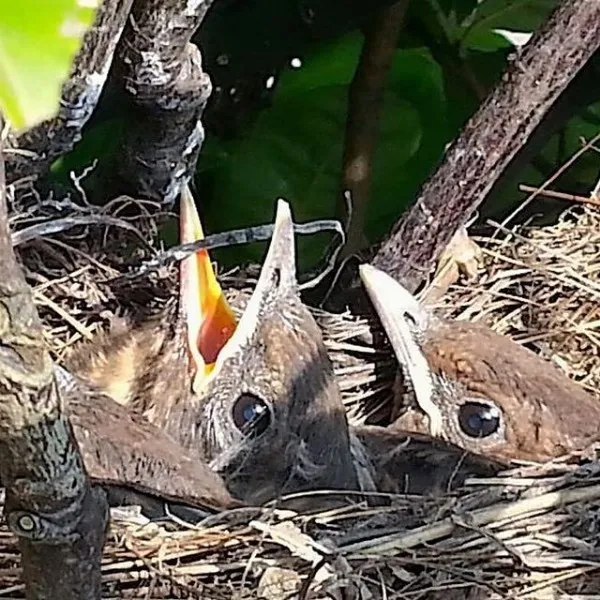
It brings life to the garden. It’s especially nice when your garden is chosen as a nesting site, so you can watch the young birds grow up right there in your garden. Every year we have a nest of blackbirds in the laurel hedge here, sometimes a nest of sparrows a little further along that same hedge, and every year a pair of Eurasian collared doves nests in the magnolia tree.
Don't have that many birds in your garden yet?
Or would you like to have (even) more birds in your garden?
51 Tips for Attracting More Birds to Your Garden
We have lots of birds in our little garden. Not just in the winter, but all year round. Here are all our tips so you, too, can enjoy lots of birds in your garden.
Plants for Birds
- Plant a dense hedge to provide extra shelter and nesting opportunities.
- Alternate low, medium, and tall plants sufficiently so that there are enough variations in height.
- Climbing plants provide extra shelter and, in some cases, nesting sites.
- Plant a (small) lawn. Birds find insects and worms in the grass.
- Leave some flowers growing in the grass. So mow (a small corner) a little less often.
- Plant a tree with a dense canopy. This will provide adequate shelter.
- Ideally, you should choose a fruit tree or a berry-bearing tree.
- Trees and shrubs that produce good crops These include holly, rowan, guelder rose, dwarf cotoneaster, and ivy. You can find more suitable species in the overview provided by the Dutch Society for the Protection of Birds.
- Let your fence or garden boundary become (partially) overgrown. This will make your garden much more attractive to birds (and to you, too, for that matter).
- Plant bird-friendly vegetation. You can find a list on the Vogelbescherming website.
- Try to have flowering plants year-round.
- A tree or large, thorny shrub provides birds with an extra safe hiding place. Think, for example, of hawthorn or rugosa rose.
- A tree also provides a good (and safe) vantage point for birds.
- Choose a green garden fence; plant a hedge or trellises covered with climbing plants instead of a stone wall, concrete wall, or plain wooden fence.
Water for the birds
- Create a (small) pond, preferably with a shallow area. In addition to birds that come to drink or bathe, water in the garden also attracts many insects.
- No room for a pond? You can also make a water dish or birdbath Place them. You'll see that birds will soon come here to drink or bathe.
- Set up a birdbath. Whether it's the hot summer or the cold winter, many birds benefit from having fresh water.
- You should change the water in a water dish or drinking bowl regularly, especially on hot days.
- You can water your plants even in the winter. Be sure to change the water regularly to prevent it from freezing.
Not too proper
- A small (sunny) clearing with loose sand in the garden gives birds such as sparrows the chance to take a dust bath. They prefer to do this near a place to hide, such as a large bush or hedge.
- Don't make the garden too neat; instead, set aside a little corner of the garden that you disturb as little as possible.
- Leave the leaves in the flower beds. They often contain many insects.
- Leave seed heads, rose hips, etc., on the plants in the fall. This also provides extra food for birds.
- Leave some of the fruit and berries on the tree or bush. The birds will be grateful for the extra food.
- Leave some of the fallen fruit on the ground. For example, fruit with bruises.
- Create a little nook with a pile of twigs (and fallen leaves). This provides extra shelter.
- Don't seal up every crack and hole in the garden. For example, leave some open space or cracks in a dry-stone wall or raised garden border.
A birdhouse in your garden
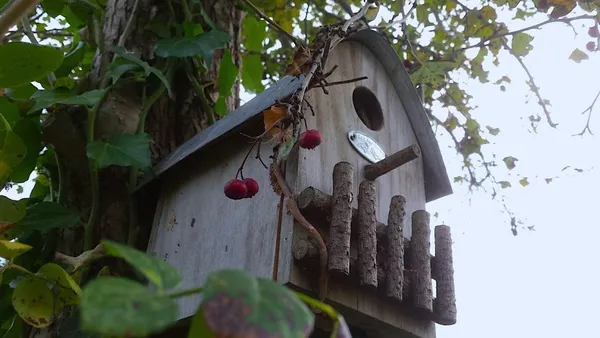
- Build your own birdhouse, or Buy a birdhouse and place it in your garden. Keep in mind that it may take a while before birds start using it.
- Choose the size of the opening based on the species you want to provide a home for. Be sure to select species that already grow in your garden.
- The correct opening size for a blue tit is 25–26 mm.
- The correct opening size for a great tit is 30–32 mm.
- The correct opening size for a house sparrow is 35 mm.
- For a blackbird, wren, or robin, a semi-open nest box is sufficient.
- Place birdhouses and nesting boxes out of reach of cats and other predators.
- It is best not to hang a birdhouse in direct sunlight.
Supplemental Feeding
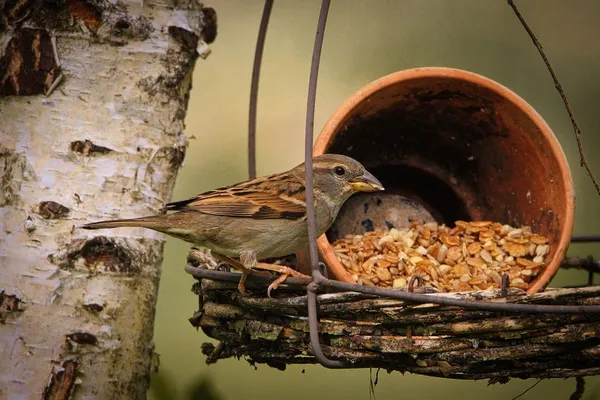
- Post a bird feeder, feeding table, or feeding board.
- When placing a feeding table or feeding tray, choose a spot that cats cannot reach—or can only reach with difficulty. For example, in a slightly elevated spot, or in the middle of a shrub (whether or not it has thorns).
- Are you planning to feed the birds? Keep in mind that different types of birds have different preferences.
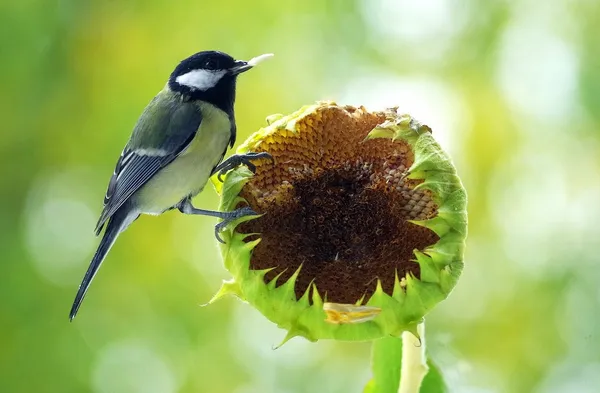
- Great Tits and Blue Tits love to eat suet balls, peanuts, and sunflower seeds.
- Sparrows and finches love to eat seeds, sunflower seeds, and peanuts.
- Blackbirds, song thrushes, and starlings love to eat fruit, berries, and breadcrumbs.
- Jackdaws, magpies, and jays love to eat bread (crumbs), fruit, and berries.
- Wren and robin both like to eat mealworms and breadcrumbs.
- Hang a small jar with bird peanut butter in the winter. Be sure to use peanut butter specifically made for birds, since it doesn't contain any salt.
- Do not feed birds milk or salted peanuts, as these are bad for the birds' health.
- Would you like a complete overview of what each species eats and the best way to feed them? Check out the overview here.
- Supplement their diet year-round, not just when it's cold. Think of it as a true supplement and tailor it to the season.
Gardening? Keep the birds in your yard in mind
- Do not trim the hedge until the nesting season is over.
- Before trimming a hedge, always check to see if there are any active nests in it. If so, postpone trimming (that part of) the hedge.
- Avoid trimming all hedges and shrubs at the same time. That way, you won’t suddenly remove all the hiding places.
- Do not use poison or chemical pesticides in the garden.
- Do you have large windows or a large sliding glass door? This can be very dangerous for birds. Put stickers on the windows so that birds are less likely to fly into them.
Do you already have a lot of birds in your yard?
Do you have any other good tips? We'd love to add them to the list!
This article contains some affiliate links. This means that we receive a small commission for each product ordered. The commission helps us keep the website online and continue to develop it.