
Make your garden hedgehog-friendly, too!
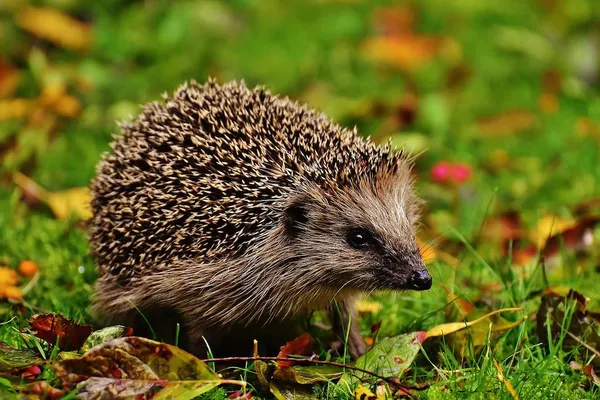
Who wouldn't want a cute little hedgehog like that in their garden—or even a whole hedgehog family?
When you see photos or videos from other gardening enthusiasts showing one or more hedgehogs happily scuttling around the garden or feasting on the food set out for them, don’t you want that in your own garden, too?
Many people have a soft spot for hedgehogs.
At least, on paper…
Because if we want to see hedgehogs in our gardens, we’ll also have to make sure there are more gardens that are suitable for hedgehogs. The still very popular “low-maintenance garden”—consisting mainly of pavers and the occasional potted plant—is completely unsuitable for hedgehogs! Hedgehogs prefer a garden that isn’t too tidy, with plenty of greenery for cover, hiding spots, and food. In other words, a greener garden! And not just your garden, but the gardens around it as well…
Here's how to make your garden hedgehog-friendly (and hopefully your neighbors' gardens too)
Don't clean up leaves and branches in the winter!
Don’t clean up too much. In the fall and winter, leave leaves, twigs, and pruning clippings in a quiet corner of the garden. You can easily sweep leaves that end up on paths or your lawn over there. Or you can spread a thick layer of leaves among the plants in your flower beds.
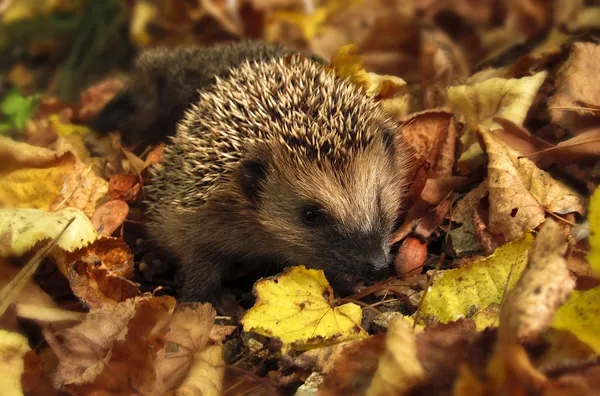
By creating a “messy corner” in your garden, you can provide a nice spot for a hedgehog to take shelter or even hibernate.
Make Your Garden Accessible
Make sure your garden is accessible to hedgehogs. These days, many gardens are completely enclosed by (concrete) fences and outbuildings. Create a passageway for hedgehogs in one or more places. For example, you could make a small hole at the bottom of your fence in a quiet corner of the garden. This will give hedgehogs a chance to reach your garden. It’s helpful if you can work with your neighbors to do this. That way, you’ll connect multiple gardens, allowing hedgehogs to access as many gardens as possible.
A passageway for a hedgehog (in a fence or barrier) should be approximately 14x14 cm. This makes the passageway spacious enough for a hedgehog but difficult for other animals (such as cats) to access.
Put a hedgehog house in your garden
A hedgehog house is a great solution for gardens that are becoming increasingly tidy. It’s ideal for making your garden hedgehog-friendly. You can buy a hedgehog house at a garden center, garden store, or sometimes at a pet store. Of course, you can also build a hedgehog house yourself. For example, use the Hedgehog House Blueprint from the Hedgehog Conservation Society.
Place the hedgehog house in a quiet and somewhat sheltered spot in the garden. Choose a spot that doesn’t get very wet (otherwise, place the hedgehog house on a tile to prevent rot) and add a thick layer of dry leaves to the hedgehog house so that a hedgehog can turn it into a warm little den. Also cover the outside with a thick layer of leaves (placing some mesh over it will prevent the leaves from blowing away). Ideally, position the entrance facing north. Hedgehogs will often find the entrance more quickly if it’s located along the garden boundary or fence.
Make sure the opening in your hedgehog house is fairly small. The entrance should be about 14x14 cm. This way, it’s spacious enough for a hedgehog but difficult for other animals (such as cats) to get through. A longer tunnel as an entrance also helps with this.
Adequate ground cover and vegetation around the hedgehog house greatly increases the likelihood that it will be used.
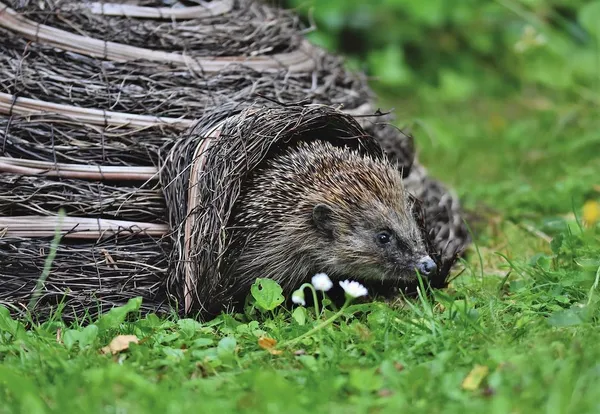
The best time to set up a hedgehog house is before October. However, you can do this year-round. During the winter, hedgehogs may occasionally move to a different shelter. In late spring and summer, hedgehogs need a safe nesting place.
Feeding Hedgehogs
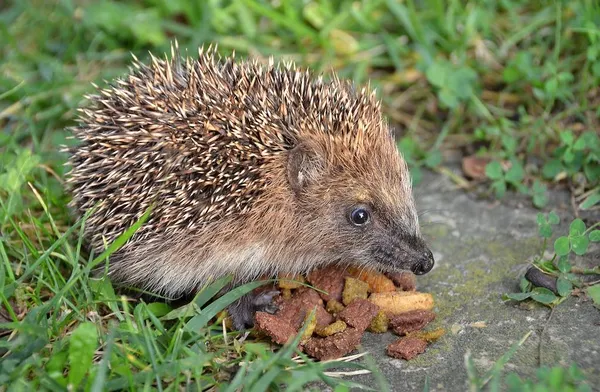
Hedgehogs mainly eat insects. However, they also eat snails, which makes them especially popular with gardeners. In a neighborhood with plenty of greenery, there will be enough food for hedgehogs during the season. Still, providing supplemental food can help attract hedgehogs to your garden, ensure they go into winter well-fed and healthy, and help them regain their strength quickly in the spring.
You can feed hedgehogs with cat food, dog food, or special hedgehog food, for example. However, cat food does carry the risk of attracting other visitors…
A shallow dish of water is also recommended. However, never give hedgehogs milk! It’s not good for them and can cause diarrhea. Make sure you place the food and/or water in a safe spot. A feeding station with a small or narrow entrance tunnel can be a good solution.
Young hedgehogs
In May and June, hedgehogs form pairs. Starting about a month later (and continuing until around the end of September), baby hedgehogs may be born. They are born in a nest made of leaves, moss, and grass. A hedgehog house can also be used for this purpose. Try to disturb the hedgehogs as little as possible during this time. After about six weeks, the baby hedgehogs become independent and start looking for food on their own. It’s fantastic to see this happen in your own backyard!
Hedgehog in hibernation
In October/November, hedgehogs begin their hibernation. They no longer need food at that point and will draw on their reserves. Around April–May, they’ll emerge again. Incidentally, a hedgehog may wake up and become more active during hibernation. They may even go looking for a new place to live toward the end of winter.
Never disturb a hedgehog that’s hibernating. Do you want to clear away a pile of leaves, branches, or logs? It’s best to wait until spring. If you really have to do it, at least check first to see if there’s a hedgehog underneath. However, there’s a very good chance you’ll disturb the hedgehog anyway, causing it to go looking for a new shelter at the wrong time.
You can also find hedgehogs at the bottom of a compost pile. So be careful and watch out if you need to turn the compost pile during this time of year. It’s better to wait until spring.
Do you still see hedgehogs active in your garden around November? That’s usually not a good sign. You can supplement their diet with some cat food or hedgehog food so they can build up their strength before hibernation.