
Laying a New Lawn

Almost every garden has a patch of grass.
Actually, this isn't always ideal, because a lawn requires a relatively high amount of maintenance, and in a small garden, it isn't always easy to provide the ideal growing conditions.
Still, a lawn is often desirable, especially if children use the garden. Besides, it’s simply a beautiful, classic garden scene, with a lawn bordered by flower beds.
Of course, you can lay a new lawn by sowing grass seed or by laying sod.
You can only sow seeds when temperatures are above 10–12℃. You can actually lay sod at any time, but it’s best to avoid doing so when it’s freezing or on very hot days, because fresh sod will dry out very quickly under those conditions.
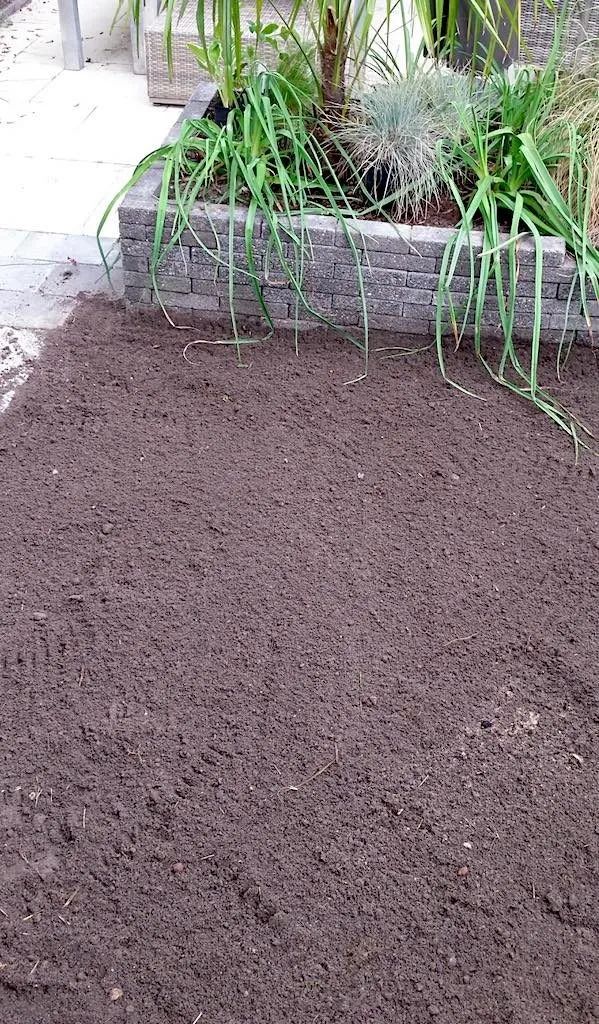
Preparing the New Lawn
Proper establishment and rapid growth depend entirely on the preparations. Before you can actually lay or sow a new lawn, you’ll need to go through quite a few steps:
- Choose a suitable spot. A sunny spot often yields the best results. Choose a spot where water doesn't pool, with adequate drainage.
- Remove all obstacles, old plants, etc., from the area where the lawn will be planted. Be sure to remove roots, old clumps of grass, and stones, and don't forget to thoroughly remove any weeds.
- Make sure there is adequate drainage under the lawn. For example, add sand or fine gravel to the subbase.
- If you do have an area where water tends to pool, drill holes about 80 cm deep and fill them with sand or gravel.
- Improve the soil by adding a good topsoil layer. For example, use good (fertilized) garden soil.
- Rake the ground to create a nice, level area and ensure that any variations in soil composition are well distributed.
- Level the surface. You can do this by tamping down the soil (walking across the ground step by step and pressing down). It’s best to do this in several intersecting directions. That way, you can be sure the soil is well compacted everywhere.
- Check for any unevenness and smooth it out by raking the surface. Add more soil if necessary.
- If any rocks, roots, or other objects have come to the surface, remove them.
- Rake the top layer so that it is slightly loose and evenly distributed throughout.
Sowing Grass
When should you sow grass?
You can sow grass when temperatures reach at least 10–12℃. Note that this refers to the soil temperature, not the outside temperature. It often takes several warm days for the soil to warm up sufficiently.
Sowing too early (or too late) will therefore mainly serve as expensive birdseed. So it’s better to wait a bit until the soil has warmed up.
It is often recommended to sow seeds in the spring or fall.
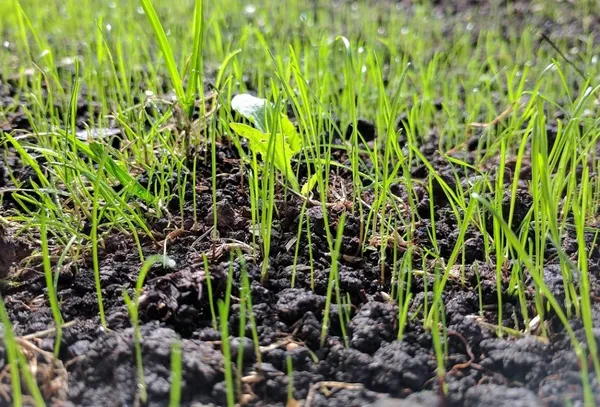
How do you sow grass?
- Decide what type of grass seed you want: ornamental lawn, play lawn, or shade lawn.
- Before you buy, calculate how many meters you'll need so you can buy enough grass seed.
- Scatter the grass seed in two directions. For example, first along the length, then across the width. That way, you'll ensure good coverage.
- Don't spread the seeds too thickly or in too large a quantity; this won't result in a denser carpet, so it's a waste and will mainly serve as bird food.
- After sowing, lightly rake the seeds into the soil so that all of them are in good contact with the soil and can germinate properly.
- Water generously after sowing so that the seeds can germinate properly as quickly as possible.
Laying Sod
When should you lay sod?
You can actually lay sod almost any time of year. The ideal time is between March and November.
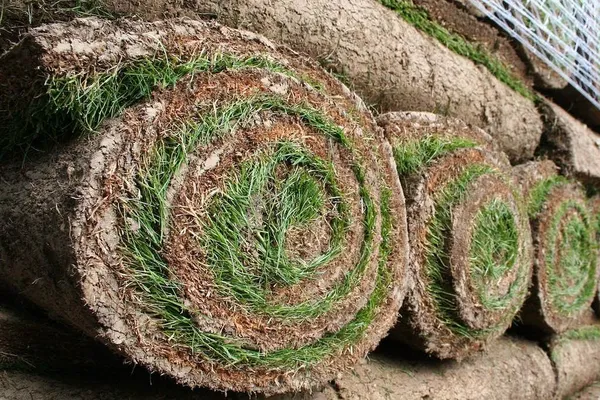
How do you lay sod?
- Decide what kind of lawn you want: an ornamental lawn, a play lawn, or a shaded lawn.
- Before you buy, calculate the number of meters you'll need so you can purchase enough sod. Keep in mind that rolls usually come in standard sizes (for example, 40 x 250 cm).
- Work from back to front so you don't get in your own way.
- Place a roll in the desired spot and carefully (but completely) unroll it. Make sure to leave a small amount of extra length. You can easily trim this off later.
- Align the rolls tightly so that the seam is as small as possible. Press the sides of two adjacent rolls together slightly so that they fit together even better.
- Cut the corners and ends to size using, for example, a bread knife. Avoid using pieces that are too small, as they often don't fit as well.
- After laying the sod, press it down firmly so that it makes good contact with the soil and can take root properly.
- Walk on the grass as little as possible. If necessary, you can use a few old planks to help distribute your weight more evenly.
- Ready? Then try to walk on the grass as little as possible during the first week—or better yet, the first two weeks.
- Of course, you should water generously after laying your new lawn so that it can take root properly and start growing beautifully as soon as possible.

Water and Nutrition
Your newly seeded lawn needs quite a bit of water to grow well.
For example, water the lawn twice a week (generously) during the initial period. If it’s dry, you can even water it every day during the first few weeks.
If grass starts to grow, that’s a sign that it has at least taken root. You can then gradually reduce the frequency of watering. Of course, it’s still important to water sufficiently during dry spells.
Fertilize your lawn at least 3 times a year for optimal growth. You can do this in the spring (March/April), summer (June/July), and fall (before October).