
Is this honeysuckle? And how do you get rid of it?
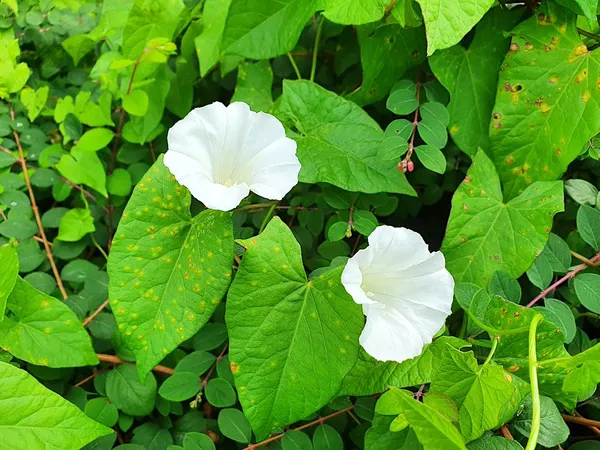
Although the flowers of the common bindweed are actually quite pretty, it’s still best to try to keep it out of your garden…
Common bindweed (also known as “pispotjes” and sometimes referred to as “incomplete bindweed”) is a rampant weed that, once established in the garden, almost always seems to return.
It is very difficult to remove hedge bindweed completely, along with all its roots and runners. It usually breaks off when you try to pull it out, and new runners quickly spring up. This weed is capable of taking over your entire flower bed.
How to Identify Hedge Bindweed
When bindweed is still small, it usually goes unnoticed, especially in a fairly green garden. Over time, however, you’ll start to see unusual leaves appearing among your plants, or even the striking white flowers (if you really spot them late).
This weed winds itself around the stems of upright plants and structures in your garden. Hedge bindweed spreads mainly through underground rhizomes, which break off easily when you try to remove it. These then sprout again. The light green leaves are elongated, triangular, or oval. The base of the leaf is arrow-shaped and the tip is pointed. The flowers are striking, with white (and actually quite pretty) trumpet-shaped blooms.
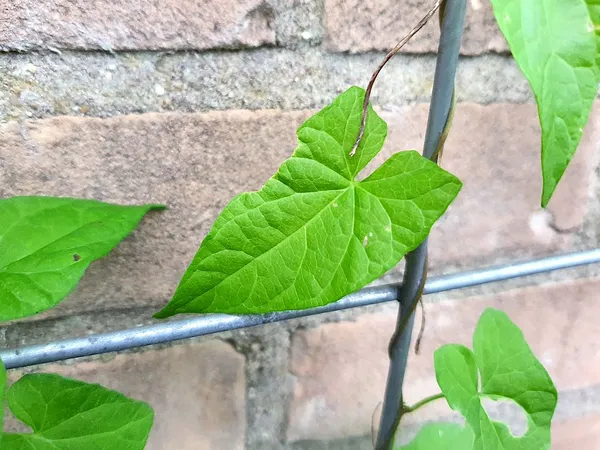
Arrow-shaped leaf
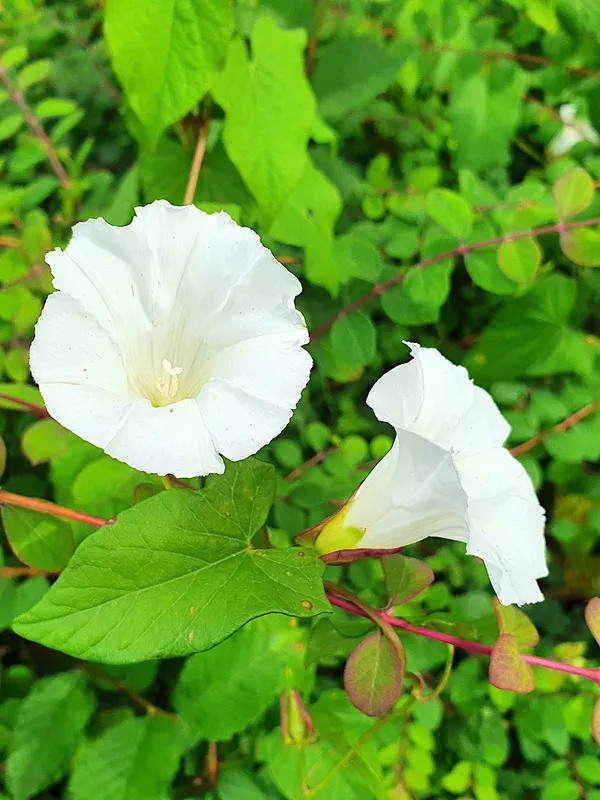
Striking trumpet-shaped flowers
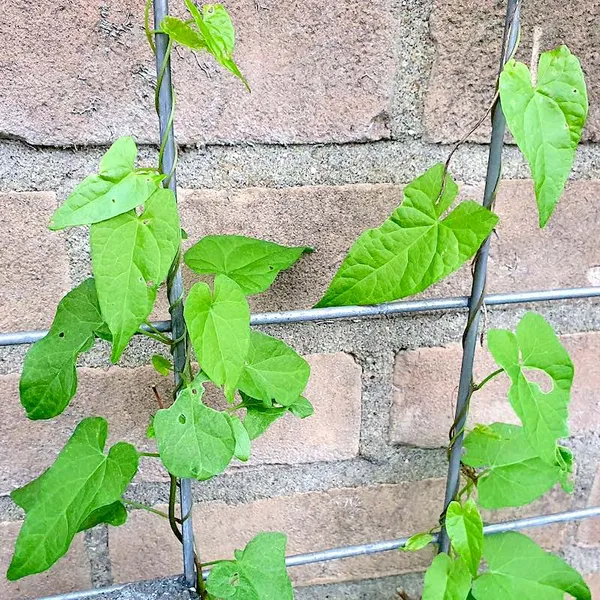
Wraps itself around structures and garden plants
Controlling Hedge Bindweed
Common bindweed is very difficult to control. We prefer not to use pesticides, as they can quickly kill more than intended.
Actually, there's really only one thing to do:
Be sure to keep pulling out all the shoots, and try to remove as many roots as possible.
Over time, the plant will become exhausted and less active. However, it may take years before this has a significant effect. All the more reason to remove bindweed every time you see it growing in your garden!
Preventing Hedge Bindweed
Common bindweed usually finds its way into your garden via underground rhizomes, for example from neighboring gardens or (municipal) flower beds. It also appears that traces of this plant can be found in compost or garden soil that is (too) cheap.
In any case, be sure not to dig up soil that contains a lot of bindweed. Doing so will only spread this invasive plant. Also, be careful about using this soil in other areas of your garden, or in pots and planters. There’s a good chance you’ll unintentionally transfer ground ivy to your new flower bed, pot, or planter.
No matter how beautiful the flowers are, prevent them from spreading further by removing the plant in a timely manner.
The best way to control field bindweed is to identify new shoots while they are still young and to keep removing them as quickly (and completely) as possible.