
Is evergreen clematis hardy?
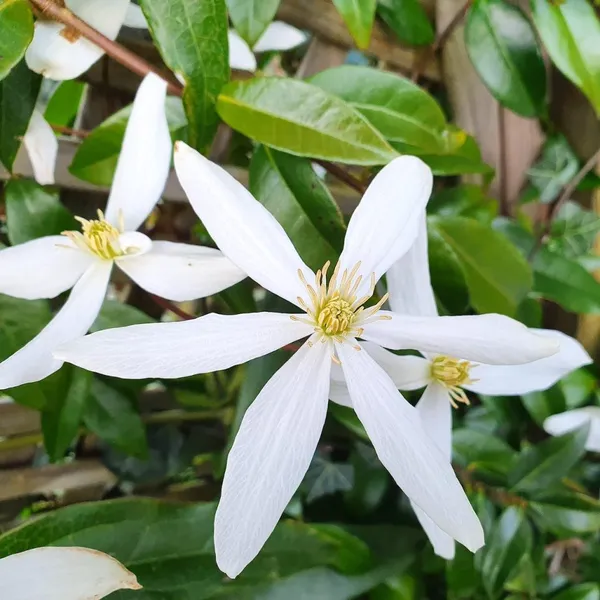
Clematis (officially known as “bosrank” in Dutch) is a beautiful climbing plant with striking flowers. Most clematis varieties lose their leaves in the winter. However, there are also evergreen clematis varieties. Take, for example, the popular Clematis armandii, with its dark green foliage and beautiful (fragrant) white flowers in the spring. But is Clematis armandii hardy? And are the other evergreen clematis varieties hardy?
Which clematis varieties are evergreen?
Let’s first clarify which types of clematis we’re talking about here: Only a small portion of the Clematis genus remains green in winter. The best-known evergreen clematis is Clematis armandii. Clematis cartmanii cultivars are also evergreen.
- Clematis armandii
- Clematis armandii ‘Apple Blossom’
- Clematis armandii ‘Snowdrift’
- Clematis armandii ‘Enham Star’
- Clematis armandii ‘Little White Charm’
- Clematis armandii ‘Hendersonii Rubra’
- Clematis cartmanii ‘Early Sensation’
- Clematis cartmanii ‘Joe’
- Clematis cartmanii ‘Pixie’
- Clematis cartmanii ‘Avalanche’
- Clematis cartmanii ‘Lunar Lass’
- Clematis urophylla ‘Winter Beauty’
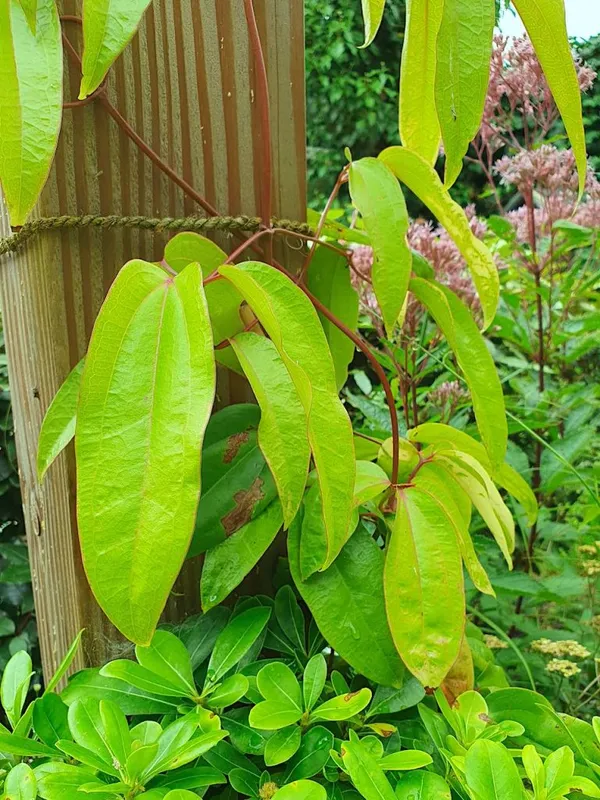
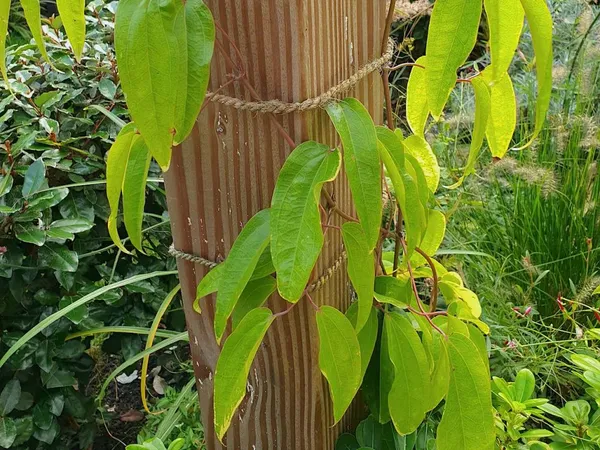
Which evergreen clematis is hardy?
Compared to “regular” deciduous clematis varieties, evergreen clematis are somewhat less hardy. This means they are not fully hardy, and frost damage can occur during prolonged periods of low temperatures. For mature plants, temperatures of -12°C are no problem. According to some sources, Clematis armandii can also withstand frost down to -18°C. We haven’t been able to verify this ourselves, but the right planting location likely played a major role in this. Our own plants withstood -15°C well, although they seemed to get back into growth a bit more slowly afterward than we were used to.
Of the evergreen clematis species, Clematis armandii is the most hardy. Some cultivars may tolerate slightly less frost. However, we have not observed this to be the case with Clematis armandii ‘Apple Blossom’.
The other evergreen clematis, including Cartmanii cultivars, are less hardy. They can generally be expected to withstand temperatures down to about -10°C.
The best spot for evergreen clematis
Just like many plants that are slightly less hardy and/or evergreen, a sheltered location and well-drained soil are recommended. An open wire mesh fence as a property boundary or garden fence is therefore less suitable. To prevent problems, the soil should not remain wet for too long in the winter. If the soil is wet in the winter, there is definitely a risk of frost damage or plant loss.
See also: How to Plant Clematis
Ask your gardening question, too!
In our "Garden Questions" section, we answer all your questions about gardens, plants, and gardening.