
In Bloom All Year Round – On Nynde's Bee Balcony
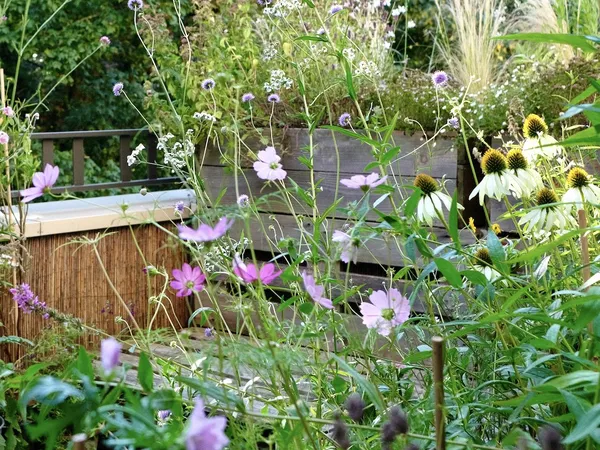
Nynde has transformed her bare 17m² city balcony into a lively haven for wild bees, butterflies, and other animals. You may already know Nynde from her Instagram account “Bijenbalkon” and her blogs for the Bijenstichting. From now on, you can also read her tips and fun blog posts here about biodiverse balcony gardening and greening even the smallest balconies.
It’s August, and we’re enjoying the summer to the fullest on our balcony. Although many plants are still in bloom, we’ll notice over the coming weeks that many summer-blooming plants are reaching their peak. Still, many bees, butterflies, and other insects continue to search for food well into the fall. How can we ensure they have enough to eat all year round? And which plants are best for that? In this blog, I’ll show you how, by varying growth and blooming times, you can fill your balcony with a colorful variety of flowers from early spring well into fall, so there’s always something for pollinators to enjoy.
No Food, No Bees
Between February and November, bees are busy collecting nectar and pollen. Nectar provides them with energy, and pollen supplies protein for the growth of their larvae. They find this food mainly in April, May, and June, when many plants are in bloom. But in early spring and late fall, insects also need food, and flowering plants are often scarce during those times.
Climate change makes this even more difficult. Mild winters cause bumblebee queens to wake up earlier, dry summers result in fewer flowers, and warm fall weather keeps bees active longer, even though many plants have already finished blooming by then. On top of that, a lot of vegetation is mowed down, preventing plants from growing and blooming. Without flowers, bees and other insects struggle. And without bees, many plants aren’t pollinated, which ultimately affects our food supply as well. So it’s a tricky situation.
How can we, as balcony gardeners, lend a hand? Simple: create a bee arch! A bee arch, or blossom arch, consists of a series of plants that bloom at different times of the year, ensuring that a floral feast is always ready for hungry nectar-seekers from March through November.
A Walk Around the Bee Arch
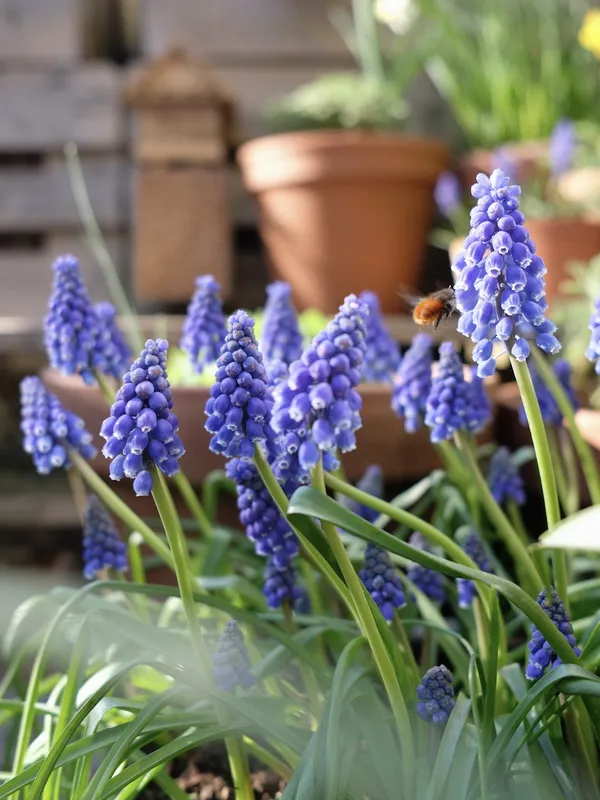
Some bumblebees, such as the earth bumblebee, wake up from hibernation as early as February. Perennials are still dormant at that time, but by planting spring bulbs—such as crocuses, grape hyacinths, and botanical tulips—you can already offer these early flyers a delicious breakfast. In March, the first flowers of lungwort and yellow deadnettle appear. Lungwort is ideal for shady spots and is a real must-have for your bee garden. Place this little plant on your balcony, and there’s a good chance the common sac-bearer bee will stop by—a sweet, plump, fuzzy little bee that loves the beautiful pink-blue-purple flowers.
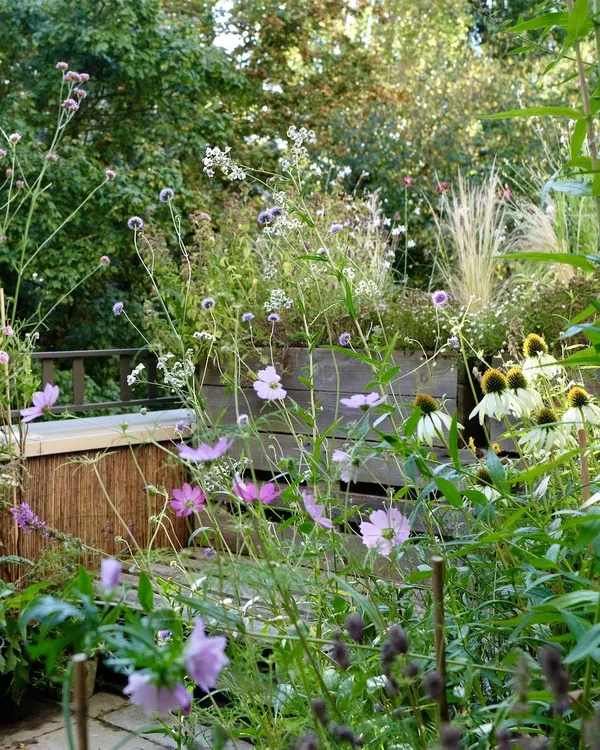
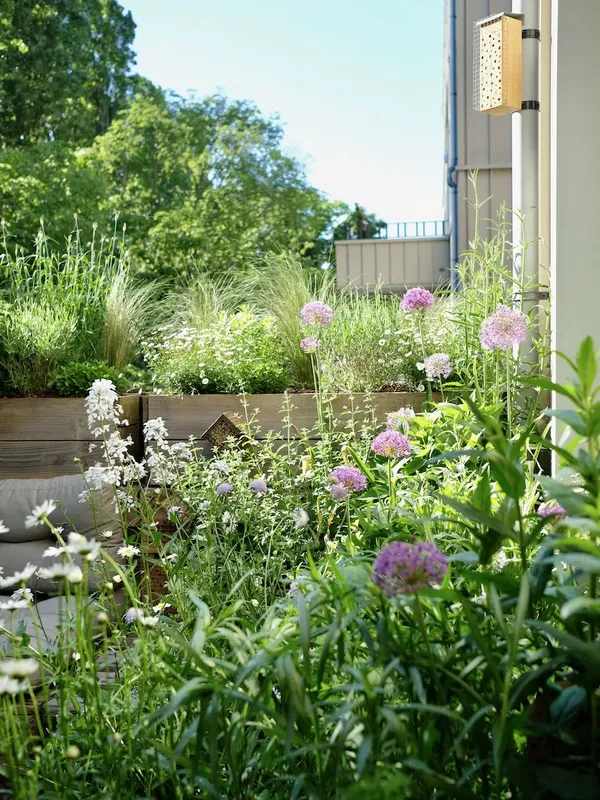
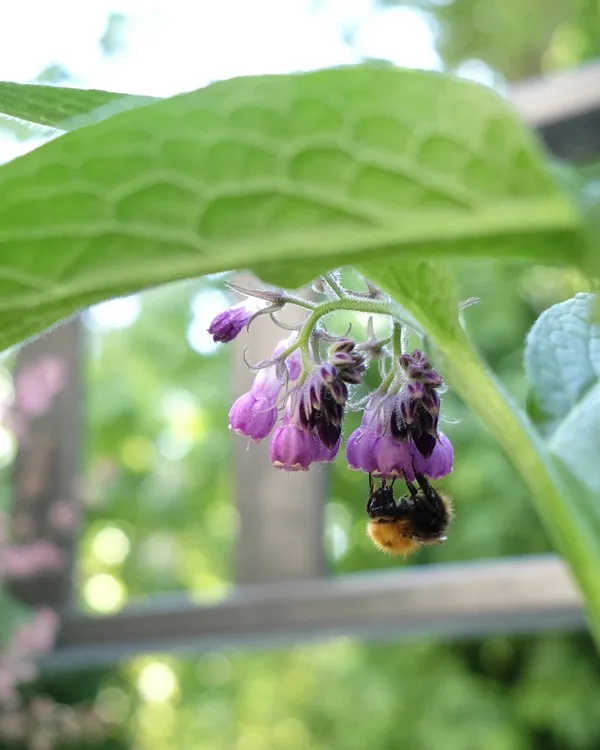
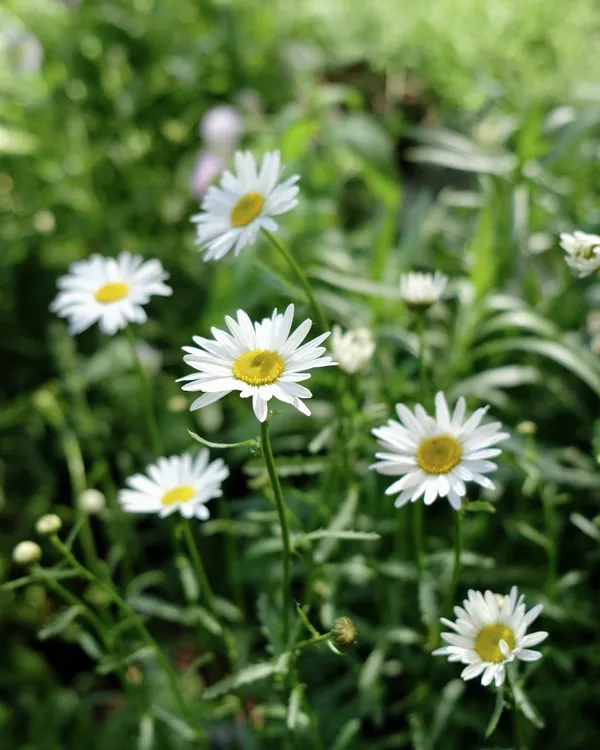
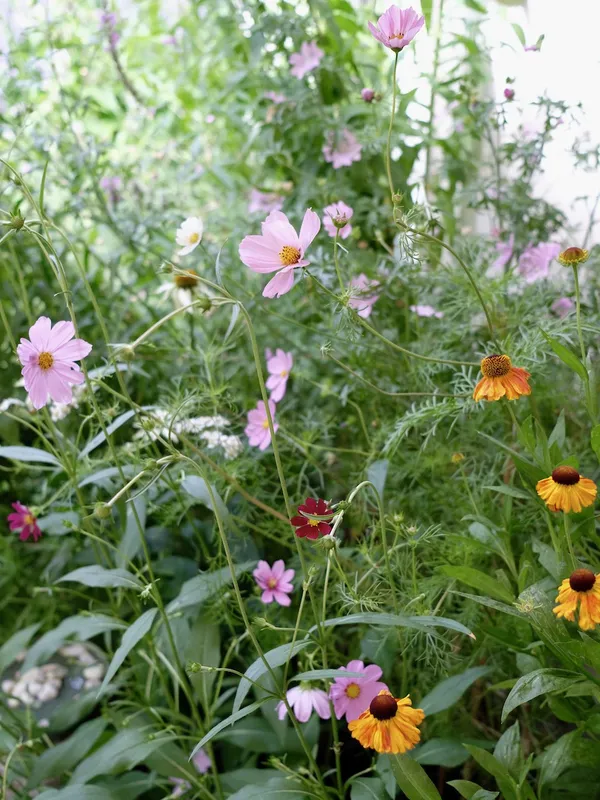
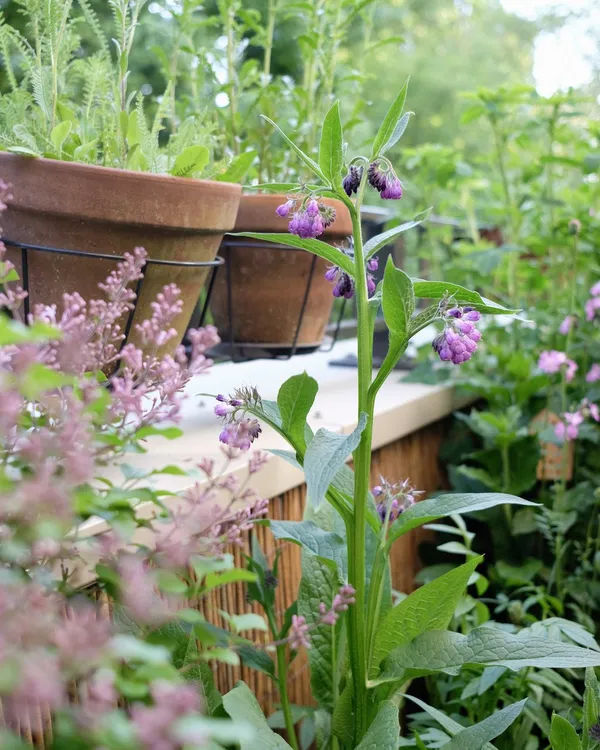
April brings the blooming of meadow saxifrage, comfrey, and fruit-bearing shrubs such as currants and blueberries. Starting in May, the spring bulbs that have finished blooming make way for catnip, common daisies, and daylily, while ornamental onions continue to bloom through June. Between June and August, wild marjoram, licorice, lavender, and tall veronica steal the show. Annuals, such as cornflowers and cosmos, complement the display beautifully and provide an extra boost of nectar during the summer months.
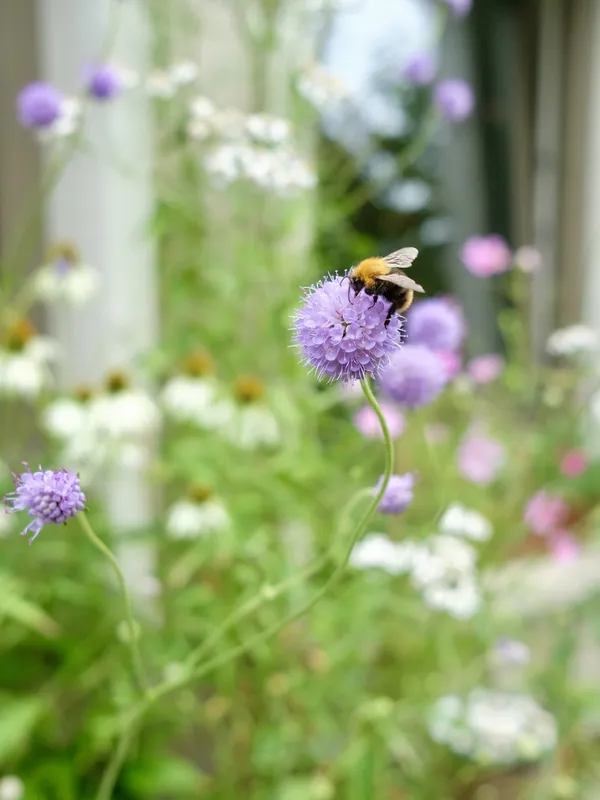
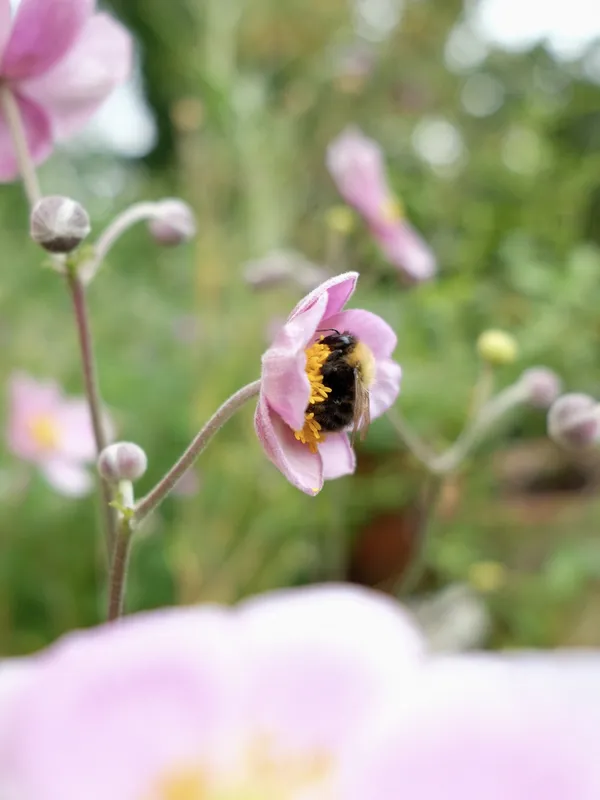
Starting in September, when most summer favorites are past their prime, plants like blue knapweed, yarrow, autumn anemone, autumn aster, and sky-key take over. With a little luck, these will continue to bloom until the first frost, so that late bloomers can begin their winter dormancy well-fed. When winter sets in and all the cheerful buzzing comes to a halt, the flowers of hellebore and winter heather, along with evergreens such as bog bilberry and dwarf periwinkle, will continue to brighten up your balcony until April. By then, the spring bulbs will have sprouted again to treat early bees to their first meal. And so the cycle begins anew!
Tip: Take a walk around your balcony every two weeks and make a note of which plants are blooming. This will help you identify any “gaps” in your blooming schedule, so you can strategically add new plants that do bloom during that time and are beneficial to insects.
The Best Food for “Our” Insects
The plants I’ve mentioned here are, of course, just a few of the many flowering plants you can choose for your bee garden. Be sure to choose native species that grow naturally in our country. They’re perfectly adapted to our environment and therefore provide exactly the food that our bees and other small creatures so desperately need. No matter what you plant, always opt for organic plants, bulbs, and seeds to ensure you don’t accidentally serve your visitors a toxic treat.
Tip: At Sprinklr and Cruydt-Hoeck, you can buy 100% toxin-free plants and filter by plant type and blooming season. That way, you can quickly find the right plant to complete your bee arch.
Year-round blooms from a single pot
Tiny balcony? Plant smart and enjoy months of blooms from one very large pot! For a sunny spot, you can fill the pot with crocuses (February–April), grape hyacinths (March–April), catnip (May–September), wild marjoram (July–September), and sky key (August–October). Is your spot more in the shade? Then combine snowdrops (February/March) with slender primrose (March/May), wild columbine (May/June), and daylily (April/October).
Tip: You don't plant spring bulbs until fall, but pre-sales are already underway. So this is the perfect time to plan ahead and stock up on bulbs. Be sure to check out the Bijenstichting's online store—it's full of organic flower bulbs.
Something for every little creature
Not all bees are the same. For example, bees differ in tongue length, which determines which flowers they prefer to visit. Bees with short tongues, such as many solitary bees, prefer wide, shallow flowers like musk mallow and poppies. Many bumblebees have long tongues and can therefore also enjoy deep, tubular flowers, such as sage and foxglove.
The color of a flower also plays a role. Do you see your balcony slowly turning into a purple-pink glow? No wonder! Bees, hoverflies, and butterflies are most attracted to these colors. Moths, on the other hand, are happiest with white or light-colored flowers, such as evening primrose, because they stand out better in the dark. In short, by varying the colors and flower shapes, you ensure that every little creature can find its favorite meal, and the nectar bar on your balcony remains a party for the critters even late into the night.
A hotspot for butterflies
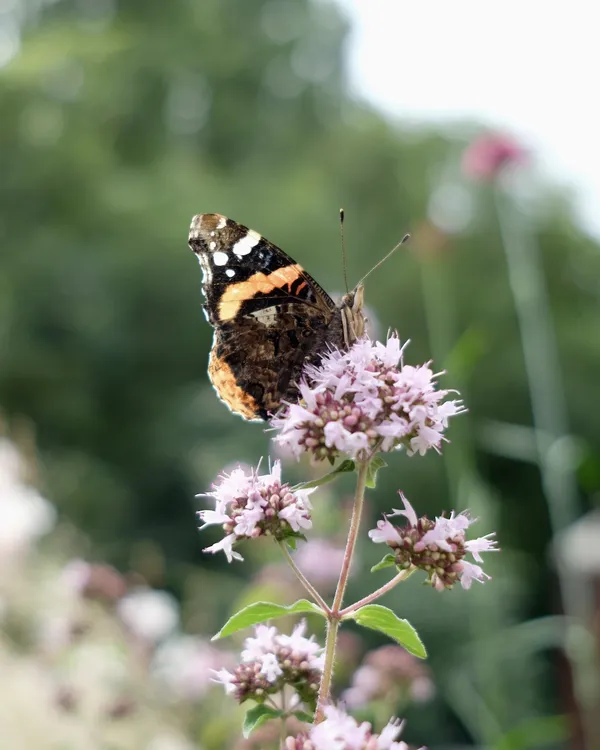
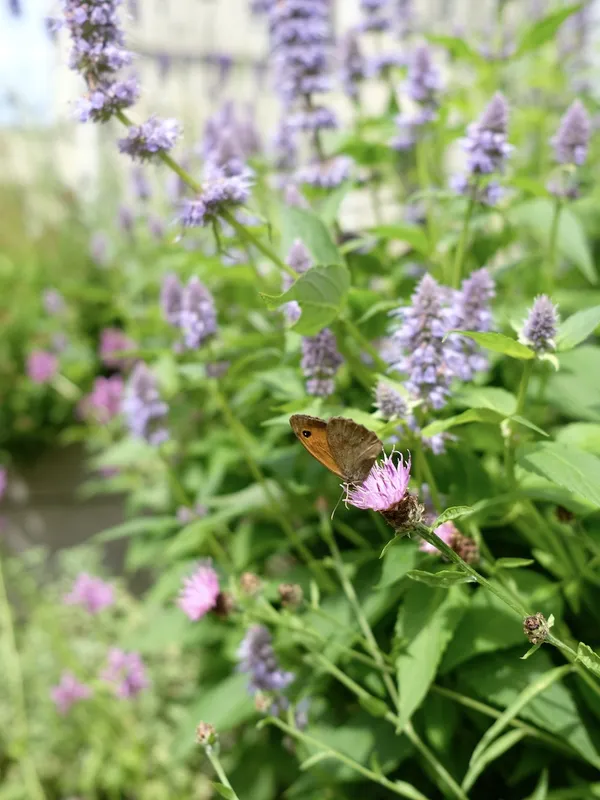
If you plant food sources like knapweed, wild marjoram, and verbena, you’ll attract not only bees but also lots of butterflies to your balcony. Over the past few weeks, I’ve had unexpected visits from holly blue butterflies, red admirals, whites, and brown argus butterflies. All that cheerful fluttering really brings that summery feeling to life!
Still, butterflies are doing very poorly, so every useful plant on your balcony helps. Don’t forget that they start their lives as caterpillars. So, if possible, also add host plants where butterflies can lay their eggs and the caterpillars can feed. Some caterpillars can be quite voracious and may completely strip your plants bare, but they often leave some leaves behind, and the plant recovers quickly.
Nasturtiums, damask flowers, and cabbage varieties are favorites among cabbage white butterfly caterpillars, while stinging nettles are the favorite food of a larger number of caterpillar species. So if you spot a stinging nettle popping up in one of your pots, be sure to leave it alone—it might just reward you with a colorful butterfly!
Tip: Late-season butterflies, such as the peacock butterfly and the red admiral, feed on meadow saxifrage, fall asters, and sedums. With Sprinklr’s “late-summer butterflies” package, you can plant these flowers now so the butterflies can quickly refuel at your garden before they begin their hibernation or migration south.
As you can see, with a little planning and the right combination of plants, you can transform your balcony into a blooming nectar paradise where you can sit among the flowers all year round, along with the bees, caterpillars, and butterflies!