
How to Transplant an Evergreen Tree or Shrub in 7 Steps
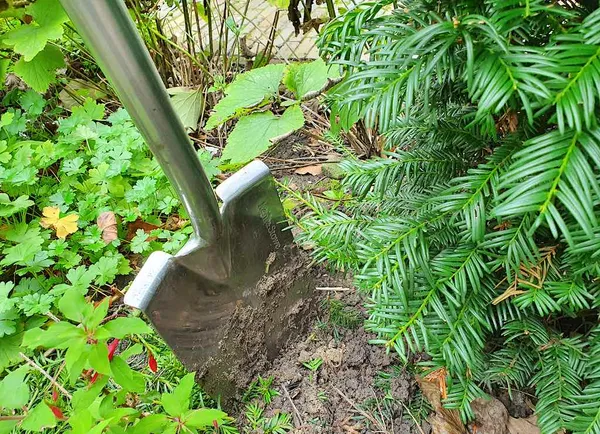
Is a tree or shrub getting too big for that spot in your garden?
Is there a particular spot where a plant just won't grow well? Or does that evergreen plant simply no longer fit into your (new) garden plan, and do you have another spot for it?
Then you can carefully transplant the evergreen tree or shrub. However, this always carries a risk. There is a chance that the plant will die. It may also fail to bloom for a year, or the tree may produce significantly fewer leaves for an extended period.
To minimize the risk of the plant dying, it’s best not to move an evergreen plant at just any time. It’s also a good idea to take a few precautions when transplanting it.
It's best to transplant evergreen plants around October, or in March–April.
Once you've decided where to plant your tree or shrub (and checked to make sure the location is suitable), you can get started.
How to Transplant an Evergreen Tree or Shrub (in 7 Steps)
1. Dig a large hole in the desired spot, preferably a little deeper and wider than the root ball of the plant you’re moving. Add a layer of good planting soil or compost to the bottom, and then pour plenty of water into the new planting hole.
2. Carefully dig up the plant you want to move. Try to dig up as large a root ball as you can carry. Check to make sure the planting hole at the new location is deep enough and spacious enough for the root ball.
3. Move the plant to its new location. It’s best to place the plant’s root ball on a hard surface or in a sturdy pot before moving it (a spacious plastic nursery pot is ideal). This prevents the root ball from crumbling or collapsing during the move.
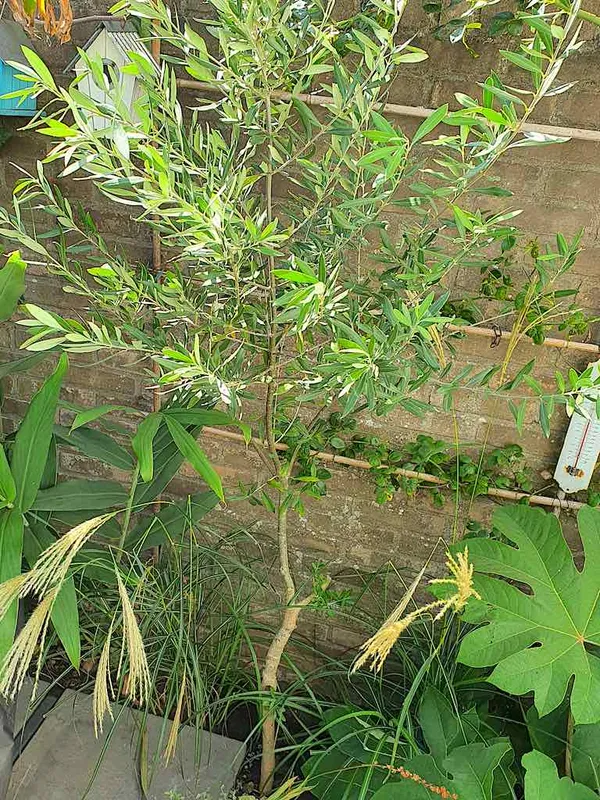
A young olive tree after transplanting. Now it just needs to be pruned back.
4. Place the plant (along with its temporary pot) in the new planting hole and take a good look at it from all angles in your garden. Rotate the plant until you're completely satisfied.
5. Fill the remaining hole with the existing soil (or with good potting soil or compost) so that the plant stays firmly in place. Firmly press the soil around the plant to ensure there are no air pockets, but be careful not to pack the soil too tightly. If you do that, you’ll create a nearly impenetrable layer of soil for the roots.
6. Water generously once more. The soil will settle a bit in some places. Top it off with existing soil, good planting soil, or compost.
7. After transplanting, prune the shrub or tree back a bit more. This will prevent the plant from losing too much energy and moisture, which would make it harder for it to take root in its new location. Ideally, the crown shouldn’t be much larger than the root ball.