
How much water should I give? And how often?
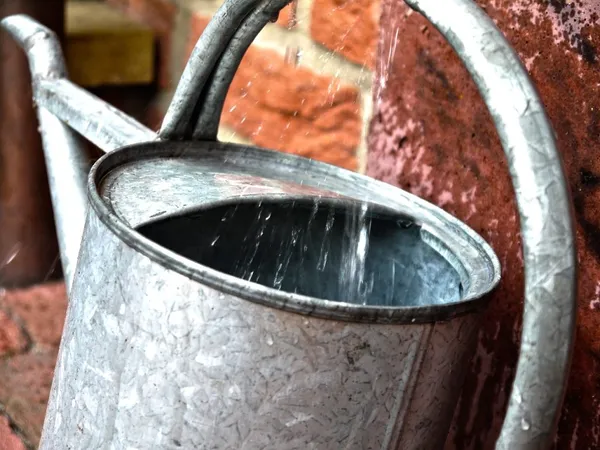
Many people don't know how much water to give their plants or how often they should water them.
Not enough water is one of the most common reasons why plants don't take root in the garden.
How much water should you give your plants?
Of course, it's very important that plants get enough water.
Are they not getting enough? Then the leaves will wither, and (parts of) the plants will naturally die…
But how much water is enough?
It's hard to describe this exactly…
But make sure to water the plants thoroughly, so that the soil becomes sufficiently saturated.
If necessary, dig a small hole about 20 cm deep. Is the soil wet or damp here? If so, it has been watered enough.
Often, not enough water is given; as a result, only the top layer of soil gets wet
In most cases, it's hard to overwater. Especially not during the growing season.
It's only a problem if water pools and doesn't drain away quickly. If this happens just once, it's no big deal. So remember how much you used too much, and use a little less next time.
This method is much better than the opposite: not watering the plants enough.
In the summer, it’s even more important to water your plants enough. Plants grow very quickly at this time of year and therefore need more water. On top of that, there’s of course also the risk of drought.
How often should you water the plants?
Most plants that have taken root well don't need any extra water. Still, they'll appreciate a little extra water during the growing season.
Of course, there are exceptions that really do require extra water. For example, there are specific types that like a lot of water (such as tropical plants like bananas and cannas). A lush green lawn also benefits from extra water.
Young plants and new plantings need (extra) water.
Of course, you can also pots, planters, and hanging baskets should not be forgotten.
It's better to water generously once a week than to water a little bit every day
During a drought
During dry spells, it’s a good idea to water at least once a week. In the event of prolonged or extreme drought, you may water twice a week. Water the plants thoroughly so that the soil becomes sufficiently saturated.
During periods of extreme drought, you can also water young plants, newly planted plants, and large pots or planters generously every other day. Small pots, planters, and hanging baskets can even be watered every day.
Don't forget to water winter and spring-blooming plants sufficiently during dry spells. These plants often start forming buds during the summer and can use a little water during dry spells.
In the winter
In the winter, it’s often not a problem to water a little less. Depending on the soil type, water will drain away more slowly (for example, in clay soil). Plants also need less water because they usually no longer have leaves and aren’t blooming.
Do you have rootstock Planted in the winter?
Be sure to water these plants generously. Do this immediately after planting, during the period that follows (but not when there is frost), and especially as spring approaches.