How do you prune an apple tree (and when)?
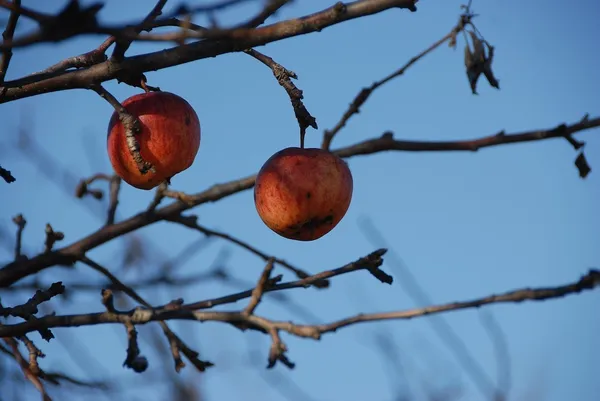
An apple tree (Malus domestica) is a great addition to your garden. Not only can you enjoy delicious fresh apples in the fall, but the beautiful blossoms in the spring are also well worth seeing.
Apple trees can be grown both in the ground and in a (spacious) pot or planter. To promote the desired growth and fruit production, you need to prune your apple tree annually. Fast-growing apple trees should be pruned twice a year. Pruning a pear tree is, by the way, almost identical to pruning an apple tree. So you can also use this pruning guide for apple trees for pears.
Why do you need to prune an apple tree?
Winter pruning stimulates the growth of branches that will bear fruit next year (short spurs) and promotes the growth of the apple tree. Proper pruning also ensures that as much light (and air) as possible reaches the canopy. Summer pruning can be used to slow the growth of an apple tree that is growing too vigorously.
When should you prune an apple tree?
Apple trees (and pear trees) require both winter pruning and summer pruning. This means you prune an apple tree twice a year (although summer pruning isn't always necessary for young trees and slow-growing trees).
Summer Pruning
You should prune an apple tree in the summer by June or July. Do not prune during periods of extreme heat and drought.
Winter Pruning
You should prune an apple tree in the winter December, January, or February. During this period, the tree is dormant. Be sure not to prune when it's freezing.
How do you prune an apple tree?
Pruning an apple (or pear) tree depends in part on the desired shape, the type of apple tree (standard, half-standard, or dwarf apple tree), and whether it is an espalier tree. Pruning espalier fruit trees requires a different pruning technique, which is not (yet) described in this blog.
Pruning in the early years is different because the necessary scaffold branches must be established first. The pruning method is also different when rejuvenating an old apple tree.
Winter Pruning of a Mature Apple Tree
When pruning an apple tree in the winter, you aim to encourage the desired shape and growth and to promote the formation of flower-bearing wood. Do not prune during a frost, and preferably not in the rain. Pruning creates wounds (pruning cuts) that heal more slowly in freezing temperatures and can become infected if they remain wet for a long time.
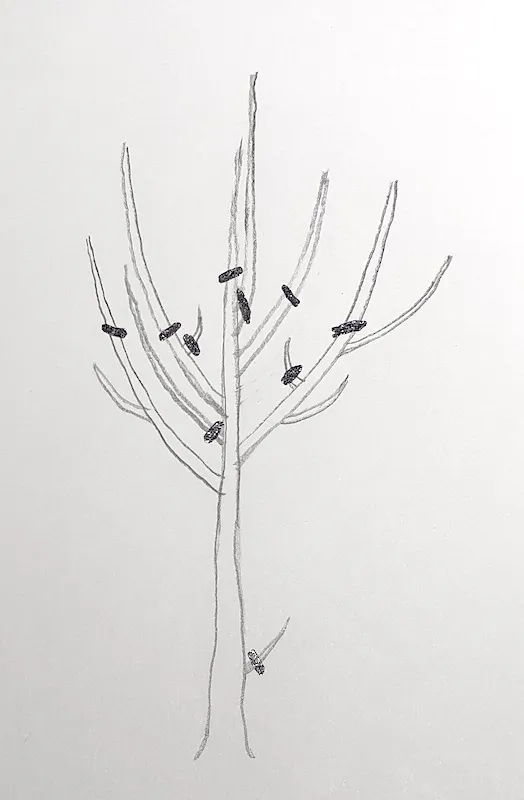
Remove diseased branches, prune water shoots (rapid, upright growth), remove inward-growing branches to create an open canopy, and remove branches at the base of the trunk.
Remove damaged branches
Prune away all dead, diseased, broken, or damaged branches. This will help keep your apple tree healthy. You should also prune any crossing branches so they don’t rub against each other and cause wounds.
Prune water shoots
Prune back the water shoots. You can prune them back to 1 or 2 buds. Water shoots are the long, (almost) upright branches that grow quickly. You can recognize water shoots by their often distinctive color (e.g., reddish-brown).
Make an open crown
Always prune above a bud that faces outward. This prevents branches from growing inward. If branches have grown inward, prune them anyway. You want to create a crown that’s as open as possible. This allows the fruit to ripen properly and reduces the risk of diseases and fungi. The well-known host Monty Don (Gardeners’ World) always uses the example that a pigeon should be able to fly through it.
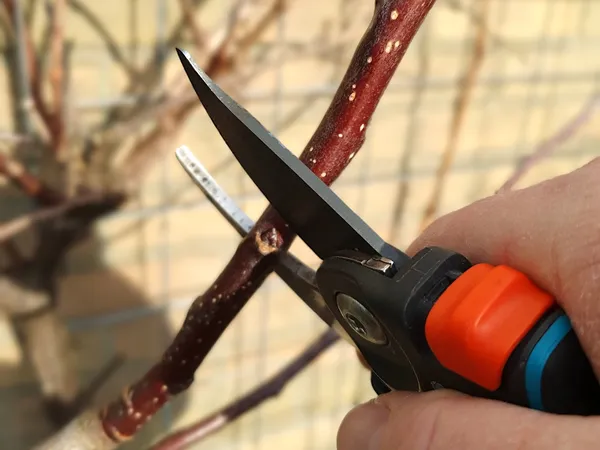
Cut off old branches
You can prune (or, more accurately, saw off) old, thick branches in the winter. Old branches bear fewer and fewer fruits.
Remove branches at the base of the trunk
Branches on the bare trunk, or those close to the ground (or graft), should also be pruned. These branches usually bear almost no fruit, and with branches below the graft, you’re dealing with the rootstock variety. Such growth will often hinder the growth of the selected variety.
Summer Pruning of an Apple Tree
In the summer, you can go ahead and prune water shoots that have developed in response to heavy winter pruning. Always prune above a bud that faces outward. During extreme heat and drought, or when there’s a lot of rain, it’s better to hold off on pruning for a while. If you have a vigorous apple tree, you can also prune back side branches in the summer. Summer pruning can help slow the growth of an apple tree that is growing too vigorously.
Pruning a Young Apple Tree
With a young apple tree, you first need to train the scaffold branches (main branches), which are essential for a good shape and yield. Next, select 3 to 5 branches that will form the framework of your apple tree. Choose strong, healthy branches that aren’t too close together but are spaced roughly equally apart. Try to select one branch in each direction, or branches that together are already growing toward the desired shape. A good scaffold branch should form an angle of 45 to 60 degrees relative to the trunk. Prune all other branches back completely. The scaffold branches themselves should be pruned back to a length of about 50 cm. Always prune above an outward-facing bud.
The following year, prune the newly formed branches on the scaffold branches back by about one-third. In the summer, shorten the side shoots to about 10 cm. This way, the apple tree will grow into the desired shape within a few years, and you can then prune it regularly.
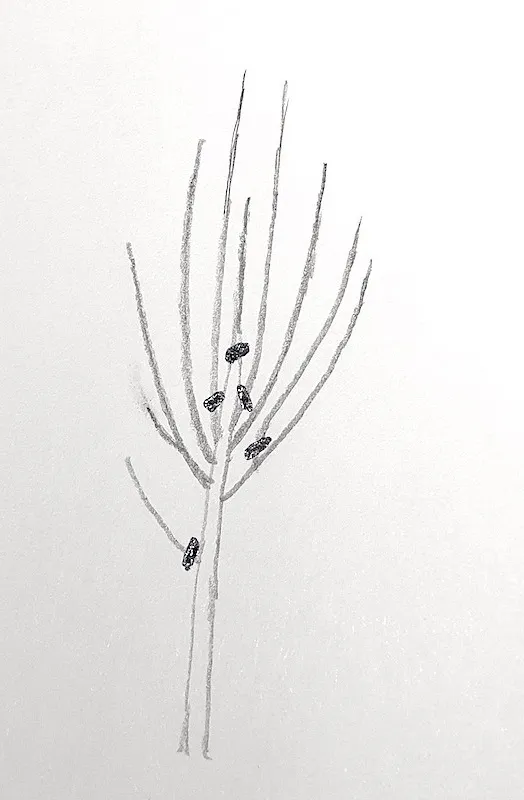
Choose good structural branches. Prune the remaining branches back completely. Then trim the structural branches down to about 50 cm.
Rejuvenating an Old Apple Tree
An older apple tree can be rejuvenated. For example, a tree that has grown too quickly, no longer has a nice shape (is out of balance), or has simply become too large. Older trees usually produce much poorer-quality fruit. Rejuvenating an apple tree is done in the winter. However, trees older than about 25–30 years are often better off being replaced. These trees often do not recover well, and the risk of disease after pruning is much higher.
It’s best to rejuvenate an older apple tree just before it starts sprouting again. Prune away all dead and diseased wood, and remove broken, damaged, or crossing branches. Keep 5 healthy scaffold branches, just as you would with a young tree. Remove all other branches. Side shoots on the scaffold branches can be pruned back and thinned out if they are too close together. The apple tree will likely bear little to no fruit during the first year, or even for several years.