
How do you ensure blooms in the spring in a prairie garden?
A prairie garden is a garden inspired by the prairies (grasslands) of North America, consisting of many ornamental grasses and flowering perennials. These gardens have a beautiful, natural look, require relatively little maintenance, and are a joy to behold! Especially from summer well into fall: In the spring, all the perennials and ornamental grasses still need to grow. The garden or border may still look a bit bare during this time.
How can you ensure that there is color in a prairie garden, perennial garden, or ornamental grass garden as early as spring?
In the spring, perennials and ornamental grasses sprout fresh new foliage again after being cut back to just above ground level in early spring. To prevent the border from looking too bare during this period, it is advisable to plan your planting accordingly.
Which plants bloom in the spring and are suitable for a prairie garden?
A prairie garden requires plants that thrive in dry and mostly sunny conditions. The soil is usually poor or depleted and must be well-drained.
Flower Bulbs
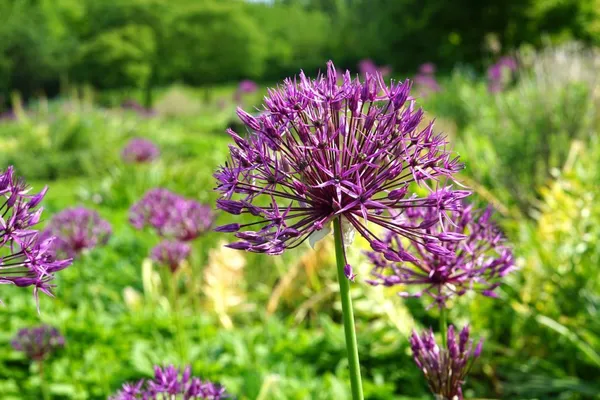
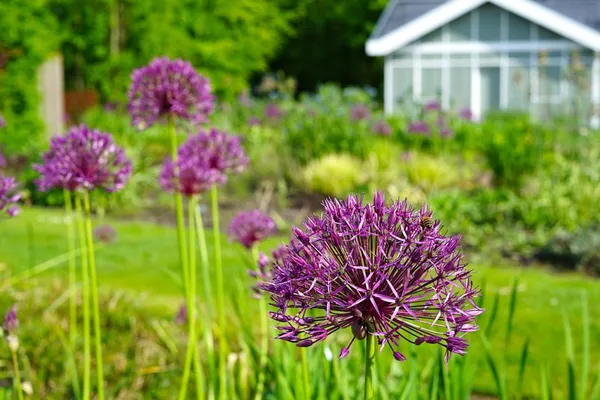
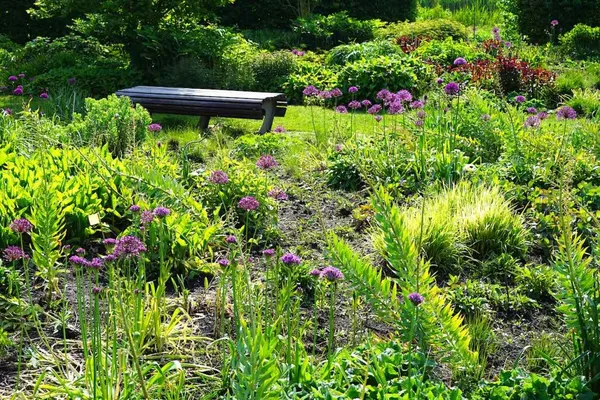
Flower bulbs are ideal for adding to a perennial garden or prairie garden to provide spring blooms. Consider (botanical) tulips, ornamental onions (Allium), and Indian flower or prairie lily (Camassia). However, the prairie lily prefers slightly moist soil. Older plants are more drought-tolerant.
Early-blooming perennials
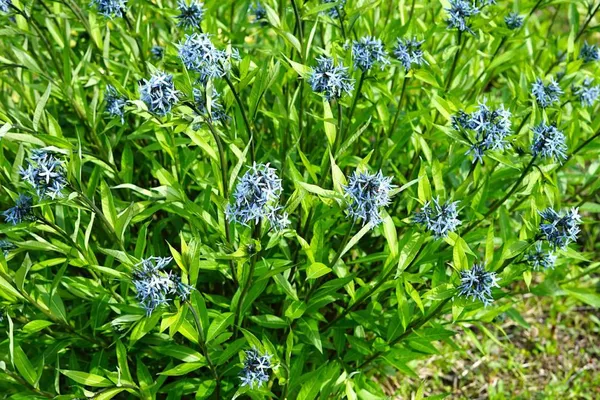
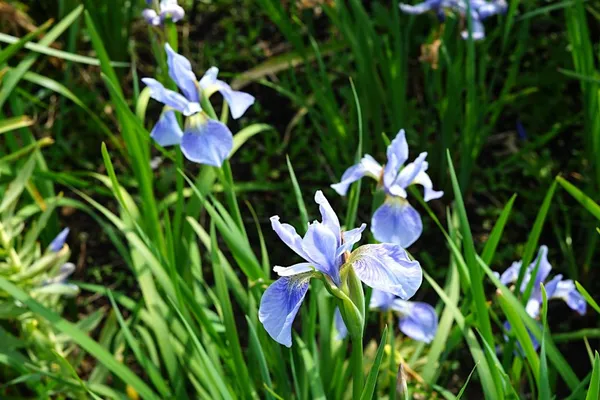
There are also early-blooming perennials. These plants bloom as early as April, and some even as early as March. With these perennials, you can add color to your garden early in the season. For example, blue star or star periwinkle (Amsomnia), deadnettle (Lamium), barrenwort (Epimedium), goat’s beard (Aruncus), early-blooming geraniums such as Prelude, Mayflower, and sometimes Rozanne; Caucasian forget-me-not (Brunnera); poppy (Papaver); Solomon’s seal (Polygonatum); Siberian iris (Iris sibirica), primrose (Primula), and spurge (Euphorbia).
Plants that develop leaves early
Plants that are already fully leafed out from the beginning of spring are also ideal for use in a prairie garden, perennial garden, or ornamental grass garden. They add structure and greenery at the start of the gardening season. Some examples of these plants include scabious (Knautia), phlomis (Phlomis), knotweed (Persicaria), hosta (Hosta), stonecrop (Sedum), Japanese mountain grass (Hakonechloa), Japanese waxflower (Kirengeshoma), bellflower (Campanula), cranesbill (Geranium), coralbells (Heuchera), and Rodgersia.
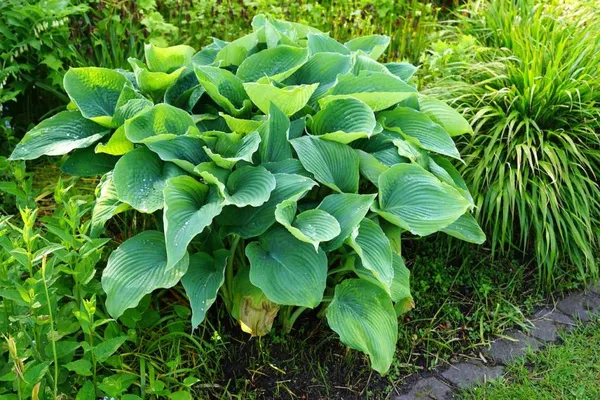
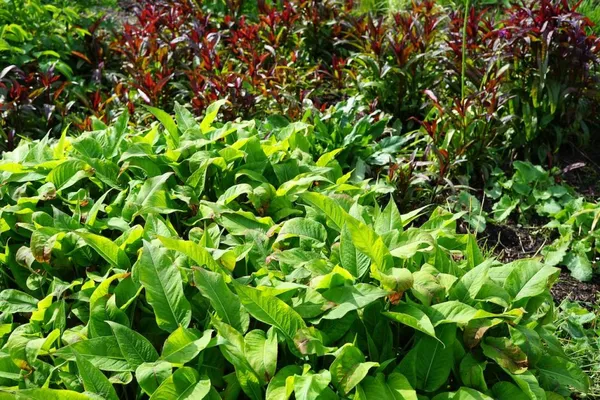
Evergreen plants and grasses for structure
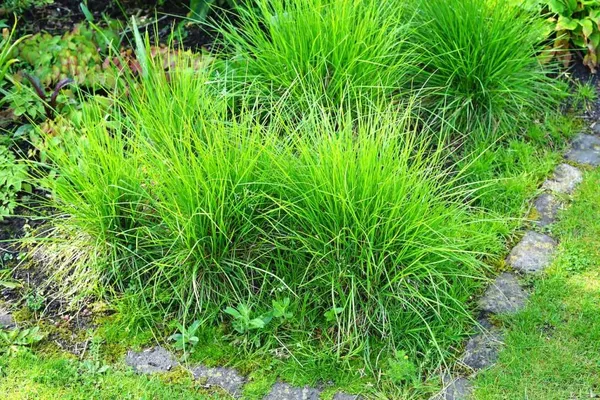
Don’t forget evergreen plants, ornamental grasses, and shrubs, which add texture in the winter and (early) spring. But a deciduous shrub or a (multi-stemmed) small tree can also add texture and shape to the border.
True evergreen perennials include lilyturf (Liriope), hellebore (Helleborus), penstemon (Penstemon), snake grass (Ophiopogon), and many groundcovers.
Various ornamental grasses also retain their foliage in the winter, such as bluegrass (Sesleria), feather grass (Stipa), and fescue (Festuca).
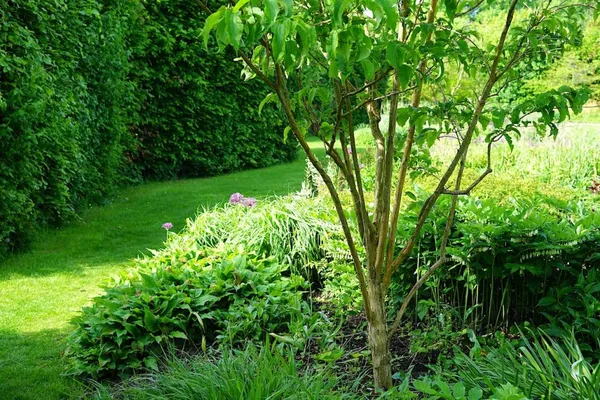
The Vlinderhof Prairie Garden in the Spring
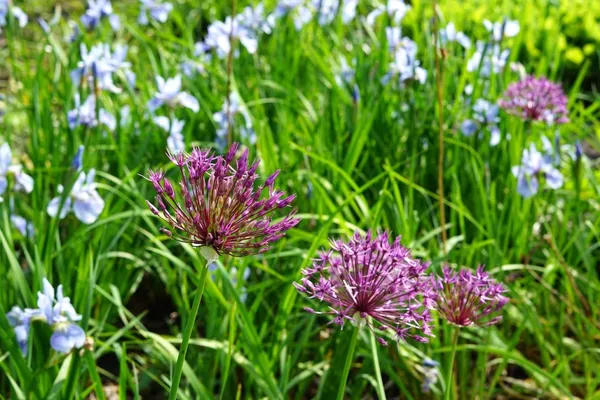
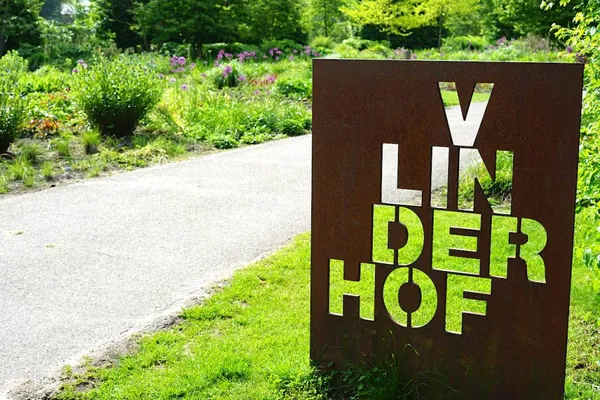
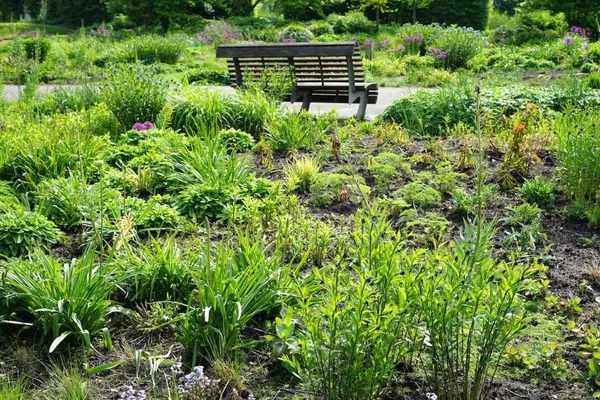
A good example of a (large) prairie garden or perennial garden is the Vlinderhof in Máximapark in Utrecht (designed by the internationally renowned garden designer Piet Oudolf). Although this public garden is, of course, much larger than our small gardens, you can still find plenty of inspiration here. You can clearly see which plants have been added to create an attractive garden with perennials and ornamental grasses even in the spring. This prairie garden is in bloom even in the spring! Here are some atmospheric photos taken earlier this month at the Vlinderhof.
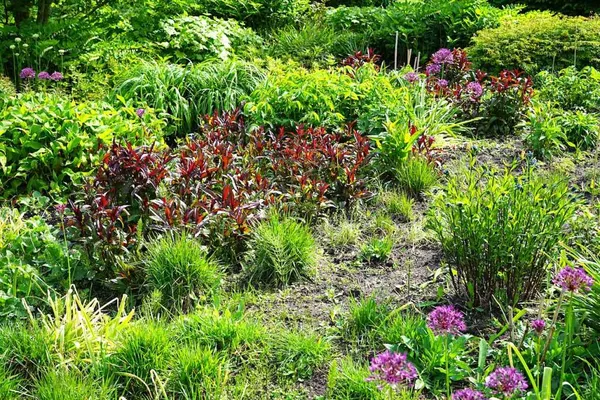
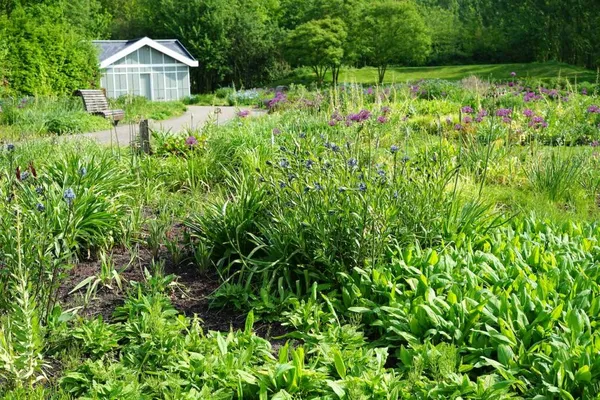
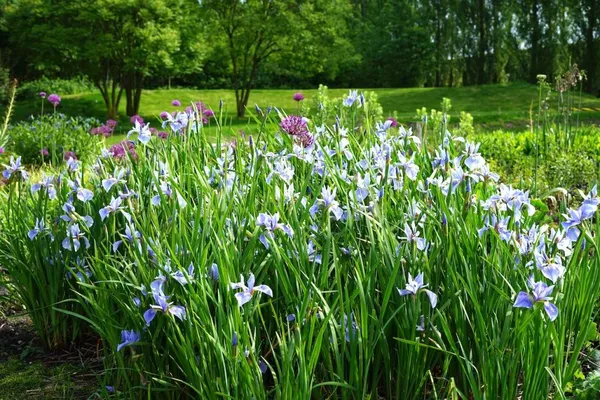
Iris sibirica ‘Perry’s Blue’ with Allium