
How can you reduce noise pollution with plants?

Do you live in a place where there's a lot of noise pollution?
For example, do you live in the middle of the city or next to a busy (highway)? Or maybe your house is near the railroad tracks?
In that case, it's a good idea to use your garden to help reduce the noise a bit.
Of course, you can install a sound barrier (or have one installed), but it’s not exactly attractive. There are also various types of fences available that help reduce noise.
However, the most beautiful (and best) solution is to use plants!
How can you make sure plants absorb as much sound as possible?
Evergreen plants
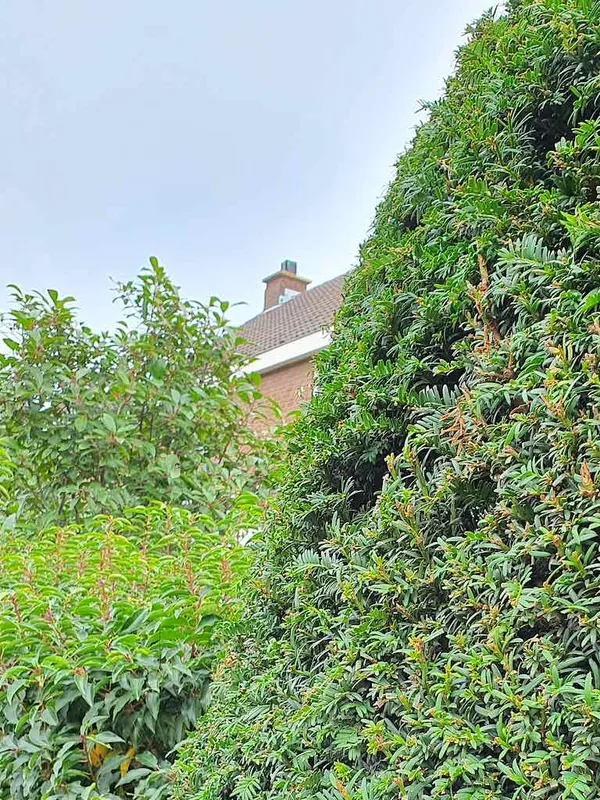
Although all densely branched plants with lots of foliage absorb sound, it’s best to choose evergreen or leaf-retaining plants. Otherwise, you’ll miss out on the sound-dampening effect of these plants in the winter. Although you’ll probably spend less time outdoors then, noise is often more noticeable in the winter because many other plants in the area have already lost their leaves.
Tall plants
The taller the plants, the more surface area there is to absorb sound. So let your plants grow as tall as possible (as much as your garden allows). Of course, you don’t want to block all the sunlight from your garden either…
Broad and full-bodied plants
A wider hedge or shrub blocks out more noise. Unfortunately, this naturally comes at the expense of your garden space. If you do have the space, it’s definitely worth it. A better solution for a small garden is to choose a slightly narrower hedge and plant a few large, full shrubs in front of it.
Which plants reduce noise and limit noise pollution?
Evergreen Hedge Plants
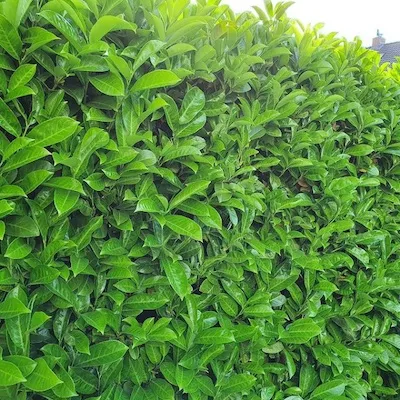
Attractive evergreen hedge plants are a good way to reduce noise pollution. The wider and denser the hedge, the more sound it absorbs. However, a wide hedge is often difficult to maintain in a small garden. It’s therefore worth choosing evergreen hedge plants that stay narrow but still grow to be nice and full. Consider, for example, Taxus, Thuja occidentalis ‘Smaragd,’ or Prunus l. Caucasica.
Bamboo
Plants with closely spaced branches or stems, such as bamboo, are also very suitable. Although you would normally opt for non-running bamboo (Fargesia), for this purpose it’s actually better to choose a fast-growing variety, such as the running bamboo species Phyllostachys. This bamboo grows much faster, forms a denser clump, and retains its foliage better in the winter.
Ornamental Grasses
To a lesser extent, you can also use plants rustling in the wind, such as ornamental grasses. The sound these plants make in the wind partially drowns out the sound of, for example, cars in the background. Still, this is, of course, much less effective than the plants we described above.
The sound of moving water. This is also a good way to drown out traffic noise and city sounds.