How can you combine perennials?
Have you ever wondered why a certain garden looks so beautiful? Or why a garden gives you the feeling that everything is just right?
This is due to the garden design and the planting plan. It’s the choices made in the selection of plants and the combinations of plants that make a garden attractive! Combining plants is one of the best ways to express your garden’s style. But how do you find the right combinations? And which plants work well together? In this blog post, we’ll discuss plant combinations featuring perennials.
Combining Perennials
Perennials are becoming increasingly popular in gardens. People are even creating entire borders using nothing but perennials! There are an incredible number of perennials to choose from, in countless colors, shapes, textures, and sizes. In the winter, they (usually) die back above ground, only to sprout fresh new growth in the spring.
What should you keep in mind when creating plant combinations?
Creating a good planting plan and attractive plant combinations takes time and attention to detail, but a well-thought-out plan results in a beautiful garden where there’s always something to see or where flowers bloom for as long as possible. Here are a few tips for creating a beautiful border.
- Plan Ahead: Make a plan before you start planting. Consider the size and shape of the border, as well as environmental factors such as sunlight and soil type. All of these factors influence your choice of plants and ensure they grow well.
- Combine colors: Choose plants with complementary colors that go well together, such as purple and yellow, or red and green. Or, for a change, opt for a striking color contrast.
- Vary the heights: Combine plants of different heights to create a more attractive border. As a general rule, place taller plants at the back of the border and shorter plants at the front. However, placing a taller plant at the front can actually add depth and visual interest to your border.
- Combine different textures: Plants with different leaf and flower textures add an extra dimension to your border. For example, try combining plants with smooth, hairy, coarse, or fine textures. That way, you can enjoy your border even when they’re not in bloom.
- Consider the blooming season: Choose plants that bloom at different times to add interest throughout the season. That way, you can enjoy color in your border all year round.
- Don't forget about scent: Choose plants with a lovely fragrance to make your garden even more inviting. In a small garden, this has an even greater effect!
Combining Perennials with Other Perennials
Because there are so many different perennials—and because there can be significant variations even among perennials—you can easily design a border using only perennials. In that case, it’s especially important to pay attention to the flowering period (to avoid limiting it too much). Also keep in mind that most perennials die back above ground in the winter. So be sure to choose plants that offer ornamental value even outside of the summer months. This doesn’t necessarily have to be flowering; the ornamental value can also lie in the plant’s structure, foliage, or winter form.
Beautiful Perennial Combinations:
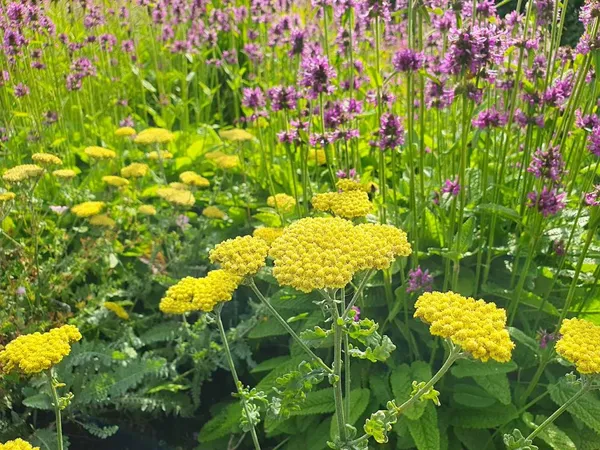
- Bistort (Persicaria bistorta) and ferns
- Aster and coneflower
- Aster and knotweed (Persicaria amplexicaulis)
- Daylily (Hemerocallis) and sage (Salvia)
- Yarrow (Achillea) and daylily
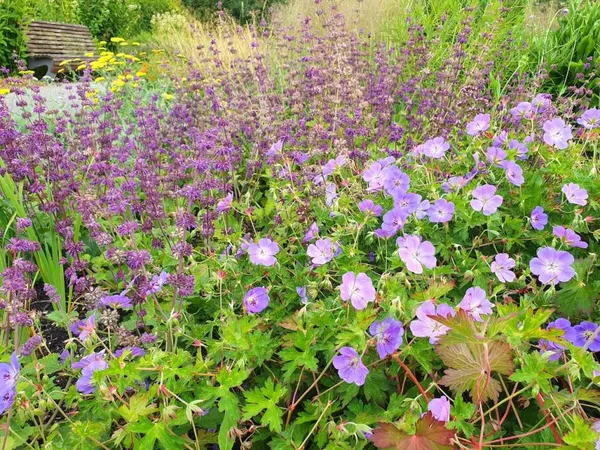
- Geranium and Sage
- Goldenrod and Catmint (Nepeta)
- Plantain Lily (Hosta) and Astilbe
- Plantain Lilies and Ferns
- Verbena and mullein (Verbascum)
- Scabious and Echinacea
- Bellflower (Campanula lactiflora) and Blazing Arrow (Kniphofia)
- Larkspur (Delphinium) and sage
- Purple Coneflower (Echinacea) and Globe Thistle (Echinops)
- Clary sage (Salvia nemorosa) and lady's mantle (Alchemilla mollis)
- Violets (Viola) and primroses (Primula)
- Black-eyed Susan (Rudbeckia) and Phlox
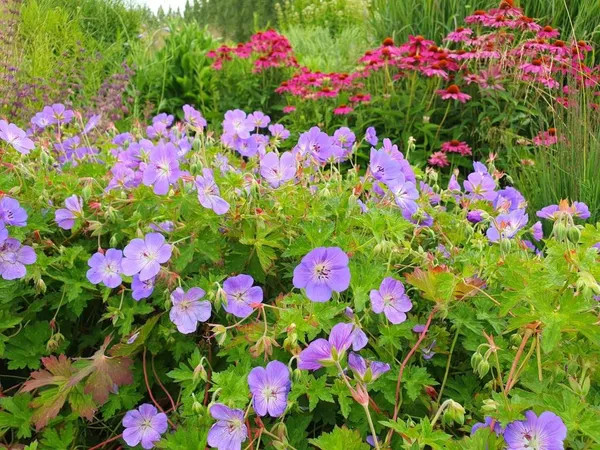
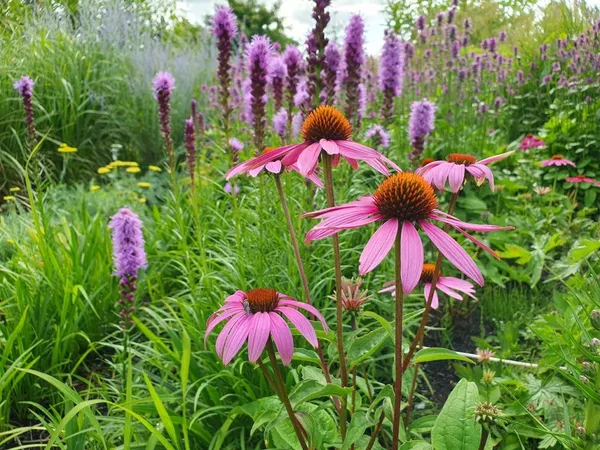
Combining Perennials with Ornamental Grasses
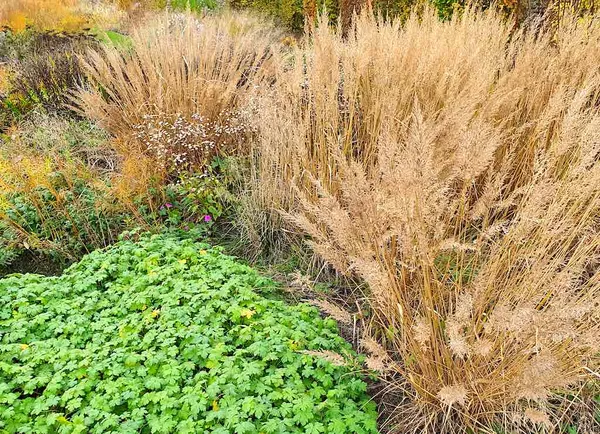
A very popular combination is perennials with ornamental grasses. Take the prairie garden, for example: a natural-looking combination of flowering perennials interspersed with one or more types of ornamental grasses. But even a combination with just one or two perennials is perfect for border planting, for instance. Ornamental grasses in a border create a sense of calm and help the flowering plants stand out more. Many ornamental grasses retain their shape long after the perennials have finished blooming (or have died back).
Beautiful combinations of perennials and ornamental grasses:
- Bistort (Persicaria bistorta) with Japanese mountain grass (Hakonechloa)
- Aster and rough hairgrass (Deschampsia)
- Lemon verbena (Agastache) with feather grass (Stipa)
- Yarrow (Achillea) with feather grass
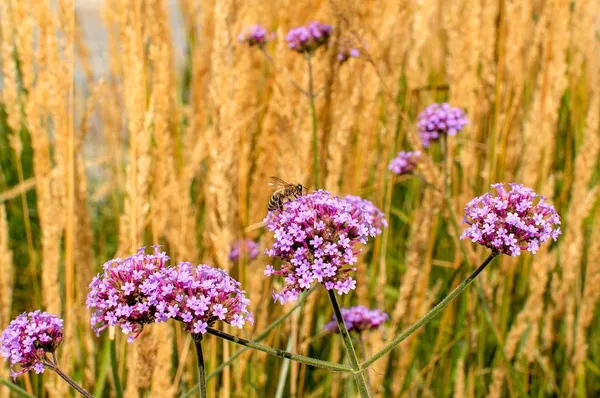
- Verbena with Pennisetum
- Scabious with Karl Foerster Reedgrass (Calamagrostis Karl Foerster)
- Catnip (Nepeta) with blue fescue (Festuca glauca)
- Catmint with lamp-polisher grass
- Purple loosestrife (Lythrum) with switchgrass (Panicum virgatum)
- Globe thistle (Echinops) with diamond grass (Calamagrostis brachytricha)
- Purple coneflower (Echinacea) with feather grass
- Red coneflower with finger grass
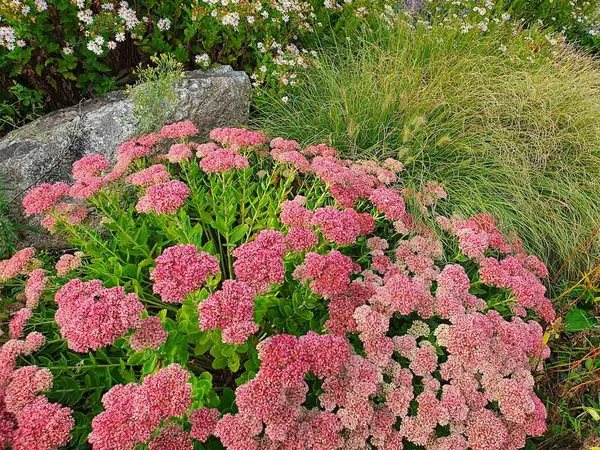
- Sedum with feather grass
- Virginia speedwell (Veronicastrum virginicum) with purple moor grass (Molinia)
- Sunflower (Helenium) with purple loosestrife
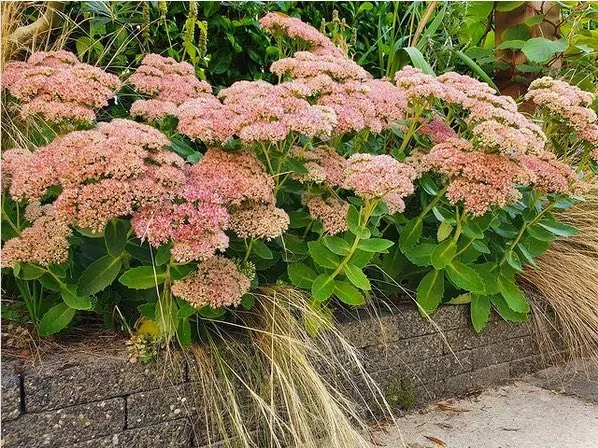
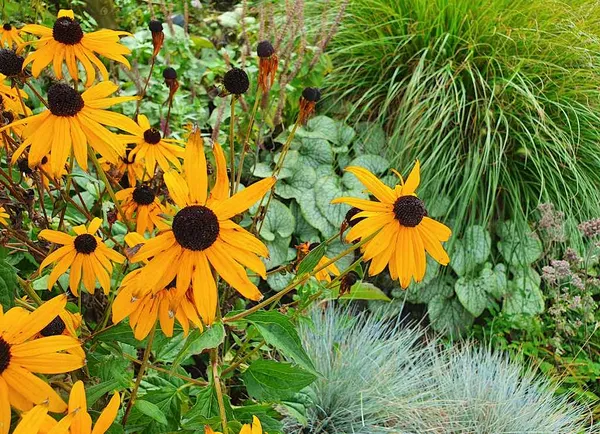
Combining Perennials with Shrubs
Combining perennials with shrubs adds more structure to your border. Consider flowering shrubs, for example, to add an extra dimension to your border, or evergreen shrubs and spherical forms. These will make your flowering perennials stand out even more beautifully. Shrubs and hedge plants are, of course, also the perfect backdrop for your border of flowering perennials.
Beautiful combinations of perennials and shrubs:
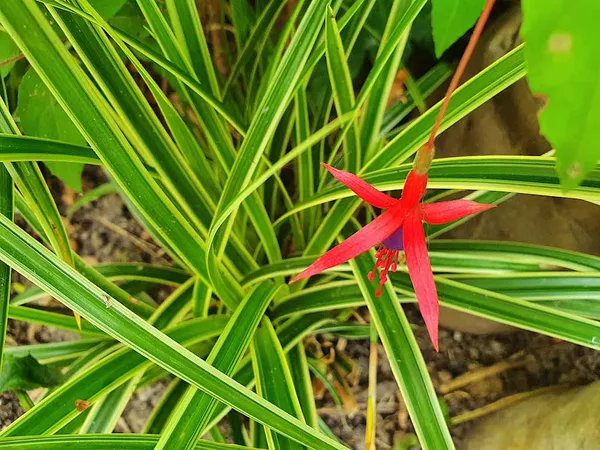
- Fuchsia with Fatsia
- Autumn anemone with Japanese maple (Acer palmatum)
- Verbena with butterfly bush (Buddleja davidii)
- Catnip (Nepeta) with roses
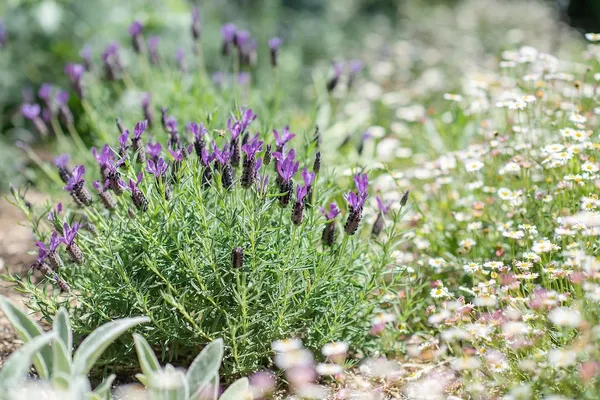
- Lavender with Poppy (Papaver)
- Lavender with Portuguese laurel (Prunus lusitanica)
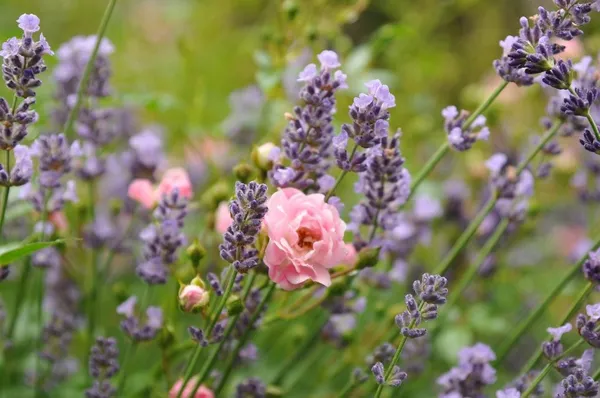
- Lavender with Roses
- Giant lavender (Perovskia) with boxwood balls
- Sage with Hydrangea (Hydrangea)
Combining Perennials with Flower Bulbs
With flower bulbs, you can add plenty of color to your border early in the year. You can choose to stay true to your border’s design or theme, or opt for an early-blooming variety to give your border a completely different look—even if only temporarily. Don’t forget about summer-blooming flower bulbs (or tubers), such as dahlias and lilies. These are a great way to extend the blooming season.
Beautiful combinations of perennials and flower bulbs:
- Anemones and Heuchera
- Crocosmia and Dahlia
- Licorice Plant with Dahlia
- Hosta with Camassia
- Lilies and Lavender
- Sage with ornamental onions (Allium)
- Stipa with Allium
- Stipa with Tulips
- Ferns with daffodils
- Verbena with Dahlias
- Forget-me-not (Myosotis) with tulips
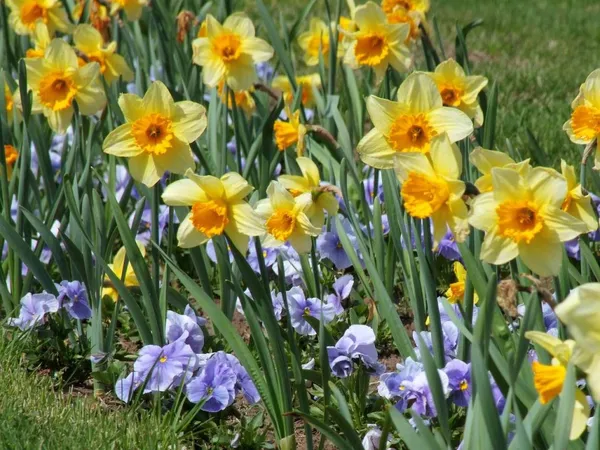
- Violets with daffodils
Combining Perennials with Annuals
Annuals are a quick way to add color to your garden. Plus, many annuals bloom for a very long time! They’re ideal for filling in gaps when creating a new border. But they’re also perfect for giving your border a completely different look every year!
Beautiful combinations of perennials and annuals:
- Lavender and petunias
- Daylilies and begonias
- Rudbeckia and zinnias
- Sage and Cosmos