
Here's How to Take Winter Cuttings (for Free New Plants)
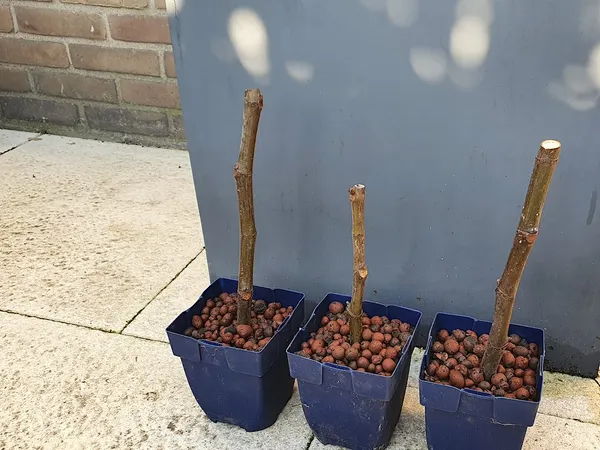
Fall and winter are also great times to propagate plants. Many deciduous shrubs are ideal for taking winter cuttings. These include woody plants and shrubs such as dogwood, butterfly bush, hydrangea, and roses. Deciduous plants, in particular, are easy to propagate from cuttings, but you can also take cuttings from (evergreen) hedge plants at this time of year.
Although it takes much longer for roots to form than with summer cuttings, there’s a much lower risk of them drying out. So most of your cuttings will take root easily.
When should you take winter cuttings?
Although the name might suggest otherwise, you can also take winter cuttings in the fall and (early) spring. The key is that the cuttings are woody (sturdy) and usually no longer have leaves, which makes them less likely to dry out. Other names for winter cuttings are wood cuttings and woody cuttings. In English, they are called “hardwood cuttings.”
Which plants are suitable for wood cuttings (winter cuttings)?
Most deciduous shrubs propagate very well from cuttings in the fall, winter, and early spring. Because they have no leaves, the risk of them drying out is very low, and they often take root well. Small-fruited shrubs are also well-suited for winter cuttings. For example, winter dogwood, willow, rose, butterfly bush, panicle hydrangea, and wild rose are very easy to propagate. You can also easily propagate climbing plants such as ivy and wild grapevine.
You can also take cuttings from evergreen plants and hedge plants. The success rate is slightly lower for evergreen plants, but it’s not difficult. Take a few extra cuttings if the final number is important. Think of hedge plants such as privet, yew, and boxwood, or herbs such as lavender and rosemary.
Be sure to check out our list of 66 easy plants for winter cuttings
How to Make a Winter Cuttings
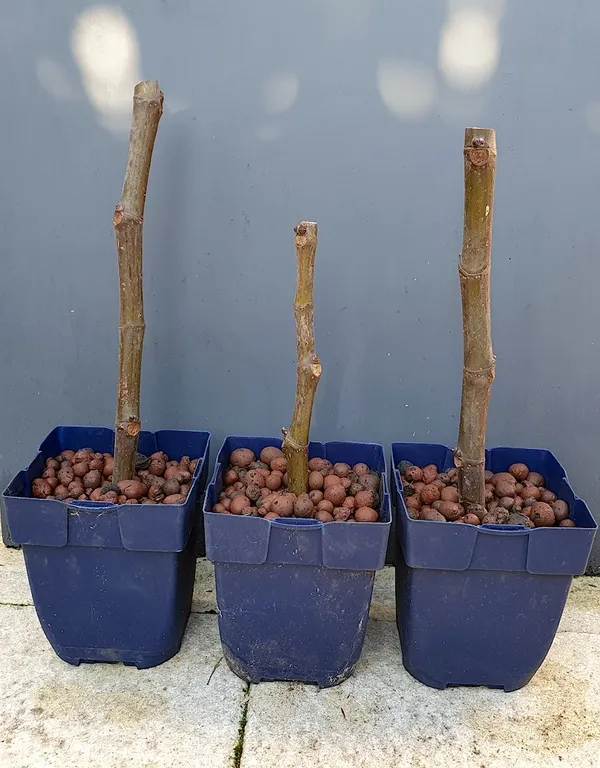
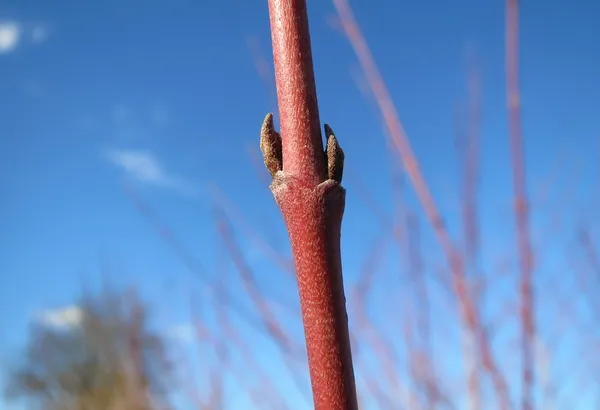
When taking winter cuttings (also known as wood cuttings), choose sturdy, straight branches that are not in bloom. Very thick branches often take root more slowly. Branches that are too thin do not provide a sturdy enough base. It’s often said that you need a branch about the thickness of a pencil. If there are still leaves on the branches, remove them carefully. A single leaf will also fall off on its own.
Choose a pot that’s tall enough and fill the bottom with some gravel, clay pellets, or other drainage material. Fill the rest of the pot with potting soil, mixed with a little coarse sand if desired. The potting soil does not need to contain any additional fertilizer. We like to use balcony planters filled with sand and a thin layer of potting soil, which makes it easy to take cuttings in large numbers.
Take cuttings that are about 20–30 cm long. Place your cuttings along the edge of the pot, if possible. You can easily fit several cuttings in one pot.
By the way, you can also just plant your cuttings directly in the ground right away, if you still have room for them. Water your cuttings after planting, but other than that, just leave them alone. It’s best to place them in a slightly sheltered spot in the garden. We always put them in a windless corner of the garden, out of the way and out of sight.
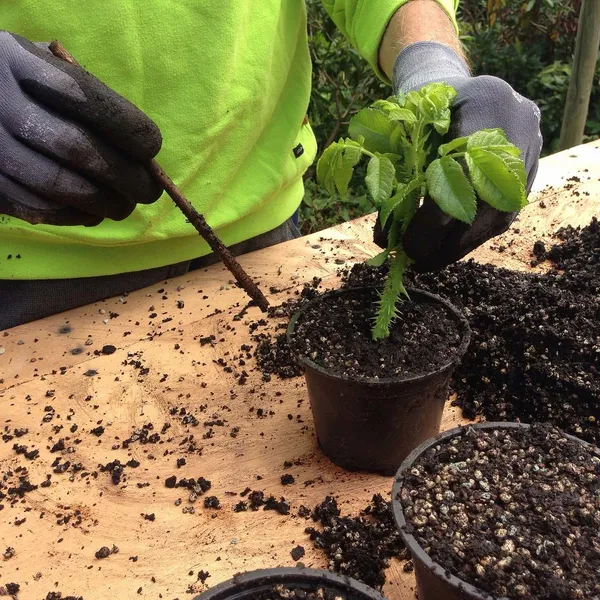
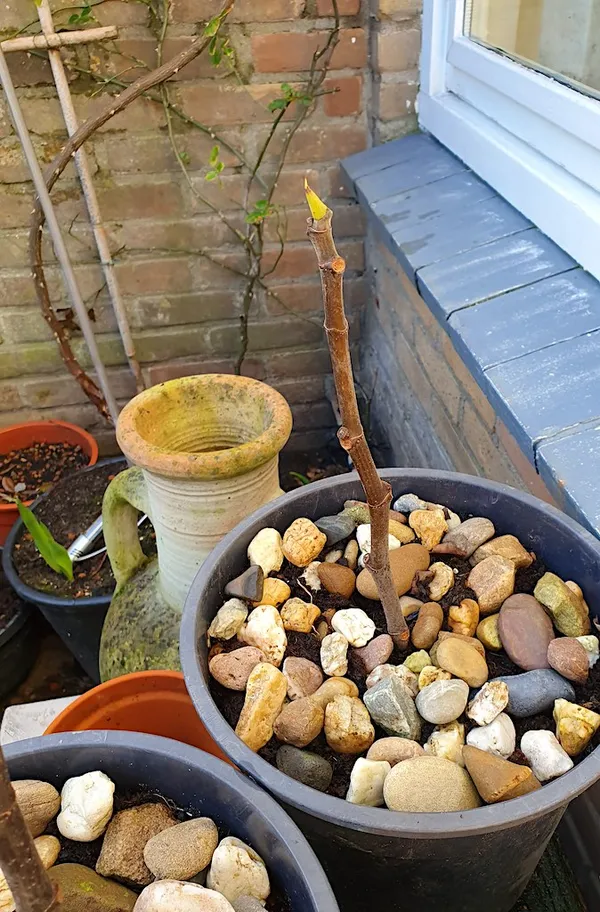
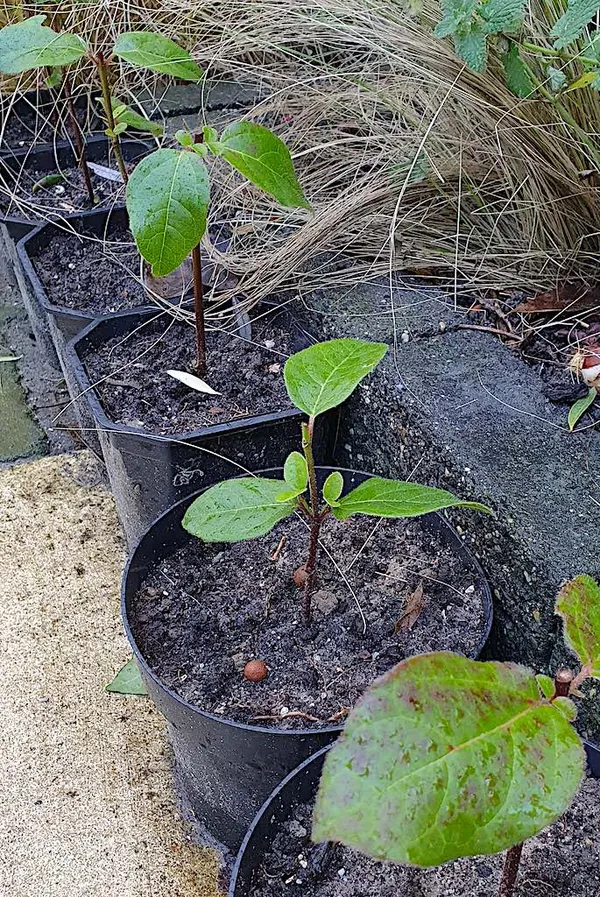
As soon as temperatures start to rise again, the first roots will begin to form. By the end of spring, a small root ball has often already formed. This is easy to see in a pot, because the roots will start to come out of the drainage hole. The first leaf may also sprout. You can then repot them, or wait until summer or fall and plant the new plants in the ground in their permanent spot.
Easily Make Winter Cuttings from Pruning Waste
There are quite a few plants that you can prune in the winter. You can then immediately take cuttings from the pruning waste. In early winter, these include grapevines, fig trees, wisteria, hawthorn, apple trees, and pear trees, but later on, you can also prune dogwood, panicle hydrangeas, roses, butterfly bushes, and willows.