
Help the Blue Mason Bee – Tips from the Bee Foundation
Bees are indispensable to nature. They are important pollinators for many plants and crops. Without bees, biodiversity and food production would decline drastically. Even with a small garden, you can make a difference for bees! In collaboration with the Bee Foundation We'll give you tips on how to make your small garden or balcony bee-friendly.
Blue Mason Bee
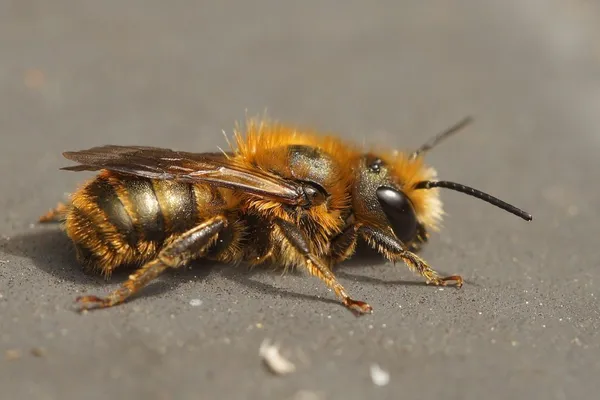
The blue mason bee (Osmia caerulescens) is a fascinating species of bee that deserves special attention. This solitary bee does not live in colonies like honeybees, but builds its nest in hollow stems or small holes in wood. The blue mason bee is easily recognizable by its unique bluish sheen.
The female blue mason bee has a black pollen brush (the long, dense tuft of hairs used to carry pollen), often covered with white pollen. Her body is black with a blue metallic sheen, with short white hairs on the head, thorax, and legs, and light bands on the abdomen. The head is strikingly large in proportion to her body. The male has a greenish-gold metallic sheen and light brown hair. They are about 9 millimeters long.
The blue mason bee is still widely distributed in the Netherlands, including in urban areas, but the number of sites where it has been found has declined significantly since 1950. Its range has decreased by 35%. This is noteworthy because this bee is not particularly picky about its food sources and can also nest in bee hotels. That is why it is important to gather more knowledge about this bee species, its habitat, and the food plants it prefers to visit.
How can you help?
There are several ways you can help the blue mason bee, and the Bee Foundation is taking action to support this cause:
Improve the living environment
By planting the right food plants, such as viper's bugloss, you can help this species of bee if it's present in your garden.
Building Bee Hotels
Installing bee hotels can also help, since the blue mason bee likes to nest in small holes and cavities.
Take a photo of the blue mason bee and win!
The more we know about where this bee species is found, the better we can protect it. Do you think the blue mason bee is in your garden? If so, take a photo and share it with us. By doing so, you’ll not only help us map its distribution, but you’ll also have a chance to win free flower seeds.
Read more about this campaign on the Bee Foundation's website
A better understanding of the blue mason bee, its habitat, and the plants it prefers to visit is essential for its conservation. By taking the right measures, we can help protect this unique bee species and restore its population in the Netherlands.