
Growing Peppers: Here's How!
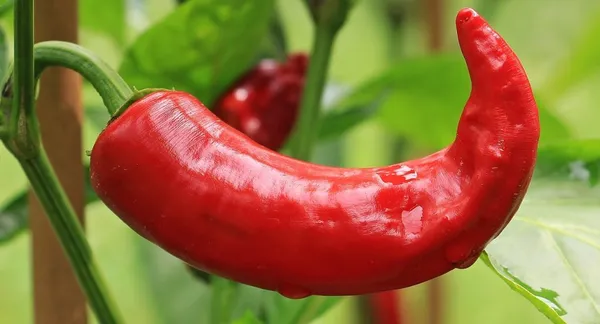
Growing peppers is very popular. Peppers (Capsicum) come in many different shapes, sizes, colors, and flavors. These colorful and spicy fruits are a delight to look at, exceptionally flavorful—whether eaten raw or used in dishes—have medicinal properties, and are perfect for the ultimate taste experience: How hot do you dare to go?
Another great thing about growing chili peppers: You don't need a garden at all… Not even an outdoor space!
As long as you want to grow peppers on a small scale, a warm, sunny spot in your home—such as a windowsill above a radiator—will work just fine.
Growing Peppers: How Do You Get Started?
Choose the Right Pepper (Which Pepper Should You Choose?)
Hot, hotter, hottest! How hot do you want your peppers? The spiciness of peppers is measured on the Scoville scale. Bell peppers, for example, have a Scoville value of 0. Chili peppers ranging from 500 to 1,000 on the Scoville scale (such as the Sweet Jalapeño) are already considered (mildly) spicy by most people. However, there are also extremes, such as the Carolina Reaper and Ghost Pepper, which score over 1–2 million on that same scale.
As a general rule, it’s best to avoid varieties that are too hot, especially if your options are limited. It would be a shame if you couldn’t do anything with them at all after growing them from seed into plants that bear plenty of fruit… If you have limited space, choose varieties that you enjoy using in your cooking, or go for something just a little hotter than you’re used to. That way, you’ll avoid any disappointment.
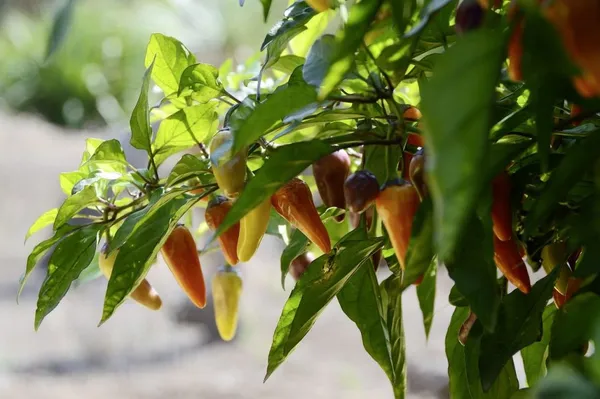
Jalapeño pepper
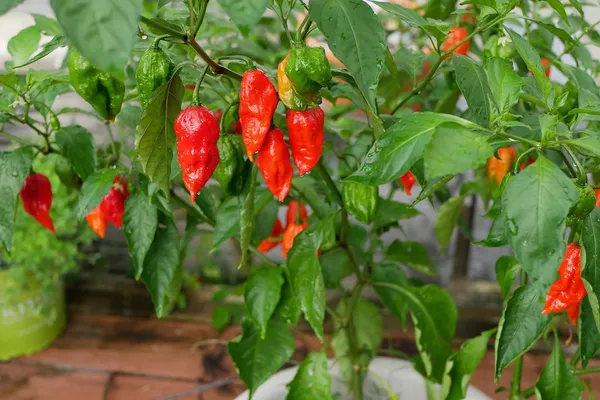
Ghost Pepper
How to Grow Peppers Successfully
What do you need to grow chili peppers?
Warmth!
Exactly what you need depends mainly on how seriously and how ambitiously you want to get started growing chili peppers. But in any case, you’ll need warmth. That’s because the seeds won’t germinate until the temperature reaches about 20–25°C. So you’ll need a warm, well-lit spot.
Do you mainly want to grow some tasty peppers for your own use? In that case, a windowsill with a radiator underneath is often enough, along with a few plastic pots—or better yet, a seed tray or seed starter kit. Are you really planning to go for a substantial harvest, or do you enjoy growing special varieties and types? In that case, you’ll want to consider growing kits, a heating mat, grow lights, and ideally a mini-greenhouse or even a full-sized greenhouse.
When should you start growing chili peppers?
It’s best to grow peppers from seed. If you start sowing them around March–April, you can expect to harvest fruits as early as (late) summer. If you start from seed later than that, the growing season will likely be too short for most of the fruits to ripen. In that case, it’s better to buy seedlings or young plants. You can sow them earlier, though: you can start peppers as early as February.
Starting Peppers from Seed
- Sow chili peppers indoors in plastic pots or a seed tray, using well-draining potting soil (e.g., with some coarse sand) or special seed-starting mix.
- Plant about 1–3 seeds per pot or cell (definitely no more, since they’ll all need to be transplanted or removed later). Water carefully (preferably from the bottom: if using a seed tray, it’s easy to add a shallow layer of water to the seed tray and then place the seed tray inside).
- Place the pots or trays in a bright, warm spot. It’s important to maintain a minimum temperature of 20–25°C so the seeds can germinate. If necessary, you can use soil heating or other growing supplies, such as grow lights. It can also help to cover the seedlings with a spool, plastic bag, or the plastic lid of a seed tray or growing kit. This helps reach the germination temperature faster and prevents the seedlings from drying out as quickly. When there are almost no condensation droplets visible, it’s time to water them again.
For growing peppers on a small scale, a windowsill above a radiator is a great place. For growing on a larger scale, you’re better off using a polytunnel or greenhouse. Peppers usually germinate within 1–2 weeks, sometimes 3 weeks.
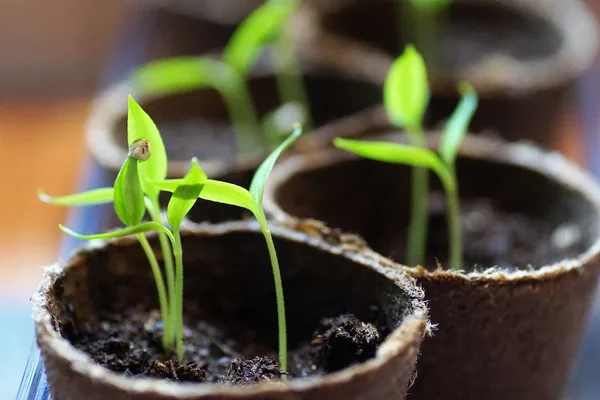
Transplanting and Repotting Peppers
- Once the peppers are growing well, have developed a true leaf, and are about 3–5 cm tall, it’s time to transplant them. If there are clearly any stunted plants, be ruthless and remove them immediately.
- Very carefully remove each plant from the tray (always by the leaves) and repot it so that each plant has its own growing pot. For example, use a pot with a diameter of at least 15–20 cm. Use good-quality potting soil or garden soil. You may want to add some compost. Water the plants after repotting.
Peppers: Growth and Care
Never let the soil dry out completely, even though peppers don’t need a lot of water. It’s better to keep the soil slightly moist so they continue to grow well. Now that the plant is really starting to grow, it needs much more nutrients. That’s why good potting soil or garden soil and/or compost has been added. This will sustain the plant for about 6–8 weeks. After that, additional nutrients will be needed. Liquid plant fertilizer is ideal for this. Of course, sufficient light and plenty of warmth are also needed during this phase. You can provide this indoors, for example, with special LED lights or grow lights, or outdoors in a plastic tunnel, mini-greenhouse, or full-sized greenhouse.
Inside or outside?
In our country, it’s best to grow peppers indoors or in a (heated) greenhouse. Do you really want to try growing them outdoors? If so, make absolutely sure they don’t go outside before the last chance of frost has passed. Otherwise, you’ll definitely lose them! When in doubt, just keep them indoors.
Harvesting Peppers
You can expect to harvest fruit starting in the summer, depending on when you started pre-sowing. Harvest time is between July and October. If you’ve taken good care of the plants, you can expect a good yield right from the first year.
Now it's time to face the truth: can you handle your own chili peppers?