
Green Happiness at High Altitudes – On Nynde’s Bee Balcony
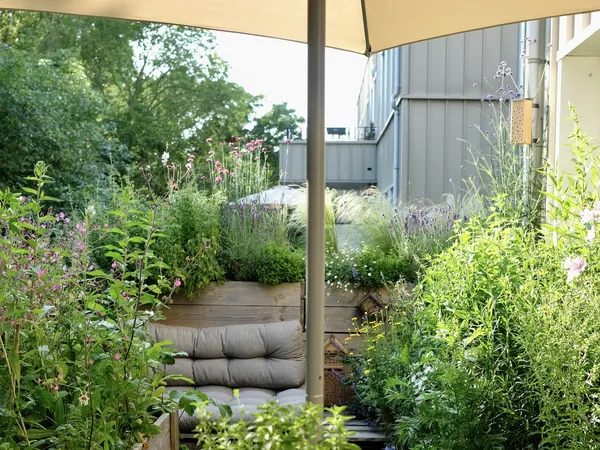
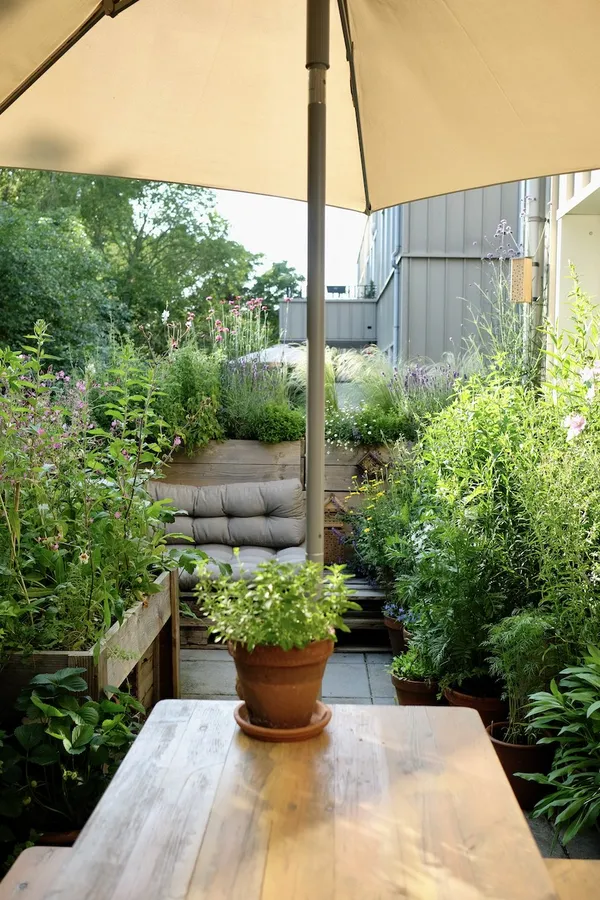
Nynde has transformed her bare, 17m² city balcony into a vibrant haven for wild bees, butterflies, and other animals. You may already know Nynde from her Instagram account, “Bijenbalkon,” and her blogs for the Bijenstichting. From now on, you can also read her tips and fun blog posts here about biodiverse balcony gardening and greening even the smallest balconies.
Summer is in full swing, and in just a few weeks, my balcony has blossomed into one big, lush, colorful sea of flowers. Hoverflies buzz around the yellow chamomile, field bumblebees and large woolly bees make their rounds among the betony, and butterflies flutter merrily around the meadow crown. In our little slice of nature high up in the air, we want to welcome all the beneficial little creatures and offer them a feast. But how do you make the most of every centimeter of your limited space to create a biodiverse oasis? And what do you do about unwanted guests? Discover in this blog how you can use smart choices and creative ideas to transform your balcony into a thriving ecosystem that both you and the little creatures can enjoy to the fullest!
Small space, big impact
If you’re lucky enough to have a large, sunny balcony, you can really go all out with plants, pots, and planters that quickly fill the space with greenery. But a smaller balcony calls for a little more creativity. For example, do you have limited width—just enough for a chair or to swing the doors open? Then go vertical! By gardening vertically and choosing plants that can grow tall, you’ll save space widthwise, which means you can fit more different plants right away. This way, you’ll create more diversity and can transform even the smallest balcony into a thriving haven for insects.
Higher and higher!
To start, make the most of your walls. Set up a trellis or stretch wires across the wall and let beautiful trailing plants grow along them. Guide them exactly where you want them to go—along the window or all the way up to the ceiling. Consider plants like wild honeysuckle, clematis, passionflower, or ivy. Bees love them.
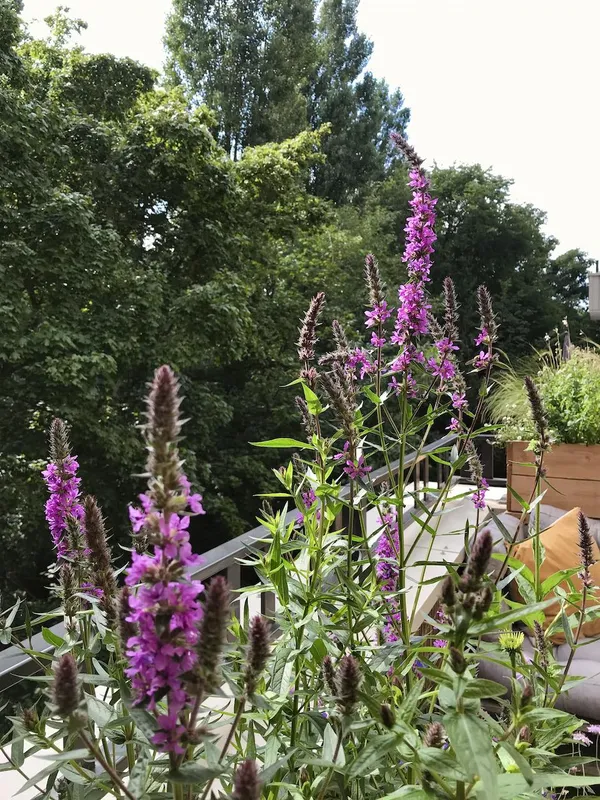
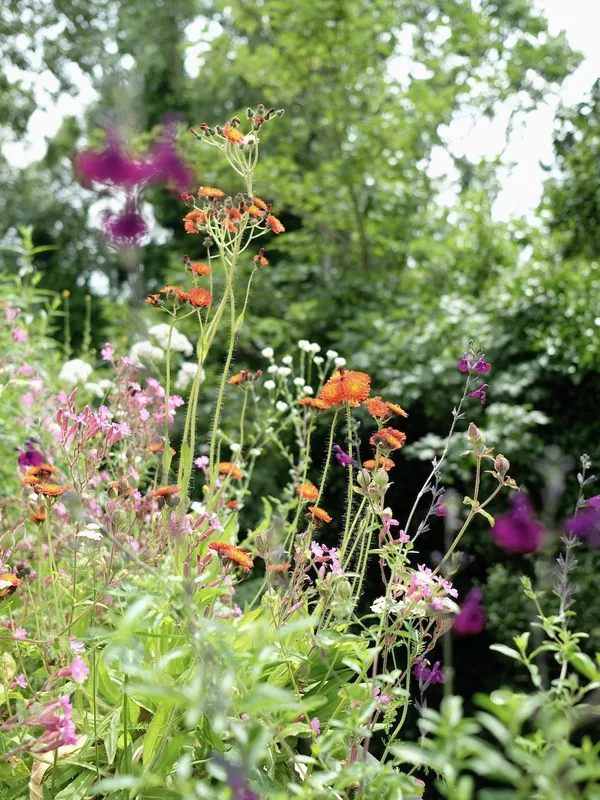
Place flowering native plants along the railing in hanging baskets filled with common daisies, orange hawkweed, dove’s-foot, bee balm, and wild marjoram. Build your own raised wooden planters, or let a row of tall spikes of great cattail and tall speedwell sway high above the railing so that butterflies, bees, and other little creatures can quickly find their way to your balcony. Don’t forget to give all those long stems some support, because it would be a shame if they snapped at the first strong gust of wind.
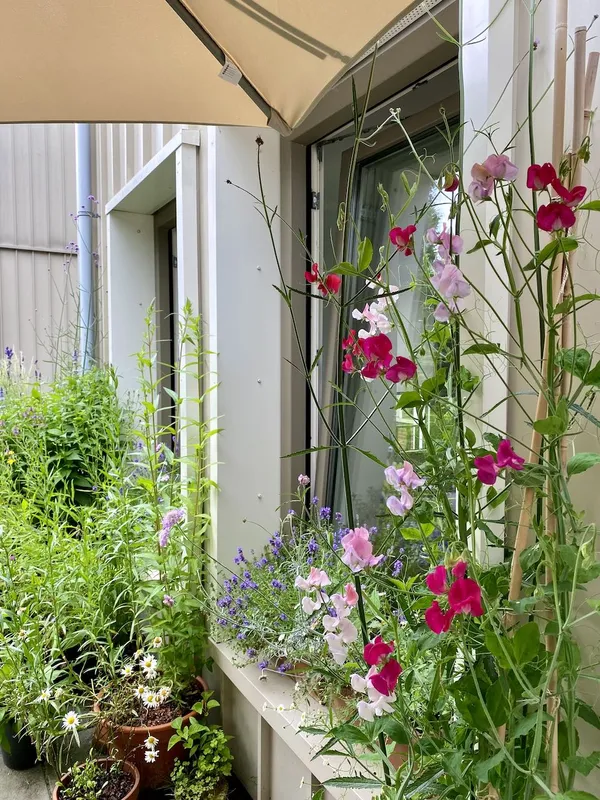
You can also, as I did, build a pyramid out of bamboo sticks and string, and place it in a large pot next to your balcony door. Let lathyrus climb up it with its enchanting butterfly-like flowers, and enjoy a lush, fragrant, flowering tower all summer long—one that you can also pick from abundantly.
Another option is stacking. You can use old stools, pallets, or crates to create different levels and build a tiered balcony planter. A simple trick I use a lot is turning an empty pot upside down and placing another pot on top of it for extra height. This way, you not only make better use of the space, but it also gives your balcony a playful look.
Plant different types of plants in a large pot so they bloom in succession. Add some organic flower bulbs in the fall, and you’ll enjoy flowers for months. Also, choose bushy plants that branch out and produce lots of flowers, such as field sage, catnip, or fall aster. These plants not only attract many insects but also ensure abundant and long-lasting blooms. The more blooms, the more life.
Tip: Feed your plants in July with a handful of Bodemliefde or some fertilizer pellets to give them an extra boost. This will keep your plants strong, and you and the pollinators will enjoy even more abundant blooms!
Every little bit helps
Although bees and other beneficial insects enrich your balcony, unwanted guests like aphids, mold, or snails can seriously hinder your plants’ growth. For example, last summer I had an unexpected visit from the yew beetle, which killed quite a few of my plants. That was frustrating at first, but I quickly rolled up my sleeves and kept going.
Nature is full of surprises, and there’s simply no such thing as a perfect patch of greenery. Especially on a balcony, where conditions are less ideal than in the ground, it’s normal to encounter a few setbacks now and then. The important thing is to disrupt the balance as little as possible, to manage things with a gentle hand, and above all, to avoid using pesticides.
Diseases and pests are often a sign that a plant isn’t entirely happy. Ask yourself: Is the plant in the right spot? Is it perhaps too wet or too dry? Is it getting enough nutrients? With enough biodiversity on your balcony, problems often resolve themselves. But sometimes there’s an overwhelming number of uninvited critters, and extra help is needed.
In that case, opt for biological pest control using natural predators, such as ladybug larvae to combat aphids and nematodes to control snails. You can order these online from Biogroei. You’ll receive a package with these creatures that you can release on your balcony. This way, you let nature do its work and everything stays in balance. Did a plant die after all? No worries—there’s always room for a new, beautiful flowering plant!
Tip: Aphid infestation? Plant nasturtiums in a pot and let the long, flowering vines climb along a wall or railing. This plant attracts aphids like a lightning rod, so they’ll pay less attention to your other plants.
Enjoy your own mini nature reserve
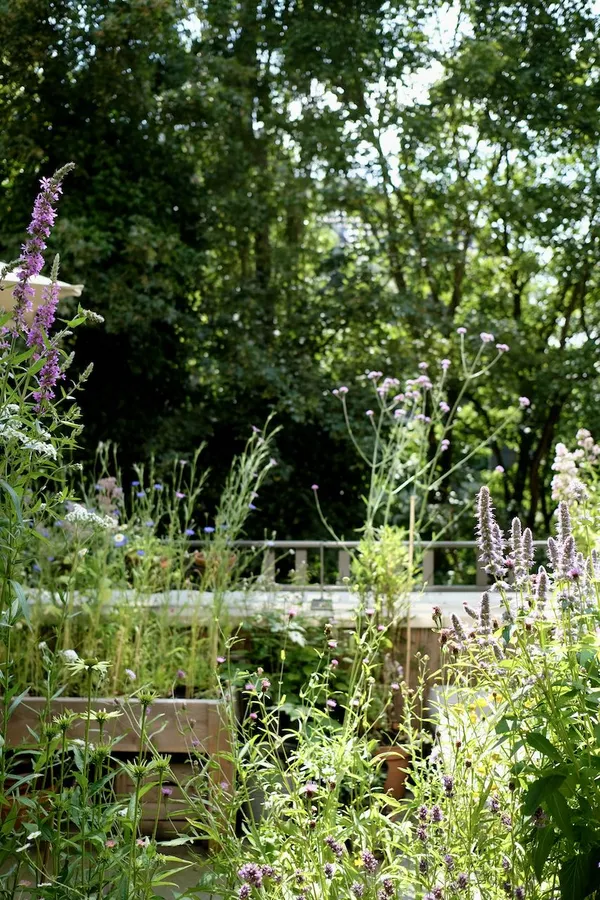
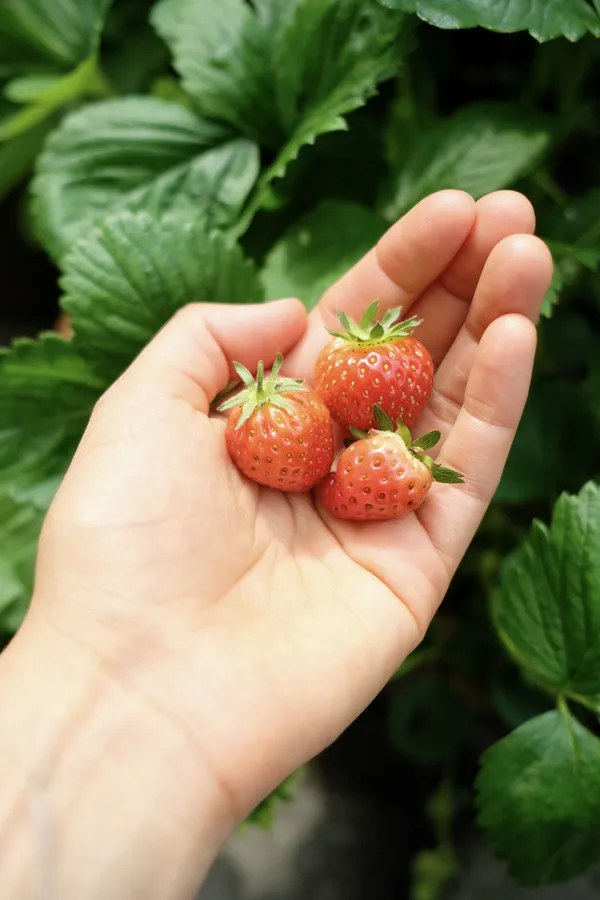
If you can combine food for the bees with food for yourself, you’ll be twice as happy. For example, add some strawberry plants or chives to your hanging baskets. Plant fennel and dill. Or plant blueberries or raspberries in a pot. With all that buzzing around you, you can count on a bountiful harvest and plenty of treats to enjoy yourself.
You can make delicious tea from lemon balm, licorice, and chamomile. And how about a vertical herb garden with wild thyme, oregano, rosemary, cilantro, and basil? Many of these herbs are known for their powerful medicinal properties, and if you let them go to seed, they’ll also attract plenty of bees. In addition, many plants that provide nectar for bees—such as musk mallow, cornflower, and yarrow—are also edible for us. So with all these flowers, you’ll not only brighten up your balcony but also your plate!
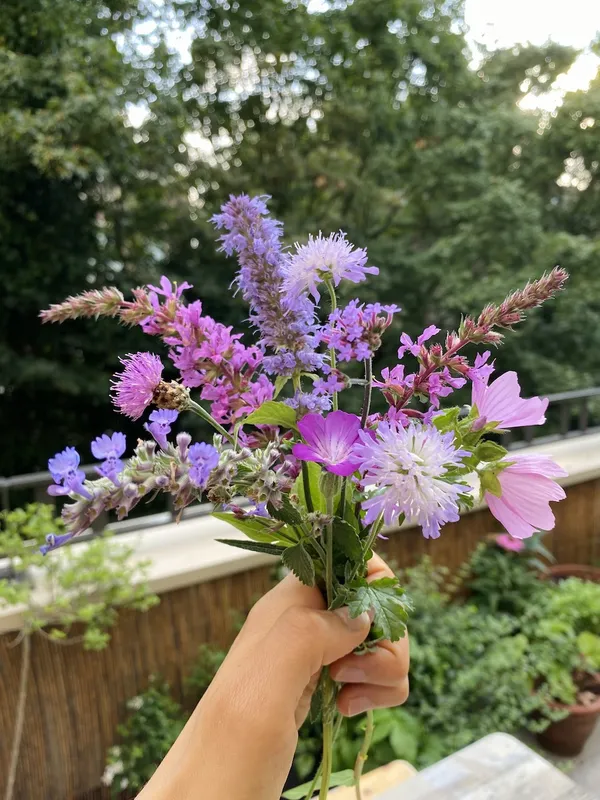
With a little luck, you’ll be able to pick your own little bouquets from your balcony in the coming months. Nothing beats the incomparable sweet scent of a sprig of lathyrus on the table or a cheerful bouquet of the most beautiful flowers in bloom at that moment. As long as there’s enough food available for the pollinators, you can pick flowers for your own enjoyment with a clear conscience.
As you can see, you really don’t need a big garden to create a bee-friendly oasis. Even with just a few square meters of space in the air, you can make a huge impact on biodiversity in your neighborhood. And by attracting natural predators, adding some edible plants, or picking a bunch of flowers every now and then, you can fully enjoy all that green happiness yourself!