
From shade and privacy to stress relief: Why Every Garden Needs a Tree
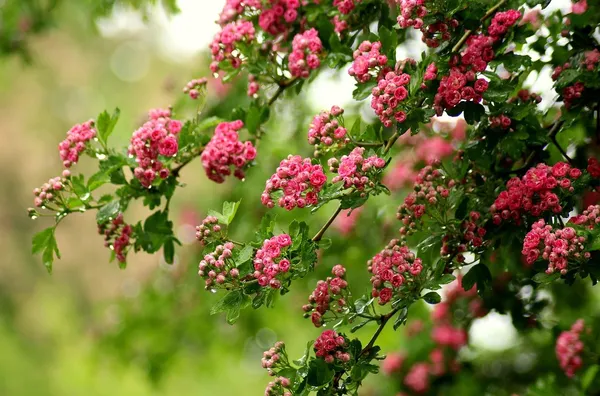
Leaves in the yard, bird droppings, a sticky film on the car, overhanging branches… Sometimes it seems as if trees are nothing but a nuisance. But nothing could be further from the truth: a tree is actually very valuable, even in a small yard! The many benefits of trees make them indispensable for your garden. Of course, there isn’t always enough space for a large tree, but even a small tree is of great value to your garden and your surroundings.
We’re big fans of trees and wouldn’t want to be without one—even though our garden is small. There are seven (small) trees in our backyard alone. How wonderful would it be if there were a tree in every garden? Since about half of the 5.4 million gardens in the Netherlands are mostly paved and it’s estimated that about 40% of them don’t have a single tree, this would have a huge impact!
Want to learn more about these numbers? Check out our article with facts and figures about gardens in our country.
What are the benefits of having a tree in your yard?
Why would you choose a buy a tree and plants in your garden? What are the benefits of a tree? There are plenty of reasons to plant a tree—almost too many to list. Still, we’d like to outline all the benefits of trees for you here. Read on below the photos, or go straight to:
- Shade and Shelter
- More privacy
- Beautiful all year round
- Sustainable
- Yield
Shade and Shelter
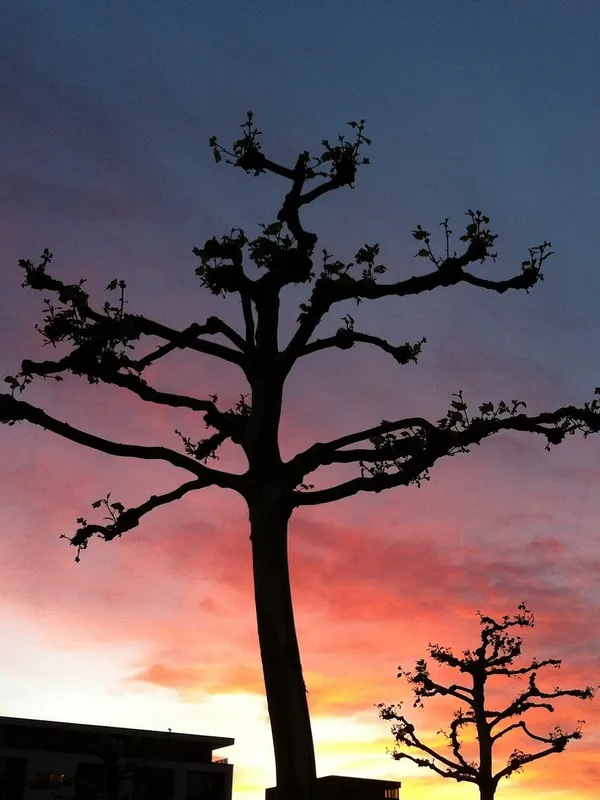
One of the main benefits of planting a tree is, of course, shade and cooling. A tree provides shade in your yard (like a natural umbrella), cools your home (like natural sun protection), and filters the light. But a tree also protects against wind and extreme weather. Trees act as windbreaks and provide shelter from the wind.
A tree:
- provides shade for the garden and the house
- protects against the wind and provides shelter
- keeps the house cool in the summer and minimizes heat loss in the winter
- filters the light
More privacy
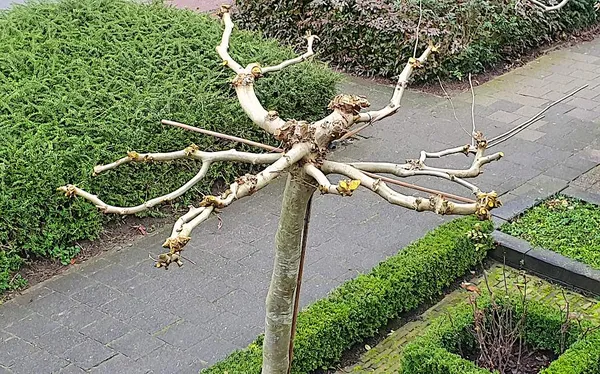
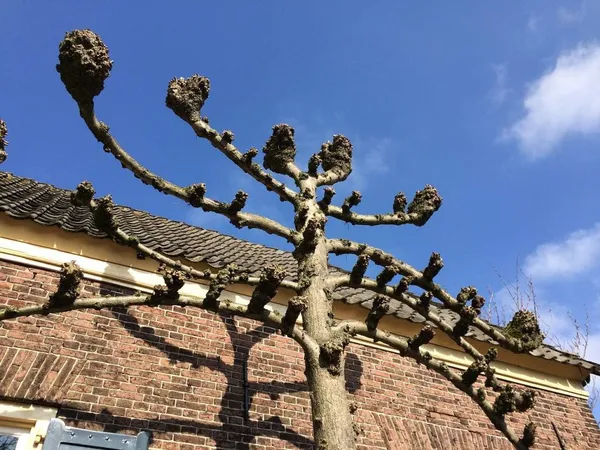
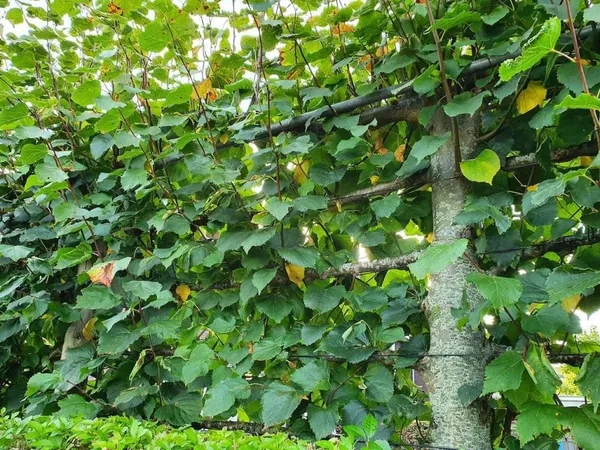
Another very good reason to plant a tree is that it blocks the view into your yard and provides more privacy. A tree can also reduce the view into your home or prevent you from seeing an unattractive object from inside your home or from the patio. Do you have very little space but would still like a green solution to block the view? Then use espalier trees for privacy. Trees also help muffle noise, thereby helping to reduce noise pollution.
A tree:
- provides privacy in your garden
- Reduced visibility into the house and garden
- blocks the view of less attractive objects
- reduced noise pollution
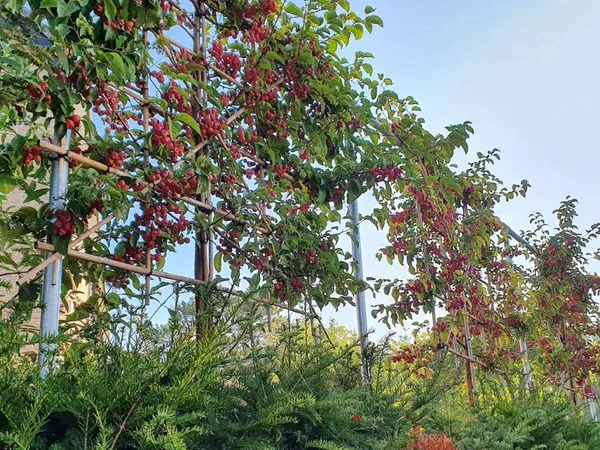
Beautiful all year round
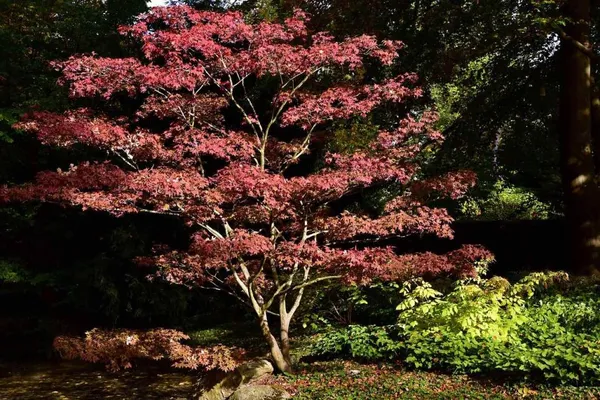
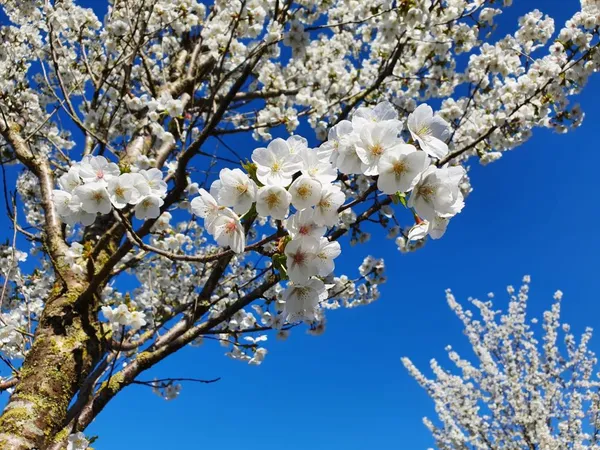
In addition to shade, shelter, and privacy, a tree naturally adds a lot of aesthetic value to your garden. Trees are beautiful in every season: from graceful buds and blossoms in the spring, fresh foliage and attractive leaf shapes in the summer, colorful fruits and berries, spectacular fall colors in the fall, and stunning silhouettes or colorful branches in the winter.
High(est) point
A tree adds height to your garden design and provides structure and shape to your garden. A tree is a great way to make use of vertical space, allowing you to maximize your limited garden area. In addition, a tree quickly gives your garden a more mature look. A beautiful tree in the garden is often seen as something that adds value to the home.
A well-placed tree acts as the star of the show (um… your garden). You could emphasize this even more by beautifully highlighting the tree. A tree is also ideal for many climbing plants. With one or more flowering climbing plants allowed to grow up the tree, you’ll enjoy your tree even longer.
Types, Shapes, and Sizes
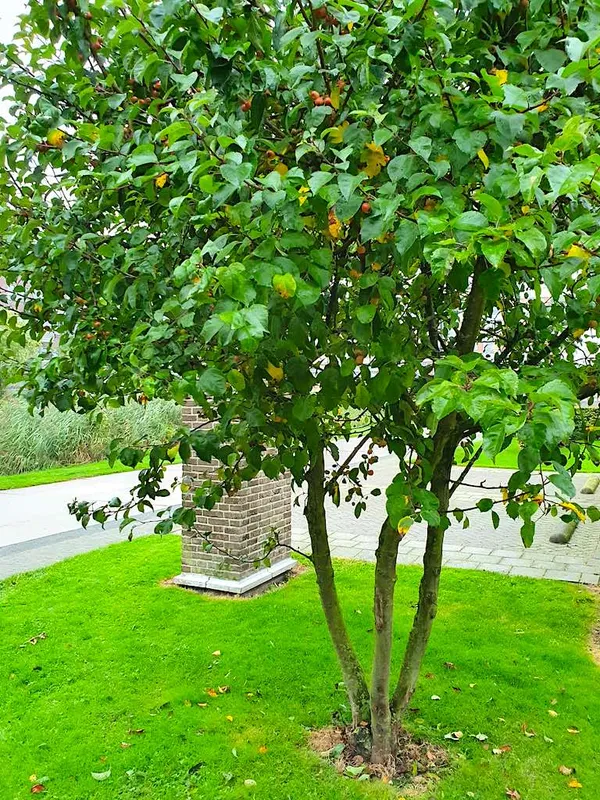
In addition to the well-known standard trees, there are also trees that have been specifically cultivated to remain small, narrow, or low-growing. While you need to prune standard and block-form trees regularly to achieve this, columnar trees always retain their narrow shape, and there are also dwarf trees that never grow taller than 6–8 meters—and even trees that reach a maximum height of 3–4 meters. For fruit trees, there are half-standard trees and low-standard trees. Many shrubs on stems are also available as small trees. Multi-stemmed trees are fantastic for a small garden because their bare trunks block little light and they often grow to a lower height, while still forming a beautiful architectural element in the garden.
Topiary is also very much possible with trees. For example, they can be shaped into a spherical tree, a cube-shaped tree, or a roof-shaped tree. Quite a few trees can be pruned into the desired shape quite easily, although shaping them can take several years. But that’s often part of the charm of topiary.
Evergreen trees keep their leaves all year round and maintain the same appearance year-round. Even when the rest of the garden is already bare. Deciduous trees may be bare in winter, but before they shed their leaves, you can often see the most beautiful fall colors, or enjoy tasty fruits or nuts. Deciduous trees allow you to experience the different seasons more fully, and they don’t block light from your garden or home in the winter.
A tree:
- has ornamental value throughout the year
- adds structure, shape, and height to your garden
- gives your garden a mature look
- often increases the home's value
- is often well-suited for topiary
- Whether grown as a columnar tree or as a standard tree, it always remains narrow or small
- When grown as a half-standard or low-standard tree, it remains smaller (many fruit trees are sold this way)
- Since it's evergreen, it stays a beautiful green all year round
- A deciduous tree allows you to better experience the changing seasons in your garden
Sustainable
Trees aren't just good for people; they also benefit the climate, nature, and animals. Sustainable gardening is becoming increasingly important. A tree in your yard increases biodiversity and helps cool the immediate surroundings (preventing heat stress) and protect against extreme weather. A tree also helps absorb and retain more rainwater.
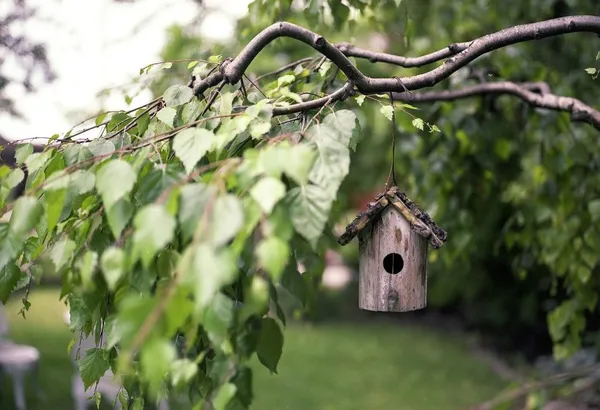
Trees provide food, shelter, hiding places, and nesting sites for animals, birds, and insects. Trees improve the soil: their roots help hold the soil in place, and fallen leaves create a good layer of mulch. A tree helps make the environment greener, which in turn reduces stress and promotes well-being. Trees are therefore good for both people and animals.
Choose the right tree so that it will last for many years and remain standing forever without growing too large. Of course, you can keep trees small by pruning them regularly, but in a small garden, you can avoid a lot of extra maintenance by choosing a tree that won’t grow too large in the first place.
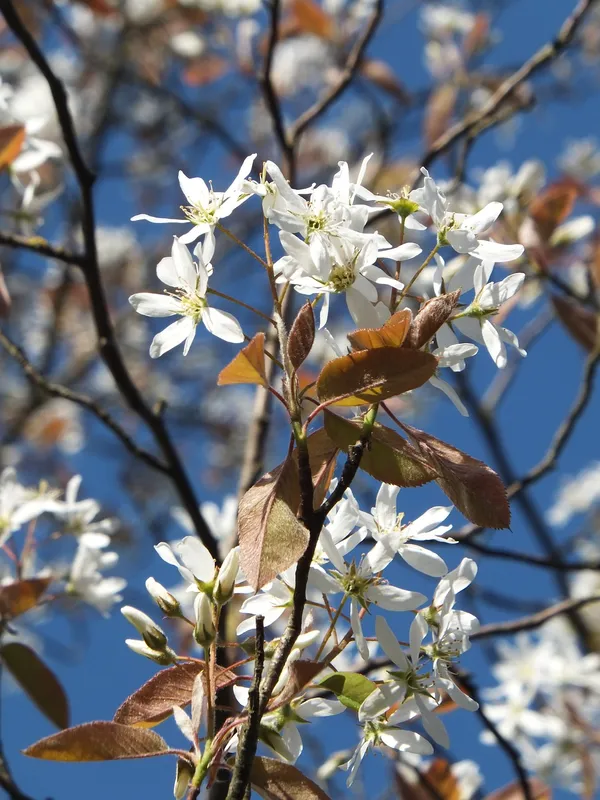
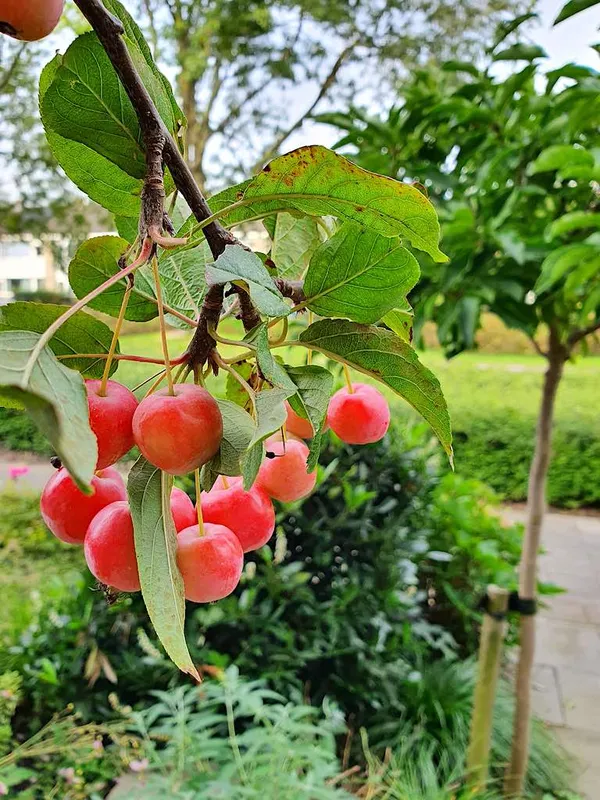
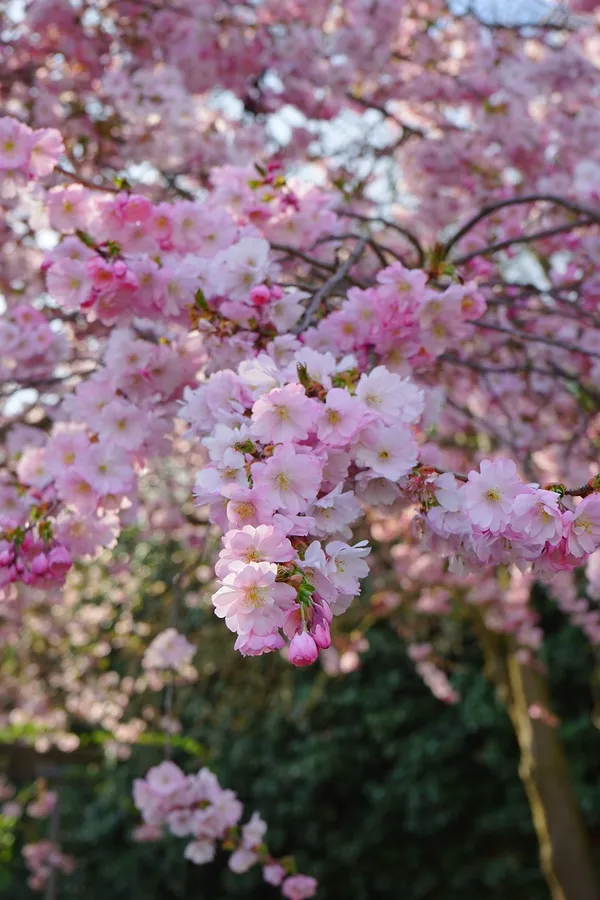
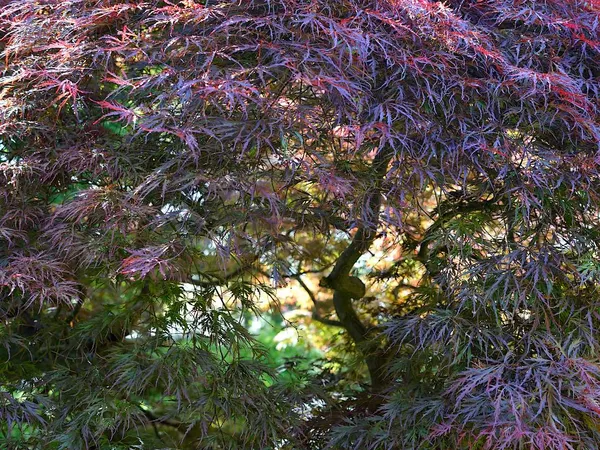
There are a vast number of species, and many trees have subspecies and cultivars that grow to be smaller or shorter. Think of serviceberry (Amelanchier), hawthorn (Crataegus), crabapple (Malus), ornamental cherry (Prunus), rowan (Sorbus), Judas tree (Cercis), star magnolia, and Japanese maple (Acer palmatum), to name just a few popular trees.
A tree:
- increases biodiversity
- provides food and shelter for animals, birds, and insects
- cools the immediate surroundings
- protects against extreme weather
- retains rainwater
- improves the soil
- contributes to a green environment
- reduces stress and promotes well-being
- has a long service life
- attracts natural predators to combat pests
- absorbs carbon and produces oxygen
Fruits and Yield
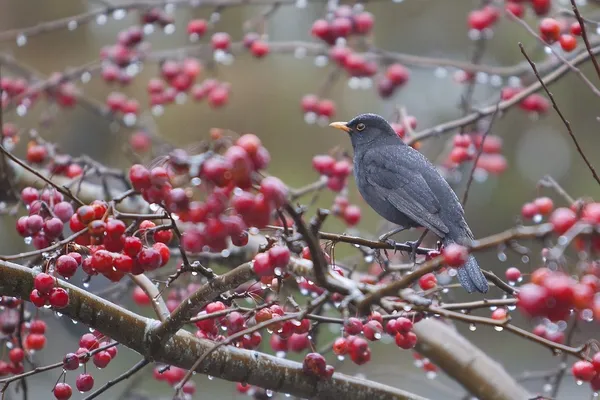
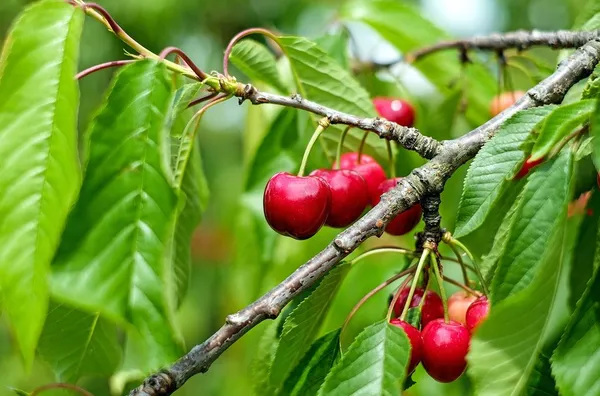
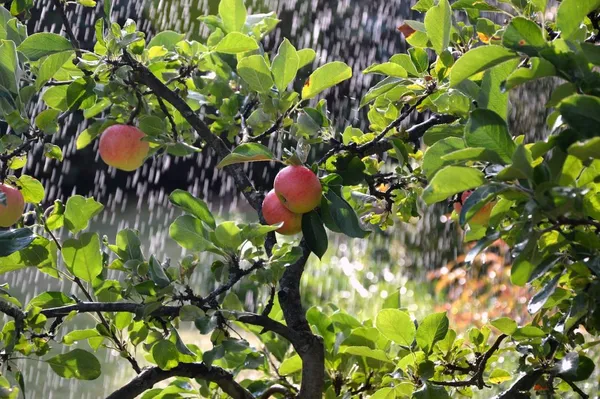
Don't forget that tasty fruits, berries, or nuts are another benefit of a tree. Fruit and nut trees are usually planted specifically for production—for example, in a vegetable garden, an orchard, or simply among other plants in the flower beds (such as in a cottage garden).
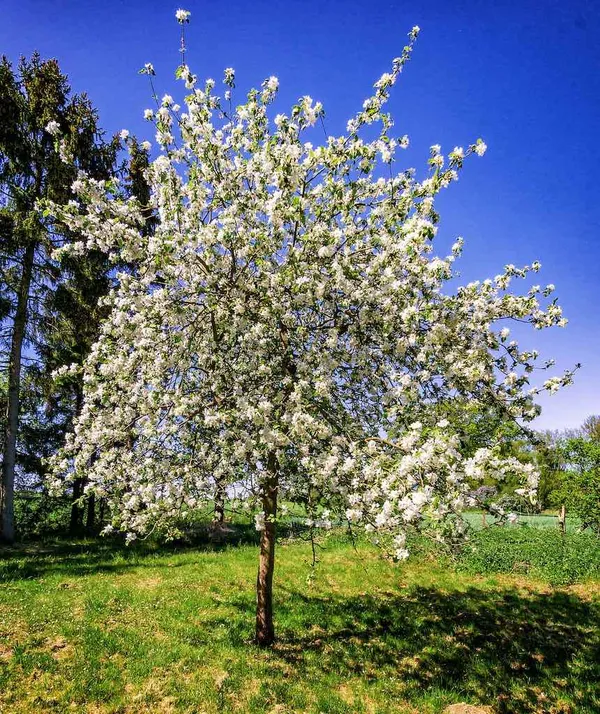
Fruit trees produce beautiful blossoms in the spring, and their fruit ripens in the summer, late summer, or fall. There are also trees whose leaves or flowers are edible. You can use them, for example, in a salad or syrup. Sturdy branches can be used as plant supports or to create a barrier (such as a willow fence or a hazel screen).
A tree:
- can be planted for the production of fruit or nuts
- or processing blossoms or leaves
- can be used for the branches
A tree in every garden!
So there are more than enough reasons to want a tree—even if your yard is small. A tree fits in any yard!
Do you already have a tree in your yard? Or would you like to plant a tree but aren't sure which one? Let us know—we'd be happy to help you decide.
We wholeheartedly welcome every additional tree that is planted!