
From a Tricky Corner to a Dream Garden: How to Design a Triangular Garden
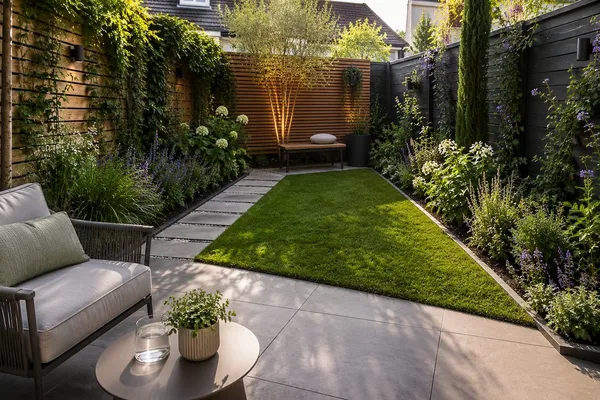
AI visualization
A triangular garden is often seen as a challenge. The slanted lines, irregular angles, and limited space make it harder to create a logical design than in a rectangular garden. Yet a triangular garden, in particular, can be designed to be surprisingly spacious, inviting, and practical.
The secret isn't in hiding the shape, but in making smart use of it. With the right design choices, you can create a garden that looks larger, exudes tranquility, and perfectly suits your needs.
In this article, you'll discover the most important design principles for a small or medium-sized triangular garden.
Why a triangular garden often feels awkward
Many people make the same mistake: they try to design a triangular garden as if it were rectangular. This results in illogical or awkward walkways, wasted corners, and fragmented spaces. All of this creates a very cluttered look.
A good garden design actually starts with the shape of the garden. When the lines, viewpoints, and plantings are tailored to this shape, a harmonious whole naturally emerges.
11 Garden Design Tips for a Triangular Garden
1. Don't emphasize the triangle
Perhaps the most important design tip is also the simplest: don’t repeat the triangle everywhere. In fact, lots of straight lines along fences actually emphasize the shape even more. This requires some planning, because this shape naturally tends to recur quite often.
Redirect attention by using:
- round shapes
- organic flower beds
- diagonal sight lines
- smooth transitions
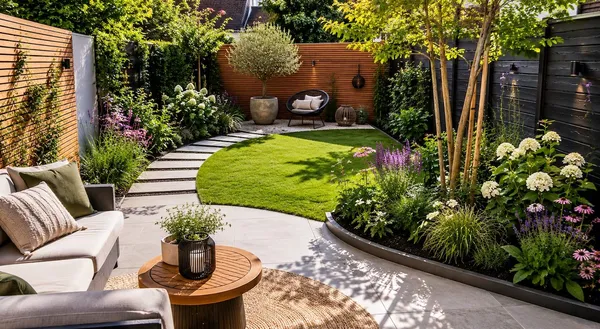
2. Use curved lines
Curved lines create a sense of calm and make a garden appear larger. This results in a more natural look and makes sharp angles less prominent. Consider, for example:
- a sloping border
- a gently winding path
- a rounded patio
- organic garden beds
3. Create a clear focal point and make the most of the tip
Every good garden has a focal point. A focal point draws the eye and gives direction to the design. For example, make smart use of the corner and place your focal point there, such as:
- a multi-trunked tree
- a large decorative pot
- a water feature
- a work of art
- a unique group of plants
4. Work with diagonal sightlines
Diagonal lines make a garden appear larger. A path, border, or line of sight that runs diagonally across the garden makes the eye travel farther. This creates depth and a sense of space. A diagonal line is perfect for a triangular garden.
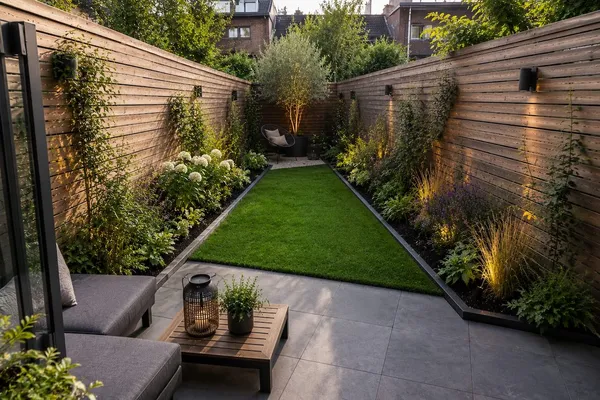
5. Hide the property lines
The better you can see the entire layout of the garden, the smaller it often appears. When parts of the fence are out of sight, the garden seems larger and less angular. Soften the property line with plants such as ornamental grasses, shrubs, climbing plants, and espalier trees. A pergola covered in plants also works very well.
AI visualization
AI visualization
6. Add height
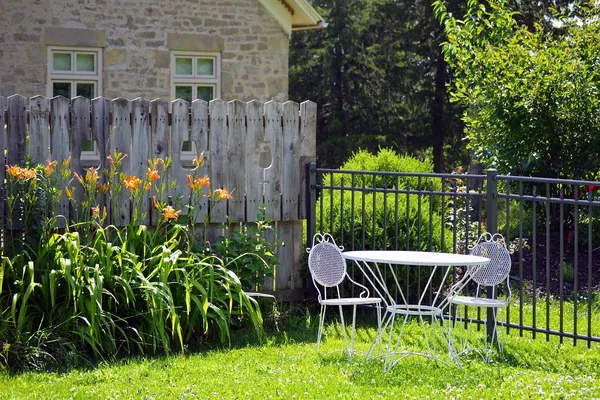
In a small garden, vertical space is worth its weight in gold. This allows you to add greenery without taking up extra space. It also helps to blur the boundaries even further. Consider:
- climbing plants
- trees grown on a trellis
- pergolas
- raised flower beds
- green walls
7. Choose larger plants
Many small plants can make a garden look cluttered. A few larger elements, on the other hand, create a sense of calm. Less variety often leads to greater impact. You can achieve this, for example, by letting a larger, multi-trunked tree take center stage, or by using a few large shrubs or tall ornamental grasses.
8. Work in layers
Professional landscape designers often use layered planting. This creates depth and a fuller look. A simple arrangement, for example, consists of low plants in the foreground (such as groundcover), medium-height plants in the middle (such as perennials and ornamental grasses, or small shrubs), and taller plants in the background (such as a small tree, large shrub, or tall ornamental grasses).
Incidentally, it’s often worth not applying this rule strictly. Some taller plants with a translucent quality can actually add more interest and depth.
9. Add a circular element
A round shape works very well in a triangular garden. Round shapes soften the garden's geometry.
Interesting round elements:
- a round table
- a round border
- a fire pit
- a circular terrace
10. Choose a custom solution
A triangular garden sometimes calls for creative solutions. Custom-made benches, planters, or a specially designed patio can make much more efficient use of the available space.
11. Leave some space
Not every square meter needs to be filled. Open space creates a sense of calm, clarity, light, and spaciousness. A garden often feels larger when there is intentional empty space. According to Japanese tradition, empty space is just as important as filled space.
A triangle offers opportunities for garden design
A triangular garden requires a different approach than a standard garden, but it actually offers many opportunities for a unique design. By incorporating curved lines, strategic vantage points, changes in elevation, and a clear focal point, you can create a garden that appears larger, more serene, and more attractive.
The most important principle? Don't design against the form—work with it.