First Aid for Drought and Heat – On Nynde's Bee Balcony
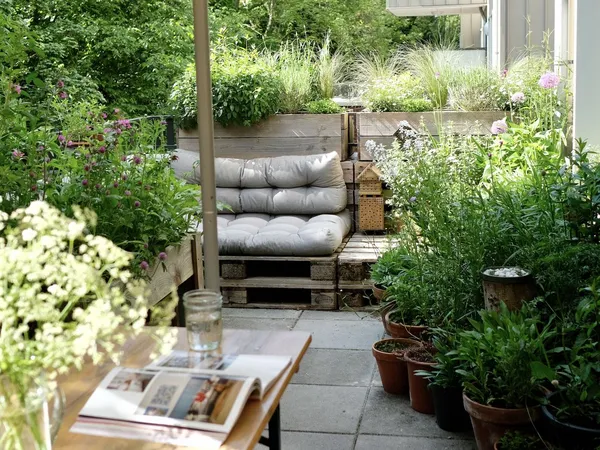
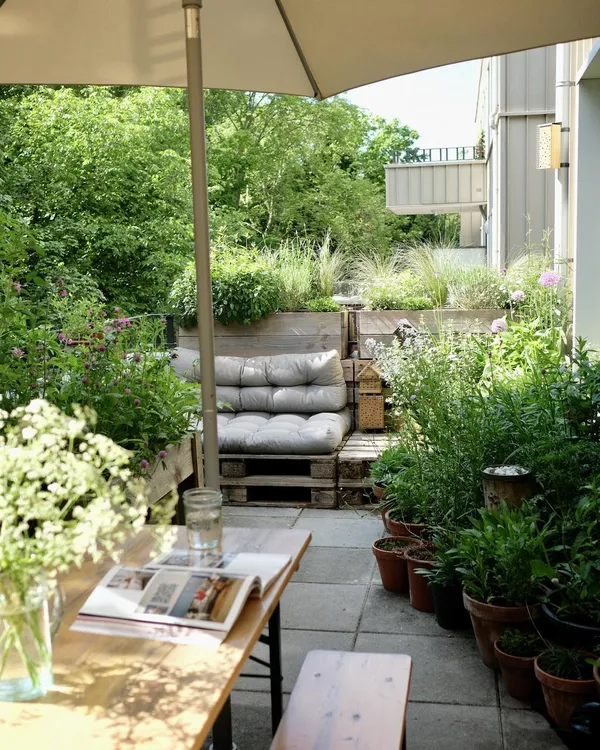
Nynde has transformed her bare 17m² city balcony into a vibrant haven for wild bees, butterflies, and other animals. You may already know Nynde from her Instagram account, “Bijenbalkon,” and her blogs for the Bijenstichting. From now on, you can also read her tips and fun blog posts here about biodiverse balcony gardening and greening even the smallest balconies.
Summer is just around the corner, and as more and more flowers start to bloom, you’ll notice bumblebees and wild bees visiting your balcony garden more often. But how do you make sure both your plants and the bees stay happy when the rain stays away or the heat strikes? On a balcony, that can sometimes be quite a challenge. That’s why I’m sharing a few smart tips and tricks below to help you get your green oasis through hot and dry spells.
Be Mindful with Water
Two silent enemies lurk on a balcony: the sun and the wind. Both can quickly dry out your potted plants, which isn’t good for the bees. That’s because flowers produce less nectar during dry periods and may even stop blooming altogether during prolonged droughts. Caring for your plants and watering them sufficiently is therefore the key to a nutrient-rich and vibrant environment with happy bees, bumblebees, butterflies, hoverflies, and other pollinators.
Plants need water almost every day, especially in the spring and summer. It’s best to water early in the morning or after sunset, because during the day, the water evaporates quickly in the sun before it reaches the roots. Personally, I prefer to water in the evening, so my plants have all night to absorb the water and can start the next day refreshed.
Depending on the type of plant and the size of the pot, you may need to water it up to twice a day on hot summer days. Water generously each time so that all the soil in the pot is thoroughly saturated and the water doesn’t just stay in the top layer. If the potting soil is very dry and all the water is draining out the bottom, first water briefly and then water thoroughly again after 5–10 minutes. This is because moist soil absorbs water better.
Tip: Has it rained lightly? If so, it might seem like your plants have had enough water, but often the water only reaches the leaves and not the soil. So always check the potting soil by sticking your finger in it to see if your plants could use a little more water.
Mulching: The Ultimate Lifesaver
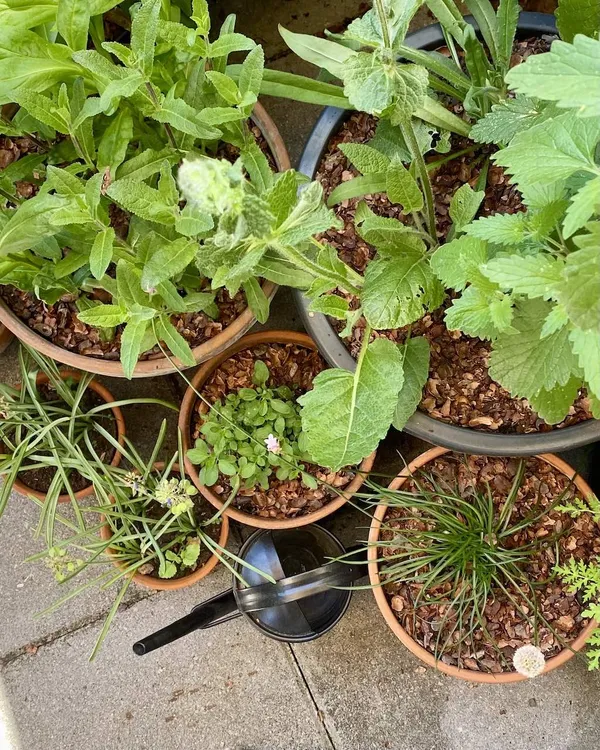
To conserve water and minimize the need to lug around a watering can, covering the soil is a must. This is also known as “mulching” and helps prevent evaporation. You see this in nature as well, where bare patches of soil are often quickly covered with greenery to protect the soil from the sun, wind, and rain. Especially during hot summers, mulching is the ultimate lifesaver, because it keeps the soil moist and your plants happy.
You can use just about anything to mulch. Personally, every spring I spread a thick layer of cocoa shells over the soil around my plants, but wood chips, bark, straw, or leaves work just as well. Mulching is especially recommended for young plants, since they still need to grow and the potting soil around them is still exposed.
Do you garden in large pots or containers? If so, be sure to fill them up nicely. For example, plant a few large plants and surround them with some smaller, low-growing varieties. All this vegetation protects the soil from direct sunlight and provides a shelter for all kinds of insects that thrive there.
Tip: Remove spent flowers to prevent seed formation and encourage new buds. This way, your plants can continue to bloom for months—a treat for both you and the bees. Don’t throw away your pruning trimmings; use them as free mulch by placing them back in the pot.
More Smart Tricks
It may sound obvious, but creating some shade on your balcony can make a world of difference. For example, hang up a cloth or open a parasol. This isn’t just good for your plants, but for you as well. Heat wave on the way? Group all your pots together, keeping them in the shade as much as possible. This way, they’ll provide each other with a little extra protection.
To quickly provide your plants with a little extra water, you can also place saucers under your pots. When you water them and the excess water drains away, it doesn’t flow out of the pot right away but collects in the saucer. This creates a reservoir that your plants can draw from later. In the fall, you can remove the saucers or turn them upside down to prevent root rot.
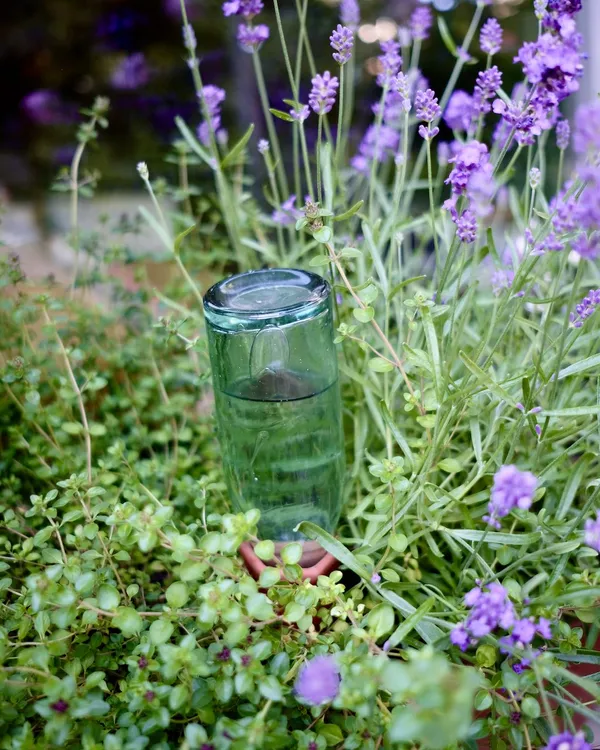
Another smart method is to use terracotta drippers, into which you place a bottle of water upside down. Terracotta is porous and allows water to seep through slowly, keeping the soil moist. This is especially useful for small pots that dry out quickly. For larger balcony planters, you can use an “Olla” terracotta pot or jug, which you fill with water and bury among your plants.
The choice of pot material also plays a role. Personally, I love terracotta pots—my balcony is full of them. But precisely because they’re so porous and absorb water, some of the water evaporates through the outer wall, which means you have to water your plants more often. Terracotta is therefore ideal for hardy plants such as lavender, catnip, field sage, yarrow, and keyflower, which won’t die right away if they’re a little dry for a while.
For plants that prefer moist conditions, glazed pots or pots made of (recycled) plastic are better options because they retain water longer. Examples include great cattail, blue knapweed, cuckoo flower, wild betony, and true valerian. All of these plants are not only fantastic for (wild) bees, but they’re also favorites among numerous other beneficial insects.
Heat Plan for Bees
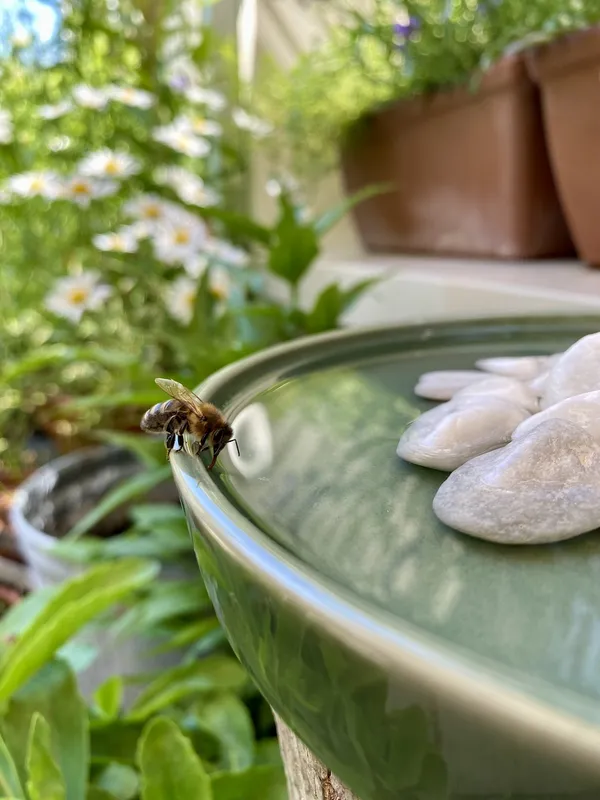
Just like other animals, bees need water on hot days to prevent dehydration and overheating. For birds, you can easily put a bowl of water on your balcony, but bees need a little extra help because they can’t just land in deep water. The solution? A bee bath—or, as I call it, a “bee spa.”
You can easily make a bee spa yourself: take a shallow bowl or plant saucer and place a handful of pebbles or marbles on the bottom. Fill the bowl halfway with water, so that the pebbles or marbles protrude just above the water. This allows the bees to land on them and drink without getting their heads underwater. You can also add some moss. Moss retains water, making it easy even for the smallest insects to drink. It’s best to use rainwater and, most importantly, let it sit for a while. Bees actually prefer dirty water to clean water.
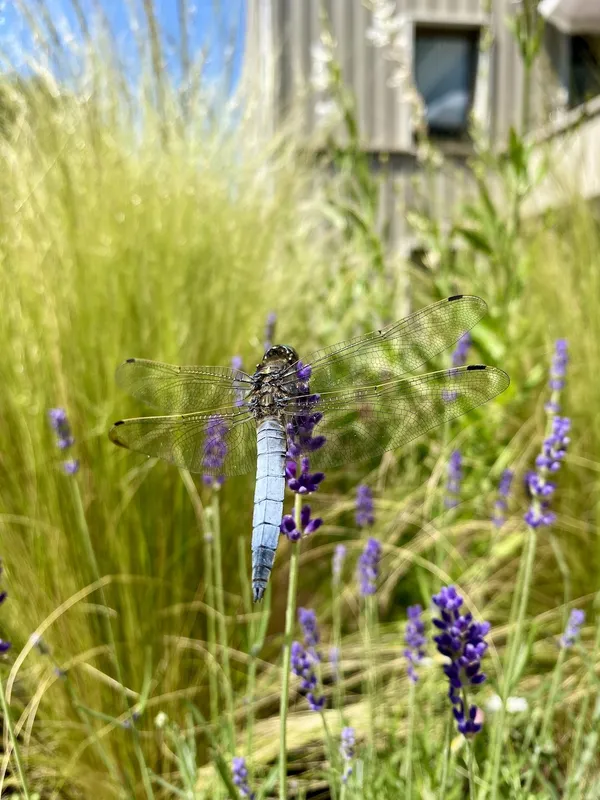
Tip: Want to go bigger? Set up a mini-pond on your balcony by filling a zinc tub or a recycled plastic pot with gravel, water, native aquatic plants, and a solar-powered fountain. This attracts not only bees, but also birds, damselflies, dragonflies, and beetles. Where there’s water, there’s life!