
Fall Lawn Care
Maintaining a beautiful green lawn can often be quite a challenge. As fall sets in, bare spots often appear and the grass becomes less dense. Still, the grass continues to grow for a long time—sometimes even into November!
(That's right.) There are plenty of things you can do in the fall to keep your (small) lawn healthy.
How to Care for Your Lawn in the Fall
Remove leaves from the lawn
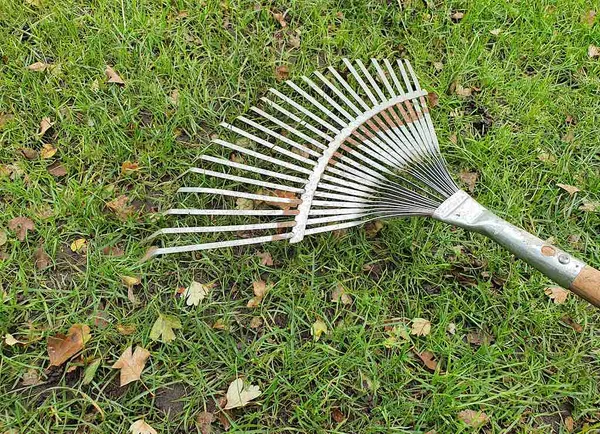
To prevent bare spots from forming and moss from spreading, it’s important to keep your lawn completely free of leaves. A leaf rake is ideal for this. By the way, the leaves you remove are great for your compost bin or to special leaf compost to make it.
Keep mowing the lawn
Grass continues to grow even in the fall. It grows a bit more slowly, but it’s definitely still growing. In recent years, it has also stayed fairly warm for a long time, which means the grass can continue to grow well into November. Grass grows at temperatures above 12 degrees.
So even in the fall, you should keep mowing. Be sure to mow the lawn a little less short. This will prevent more bare spots and damage from forming. Instead of a height of 2–3 cm, it’s better to set it to about 4–5 cm.
Try to mow the lawn when the weather is dry. This way, you're less likely to leave tracks and you'll get a neater, more even result. Don't leave the clippings on the lawn; remove them from your lawn.
Lawn Fertilization in the Fall
If you still want the lawn fertilize, use a special fall fertilizer for your lawn. That way, you’ll avoid applying the wrong nutrients for this time of year (less nitrogen and more potassium). This fertilizer slows down active growth, hardens the grass for winter (in theory), and keeps your lawn a beautiful green color.
Spreading lime in the fall
In most cases, the soil gradually becomes more acidic. This is detrimental to the growth of your lawn. To counteract this, you can spread lime in the fall. The ideal time to add lime is around November or December. Note that you should not apply lime at the same time as fertilizer.
Aerating the Lawn
Since the lawn naturally gets a lot of foot traffic, this becomes more and more noticeable over time. As a result, the soil slowly becomes compacted. Fall is the ideal time to prevent this and aerate the lawn. Use a garden fork, for example. Stick it straight into the ground and then move it gently back and forth. This method works well for a lawn that isn’t too large.
Scarifying in the Fall
If your lawn feels as if there’s a soft layer of thatch covering it, or if there’s a lot of moss in the lawn, it’s a good idea to dethatch your lawn in the fall as well. The best time to do this is September or October. Usually, it’s enough to vigorously rake the lawn with a leaf rake or grass rake in the fall to remove as much thatch, loose grass, dead grass, moss, and leaves as possible. If you do it right, you’ll almost certainly end up with some bare spots or streaks. This allows light and air to reach your lawn again, and new grass can still grow just fine during this time of year. If a truly bare spot does develop, you can fill it in.
In a large garden, you might consider using a dethatching machine. However, we would prefer to do this in the spring.
Filling in Bald Spots
For much of the fall, the soil is still warm enough for grass seed to germinate. So you can repair bare spots by planting new to sow grass seed. By the way, there’s also special grass seed for repairing bare spots. It’s also possible to use this turf If you use it, you'll see results right away, of course.