
Fall Colors in the Small Garden
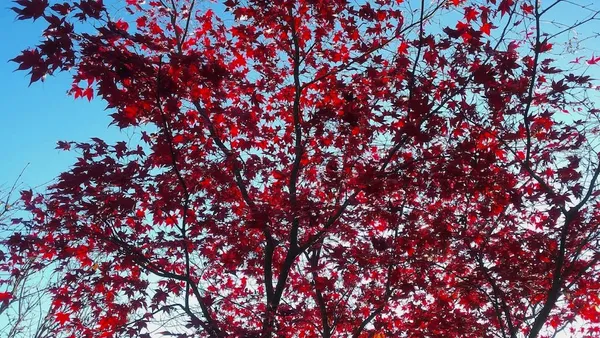
There are quite a few trees and shrubs with beautiful fall colors.
But in a small garden, there isn't always room for plants that are only beautiful or unique during a single season.
Fortunately, there are also (dwarf) trees and shrubs that display beautiful fall colors
AND they're worth visiting during the other seasons, too!
Small-growing trees with beautiful fall colors
Acer (maple)
When you think of fall colors, you think of maple trees…
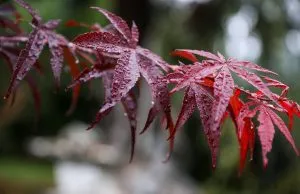
Although most maple trees do grow too large for small gardens, Japanese maples (Acer) in particular are well-suited for smaller gardens. They often remain smaller or grow more slowly. Many maples display spectacular fall colors!
The many cultivated varieties of Japanese maples can be traced back to three species:
- Acer palmatum
- Japonicum
- Shirasawanum
Well-known names include Dissectum, Areum, Vitifolium, Aconitifolium, Osakazuki, and Sangokaku.
In addition to Japanese maples, there is also Acer griseum, which does not grow too tall (up to 6 meters) and also features a beautiful red fall color. Another advantage is its distinctive bark.
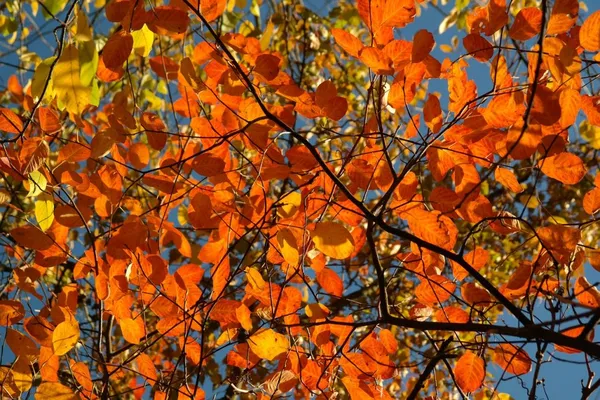
Amelanchier lamarckii (American serviceberry)
The serviceberry has a beautiful orange-red fall color. It’s a small tree that doesn’t grow too densely. So while it does block the view, it doesn’t block the light. In the spring, it produces white blossoms, and the Amelanchier also bears black berries. So you can enjoy this tree all year round.
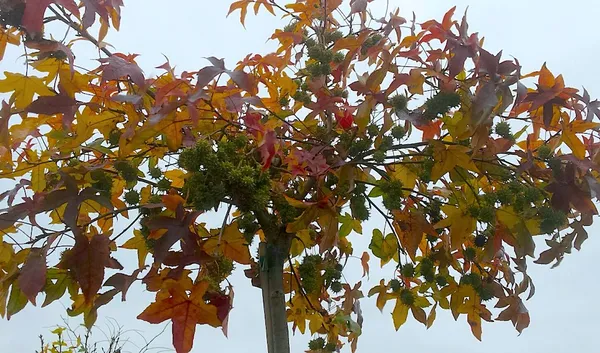
Liquidambar (sweetgum tree)
The sweetgum tree displays spectacular fall colors: shades of yellow in dry soil and shades of orange-red in moister soil. Its large leaves also make an impression the rest of the year. Be careful with this species, though, as there are several cultivars, some of which can still grow quite tall and large. For a small garden, for example, you might opt for the globe-shaped variety.
Prunus serrulata (ornamental cherry)
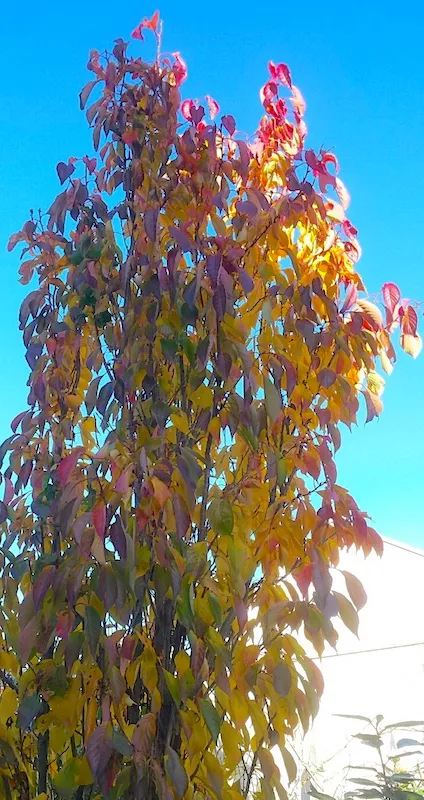
This columnar ornamental cherry tree turns completely orange in the fall. The trunk is also very attractive. Because of its columnar shape, the tree doesn’t take up too much space. In April and May, the tree is also abundantly covered with pink blossoms.
Rhus typhina (sumac)
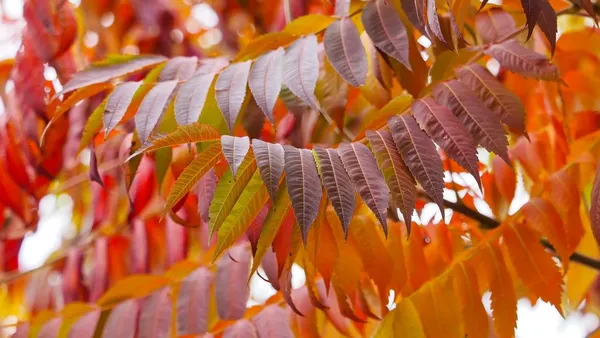
The velvet tree turns a striking orange-red in the fall and really stands out during this time of year. The flower panicles that form in the summer are still visible in the fall. Although the velvet tree does not grow very tall, it can develop a broad crown. This tree often develops multiple trunks.
Shrubs with beautiful fall colors
Euonymus alatus (cardinal's hat)
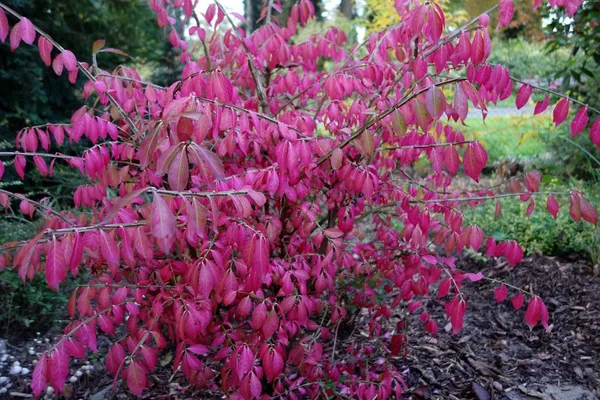
Both Euonymus alatus and Euonymus planipes have a particularly striking appearance in the fall: the shrub turns completely pinkish-red. Even after the leaves have fallen, it’s a remarkable sight, because then its distinctive (cork-like) trunk is clearly visible.
Aronia (chokeberry)
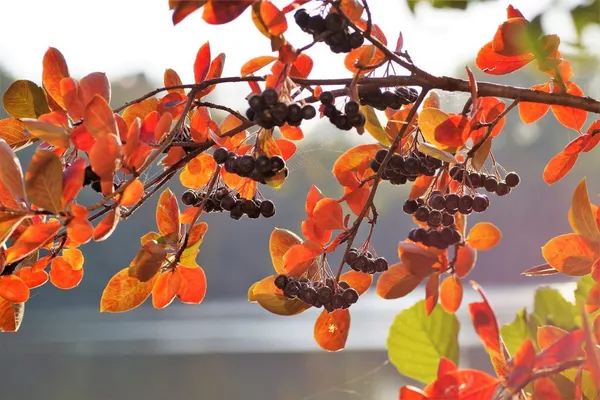
In addition to its beautiful purplish-red fall color, this low-growing shrub has more to offer: white flowers in early summer, followed by black berries.
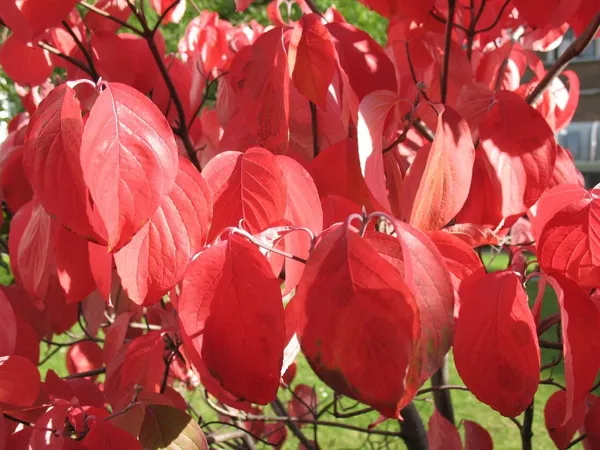
Cornus kousa (Japanese dogwood)
Both Cornus kousa and Cornus sanguineum take on a deep, dark red fall color. In addition, you can enjoy their many white flowers earlier in the season, and in winter, their colorful branches become clearly visible. Many other Cornus species (such as Cornus sibirica) also display beautiful fall colors.
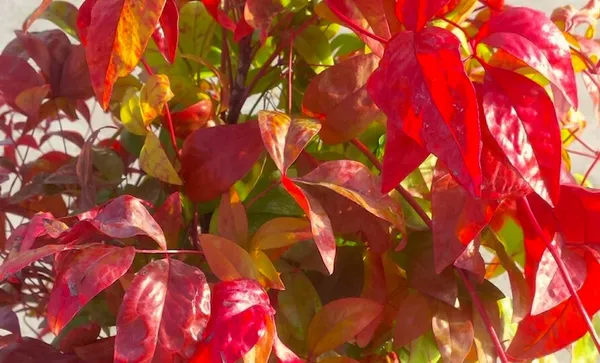
Nandina domestica (heavenly bamboo)
After flowering in July and August, the leaves turn pinkish-red. This drastically changes the plant’s appearance. In winter, you can enjoy its many bright red berries once again.
Climbing plants with beautiful fall colors
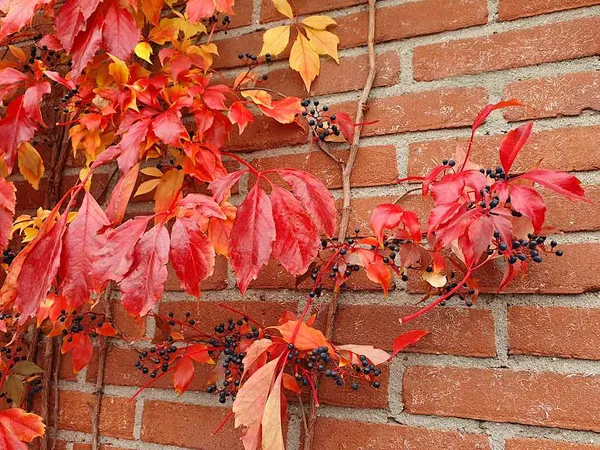
Parthenocissus (wild grapevine)
People generally choose wild grapevine specifically for its fall colors. The leaves turn a striking dark red. This creates an impressive effect, especially on larger plants. Be careful, though, because wild grapevine is a vigorous grower and can reach heights of up to 10 meters.
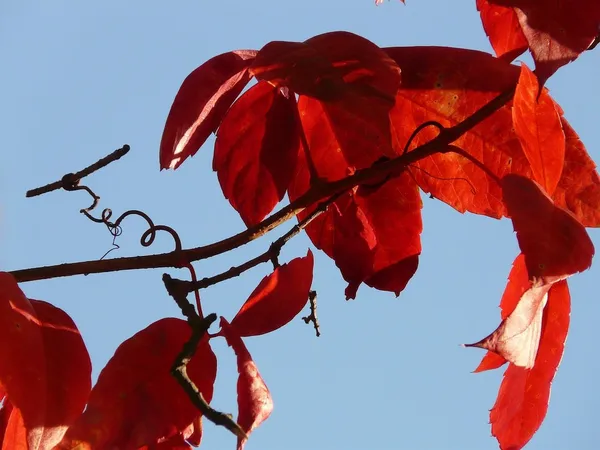
Vitis coignetiae (ornamental grapevine)
Unlike most grape varieties, this one does not produce edible grapes. You really choose this grapevine for its unique foliage and beautiful fall colors. In the fall, the leaves turn a deep, almost purple-red color. In a small garden, you’ll need to pay close attention, as timely pruning is necessary to keep the ornamental grapevine under control.
What's your favorite fall plant?
So even in a small garden, it's entirely possible to see beautiful fall colors.