
Expert Garden Design Tips: Charming, Green, and Circular on 30 m²
Who better than a landscape designer to offer tips on designing a small garden? In this section, we feature well-known and successful landscape designers. They share expert tips for creating a great design and a beautiful garden.
Michaël Meijer of Coenraad Tuinen is an independent landscape designer and gardener in Utrecht. He enjoys creating inviting, green, and circular gardens. Incidentally, he operates entirely without a fleet of vehicles, as he does everything using his city bike and cargo bike. He wouldn’t want it any other way!
Virtually all of the gardens Michaël works on are smaller than 100 square meters. More and more often, he designs gardens that are less than 30 square meters—truly tiny gardens! This calls for extra creativity and ingenuity. A single good idea or concept can carry the entire garden. Of course, the garden must also be visually appealing throughout all the seasons.
Since every garden requires space for sitting and walking—and other uses often take up the limited space as well—the room for greenery in a (truly) small garden is very limited. Still, with a few helpful tips, you can create a green space even in this type of garden.
Michaël enjoys this challenge and the puzzle of getting everything just right. Here are some tips for creating a charming and green garden that’s less than 30 square meters.
Landscape Design Tips for a Cozy, Green Small Garden
Bring a sense of calm to the garden
Limit the number of materials, colors, and textures visible in the garden, and coordinate them with what’s already there. If you use a combination of fired pavers, concrete blocks, and gravel as paving in a garden, or a fence or structure made of different types of wood and/or a patio set made of steel, glass, and plastic, it can quickly become too busy.
Choose a limited number of new materials and incorporate them throughout the garden. Materials with a warm appearance, such as untreated or rough-hewn wood and fired pavers, “soften” an angular, stony space.
Also, be sure to remove all unnecessary pots, containers, and other items from the garden (or at least keep them out of sight). This prevents the garden from looking cluttered and creates a more peaceful atmosphere.
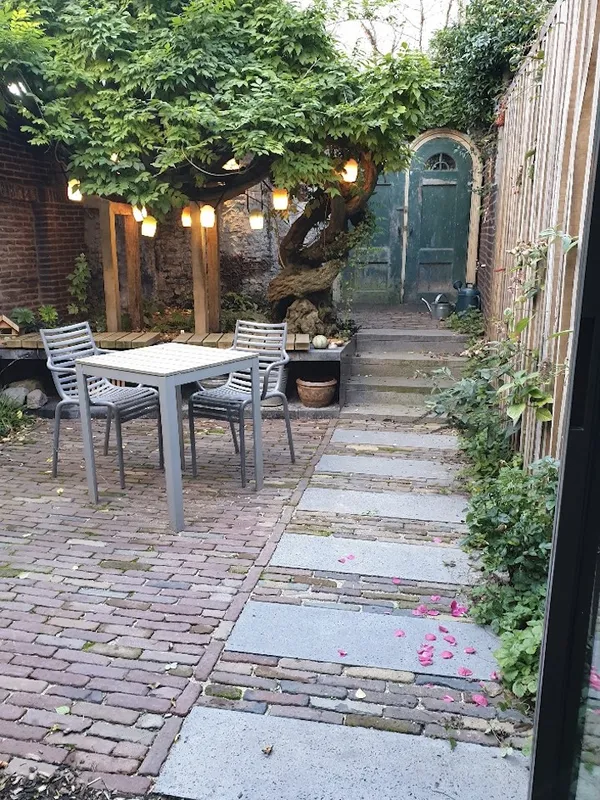
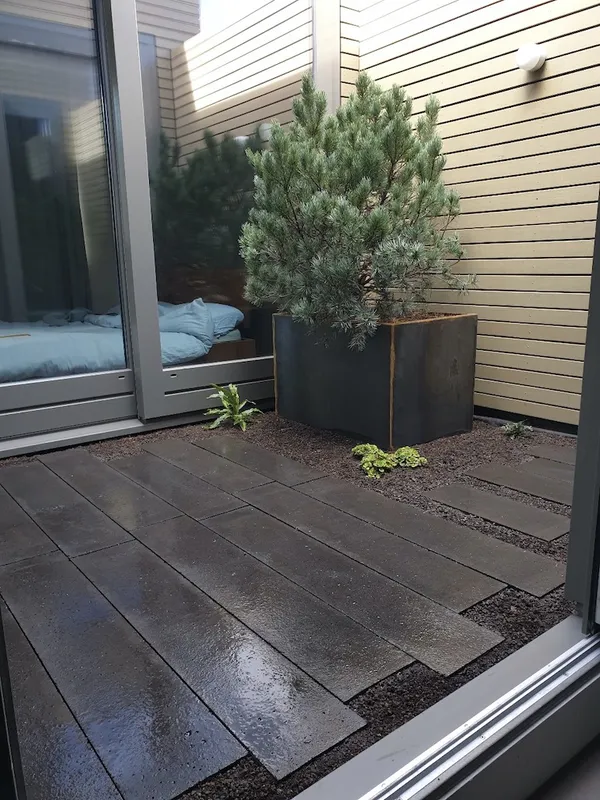
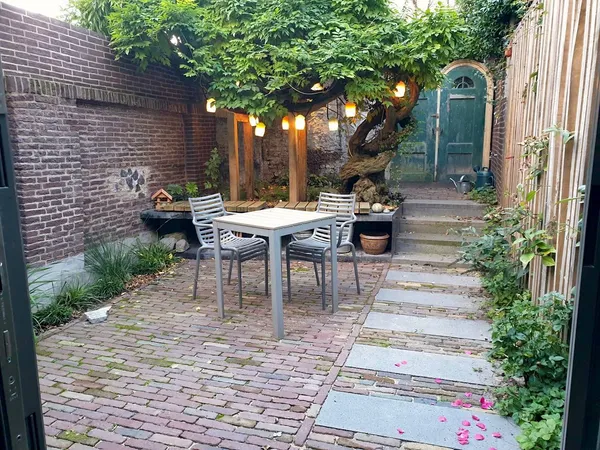
Photo 1: A garden that’s just a bit too vast to take in at a glance, created with a limited number of materials. The old wisteria acts as a room divider and adds depth and visual interest. The line of sight toward the stairs and the trompe-l’oeil effect are emphasized by the line of the paving. Garden design: Historic City Garden.
Photo 2: A compact tree in a beautiful planter in this 7-square-meter patio garden. The design is like a still life that you can admire from inside your home. It’s an inviting and peaceful outdoor space with a few elements that look beautiful all year round.
Greenery along and on the walls
Hard walls and fences further contribute to a feeling of confinement in a small garden. When paving abuts a wall, it creates a harsh visual impression. It’s often possible to create a narrow border of greenery along the edge. By allowing plants to grow on the walls, you soften the appearance and, with greenery, blooms, insects, and more, you create additional space for experiencing nature and the changing seasons.
Variety in the Pavement
By not paving everything with the same stone or tile, you create a varied look and can, if desired, emphasize sightlines or distinguish different areas of the garden from one another. Adding some soft landscaping can also create a “softer” atmosphere. Just be careful not to introduce too many different materials.
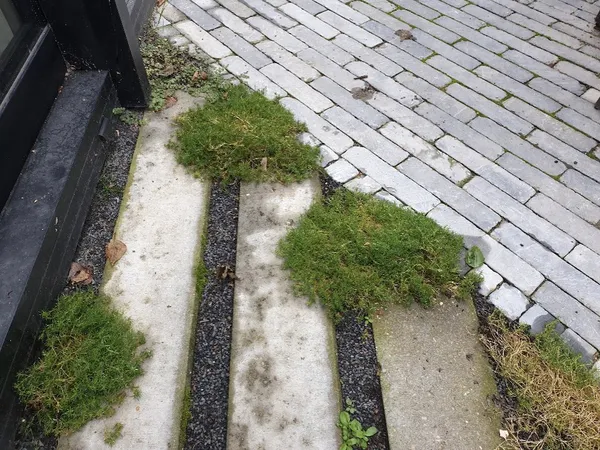
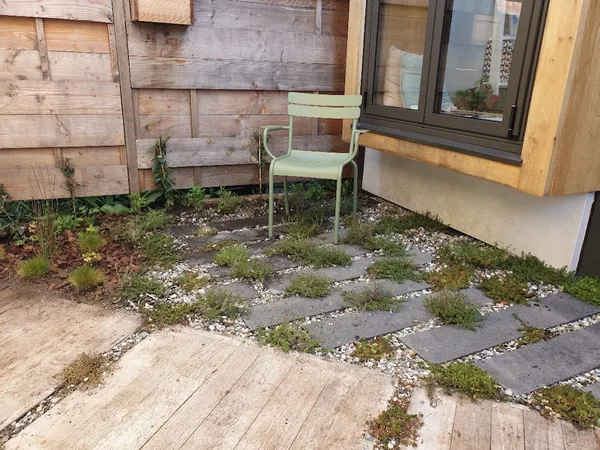
Photo 3: A mix of paving types and the addition of semi-paving (which promotes water infiltration) with groundcover plants. The materials used complement each other well.
Photo 4: The use of different types of paving and the addition of groundcover plants. Stone walls are used in the foreground. Garden design: Permeable Green City Garden.
Greenery on the ground
Grass can be a challenge in a small garden with plenty of shade and heavy foot traffic. However, there is also a wide variety of so-called “tread-tolerant” plants available—plants that can withstand being walked on. Plant them strategically between and along paved and semi-paved areas.
Groundcover plants that Michaël likes to use include stonecrop (e.g., Sedum album), creeping speedwell (Veronica repens), coinwort (Lysimachia nummularia), and creeping thyme (e.g., Thymus preacox). Soleirolia and blue ground-creeper (Isotoma fluviatilis) are also beautiful, but they aren’t always very hardy.
You might also consider golden strawberry (Waldsteinia), copper button (Leptinella), and needle stonecrop (Sagina subulata).
Head up high
A small tree or a (tall) pergola can completely transform the feel of a small space. A dull, functional passageway can suddenly become a space of its own, with a tall feature that you can walk under or sit beneath. A tree or climbing plants on the pergola also add greenery. The shade this creates helps combat the heat that’s typical of many small urban gardens.
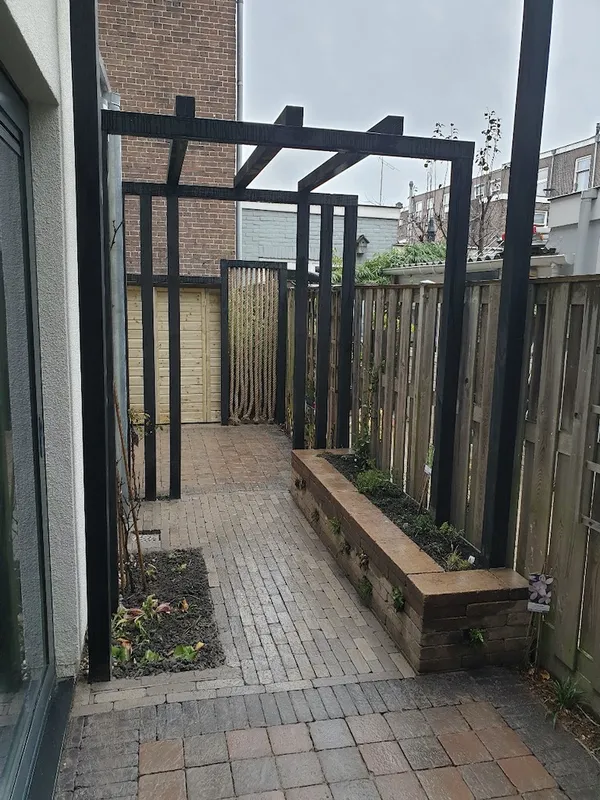
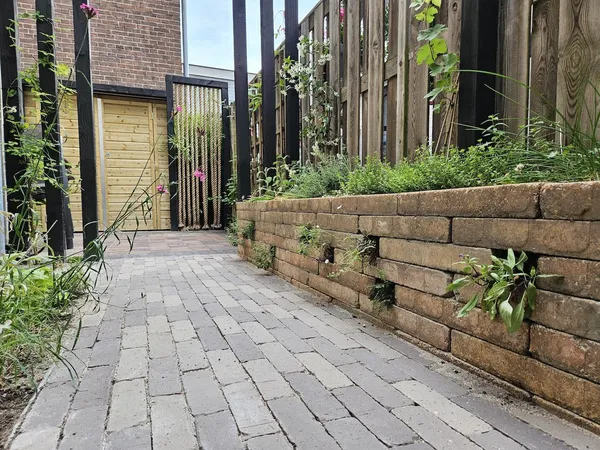
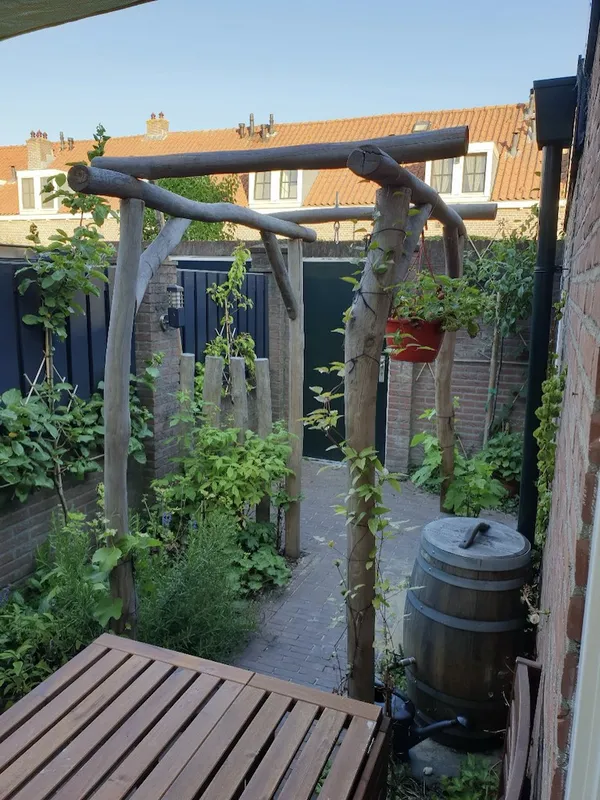
Photos 5 and 6: Two pergolas with integrated palisades divide the spaces and draw your gaze toward the back and the passageway with ropes (optical illusion). Behind them stands a bamboo plant that suggests the garden extends into the neighbors’ yard, where there is also bamboo. Variations in elevation and greenery along the walls. Garden design: Narrow backyard with a pergola. Photo 5 was taken immediately after construction; photo 6 was taken once all the plants had taken root.
Photo 7: A 16-square-meter garden with plenty of paved areas. Yet it still creates a green atmosphere. Height is provided by the overgrown pergola and a palisade serving as a “room divider.” Garden design: Playful Green Stamp Garden.
Create exciting glimpses
With a picket fence, a large shrub, a tree, or a pergola, you can prevent being able to see the entire garden at once (from inside your home). That keeps a small garden interesting. You can also use these elements to guide the eye through the garden. This way, you determine where your gaze is directed. Naturally, you’ll want to direct it toward a fun and interesting part of the garden or a beautiful feature. For example, as your gaze travels along a palisade or pergola, it creates an illusion of depth. This makes a small garden appear larger. I often refer to this as a room divider in the garden—and usually a semi-transparent one at that. That way, it doesn’t become too solid or dense. Otherwise, you run the risk of making the garden feel too compartmentalized or smaller.
Work Involving Elevation Differences
If part of the garden can be raised or lowered in a logical way, it creates more variety and often an interesting view through the space. Furthermore, a raised border can also serve as a seating area, which in turn means efficient use of space. Raised borders can often be easily built using old stones from the garden. These small stone walls can also be planted with greenery for added color. A sunken seating area (a sunken seat) also offers a completely different perspective.
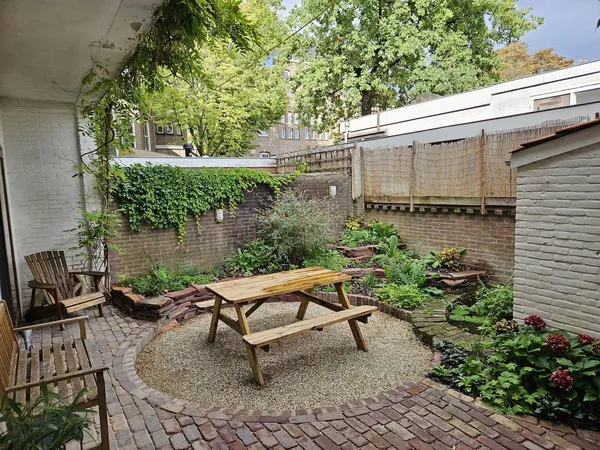
level changes with a sunken seating area…
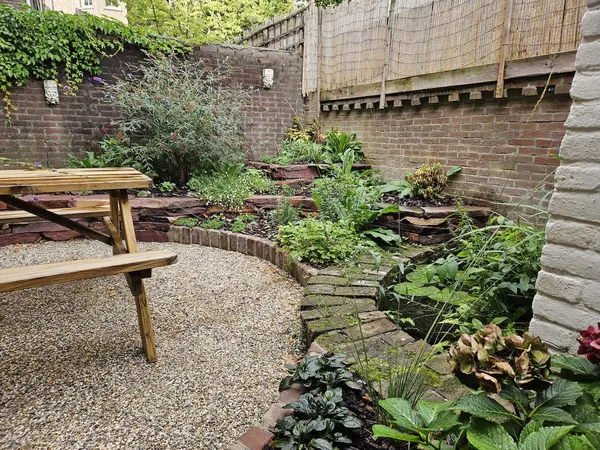
and low retaining walls in the flower beds
Create a clean, clean-lined design
I really love rounded and flowing shapes, but in a small garden, they often take up too much space. That’s because more space is lost. In that case, straight lines and angles are more efficient. A diagonal layout can offer a solution. It emphasizes both width and depth and quickly creates a varied, efficient, and playful division of space. Clear lines in the garden ensure that all elements continue to function as intended. This is true even when lush vegetation takes over significantly during the growing season and softens the hard lines.
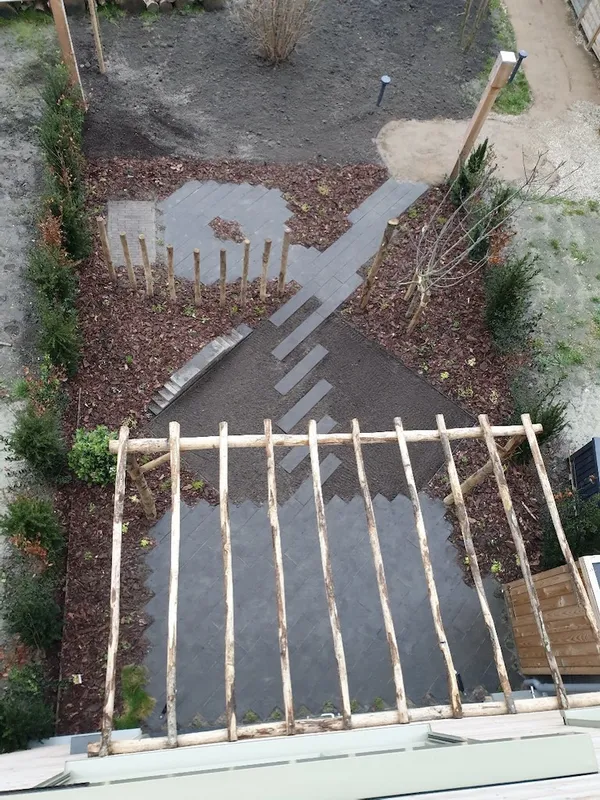
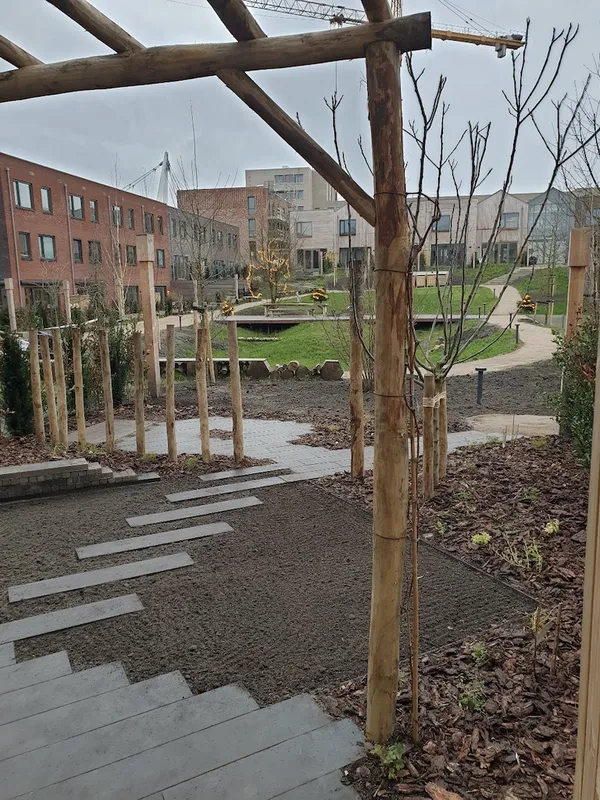
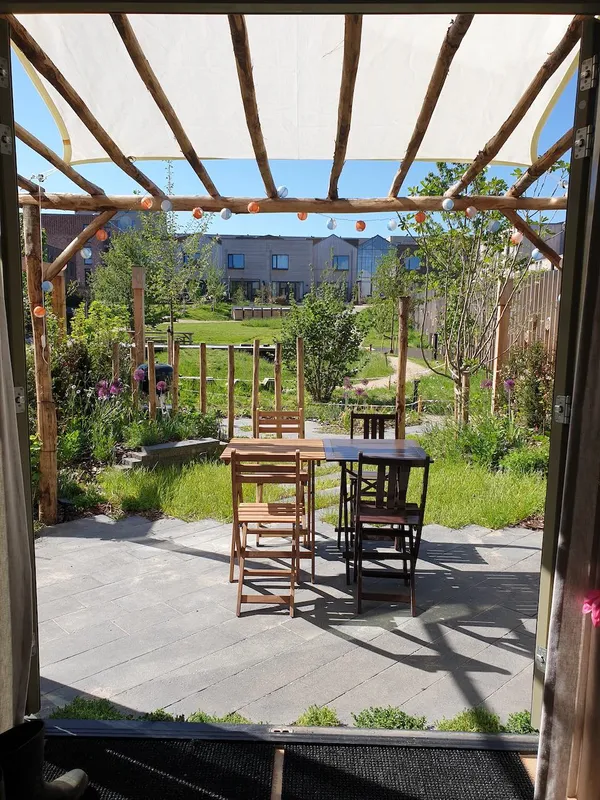
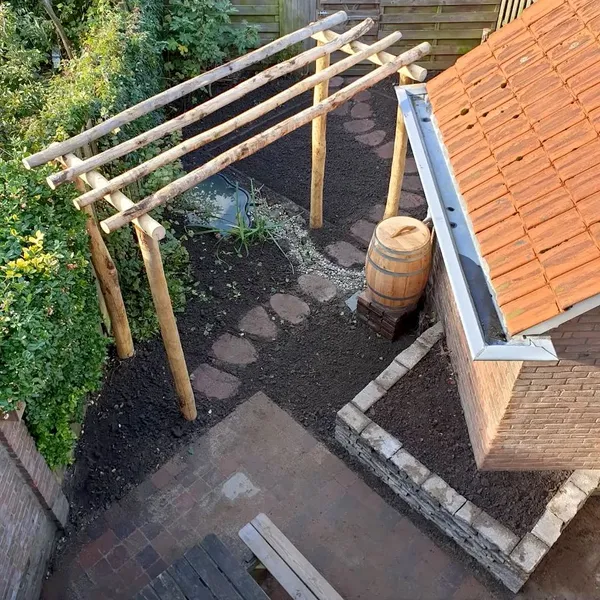
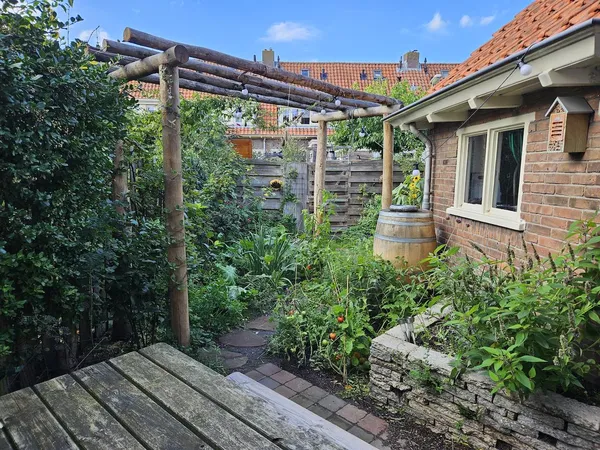
Photo 8: The diagonal lines create a sense of depth and width and provide a favorable division of space. Simplicity in the use of materials. Garden design: Urban garden at a newly built home with an adjacent courtyard garden.
Photo 9: The tree and pergola provide height and shade in this south-facing garden. The picket fence screens off the second patio and beautifully frames the view into the adjacent courtyard garden.
Photo 10: The same garden, but now that the plants have taken root.
Photos 11 and 12: The diagonal line gives this design a dynamic feel. The stepping stones create a sense of depth, and the pergola provides a view through and adds height. Garden design: Dynamic garden. Photo 12 was taken now that the plants have grown quite a bit.
Dual and Creative Use of Space
Give elements a dual purpose and be creative with the space. Would you like a sandbox for the kids, but don’t have enough room? Build a sandbox that you can also sit on. A pergola can also double as a swing, and a raised flower bed (with a wide border) or a retaining wall can be used as a built-in seating area.
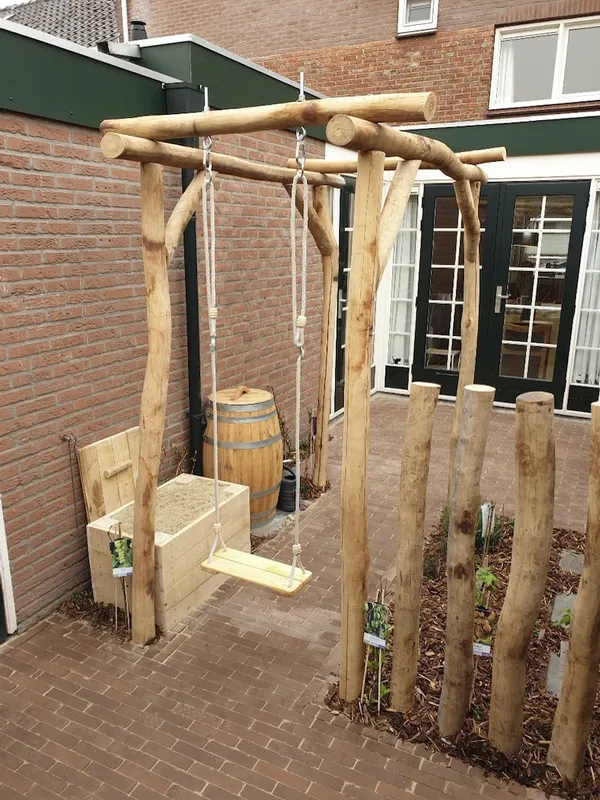
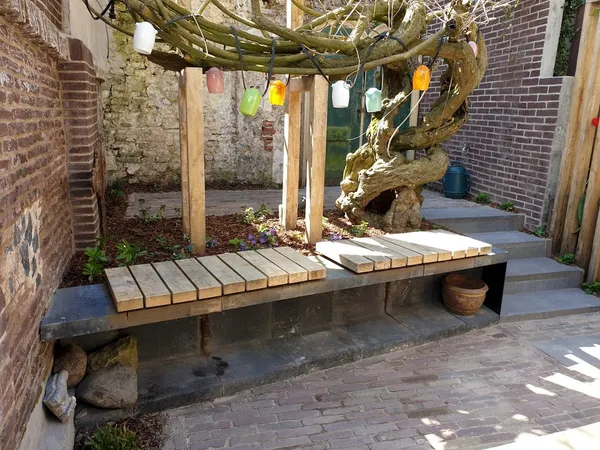
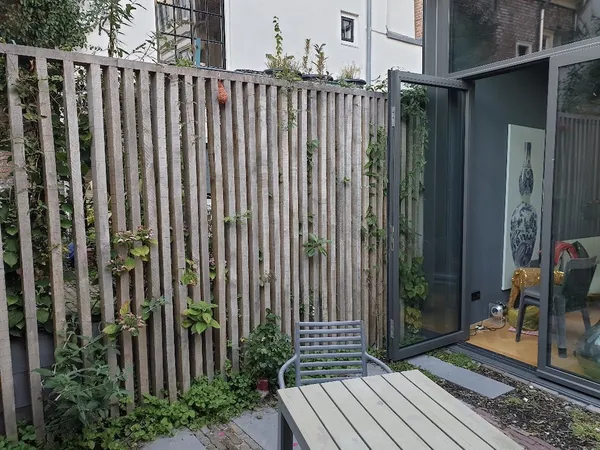
Photo 13: The sandbox that doubles as a seating area. Garden design: Playful Green Stamp Garden.
Photo 14: The retaining wall has been used as a permanent seating area under the wisteria, with additional storage space. Garden design: Historische Stadstuin.
Photo 15: Transparent slatted fence. The slats are closer together near the house for more privacy.
Transparent walls
If you need to install a fence, consider keeping it as open as possible. Of course, be sure to involve your neighbors in this decision. You’ll naturally want as much privacy as possible near the house, but at the back of the yard, this may not be necessary—or at least not to the same extent. For example, use slats. Place them close together near the house and leave more space between them further away. This makes your garden feel larger and more spacious, and allows both light and air to penetrate the garden more easily.
Create a trompe-l’oeil
A trompe-l’oeil is the French term for an optical illusion. If there is an element in the garden that can be used to suggest a passageway or make the garden appear larger, this can create a stunning effect.
It’s typically an idea or concept that “defines” the entire garden. What’s more, it adds excitement to the garden and inspires wonder. The client for whom I created my first trompe-l’oeil told me that visitors still regularly ask her where those doors in her garden actually lead.
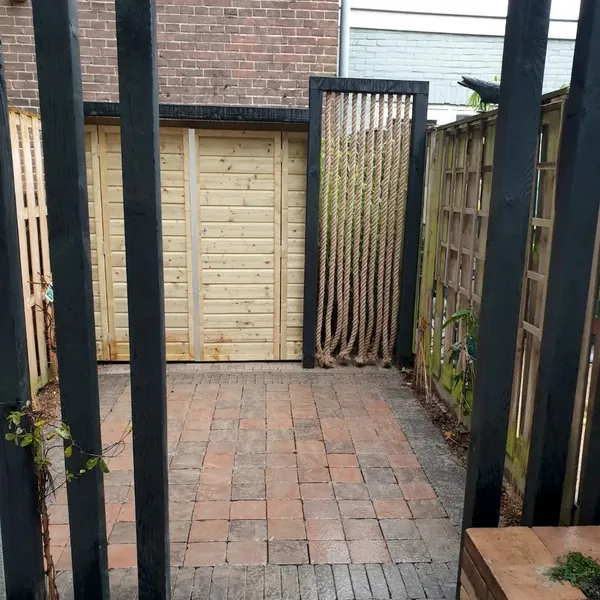
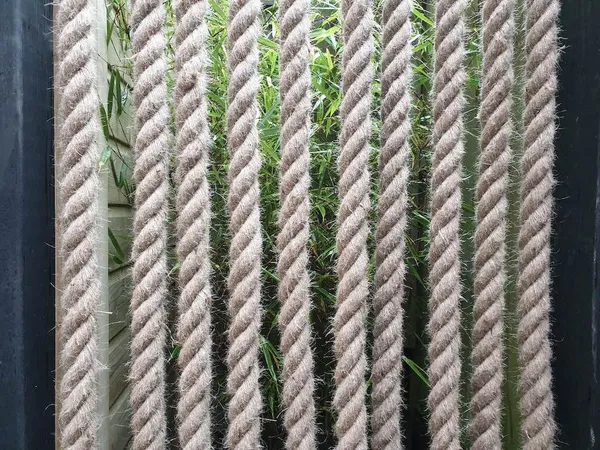
Photo 16: The image suggests that the garden continues beyond the ropes. However, there is only a single bamboo plant here, and the neighbors’ bamboo can be seen in the background. Garden design: Narrow backyard with a pergola.
Photo 17: The bamboo behind this “gate” made of ropes creates a mysterious atmosphere and makes the garden appear larger than it actually is.
Photo 18: The trompe-l’oeil (no, it’s not a real gate) is the focal point of this garden design. The windows have been replaced with mirrors to complete the illusion. The wisteria serves as a room divider. The line of sight is emphasized by the paved area.
About Michaël Meijer (Coenraad Tuinen)
Ever since his childhood, Michaël had been fascinated by nature. As a child, he also had his own little patch of garden, and later he regularly worked at his mother’s landscaping business. With a background in Garden and Landscape Design and, later, Urban Planning, Michaël worked at various consulting firms. He also taught at a college for many years while simultaneously conducting research on innovative forms of urban development in Rotterdam. Because Michael wanted to spend more time outdoors, he changed course and followed in his mother’s footsteps. After completing a permaculture course and professional training in landscape architecture, he started his own landscaping business: Coenraad Tuinen.
All gardens are designed to create more greenery, make optimal use of space, and be climate-resilient. Michaël believes it is very important to work as circularly as possible. The guiding principle for every Coenraad garden is therefore: inviting, green, and circular.
Follow Coenraad Tuinen on Instagram, too
View more gardens up to 40 m², view all gardens in our "My Small Garden" section, or go to "Garden Design and Layout" for more garden design tips for small gardens.